

‘One Hundred Years of Solitude’ Part 2 Ending Explained: What Happens to Macondo and the Buendías?
Quick heads up before you scroll further: Netflix hasn’t actually dropped the real ending yet. The first seven episodes of Part 2 landed on August 5, 2026, but the Grand Finale — the part that actually closes the book on Macondo — doesn’t premiere until August 26. So let’s talk about where the show stands right now, and how Gabriel García Márquez wired the ending in the novel it’s based on.
Wait, the finale hasn’t even aired?
Nope. Netflix split this adaptation into two eight-episode halves, and then split that second half again. The first seven episodes of Part 2 arrived on August 5, with a nearly two-hour cinematic Grand Finale, directed by Laura Mora, following later that month on August 26. Netflix’s own VP of content for Latin America, Francisco Ramos, explained the reasoning pretty plainly: the story needed a format bigger than a standard episode, so the finale became something closer to a feature film.
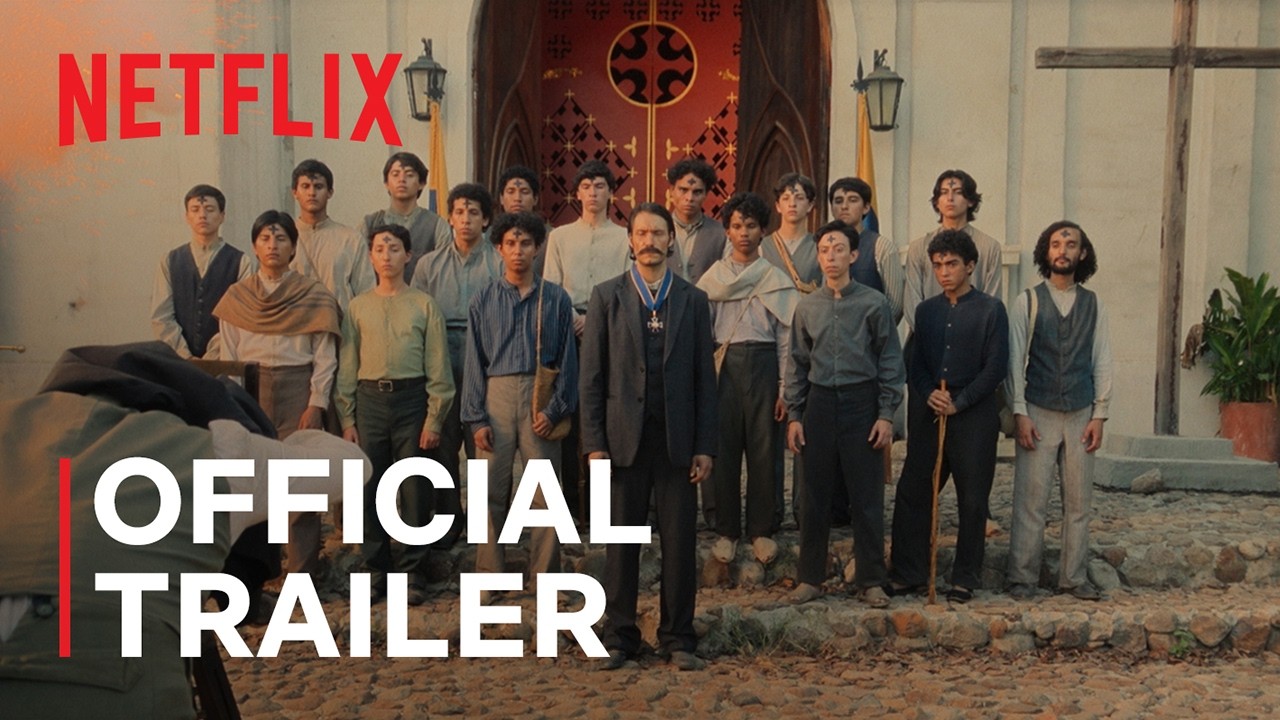
That means anyone typing “One Hundred Years of Solitude ending explained” into Google right now is going to land on a mix of two things — recaps of what’s already streaming, and analysis of how the novel wraps up, since that’s almost certainly the blueprint the finale is following. We’ll cover both here, clearly labeled, so you know what’s confirmed and what’s still speculation.
Where Part 2 leaves things before the Grand Finale
The seven episodes released on August 5 carry titles like The Armistice, Fernanda del Carpio, and It Rained For Four Years, Eleven Months and Two Days — covering episodes 9 through 15 in the show’s overall numbering, split between directors Laura Mora and Carlos Moreno. That last title isn’t just a mood — it’s a direct nod to one of the book’s most brutal stretches. The episode’s ending focuses on the toll Macondo has taken after war, the railroad, the banana company, and years of family pain, showing that the past is still shaping the Buendías. Basically? The town José Arcadio Buendía once dreamed up is unrecognizable. The rain isn’t just weather. It’s punishment.
If you’ve read the book (or Googled around), you probably already sense where this is going. Episode 8, simply titled “Grand Finale,” is billed as the chapter that finally brings the Buendía family’s story to a close and completes the adaptation. Everything before it has been building toward one very specific, very strange final image.
Who’s Melquíades, and what’s actually written on those parchments?
Okay, here’s where things get properly weird — in the best way. Melquíades shows up early in the story as a gypsy who rolls into Macondo with ice, magnets, and other “miracles” of the outside world. He’s also a bit of a ghost, sticking around in the Buendía house long after he dies. Before he goes, he leaves behind a stack of parchments nobody can read.

Turns out those parchments aren’t random scribbles. They’re written in Sanskrit verse and encode, a hundred years ahead of time, every event that happens in the story. Not a vague horoscope — an actual, specific record of the family’s entire history, written before most of it occurred. It’s the kind of narrative trick that only really works in magical realism, and it’s a big reason critics call this book “unfilmable.” How do you show someone reading their own future as if it already happened?
Some readers treat Melquíades as a stand-in for García Márquez himself — an author-figure inside the story, writing the world into being while simultaneously just describing it. Trippy, right? The parchments don’t predict the ending so much as contain it.
How the book ends: Aureliano Babilonia and the last page
By this point in the story, the Buendía line has thinned out to almost nothing. The last two are Amaranta Úrsula and Aureliano Babilonia — an aunt and nephew who don’t realize (or maybe don’t care) that they’re related until it’s too late. They fall in love anyway. And this is where the family’s oldest fear finally catches up with them.
From the very first generation, the Buendías carried a whispered warning: inbreeding in the family would eventually produce a child born with a pig’s tail. Generations dodge it. Then Amaranta Úrsula and Aureliano don’t. Their child is born with a pig’s tail, the fulfillment of an omen going all the way back to the family’s first generation, and Amaranta Úrsula dies in childbirth. What happens next is genuinely one of the darkest beats in 20th-century literature — Aureliano loses the baby, and later finds it being carried off by ants.
Alone in a crumbling house, with nothing left, Aureliano finally sits down and decodes Melquíades’ parchments. And here’s the gut-punch: as he reads, he realizes the parchments are the complete history of his family — and he’s reading about the exact moment he’s living in, in real time.
The windstorm that erases Macondo
This next part is the image everyone remembers, even people who’ve never read the book. As Aureliano keeps reading, a windstorm builds outside. Not a normal storm — something closer to biblical. Just as he reaches the final line of the manuscript, the full force of the windstorm hits Macondo and wipes the town off the map completely. It tears roofs off, uproots foundations, and erases the town from the earth — and from memory.
Why memory too? Because that’s the actual punchline of the whole book. The last line (paraphrasing here, since it’s copyrighted text) makes clear that families like the Buendías, doomed to a hundred years of isolation, don’t get a second chance at existing. Once it’s over, it’s over — no sequel, no rebuilding, no “next generation picks up the pieces.” The story ends the second the last word is read, and so does the town. It’s worth noting the irony, though — Macondo hasn’t actually been erased from memory in real life, since the novel itself has kept the town alive for readers for over half a century.
The Buendía family tree: how the line finally dies out
If you’ve been trying to track the family tree across generations (fair warning, the book reuses the names José Arcadio and Aureliano constantly, which is half the joke and half the headache), here’s the short version of how it collapses:
- José Arcadio Buendía & Úrsula Iguarán — the founders, first-cousins whose marriage plants the seed of the family’s fear of a “pig-tailed” child from the very start.
- Colonel Aureliano Buendía — fathers 17 sons with 17 different women during the civil wars; nearly all of them are later hunted down and killed, cutting that branch off almost entirely.
- Aureliano Segundo & Fernanda del Carpio — their children carry the line into its final, exhausted stretch.
- Amaranta Úrsula & Aureliano Babilonia — aunt and nephew, the last two Buendías standing, whose relationship produces the prophesied child.
- The pig-tailed infant — dies almost immediately, taken by ants, closing the bloodline for good.
Six generations, one recurring set of names, and one ending that was apparently locked in before the first sentence of the book was even written. That’s the cyclical-time thing García Márquez is famous for — history in Macondo doesn’t move forward so much as loop, with each generation repeating the mistakes (and names) of the last.
What does it all mean, though?
Here’s the thing that trips people up: the ending isn’t really about plot. It’s a structural trick. Time in the novel isn’t a straight line — it’s more like an infinite number of moments happening at once, where past, present, and future blur into each other. The parchments could only ever be read at the exact moment they describe, because record and event are, in a weird way, the same thing.
One Goodreads reader summed up the emotional logic pretty well: the family kept skirting the curse of inbreeding until it finally happened to Amaranta and Aureliano, and nature made sure to erase all trace of it once it did. It’s less “the wind killed them” and more “the wind was always going to be there, waiting.”
That’s the real horror of the book, if you think about it. Not the storm. The inevitability. Every choice these characters make feels free in the moment — but the parchments were already written. Kind of makes you wonder how much of your own story is already “written” somewhere, doesn’t it?
Will the Netflix finale follow the book exactly?
Nobody outside the production knows for sure yet — the Grand Finale hasn’t aired as of this writing. But the signs point toward a faithful adaptation. Showrunner Alex García López has talked about how the team deliberately split the story at its midpoint to mark the turn between generations, treating the two parts as a “bookended” project. That kind of structural planning suggests they’re building toward the same closing image from the novel — the parchments, the wind, Macondo gone.
Netflix has described the Grand Finale as bringing García Márquez’s masterpiece “to its close,” produced by hundreds of Colombian artists and crew who worked to bring Macondo to the screen. Given the show’s fidelity so far — and its 84% Certified Fresh score on Rotten Tomatoes for Part 1 — there’s little reason to expect a dramatically different ending. A streaming adaptation could soften the ants, or shift a detail or two for pacing. But the windstorm? That’s almost certainly staying. It’s the whole point of the book.
Quick FAQ
When does the actual ending come out?
The Grand Finale premieres August 26, 2026, on Netflix.
Does the pig-tailed baby survive in the book?
No. It dies shortly after birth, carried off by ants while Aureliano is drinking in the town square.
Why is Macondo erased instead of just abandoned?
Because the wind hits at the exact instant Aureliano finishes reading Melquíades’ parchments — the story and the town’s existence are tied together. Once the last word’s read, there’s nothing left to describe, so nothing’s left standing.
Is the ending the same as the real 1928 banana massacre in Colombia?
The book fictionalizes a real historical event — the 1928 Banana Massacre of workers in Colombia — and the show has been building toward that same historical backbone through Part 2’s episodes.
Who directs the Netflix Grand Finale?
Laura Mora, who also directed several earlier episodes in Part 2.
So yeah — if you’re staring down that August 26 release date, wondering how they’ll possibly wrap up six generations of Buendías in under two hours, now you know what they’re working toward. Whether Netflix nails that final windstorm the way the book demands? We’ll find out together in a couple weeks.

