

Jack Hill’s 1967 cult masterpiece Spider Baby (subtitled The Maddest Story Ever Told) stands as one of the weirdest, most surprisingly touching horror comedies in American cinema. Filmed on a shoe-string budget in just twelve days, this gothic oddity mixes pitch-black slapstick with genuine family tragedy. By the time the dynamite fuse burns down in the basement, the story delivers an unforgettable climax about loyalty, generational trauma, and unavoidable doom.
Jack hill Spider Baby ending breakdown
The third act erupts when the polite facade maintained by the household completely crumbles.
Greedy distant relatives Peter (Quinn Redeker) and Emily (Carol Ohmart), accompanied by their sleazy lawyer Schlocker (Karl Schanzer) and his secretary Ann (Mary Mitchel), spend the night at the rotting Merrye mansion. Their goal is simple: evict the kids, seize the estate, and lock the siblings away in state institutions.
Things unravel rapidly once night falls:
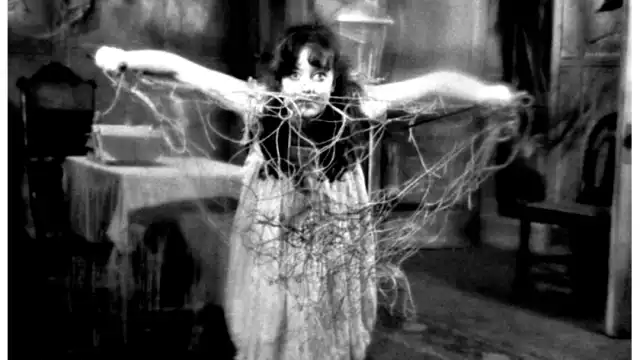
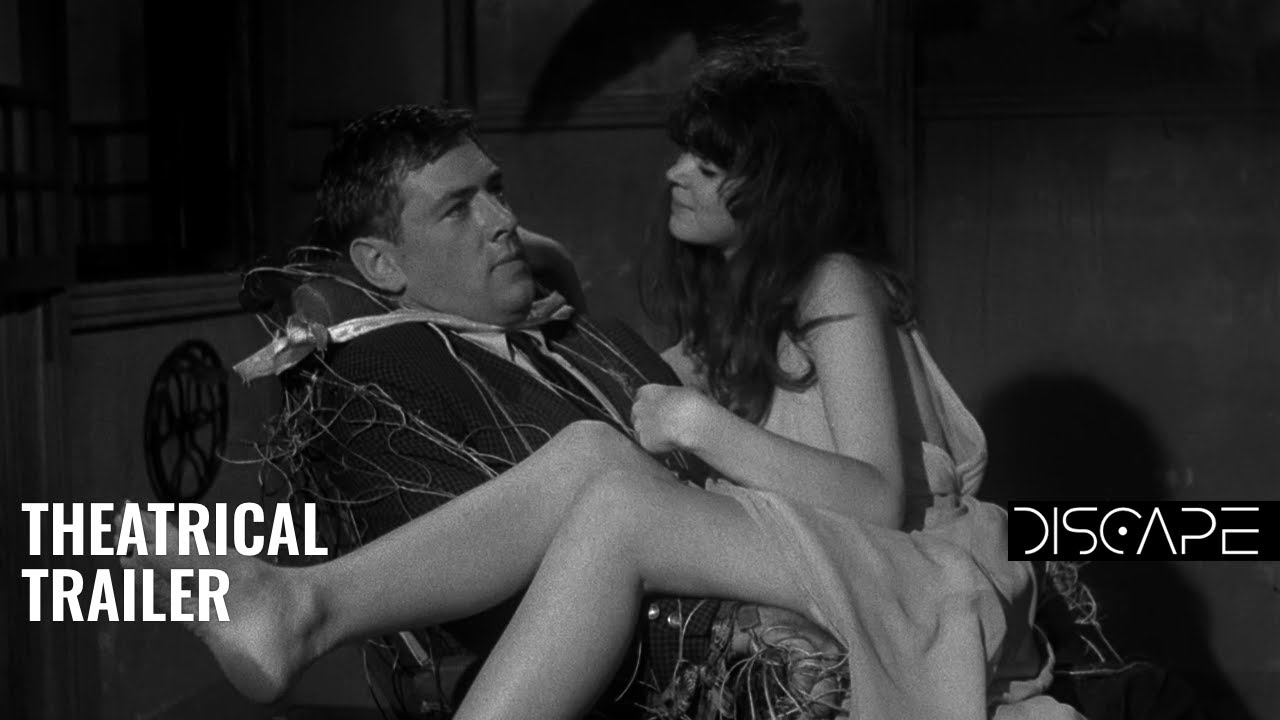
- The First Strike: Schlocker sneaks around the property, only to be caught in a giant string web by Virginia (Jill Banner). Treating him like an oversized fly, she gleefully carves him up with twin butcher knives.
- Emily’s Panic: Emily discovers Schlocker’s body and runs for her life. Ralph (Sid Haig) corners her, and the sisters drag her away to be butchered in their bedroom.
- The Hostage Stand: Peter and Ann are tied up and terrorized by the girls while Ralph wrecks the furniture.
- Bruno’s Return: Bruno (Lon Chaney Jr.) arrives home from an errand and discovers the bloodbath. Realizing the outside world will soon arrive with guns, cages, and straitjackets, he cuts Peter and Ann free and orders them to run.
- The Explosive Mercy: Bruno locks every door from the inside. He walks into the cellar where the older, fully devolved cannibal relatives are kept, lights a bundle of dynamite, and waits. The entire mansion explodes into rubble, killing Bruno, the children, and the beasts below.
Merrye syndrome Spider Baby explained
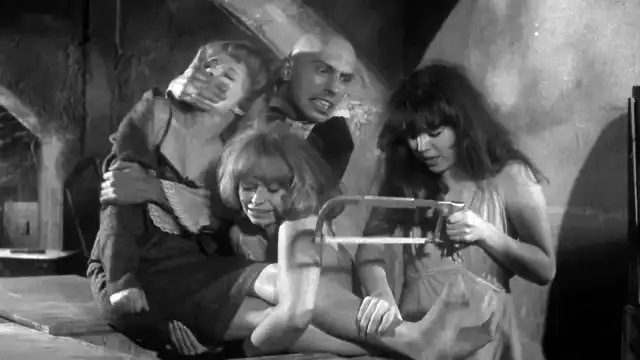
What is actually wrong with this family?
The core conceit of the film is Merrye Syndrome, a fictional genetic disease unique to this single inbred bloodline. Unlike normal aging, where the mind matures as the body grows, Merrye Syndrome causes a person’s mental age to run in reverse.
Around the onset of puberty, afflicted family members start sliding backward along the evolutionary ladder:
- Stage One (Early Teens): Childish tantrums, stunted social development, and bizarre fixations (like Virginia’s obsession with spiders).
- Stage Two (Late Teens/Early Adulthood): Loss of speech, complete loss of impulse control, and feral physical behavior (embodied by Sid Haig’s mute, grunting Ralph).
- Stage Three (Full De-evolution): Total loss of humanity. Victims regress into primal, predatory cave dwellers who only know how to hide in dark holes and feed on raw meat.
The tragedy is that the children have no malice in their hearts. When Virginia butchers someone, she genuinely thinks she is playing a harmless game of tag.
Spider Baby bruno final scene meaning
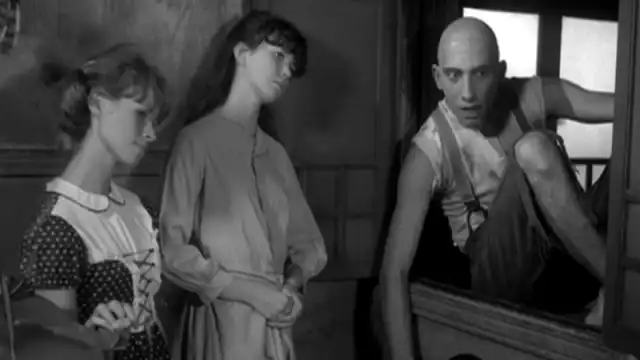
Lon Chaney Jr. delivers one of the finest, most heartbreaking performances of his entire career as Bruno.
Bruno is not a mad scientist or a sinister henchman. He is an ordinary, exhausted chauffeur who promised the children’s late father on his deathbed that he would protect the kids from being locked in an asylum.
Why does Bruno light that fuse?
- Protection from Institutional Abuse: Bruno knows how 1960s state asylums handled violent, mentally disabled patients. They would be chained to walls, chemically lobotomized, and displayed like zoo animals.
- Sparing Them from Stage Three: Bruno feeds the shrieking relatives in the basement every day. He knows exactly what Virginia, Elizabeth, and Ralph will turn into within a few years. He refuses to let them suffer that degradation.
- A Final Act of Parental Love: Blowing up the house is a tragic act of euthanasia. Bruno dies with them because he views those children as his own family, refusing to abandon them in their final seconds.
The breakdown of the merrye family tree
| Character | Regression Stage | Key Behaviors | Final Outcome |
| Virginia (Jill Banner) | Early Stage (Playful / Lethal) | Traps guests in string webs; uses butcher knives like spider fangs. | Dies in the estate explosion. |
| Elizabeth (Beverly Washburn) | Early Stage (Manic / Mimicking) | Acts like a bossy toddler; mimics adult behavior without understanding morals. | Dies in the estate explosion. |
| Ralph (Sid Haig) | Mid Stage (Feral / Non-Verbal) | Climbs walls, grunts, and acts on primal sexual and physical impulses. | Dies in the estate explosion. |
| Uncle Ned & Aunt Clara | Late Stage (Sub-Human) | Locked in the basement; live in dirt pits and eat raw meat scraps. | Obliterated in the cellar blast. |
| Peter Howe (Quinn Redeker) | Latent Carrier (Distant Cousin) | Civilized, kind, and rational, but carries the dormant family genetics. | Survives and unknowingly passes on the gene. |
Spider Baby 1967 movie meaning
Look past the campy theme song (sung by Lon Chaney Jr. himself!), and Spider Baby functions as a brilliant critique of the American nuclear family.
Director Jack Hill flips standard horror tropes on their head. The “monsters” are sweet, vulnerable children who enjoy roasting weenies and playing games. The “normal” outsiders — the greedy sister Emily and the predatory lawyer Schlocker — are the ones motivated by genuine malice and greed.
The film laid the direct groundwork for later grindhouse classics like Tobe Hooper’s The Texas Chain Saw Massacre (1974) and Rob Zombie’s House of 1000 Corpses (2003). It proved that a family unit bound by blood, isolation, and bizarre rituals could be horrifying and strangely sympathetic at the exact same time.
The dark epilogue: why the curse never dies
The movie doesn’t end with the fire and smoke.
Years later, Peter and Ann are comfortably married with a house in the suburbs. Peter has written and published a comprehensive medical book detailing the tragic history of the Merrye Syndrome. As he proudly explains how the bloodline and its genetic disease were eradicated in the blast, the camera drifts outside to the garden.
There sits their adorable young daughter.
She catches a spider in her hands, pulls its legs off with a cold, glassy smile, and looks up at the camera with the exact same dead-eyed grin Virginia used to wear.
Peter assumed distance from the mansion meant safety. He forgot that genetics do not care about distance. The Merrye curse never died in that basement — it was carried straight into the suburbs, ready to bloom all over again.

