
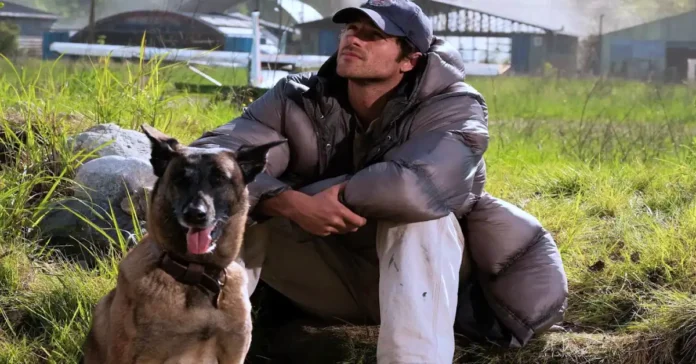
Peter Heller’s post-apocalyptic masterpiece The Dog Stars strips away the zombie hordes and mechanical doom of typical dystopian tales to tell an intimate story about grief, friendship, and sky-high hope. Set across the empty plains and high peaks of Colorado, the story follows a lonely pilot trying to figure out what makes life worth living after everything has vanished. With the 2026 feature film adaptation directed by Ridley Scott bringing this world to movie screens, understanding Hig’s journey has never felt more vital.
What is The Dog Stars? premise and setting

Most end-of-the-world novels focus entirely on the horror of societal collapse. The Dog Stars takes a completely different path. written by adventure journalist and poet Peter Heller, the narrative picks up nine years after a virulent, weaponized flu wiped out over ninety-nine percent of humanity, followed immediately by a lethal blood disease.
The world did not burn in atomic fire. It simply emptied out. Denver’s skyscrapers sit wrapped in green creepers. Superhighways have turned into silent cracked concrete. The climate has baked the plains into a scorching, arid expanse where trout still swim in mountain creeks and deer still graze along the foothills.
Our narrator is Francis “Hig” Higley, a forty-something widower, poet at heart, and amateur pilot. He lives inside an airplane hangar at an abandoned regional airstrip in Erie, Colorado. His universe consists of three things:
- A 1956 Cessna 182: An old, reliable single-engine plane that Hig uses to run aerial reconnaissance and hunt for food.
- Jasper: An aging, loyal dog who sits in the copilot seat and serves as Hig’s emotional anchor.
- Bruce Bangley: A heavily armed, cynical military veteran who occupies a nearby two-story house, guarding the perimeter with terrifying efficiency.
The Erie Airstrip Perimeter
| Francis “Hig” Higley | Mutual Need / Truce Line | Bruce Bangley |
|---|---|---|
| Lives in the open hangar | Mutual need | Fortified in the two-story house |
| Flies the 1956 Cessna 182 | Truce line | Master marksman and weapon hoarder |
| Longs for human tenderness and poetry | Mutual need | Trusts nobody; shoots on sight |
| Retains moral empathy | Truce line | Relies on Hig for aerial intel |
Hig and Bangley are polar opposites. Bangley loves the apocalypse because it lets him shoot anyone who steps onto his property without legal consequences. Hig hates the killing, mourning evry life snuffed out while clinging to old fishing memories and dog-eared poetry books. Together, they form an unbreakable survival unit. Hig flies and spots incoming raiders from the clouds; Bangley eliminates them from his sniper roost.

Key characters and survival philosophies
To understand where this narrative lands, you have to look at the people holding it together. Heller builds characters who represent contrasting ways of coping with unbearable grief.
| Character | Role & Background | Core Motivation | Fatal Flaw / Vulnerability |
| Francis “Hig” Higley | Widowed pilot, fly-fisherman, narrator | Searching for emotional connection and genuine love | Paralyzing grief over his late wife Melissa |
| Bruce Bangley | Ex-marine, survivalist marksman | Absolute tactical control and self-preservation | Total paranoia; inability to trust anyone |
| Jasper | Australian shepherd / Malinois mix | Protecting Hig and keeping him tethered to sanity | Old age, sickness, and fragile mortality |
| Pops | Veteran doctor/rancher in Grand Junction | Guarding his daughter and their secluded canyon | Advancing age and terminal illness |
| Cima | Pops’ resourceful daughter | Rebuilding a real future out of the wilderness | Deep wariness of predatory outsider gangs |
The plot step by step

Heller divides the story into an episodic journey that moves from static survival to high-stakes exploration.
| Stage | Event | Description |
|---|---|---|
| 1 | Routine Survival | Erie Airstrip |
| 2 | Grief of Jasper’s Loss | The catalyst |
| 3 | Point of No Return Flight | Flying to Grand Junction |
| 4 | The Canyon Encounter | Meeting Cima & Pops |
| 5 | Defending the Valley | Facing the marauders |
| 6 | New Life & Family | Rescuing Bangley |
1. Life inside the perimeter
Hig’s routine consists of flying short, tightly calculated loops around the Erie airfield to conserve high-octane 100LL aviation fuel. Down below, bands of desperate marauders roam the ruined plains. Whenever intruders stumble close to the compound, Bangley lures them into pre-measured kill zones using an old dumpster as deceptive cover.
Hig also visits a secluded camp of surviving Mennonites who caught the blood sickness. Because they are contagious, he cannot touch them. Instead, he drops gifts of fresh fish, canned goods, and hand-sewn garments near their fence line. These small acts of kindness keep his soul intact while everything around him decays.
2. The radio ghost
Three years prior to the novel’s main events, during a high-altitude patrol, Hig heard a faint crackle through his headset:
“Grand Junction Tower, this is Cessna November niner-three-four-eight-echo… we have you on radar, welcome back.”
The transmission vanished into static within seconds. Was it a glitch? Was it an actual working airport hundreds of miles across the Rocky Mountains? Bangley dismissed it as an echo or a phantom signal. For Hig, that single transmission became an obsession — a whisper proving that civilization might still draw breath somewhere beyond the ridgeline.
3. The catalyst: losing jasper
Hig’s fragile equilibrium shatters when Jasper falls gravely ill. The dog suffers from old age, parasites, and the relentless heat. When Jasper finally dies, Hig’s last emotional bridge to the pre-collapse world snaps.
Living at the airfield becomes unbearable. The endless tactical vigilance, Bangley’s cold gun oil, and the silent hangar only amplify his grief. Hig decides to fuel up the Cessna, pack his remaining gear, and fly west toward Grand Junction. He knows he does not possess enough fuel to fly there and return. This is a flight past the Point of No Return. If nobody is there, he will crash into the desert and die.
He accepts that risk freely. Surviving in a bunker is not the same as being alive.
4. The trap at grand junction and the canyon landing
Reaching Grand Junction, Hig discovers the airport is an abandoned decoy. Worse, his fuel runs dry, forcing him to make a treacherous emergency landing in a secluded canyon valley.
The moment he steps out of the plane, a high-powered rifle pins him to the dirt.
His captors are Pops, an aging military veteran with sharp tactical instincts, and his daughter Cima, a fiercely capable young woman. They had watched countless vicious marauders enter their valley, executing intruders on sight to protect their orchard and spring water.
Hig survives their judgment because he does not act like a predator. His openness, gentle manner, and evident grief disarm Cima’s skepticism. Over the coming weeks, Hig integrates into their homestead. He helps Cima clear trees to build an improvised runway, harvests crops, and experiences the warmth of human touch for the first time in a decade. Love begins to heal his long-festering wounds.
Climax: a siege on two fronts
Peace in Heller’s world never lasts without a fight. Trouble arrives when an organized gang of killers tracks Hig’s plane to the canyon. Pops, Cima, and Hig coordinate a ferocious ambush, wiping out the attackers before the homestead can be overrun.
During the skirmish, Pops’ health deteriorates rapidly due to terminal illness and battle fatigue. Knowing his days are numbered, Pops extracts a promise from Hig: take Cima away from this isolated valley, fly back east, and find a sustainable community where she won’t be trapped alone when he passes.
Using aviation fuel salvaged from a hidden reservoir on the ranch, Hig gets the Cessna airborne again. Together with Cima, he flies back across the Rockies toward Erie.

As the runway appears beneath them, Hig spots disaster:
- The airfield perimeter fence is breached.
- Bangley’s house is riddle-marked with heavy gunfire.
- Dozens of armed marauders have trapped Bangley inside his basement bunker.
Hig turns the Cessna into an aerial weapon, buzzing the tree line and sowing chaos among the attackers. Cima and Hig touch down on the tarmac, grab their rifles, and mount a flanking counter-attack. Working in tandem with Bangley’s suppressive fire from the cellar, they wipe out the raiding party in a bloody shootout.
Dog Stars ending explained: what does the resolution mean?
The final chapters of The Dog Stars offer one of the most poignant conclusions in modern speculative fiction.
Following the battle, Bangley is wounded and completely astonished. He expected Hig to die in the western mountains. Seeing his partner return with fresh aviation fuel, supplies, and another capable human being chips away at the old soldier’s iron cynicism.
The Ending Shift
| From: Mere Survival | To: True Living |
|---|---|
| Paranoia and fortified bunkers | Shared meals and mutual trust |
| Hoarding dwindling resources | Farming, fly-fishing, and flying |
| Shooting at shadows | Planning a future together |
| Reliving dead memories | Creating new memories |
The trio establishes a renewed communal ecosystem at the airfield:
- Safety Through Community: Bangley handles long-range defense, but accepts Cima and Hig as genuine partners rather than suspicious liabilities.
- Generational Continuity: Hig and Cima build an authentic romantic partnership, transforming the cold concrete hangar into a home filled with laughter and shared meals.
- The Sky Remains Open: Hig continues to fly, not as a desperate ghost looking for an excuse to crash, but as an explorer mapping safe territories and gathering seeds for future seasons.
The symbolism of the “Dog Stars”
Why did Heller title the book after Sirius, the Dog Star?
In astronomy, Sirius is the brightest star in the night sky, part of the constellation Canis Major. In classical times, its rising marked the scorching “dog days” of summer — a time of fever, pestilence, and blinding heat.
In the novel, the Dog Star represents three interconnected ideas:
- The Fever That Broke Civilization: The pandemic that burned humanity down to its raw elements.
- The Unconditional Loyalty of Jasper: The pure, guiding love of Hig’s canine companion that kept him humane long enough to find Cima.
- A Bright Beacon in Deep Darkness: No matter how black the night sky gets, the star continues to burn steadily overhead.
Hig realizes that survival alone is hollow. True life requires you to open yourself up to potential heartbreak by loving again. The ending is not a promise that humanity will rebuild cities or re-establish global trade. It is a quiet declaration that two or three people planting tomatoes, cooking stew, and watching the stars can keep the light of civilization burning.
Major themes analyzed
Heller’s storytelling works because its themes resonate far beyond the apocalyptic genre.

1. The geometry of solitude and human need
Can anyone truly survive alone? Bangley thinks he can, yet without Hig, he would have been killed in his basement. Hig thinks his dog and his plane are enough, yet his soul starves until he meets Cima. The novel demonstrates that human beings are fundamentally communal creatures. Total isolation warps the mind, breaking language and empathy.
2. Nature’s indifference and healing power
Unlike post-apocalyptic tales where the planet becomes an irradiated ash heap, Heller’s Colorado is alive, green, and vibrant. Trout leap in the river eddies. Aspens turn gold in autumn. The wilderness does not mourn the human race; it simply keeps growing. Hig finds deep solace in that neutrality. Nature’s refusal to care about human tragedy allows him to heal without guilt.
3. The broken music of memory
Heller crafts Hig’s narration using fragmented syntax, sudden line breaks, and stream-of-consciousness bursts. When someone spends a decade talking only to a dog and the wind, grammar deteriorates. Memory intrudes without punctuation:
“I fished. The line went out like silk. I thought of Melissa’s wrist.
The bone there. How she held the coffee mug.
Then the strike. Cold silver in the net.”
This stylistic choice pulls the reader directly inside Hig’s traumatized mind, showing how grief fragments our perception of time.
The 2026 film adaptation vs the novel
Bringing a poetic, slow-burn book to the big screen is tricky. Ridley Scott’s 2026 film adaptation, written for the screen by Mark L. Smith (The Revenant), makes distinct choices to translate Hig’s inner monologue into cinematic spectacle.
As critical reviews from independent cinema blogs and mainstream industry trackers documented on Wikipedia‘s The Dog Stars page point out, the film balances quiet contemplation with punchy frontier action.
| Feature / Element | Peter Heller’s 2012 Original Novel | Ridley Scott’s 2026 Feature Film |
| Narrative Tone | Introspective, lyrical, poetic stream-of-consciousness | Atmospheric survival thriller with visceral action beats |
| Hig’s Portrayal | Aging, weary, soft-spoken widower in his 40s | Played with quiet vulnerability by Jacob Elordi |
| Bruce Bangley | Misanthropic, calculated, dryly funny gunman | Portrayed with gruff, intimidating grit by Josh Brolin |
| Pacing Emphasis | Long stretches of fly-fishing, gardening, and internal memory | Shorter reflective pauses mixed with high-tension defense sequences |
| The Radio Signal | A ghost transmission that haunts Hig for years | Voiced by Allison Janney as a mysterious radio beacon |
While the film emphasizes the tactical reality of defending a homestead in an ungoverned wasteland, both versions share the same emotional core: hope is a deliberate choice.
Quick Reference FAQ
Why did Hig leave the airport if he had food and shelter?
Hig survived physically at the airfield, but was dying emotionally. When his dog Jasper died, the last spark of warmth vanished from his life. Flying past his point of no return was a conscious refusal to spend the rest of his existence simply waiting to die in a bunker.
Does Jasper survive in The Dog Stars?
No. Jasper passes away from sickness and age midway through the story. His death serves as the essential turning point that pushes Hig out of the Colorado hangar and into the broader world.
Is the ending of The Dog Stars happy or sad?
It is fundamentally optimistic. Unlike many post-apocalyptic novels that end in tragedy or ambiguous bleakness, The Dog Stars finishes with Hig, Cima, and Bangley alive, healthy, and forming a self-sustaining family unit grounded in love and mutual respect.
Peter Heller created an enduring piece of American literature because he understood a fundamental truth: the end of the world is easy to imagine, but the courage to love what remains is what makes us human. Whether you experience it on the printed page or through the lens of Ridley Scott’s 2026 film, The Dog Stars reminds us that as long as we have stories to tell, fuel in the tank, and someone waiting on the runway, we are never truly lost.

