

Is the Swiss Travel Pass Worth It? Cost Breakdown for 3, 5, and 8 Days in Switzerland
Traveling to Switzerland is notoriously expensive. Train tickets can drain your wallet faster than a melted fondue pot. Consequently, parents and budget conscious travelers face a massive dilemma. You want to see the Alps, ride the panoramic trains, and cruise the pristine lakes. However, buying individual tickets for every single journey quickly becomes an absolute nightmare.
Therefore, you are probably wondering: Is the Swiss Travel Pass actually worth the steep upfront cost?
Let’s do the math. Frankly, blindly buying travel passes is a rookie mistake. Sometimes it saves you hundreds. Conversely, sometimes it wastes your hard earned cash. We reviewed the newly updated 2026 pricing data from the official Swiss Federal Railways (SBB). Grab your calculator. get into a brutally honest cost breakdown to see if this famous ticket fits your specific itinerary.
What Actually Is the Swiss Travel Pass?

Essentially, it is a golden ticket for the Swiss transport network. Instead of fumbling with ticket machines at every station, you simply hop on and off. Furthermore, it covers much more than just standard trains.
Here is exactly what the pass includes:
- Unlimited transit: Free travel on trains, buses, and boats across the entire country.
- City transport: Free access to local trams and buses in over 90 Swiss cities.
- Premium panoramic routes: Fares for the Glacier Express, Bernina Express, and GoldenPass are covered (though mandatory seat reservation fees still apply).
- Mountain excursions: 100% free rides up Mount Rigi, Stanserhorn, and Stoos.
- Major discounts: Up to 50% off other mountain railways, including Titlis and Gornergrat.
- Museum access: Free entry to over 500 museums nationwide, including the FIFA Museum and Chillon Castle.
- The Swiss Family Card: Kids under 16 travel entirely for free when accompanied by a parent holding a pass. This is a massive perk for families.
The 2026 Cost Breakdown: 3, 5, and 8 Days
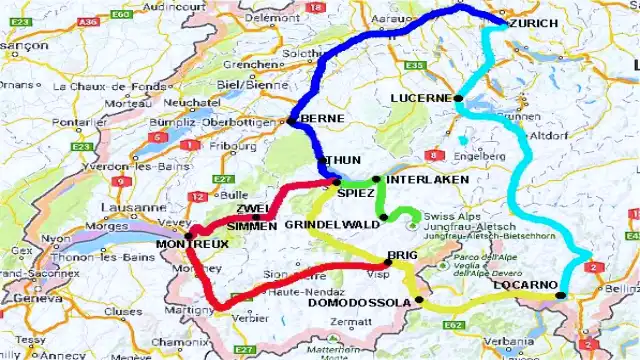
Pricing for the Swiss Travel Pass adjusted slightly for 2026. To determine if it holds value, we must break down the daily cost.
Note: All prices below reflect the 2026 Adult 2nd Class fares in Swiss Francs (CHF). The exchange rate fluctuates, but 1 CHF roughly equals $1.15 USD.
1. The 3-Day Pass: Fast and Furious Travel
- Total Cost: 254 CHF
- Cost Per Day: ~84.60 CHF
Is it worth it? Yes, but only if you move constantly.
Because the daily cost is high, a 3 day pass requires an aggressive itinerary. For instance, a standard point to point ticket from Zurich to Zermatt costs around 125 CHF. If you make that single journey, plus take a local bus, your pass pays for itself that day. Furthermore, adding a free boat cruise on Lake Thun easily pushes you into the “money saved” category. However, if you only travel from Geneva to Lausanne and stay put, you will absolutely lose money.
2. The “5-Day” Dilemma: Hacking the System
Here is a quirky fact about the Swiss Travel System. A 5 day pass does not exist. The official consecutive durations are strictly 3, 4, 6, 8, and 15 days. Therefore, if your trip is exactly five days, you have to get creative.
You have two smart options:
- Option A (The Hybrid Hack): Buy a 4 Day Pass (309 CHF). Then, buy a single “Saver Day Pass” for your fifth day. SBB Saver Day Passes start around 52 CHF if booked weeks in advance. Total cost: ~361 CHF.
- Option B (The Lazy Route): Simply buy the 6 Day Pass (399 CHF) and swallow the cost of the unused day.
Is it worth it? Typically, the Hybrid Hack (Option A) works best. Over five days, your daily average sits roughly around 72 CHF. Indeed, visiting multiple cities over five days makes this highly worthwhile. You can easily squeeze in a trip to Lucerne, a free excursion up Mount Rigi, and a train ride down to the Italian border.
3. The 8-Day Pass: The Ultimate Sweet Spot
- Total Cost: 439 CHF
- Cost Per Day: ~54.80 CHF
Is it worth it? Absolutely. Without a doubt, the 8 day pass offers the best value for standard tourists.
Notice how the daily cost plummets to just under 55 CHF. Simply put, you cannot buy a standard intercity train ticket in Switzerland for 55 CHF. Consequently, nearly every time you step onto a train, you are saving cash. If your week long itinerary includes the Glacier Express, a few museum visits in Bern, and getting around Zurich, the 8 day pass feels like a steal.
Swiss Travel Pass vs. Swiss Half Fare Card (2026 Update)
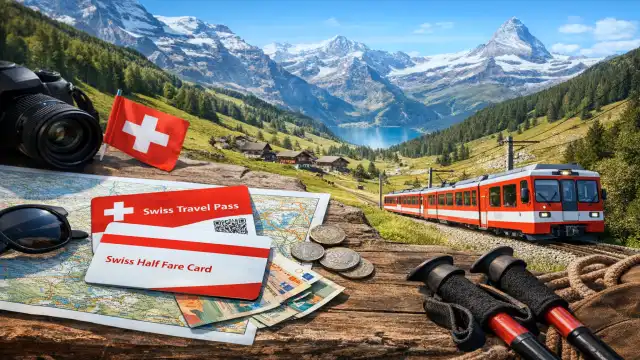
Often, budget travelers debate between the full Travel Pass and the Half Fare Card. In 2026, the SBB increased the price of the Half Fare Card from 120 CHF to 150 CHF for a one month validity.
The premise is simple. You pay 150 CHF upfront. Afterward, you buy individual tickets for every single journey at a 50% discount.
When should you choose the Half Fare Card?
- You don’t mind logistics. You must pull out your phone and buy a ticket before boarding every single train or bus.
- You love high mountains. The Half Fare Card gives a 50% discount on the ultra expensive Jungfraujoch excursion. Meanwhile, the Swiss Travel Pass only gives a 25% discount for that specific peak.
- You stay in one base. If you rent an Airbnb in Grindelwald and only take short daily trips, the Half Fare Card consistently beats the Travel Pass mathematically.
When should you choose the Swiss Travel Pass?
- You crave convenience. Honestly, walking straight onto a train without checking an app is incredibly liberating.
- You travel far. Cross country trips (e.g., Geneva to St. Moritz) rack up costs fast. The Travel Pass absorbs those massive long haul fares effortlessly.
- You travel with kids. The Swiss Family Card makes family travel ridiculously cheap.
Official Purchase Sites (2026)
Swiss Travel Pass (and Flex version)
- SBB Official Site: sbb.ch
- Switzerland Travel Centre (Official Ticketshop): switzerlandtravelcentre.com
Swiss Half Fare Card
- SBB Official Site: sbb.ch
- Switzerland Travel Centre (Official Ticketshop): switzerlandtravelcentre.com
Important: Only buy from these official outlets. Avoid third-party resellers to prevent scams or inflated prices.
- Scams: Some unofficial sites sell overpriced or invalid passes. Always stick to SBB or Switzerland Travel Centre.
- Hidden Costs: Neither pass gives free mountain railway rides expect 25-50% discounts only.
- Flexibility: The Half Fare Card is more flexible for spontaneous short trips; the Travel Pass is better for structured itineraries.
Comparison: Swiss Travel Pass vs. Half Fare Card
| Feature | Swiss Travel Pass | Swiss Half Fare Card |
|---|---|---|
| Price (2026) | CHF 244–740 (3–15 days) | CHF 150 (1 month) |
| Duration | 3, 4, 6, 8, or 15 consecutive days | 1 month |
| Trains | Unlimited free travel | 50% off all tickets |
| City Transport | Included in 90+ towns | Not included |
| Boats | Unlimited free | 50% off |
| Museums | 500+ free entries | Not included |
| Mountain Railways | 25–50% off | 25–50% off |
| Best For | 4+ day trips, multi-city, culture-heavy itineraries | 1–3 day trips, mountain excursions focus |
Hidden Perks That Make the Pass Pay for Itself
Many people strictly calculate train fares. However, they completely ignore the secondary benefits. Consequently, they underestimate the pass’s true value.
First, consider the weather. Alpine weather is famously unpredictable. If you buy strict, non refundable point to point tickets months in advance, a sudden thunderstorm ruins your plans. Conversely, the Swiss Travel Pass provides total flexibility. Raining in Zermatt? Simply jump on a train to the sunny Ticino region. You pay nothing extra for pivoting.
Second, city transport adds up. A short tram ride in Zurich costs roughly 4.60 CHF. If you take four trams a day, that is almost 20 CHF. The Travel Pass covers all of it.
Finally, museum hopping. A standard entry to the Olympic Museum in Lausanne or the Matterhorn Museum in Zermatt costs around 15-20 CHF. Because the pass doubles as a Swiss Museum Pass, you enter completely free.
When You Should Not Buy the Pass
Let’s be completely transparent. The pass isn’t a magic wand for everyone. Skip it if:
- You are renting a car. Obviously, if you plan to drive, a rail pass is useless. (Though parking and gas in Switzerland might make you regret driving!).
- You never leave the valley. If you just want to sit by Lake Geneva for a week, buy standard tickets.
- You are exploring one hyper specific region. If you only care about the Jungfrau region, buy the regional Berner Oberland Pass or Jungfrau Travel Pass instead. Regional passes offer better coverage for local cable cars.
Should You Buy It?
Ultimately, the Swiss Travel Pass remains an incredible piece of travel infrastructure. Yes, dropping 439 CHF for an 8 day pass stings initially. However, Switzerland is a country built around public transit. The trains are spotless. They run flawlessly on time. Furthermore, the scenic views from the carriage windows rival any paid excursion in the world.
If you plan to visit three or more cities, ride a panoramic train, and explore a few museums, the pass pays for itself easily. More importantly, it removes the daily stress of navigating complex foreign ticketing systems.
You aren’t just buying train rides. You are buying peace of mind.
Are you planning a Swiss getaway this year? We want to hear from you! Drop a comment below and tell us your itinerary. Have you used the Swiss Travel Pass before? Share your best money saving tips to help out your fellow travelers!

