

Let’s be honest. On paper, the zombie is a one-note monster. It’s slow (usually), it’s dumb (mostly), and its entire motivation is “eat.” It’s basically a walking appetite. So why, decades after George A. Romero’s Night of the Living Dead (1968) set the gold standard, are we still so obsessed?
Why do we debate “slow vs. fast” zombies with the passion of a sports rivalry? Why do we binge-watch 11 seasons of The Walking Dead when we know the formula?
Because it was never, ever about the zombies.
The zombies are a catalyst. They are the walking, rotting, single-minded pressure cooker that forces humanity to deal with its real problems. A great zombie movie isn’t about the undead; it’s about the living. It’s a genre that holds up a dirty, cracked mirror to society and forces us to ask one simple, terrifying question:
When the world ends, who do we become?
Making a good zombie movie is easy. You need some gore, a few jump scares, and a hero with a shotgun. But making an unforgettable one? One that sticks in your brain, haunts your dreams, and makes you side-eye your neighbors? That requires following a set of unwritten, iron-clad rules.
And they have nothing to do with “Cardio.”
1. The Zombies Must Be a Force of Nature
The best zombies are not characters. They are the apocalypse. They are the flood, the fire, the earthquake, the plague. You cannot reason with them. You cannot bargain with them. They don’t have a motive beyond a single, primal instinct.
This is the genius of Romero’s original ghouls. They are a slow-moving, existential threat. A single one is pathetic, almost laughable. You could walk away from it. But a horde? A horde is an inevitability. It’s the relentless, crushing weight of death itself, and it’s always coming.
In Dawn of the Dead (1978), the zombies shuffling through the mall aren’t a “villain.” They are a mindless reflection of the consumerism that defined the survivors’ old lives.
In 28 Days Later (2002), the “Infected” are the opposite. They are a blistering-fast, volcanic explosion of pure, unthinking rage. They represent the terrifying speed atin which society can tear itself apart.
Whether they are fast or slow doesn’t matter. What matters is that they are consistent, impersonal, and unstoppable. They are the ticking clock that drives the entire story.
2. The Rules of the “Virus” Must Be Crystal Clear
How does it spread? How long does it take to turn? How do you kill one?
The audience needs to know the “lore” of the undead. This isn’t just nerdy world-building; it’s the entire basis for the film’s suspense. If the rules are consistent, the audience can play along. We can participate in the survival.
- The Bite: Is a bite the only way? In The Walking Dead, the most terrifying rule is revealed in season one: You are already infected. Everyone turns when they die, bite or no bite. This instantly reframes the entire world. The threat isn’t just “out there”; it’s inside every single living person.
- The “Cure”: How do you stop one? Zombieland made “Rule #2: The Double Tap” a joke, but it’s rooted in the classic “destroy the brain” trope. This single mechanic dictates every fight scene. It’s why a gun is better than a knife, and why a baseball bat is a lot of work.
- The Transformation: How long does it take? World War Z‘s 12-second transformation creates a completely different kind of panic than the agonizing, fever-dream-filled hours of other films.
When a movie breaks its own rules, the audience checks out. But when it sticks to them, the tension is unbearable.
3. The Real Monster Is Always, ALWAYS Us
This is the big one. The most important rule.
The zombies are the problem, but the humans are the villains.
The moment the undead show up, the thin veneer of civilization evaporates. The true horror of the zombie apocalypse is not being eaten alive; it’s seeing what your desperate, terrified neighbor is willing to do to you for a can of beans.
![Night of the Living Dead (1968) [Horror] [Mystery]](https://www.gsnsp.com/wp-content/cache/flying-press/91b681783c74a727c9e27cdd203a53c2.jpg)
- Night of the Living Dead wasn’t a horror movie; it was a social commentary. The real conflict wasn’t the ghouls outside; it was the power struggle, racism, and paranoia between the survivors locked in the farmhouse.
- The Walking Dead gave us The Governor and Negan, villains far more terrifying and complex than any “Walker.”
- 28 Days Later hits this nail the hardest. The most monstrous characters in the film aren’t the rage-fueled Infected; they’re the soldiers who, in their isolated “utopia,” immediately plan to enslave and rape the female survivors.
The zombies are a test, and humanity fails every single time. That’s the core of the genre.
4. The Apocalypse Must Be a “Character”
The setting is more than just a backdrop; it’s a graveyard. A great zombie film uses its location to tell a story of the world that was lost.
- The Shopping Mall (Dawn of the Dead): A perfect symbol of 1970s consumerism, now a tomb where the dead “shop” out of dim, lingering instinct. It’s a bitter, beautiful, and darkly funny statement on what we value.
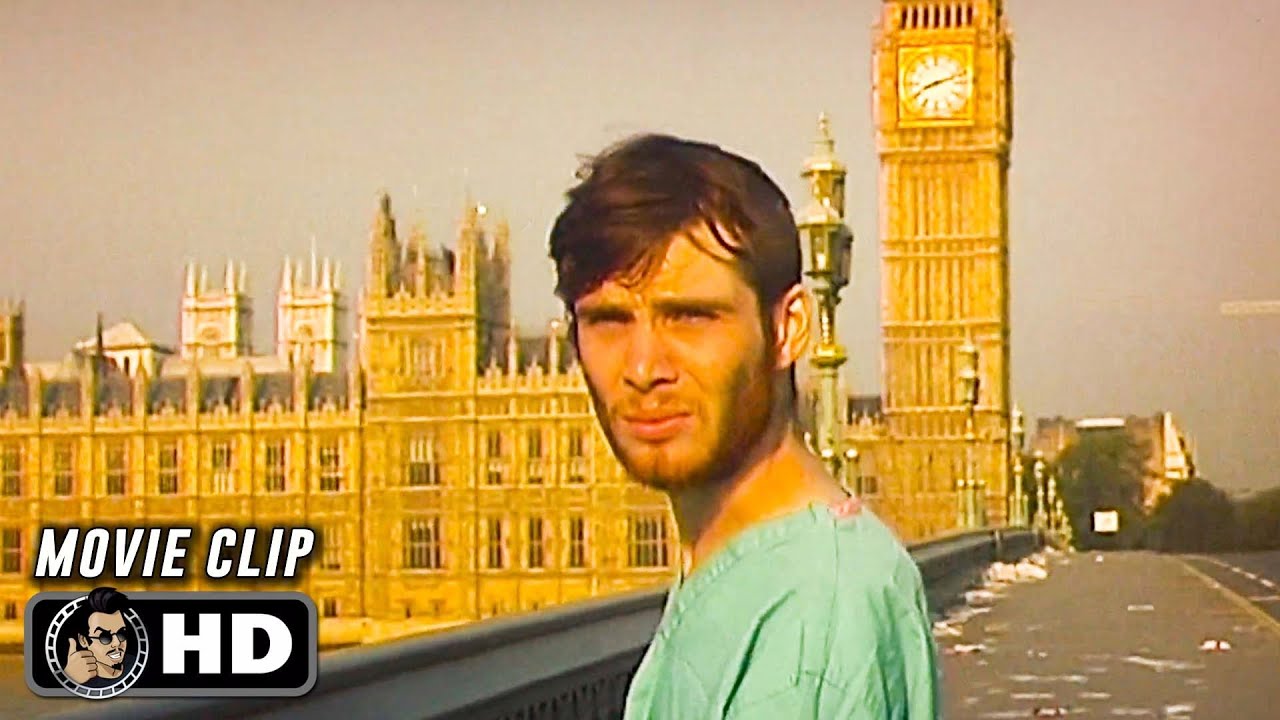
- The Empty City (28 Days Later): The iconic, haunting opening of Jim wandering through a totally deserted London is one of the most powerful scenes in horror. It shows the scale of the loss without a single zombie. The silence is louder than any scream.
- The Suburbs (Shaun of the Dead): This film’s genius is in its observation that modern, drone-like life isn’t that different from being a zombie. Shaun shuffles to the corner store, past the undead, and barely notices. It’s a brilliant joke that’s also a little too real.
The setting constantly reminds the survivors (and the audience) of everything they’ve lost, making their fight for survival that much more desperate.
5. The “Safe Zone” Is Never Safe
The entire plot of most zombie stories is the “Quest for a Safe Place.” The survivors are always pushing toward a rumored sanctuary: a military base, an island, a fortified town.
This is always a lie.
Or, if it’s not a lie, it’s a trap. The “safe” place is where the real horror begins, because it’s where humanity’s worst impulses have had time to fester.
- In Land of the Dead, “Fiddler’s Green” is a fortified high-rise, but it’s just a new, brutal class system, with the rich living in luxury while the poor live in squalor outside.
- In The Walking Dead, Woodbury looks like a perfect, pre-apocalypse town. It’s actually a fascist dictatorship. Terminus, the sanctuary at the end of the tracks? They’re cannibals.
The true horror is the realization that there is no safe place. There is no “going back to normal.” This is the new world, and it is broken.
6. The Cast Must Be a Microcosm of Society
A zombie movie is a social experiment in a bottle. You can’t just have a group of four identical, gun-toting action heroes. That’s boring.
You need a cross-section of humanity. You need the skeptic, the pragmatist, the idealist, the coward, the believer, and the broken. You need people who would never be in the same room in the old world, now forced to rely on each other to survive.
Why? Because it creates conflict.
The tension in Night of the Living Dead comes from the alpha-male Ben clashing with the paranoid, selfish Harry Cooper. The story writes itself. A great zombie flick is a “bottle episode” with the entire human condition trapped inside.
7. The Opening Must Be a Gut-Punch
You have to establish the stakes. Fast. A great zombie movie’s first 10 minutes are critical. They either show the end of the world or the start of it.
- The “Start” (Dawn of the Dead Remake, 2004): This is arguably one of the best horror openings ever. Ana, a nurse, comes home from a long shift. She goes to sleep in a normal world and wakes up in hell. Her neighbor’s kid, her husband… it all goes bad in about three minutes. It’s a blistering, chaotic, and terrifying sprint that perfectly sets the tone for the fast-paced movie to come.
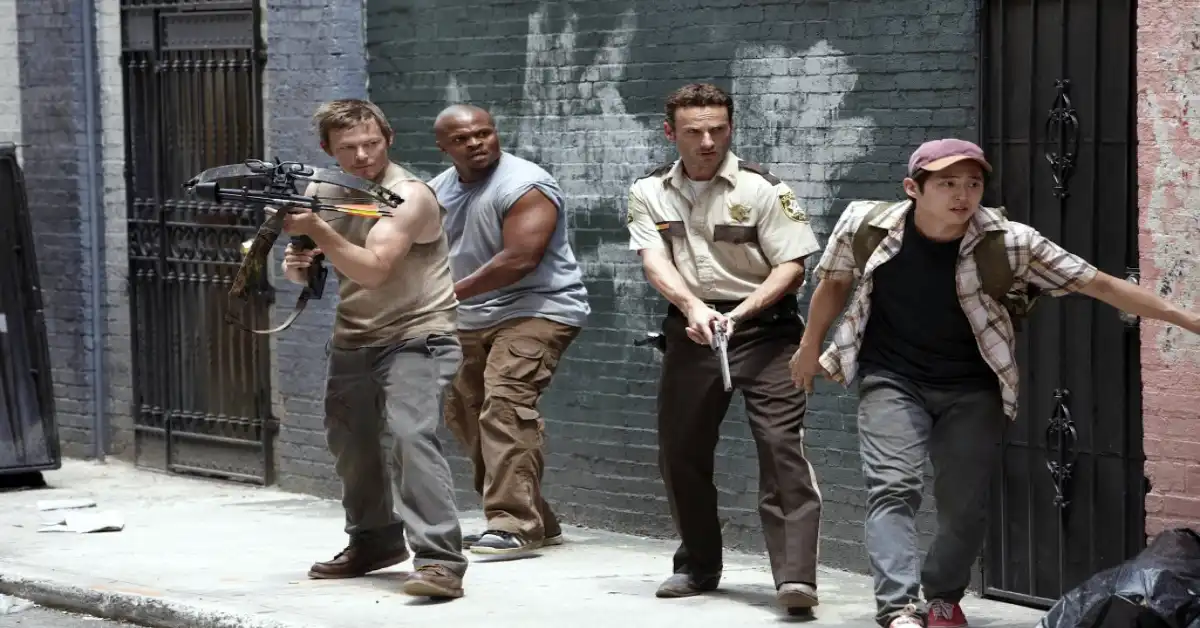
- The “End” (The Walking Dead Pilot): Rick Grimes wakes up from a coma. The hospital is abandoned. The doors are chained. He walks outside… and sees a field of bodies. The silence, the confusion, the slow-dawning horror. It’s not a jump scare; it’s a profound “oh, God” moment.
The opening has to grab the audience by the throat and say, “The world you knew is gone.”
8. You Must Have “That” Scene (The First Bite)
Every zombie story needs the moment. The scene where a beloved character, the moral compass, the one you thought was safe… gets bitten.
This is the genre’s most powerful, gut-wrenching trope. Why? Because it introduces an impossible choice.
- Do you lie about it?
- Do you tell the group and get exiled?
- Do you amputate?
- Do you ask your best friend to kill you?
- Or do you just… wait?
This moment is more tragic than a simple death. It’s a countdown. It’s the ultimate betrayal by the universe. It’s the scene that forces the characters (and the audience) to confront the emotional-versus-logical core of the apocalypse.
9. You Can’t Take Yourself Too Seriously
The concept of reanimated corpses eating people is, at its core, completely absurd. And the best zombie movies know this.
Even the most serious, grim-dark entries need a tiny pressure valve of dark humor. It’s what makes the horror bearable. Shaun of the Dead and Zombieland are full-blown comedies, but they are also fantastic zombie movies because they respect the other rules on this list.
The humor in Dawn of the Dead (1978) is drier, but it’s there. The survivors play-act their old lives. The Hare Krishna zombie gets mobbed. Romero knew that without a little absurdity, the unrelenting bleakness would just be numbing. That wink at the audience says, “Yeah, this is ridiculous… but what if it wasn’t?”
10. The Ending Must Mean Something
A great zombie movie doesn’t just end. It finishes with a statement. After all the blood, guts, and betrayal, what’s the point? The ending is the point.
- The Cynical Ending (Night of the Living Dead): Ben, the sole survivor, makes it through the night. He steps out of the cellar in the morning, exhausted but alive… and is immediately shot in the head by a trigger-happy human posse who “mistakes” him for a zombie. It is a brutal, soul-crushing, and perfect ending. It states, unequivocally, that the real danger was always other people.
- The Hopeful Ending (Train to Busan): After an entire film of sacrificing everything, the only survivors are a pregnant woman and a small child. As they enter a dark tunnel, the soldiers on the other side are about to open fire… until they hear the child singing. They lower their weapons. In a world gone dark, the innocence of a child is the only thing that stops humanity from destroying itself.
- The Ambiguous Ending (28 Days Later): The survivors are in a remote cottage. A plane flies overhead. They’ve spelled “HELLO” on the grass. The plane keeps going. Or does it? It’s a tiny, flickering ember of hope, but the movie doesn’t give you the comfort of a “happily ever after.”
The ending is the filmmaker’s final thesis. Is humanity worth saving? Are we doomed to repeat our mistakes? Or is it all just a pointless, bloody joke?
The best ones don’t give you an easy answer. They just let you sit in the dark and think about it. And that is why we keep coming back.
What’s your number one zombie movie rule? What’s the film that you think does it best (or worst)? Let’s fight about it in the comments.

