

The Plain of Jars Mystery: Why Thousands of Giant Stone Jars Cover This Ancient Site in Laos
Imagine hiking through a lush, misty mountain plateau. Suddenly, you stumble upon a massive stone cup. Then, you see another. Consequently, as the fog clears, thousands of these giant rock cauldrons reveal themselves, scattered across the landscape like forgotten toys of a giant.
Welcome to the Plain of Jars.
Located in the remote highlands of northern Laos, this site presents one of the greatest archaeological puzzles on earth. Over 2,100 megalithic stone vessels dot the Xieng Khouang Plateau. Interestingly, nobody knows exactly who carved them.
Even crazier? Getting close to them can be deadly. Today, we are diving deep into this ancient enigma. Specifically, we will explore the latest scientific breakthroughs, the bizarre local legends, and the tragic modern history that makes this place the world’s most dangerous historical site.
What Exactly Are We Looking At?

Before jumping into the wild theories, let’s look at the hard facts.
The Megalithic Jar Sites (as UNESCO officially calls them) consist of huge, carved stone urns. Furthermore, they aren’t small kitchen containers.
- Massive Dimensions: These cylindrical vessels range from three to ten feet tall.
- Incredible Weight: The largest ones weigh up to a staggering 14 tons.
- Tough Materials: Ancient builders carved them primarily from solid sandstone, though some consist of granite, conglomerate, or calcified coral.
- Vast Spread: Researchers have found them clustered across more than 90 different locations. Sometimes a spot has just one lonely rock. Meanwhile, other valleys hold over 400 of them crammed together.
Did they have lids?
Yes, but rarely. Archaeologists have discovered flat stone discs nearby, suggesting most pots originally had covers. However, time, weather, and human interference have stripped them away. Currently, the majority sit wide open to the sky, slowly filling with rainwater and dead leaves.
The Giant Whiskey Legend vs. Hard Science

If you ask a local villager where these massive structures came from, you won’t hear about ancient architects. Instead, you will get a legendary tale about booze.
The Myth of Khun Cheung’s Victory Party
According to local folklore, a mythical race of giants once roamed these hills. A prominent giant king named Khun Cheung allegedly fought a grueling, victorious war against his enemies. Therefore, to celebrate, he needed to throw an epic party.
Naturally, a giant needs a giant drink.
The legend claims these massive stone cups were crafted to brew vast quantities of lau hai, a traditional rice wine. Basically, locals believed the plain was just the aftermath of a massive, prehistoric frat party.
What Do Archaeologists Say?
Science paints a much darker, yet equally fascinating, picture.
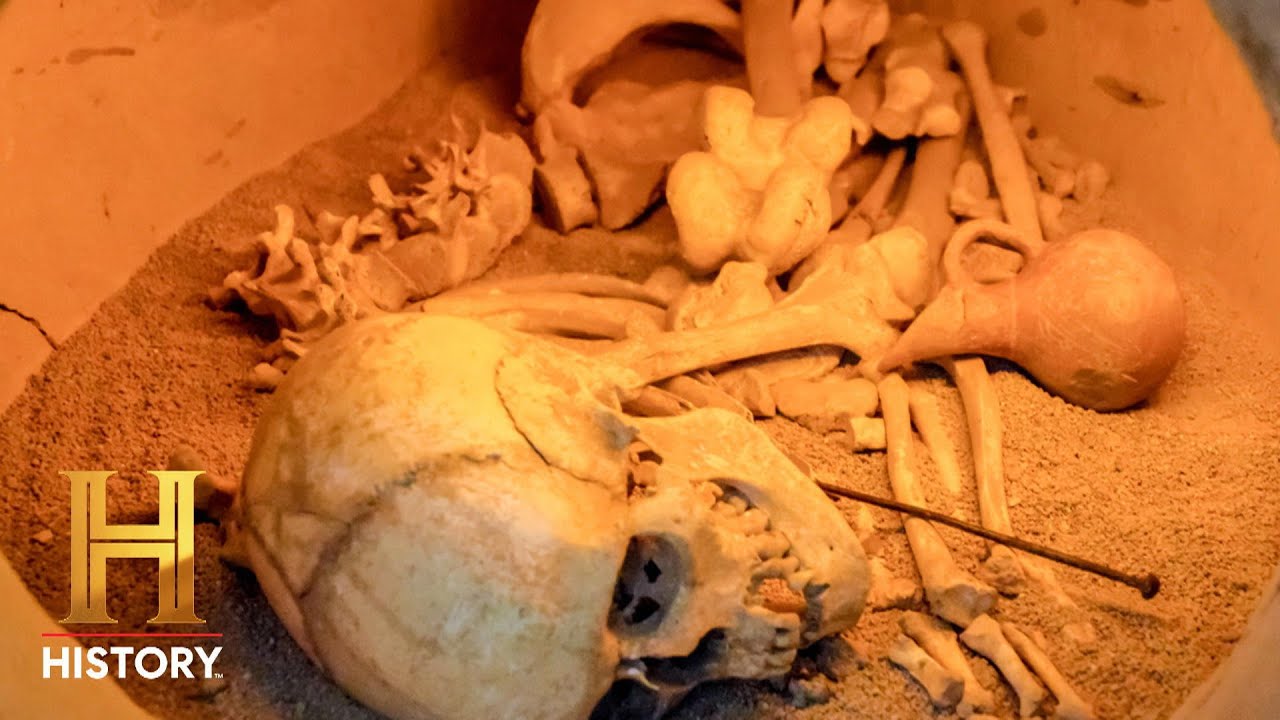
French researcher Madeleine Colani first investigated the area in the 1930s. She dragged her equipment through dense jungles and eventually found human teeth, burned bones, and glass beads inside the vessels. Consequently, she theorized they were ancient mortuary urns.
Decades later, modern science proved her right.
These weren’t ancient beer kegs. Rather, they were part of a complex, gruesome burial ritual. Specifically, researchers believe the dead were placed inside these rock containers to decompose. Once the harsh tropical elements stripped away the flesh, families would collect the clean bones. Ultimately, they buried these remains in the ground nearby.
Solving the Timeline: How Old Are They?
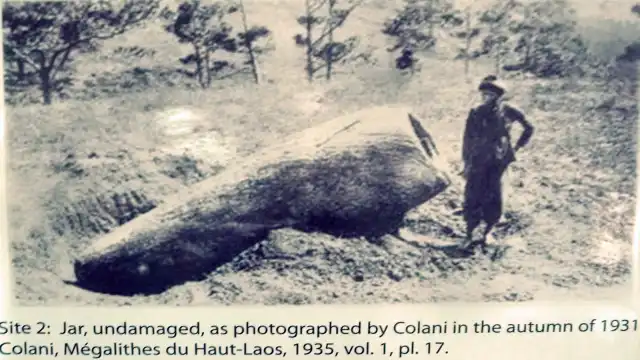
For decades, pinpointing their exact age was practically impossible. Stone cannot be carbon dated because it was never alive. Thus, scientists were essentially guessing.
Recently, however, everything changed.
In 2021, a multinational team from the Australian National University (ANU) cracked the code. Lead researchers Dr. Louise Shewan and Dr. Dougald O’Reilly utilized a mind boggling technique called Optically Stimulated Luminescence (OSL).
Wait, what is OSL?
Think of it as a sunlight memory test. This method measures the last time the quartz minerals in the dirt directly beneath the jar saw sunlight. By examining the soil crushed underneath the heavy rock, scientists can tell exactly when the object was dropped there.
The results shocked everyone.
The OSL tests revealed the jars were placed on the landscape between 1240 BC and 660 BC. That makes them over 3,000 years old!
Yet, the plot thickens.
Radiocarbon dating of the human skeletons buried around the vessels showed the bones date to the 9th to 13th centuries AD. Therefore, this landscape maintained a sacred, spooky significance for over two thousand years. Different civilizations kept returning to this exact spot to bury their loved ones.
The World’s Most Dangerous Archaeological Site
Now, we must address the terrifying reality of visiting this location today. Why did it take until the 21st century for archaeologists to seriously study these artifacts?
Because the ground is rigged to blow.
The Legacy of the Secret War
Between 1964 and 1973, the United States fought a “Secret War” in Laos. The goal was to destroy the Ho Chi Minh Trail, a crucial supply route for North Vietnamese forces.

Consequently, the US Air Force dropped a staggering 270 million bombs on the country. To put that in perspective, a B-52 bomber dropped a payload every eight minutes, 24 hours a day, for nine straight years.
Xieng Khouang Province took the heaviest beating. Sadly, up to 30% of these explosives failed to detonate on impact. These unexploded ordnances (UXO), locally known as “bombies,” still litter the soil.
Even today, these dormant killers claim the lives of innocent farmers and children. Naturally, digging for ancient artifacts in a literal minefield is a terrible idea. Two brave archaeologists did limited excavations in the 1990s without getting blown up, but as one researcher noted, “that’s just luck”.
Enter the Mines Advisory Group (MAG)
Thankfully, heroes stepped in. The Mines Advisory Group (MAG), an international NGO, has spent decades painstakingly clearing explosives from the area.
If you visit today, you will notice small colored markers on the ground.
- Red Markers: Danger. Do not step here.
- White Markers: Cleared and safe.
You absolutely must stay exactly between the white bricks. Wandering off the path for a cool Instagram photo could literally cost your life.
The Engineering Mystery: Moving 14-Ton Rocks
Let’s pivot back to the ancient builders. How did a prehistoric society move 14-ton boulders across a mountainous landscape without wheels or modern cranes?
First, scientists needed to find the source.
Using a highly advanced chemical analysis called U/Pb zircon dating, geologists matched the sandstone of the carved pots at Site 1 to a specific quarry.
The quarry is roughly 8 kilometers (5 miles) away.
Moving a 28,000 pound object five miles over rough, uneven terrain is no small feat. Historians assume the builders used wooden rollers, sledges, and hundreds of men pulling ropes. However, we lack physical evidence of these tools. Furthermore, no evidence of ancient housing exists near the sites. It seems the creators lived elsewhere, traveled here solely to build this massive cemetery, and vanished into the fog of history.
A Newly Crowned UNESCO World Heritage Site
After decades of lobbying, clearing bombs, and conducting safe research, Laos finally secured a major victory.
In July 2019, the United Nations officially designated the Plain of Jars as a UNESCO World Heritage Site. It became the country’s third recognized location, following the historic town of Luang Prabang and the Vat Phou temple complex.
This prestigious label brought vital funding. Moreover, it shines a global spotlight on the desperate need to clear the remaining UXO from the surrounding villages. Tourism is steadily growing, bringing much needed income to the local economy.

How to Visit the Plain of Jars Today
Ready to pack your bags? If you want to witness this marvel yourself, here is how you do it safely.
- Base Camp: You will need to travel to Phonsavan, the dusty, charming capital of Xieng Khouang Province.
- The Main Sites: Out of the 90+ locations, only a handful are completely cleared of bombs and open to tourists.
- Site 1 (Ban Ang): The most popular and accessible. It features over 300 jars, including the largest one in existence.
- Site 2 (Hai Hin Phou Salato): Features two distinct hills divided by a road. It offers a quieter, deeply atmospheric experience.
- Site 3 (Hai Hin Lat Khai): Requires a scenic hike through active farmland.
- Hire a Guide: While you can rent a moped and go solo, hiring a local guide is highly recommended. Not only do they keep you on the safe paths, but your money directly supports a community still recovering from the shadows of war.
What Should You Bring?
Expect unpredictable weather. The plateau sits at a high elevation, meaning mornings are surprisingly chilly, while afternoons can be blisteringly hot. Additionally, wear sturdy hiking boots. You will be walking through tall grass and uneven dirt.
Finally, bring a deep sense of respect. You are standing in a prehistoric graveyard that doubles as a modern tragedy zone. It is a place of profound silence, broken only by the wind rustling through the trees.
Puzzle That Refuses to Be Solved
The Plain of Jars remains one of humanity’s most captivating secrets.
We now know when they were placed there. Furthermore, we know how they were used. Yet, the biggest question still hangs in the air: Who were the brilliant, dedicated people who carved them?
Perhaps we will never know. Indeed, the ancient jungle keeps its secrets closely guarded.
In the meantime, these silent stone sentinels continue to watch over the Laos highlands, outlasting empires, surviving relentless bombings, and waiting for the next generation of explorers.
Frequently Asked Questions
Are there still human bones visible inside the stone vessels today?
Surprisingly, modern visitors will not spot any ancient skeletons resting inside these open pots. Consequently, opportunistic grave robbers and historical archaeological teams cleared out the visible relics decades ago.
Is it actually safe to walk off the trail at Site 3 right now?
Absolutely not, because unexploded ordnance heavily infests the surrounding uncleared jungle patches. Therefore, wandering even a few feet past the white MAG markers could trigger a deadly leftover cluster bomb.
Can tourists visit the Xieng Khouang plateau during the heavy rainy season?
Technically yes, but intensely muddy roads make reaching the remote valley locations incredibly frustrating. Furthermore, heavy tropical downpours frequently flood the massive stone cups, completely obscuring their fascinating interior details.
Why couldn’t scientists just use standard carbon dating on the giant rocks?
Essentially, radiocarbon technology only analyzes organic materials that once actively lived and breathed. Thus, frustrated experts had to innovatively test the crushed dirt buried underneath the sandstone instead of the artifact itself.
Do local Laotian villagers currently leave offerings at these megaliths?
Interestingly, some older provincial residents still passionately honor the mythical King Khun Cheung by leaving small tokens. Conversely, younger generations generally view the area as a protected heritage zone rather than an active spiritual shrine.
Does the thrill of exploring the world’s most dangerous archaeological site excite you, or does the thought of unexploded bombs keep you away? Drop a comment below and let us know if you would add the Plain of Jars to your travel bucket list! Don’t forget to share this article with your favorite travel buddy.
Sources help:
- worldheritagesite.org
- https://whc.unesco.org/en/list/1587/
- https://archaeology.org/issues/online/features/plain-of-jars/
- https://journals.plos.org/plosone/article?id=10.1371/journal.pone.0247167
- https://en.wikipedia.org/wiki/Plain_of_Jars

