

BBC spaghetti tree hoax: why the 1957 april fools’ day prank became famous
Imagine tuning into your favorite, ultra serious news program. Suddenly, the most trusted journalist in the country starts talking about farmers harvesting fresh pasta from actual trees. Sounds completely ridiculous, right? Well, back on April 1, 1957, millions of British viewers swallowed this exact story hook, line, and sinker. In fact, the BBC spaghetti tree hoax remains one of the most legendary media pranks in human history.
Consequently, this strange event leaves us with some big questions. How did a respected network pull off such a massive deception? Furthermore, why did so many sensible people actually believe that noodles grew on branches? Today, we are going to dive deep into the fascinating, hilarious history of the Swiss spaghetti harvest. Grab a bowl of your favorite pasta, and let’s unravel this incredible story together.
Key takeaways
- The Mastermind: BBC cameraman Charles de Jaeger created the prank, inspired by a childhood teacher’s insult.
- The Voice of Trust: Legendary broadcaster Richard Dimbleby narrated the segment on the respected news show Panorama.
- The Context: In 1950s Britain, pasta was considered an exotic delicacy, usually found squished inside a tin can.
- The Reaction: Hundreds of viewers called the BBC begging for advice on how to grow their very own spaghetti trees.
- The Ultimate Advice: The network cheekily told callers to “place a sprig of spaghetti in a tin of tomato sauce and hope for the best”.
1950s British food culture

To truly understand why this prank worked, you have to step into a time machine. Specifically, we need to visit the United Kingdom in the late 1950s. At that time, the culinary landscape looked wildly different than it does today.
Mystery of pasta
Believe it or not, spaghetti was not a normal pantry staple in 1957. Food rationing from World War II had only ended a few years prior. Consequently, most British citizens were used to eating highly traditional, localized diets. They consumed plenty of meat, potatoes, and boiled vegetables.
However, Mediterranean food was incredibly rare. For the average working class family, “spaghetti” meant a weird, soft substance soaking in sugary tomato sauce inside a tin can. Authentic Italian restaurants hardly existed outside of tiny immigrant neighborhoods in London. Therefore, the general public possessed absolutely zero knowledge regarding how pasta was actually made.
Trust in “Auntie Beeb”
Meanwhile, television was still a relatively new and magical invention. About 44% of British homes owned a TV set, and they overwhelmingly trusted the British Broadcasting Corporation (BBC). Affectionately known as “Auntie Beeb,” the network was considered the ultimate authority on facts. If the BBC said something was true, you simply did not question it.
Panorama was their flagship current affairs program. Naturally, it tackled serious, heavy hitting topics. Furthermore, it was anchored by Richard Dimbleby. He was the Walter Cronkite of Britain, a man possessing immense gravitas and unimpeachable integrity. Ultimately, his involvement was the secret ingredient that made the entire joke land perfectly.

Mastermind behind the spaghetti tree hoax
Every great prank needs a visionary. In this case, the genius was an Austrian born BBC cameraman named Charles de Jaeger. Known around the office as a notorious practical joker, he had dreamed of pulling off a massive stunt for years.
A childhood insult sparks genius
Interestingly, the initial idea stemmed from a rather insulting childhood memory. While attending school in Vienna, de Jaeger had a particularly grumpy teacher. Whenever the class acted foolishly, the teacher would scold them by saying, “Boys, you are so stupid, you’d believe me if I told you that spaghetti grew on trees”.
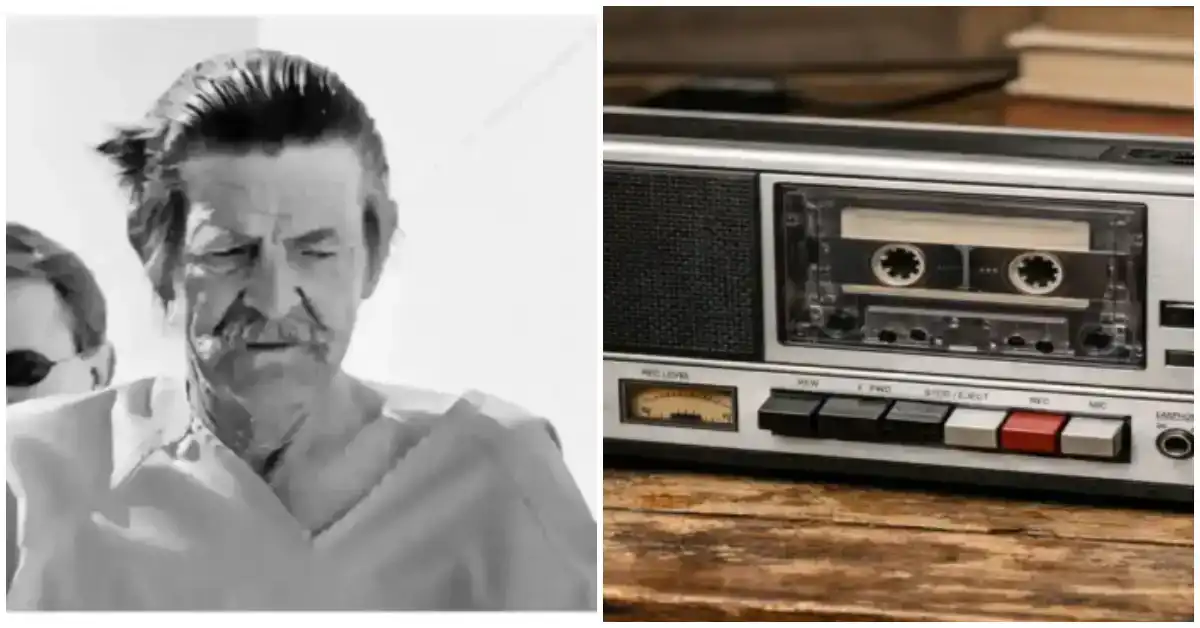
Decades later, that throwaway insult morphed into sheer television gold. Since April 1 happened to fall on a Monday in 1957, it perfectly aligned with Panorama’s regular broadcast schedule. De Jaeger pitched his wild idea to Michael Peacock, the show’s editor. Surprisingly, Peacock loved it. He handed the cameraman a tiny budget of £100 and told him to make it happen.
Secret filming process
Shooting the footage wasn’t exactly a walk in the park. Originally, de Jaeger traveled to a picturesque hotel in Castagnola, Switzerland, right near the shores of Lake Lugano. He brought 20 pounds of uncooked homemade pasta and attempted to hang it from the branches of laurel trees.
Unfortunately, he quickly hit a major snag. The raw pasta kept drying out and blowing away in the wind. Next, he tried cooking it first. However, the wet noodles became incredibly slippery and just slid right off the branches into the dirt. Eventually, he found the perfect middle ground by wrapping uncooked pasta in damp cloths. This kept the strands flexible enough to drape over the trees beautifully.
To complete the illusion, he hired several local Swiss women. Dressed in traditional peasant clothing, they climbed ladders and delicately “harvested” the noodles into woven wicker baskets.
The Broadcast: three minutes of pure comedy magic
When Monday evening arrived, roughly eight million people tuned in to watch Panorama. After delivering a standard slate of heavy, serious news, Richard Dimbleby looked into the camera. Without cracking a single smile, he introduced a segment on the annual “Swiss spaghetti harvest”.
A masterclass in deadpan delivery
For three glorious minutes, the British public watched seemingly authentic documentary footage. As beautiful Swiss women plucked strands of pasta from trees, Dimbleby provided a deeply poetic, utterly straight faced voiceover.
He confidently explained several “facts” about the agricultural process:
- The Weather: He noted that a mild winter had led to an exceptionally heavy crop this year.
- The Spaghetti Weevil: He claimed that farmers were thrilled because the dreaded “spaghetti weevil” had been nearly eradicated.
- The Perfect Length: Have you ever wondered why all spaghetti is the exact same length? According to Dimbleby, this was the result of “years of patient endeavor by plant breeders”.
Finally, the segment ended with the happy farmers sitting around a table, enjoying a freshly cooked bowl of their own harvest. Dimbleby closed the show by saying, “Now we say goodnight, on this first day of April”. He heavily emphasized the date, hoping people would catch the hint.
Spoiler alert: Most of them didn’t.

The Aftermath: britain goes wild for pasta trees
As soon as the broadcast finished, all hell broke loose at the BBC headquarters. The network’s switchboards lit up like a Christmas tree. Hundreds of frantic viewers called in, demanding more information.
Hilarious phone calls
What exactly were these people asking? Well, the reactions generally fell into three distinct camps:
- The Skeptics: Some folks called to angrily complain. They knew pasta was made from flour and water, and they were furious that a serious news program would air such nonsense.
- The Arguers: Many callers just wanted to settle domestic disputes. Husbands argued that the trees must be real because the great Richard Dimbleby said so. Meanwhile, their wives completely disagreed.
- The Gardeners: This was the largest, funniest group. Countless people genuinely wanted to know where they could buy spaghetti seeds or saplings to start their own backyard pasta orchards.
Even the boss was fooled!
Perhaps the most incredible part of the whole ordeal involves the BBC’s own Director General, Sir Ian Jacob. That’s right, the head honcho of the entire network fell for the prank! He and his wife watched the broadcast at home and were genuinely astonished.
Consequently, they grabbed their Encyclopedia Britannica to look up spaghetti agriculture. Because pasta was still so obscure, the encyclopedia didn’t even have a dedicated entry for it yet. Eventually, Sir Ian realized he had been duped by his own employees.
BBC’s perfect response
So, how did the telephone operators handle the flood of eager gardeners? Instead of breaking character, the BBC decided to double down on the joke. Management instructed their staff to give a highly specific, totally ridiculous piece of gardening advice.
Whenever someone asked how to grow a pasta tree, the operator politely replied:
“Place a sprig of spaghetti in a tin of tomato sauce and hope for the best.”
Additionally, the Swiss National Tourist Office in London decided to join the fun. When confused Brits called them, the tourist office patiently explained that Switzerland grew spaghetti verticalis. Conversely, they claimed the Italians grew spaghetti horizontalis. It was a masterclass in committed trolling.
Why is this prank still famous today?
Decades have passed since that fateful broadcast. Yet, the BBC spaghetti tree hoax remains a towering achievement in television history. In fact, CNN later declared it “the biggest hoax that any reputable news establishment ever pulled”.
But why do we still talk about it? Why does this specific joke endure while thousands of other April Fools pranks are instantly forgotten?
Psychology of trust
Primarily, the hoax exposed the sheer power of media authority. In 1957, the public was heavily conditioned to accept anything presented in a formal, documentary format. Because Richard Dimbleby spoke with absolute conviction, people bypassed their own critical thinking skills. They assumed a trusted source would never lie to them.
Today, we have Google and Wikipedia constantly at our fingertips. If a news anchor told us marshmallows grew on bushes, we would fact check it within five seconds. However, in the 1950s, the TV anchor was the search engine. That inherent trust made the illusion incredibly powerful.
Bridging news and entertainment
Furthermore, this event drastically changed the landscape of broadcasting. Before 1957, television news was incredibly stiff, rigid, and strictly serious. The idea that journalists could possess a sense of humor was practically scandalous.
By pulling off this stunt, the BBC proved that news organizations didn’t have to be completely devoid of joy. They safely blurred the lines between hard journalism and lighthearted entertainment. Consequently, they paved the way for modern satirical news shows. Without the spaghetti tree, we might never have gotten The Daily Show or Last Week Tonight.
Delicious slice of history
Ultimately, the 1957 BBC spaghetti tree hoax is so much more than a silly April Fools Day gag. It perfectly encapsulates a unique moment in time. It highlights a period when the world felt a little bit smaller, food was wildly localized, and a single television broadcast could genuinely captivate an entire nation.
Charles de Jaeger’s brilliant vision, combined with Richard Dimbleby’s flawless execution, resulted in three minutes of absolute perfection. They didn’t just trick the public; they genuinely delighted them. They transformed a boring, rainy Monday into a shared cultural experience that people are still laughing about over half a century later.
So, the next time you sit down to enjoy a steaming plate of carbonara or bolognese, take a second to smile. Look closely at those long, perfectly uniform noodles. Then, maybe whisper a quiet “thank you” to all those hardworking Swiss farmers, tirelessly battling the spaghetti weevil to bring you dinner.
Did this incredible piece of history blow your mind? We would love to hear your thoughts! Have you ever fallen for a massive media hoax, or do you know someone who has? Drop a comment below, and don’t forget to share this article with your friends to see if they would have believed the legendary spaghetti tree!
Sources help:
- https://en.wikipedia.org/wiki/Spaghetti-tree_hoax
- https://en.wikipedia.org/wiki/Charles_de_Jaeger

