

Why is it called Good Friday? meaning, history, and holy week traditions
Have you ever looked at a calendar and wondered about the Friday right before Easter? Honestly, it marks one of the darkest, most brutal events in Christian history. Yet, we celebrate it with an incredibly positive name. Consequently, this strange paradox leaves many folks scratching their heads. If Jesus suffered a horrific execution, why on earth do we call it Good Friday?
Actually, this common question has a fascinating answer rooted in ancient linguistics, history, and deep spiritual meaning. Today, we are going to explore the exact origins of this holy day. Furthermore, we will unpack its rich history and travel the globe to see how different cultures honor Holy Week.
Key takeaways
- Linguistic Roots: In Old English, the word “good” originally meant “holy” or “sacred”. Therefore, the day literally translates to “Holy Friday.”
- Theological Meaning: Christians believe Jesus Christ’s sacrifice conquered sin and death, which ultimately brought profound “good” to humanity.
- Global Traditions: Observances range from silent fasting in Europe to dramatic reenactments in the Philippines and Mexico.
- Key Timing: Modern church services often occur between noon and 3:00 PM, reflecting the biblical hours of darkness during the crucifixion.
Why is it called good friday?

At first glance, the name sounds like a massive contradiction. Specifically, if someone watched a historically accurate movie about the crucifixion, they would likely flinch at the gruesome details. Naturally, calling such a day “good” feels completely backward. However, the quirks of language evolution explain this perfectly.
The “Holy” connection
Historically, English words shift in meaning over centuries. According to linguistics experts, the word “good” formerly acted as a synonym for “holy”. Thus, when early church leaders named the day, they were actually declaring it a sacred time. For example, Dr. James Holt, a religious education expert, notes that we still see this archaic usage when people refer to the Bible as the “Good Book”. By that same logic, Good Friday simply means Holy Friday.
“God’s Friday” theory
Meanwhile, a popular alternative theory constantly floats around the internet. Some folks believe the name naturally evolved from “God’s Friday.” Certainly, this sounds highly plausible on the surface. Yet, most etymologists reject this idea because there is no historical evidence linking the two words in this specific context. Instead, the academic consensus firmly points back to the “holy” translation.
What do other languages call it?
Interestingly, English is somewhat unique in using this specific positive adjective. If we look across international borders, other cultures use much more literal titles.
- Germany: Germans traditionally refer to it as Karfreitag, which translates to “Sorrowful Friday”.
- Romance Languages: In Spanish, it is known as Viernes Santo (Holy Friday).
- Eastern Orthodox: Many Eastern church traditions boldly refer to it as “Great and Holy Friday”.
Ultimately, regardless of the exact translation, the focus remains entirely on reverence and solemnity.
Deep history and meaning of good friday
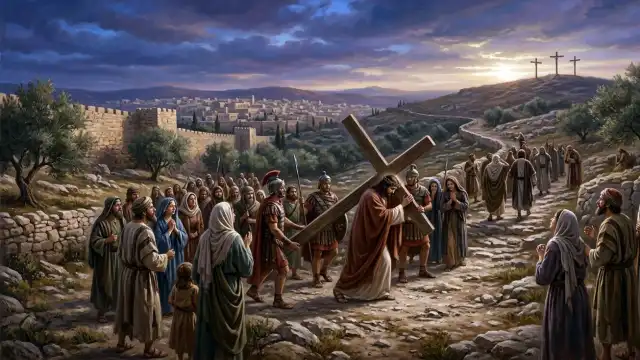
Now that we understand the name, we must deeply examine the actual history. Biblically speaking, this day commemorates the execution of Jesus Christ at Calvary, also known as Golgotha. From a religious standpoint, this single event serves as the ultimate turning point in human history.
Christian perspective
Why do believers find immense comfort in such a tragic event? Essentially, Christian theology teaches that Jesus willingly traded places with humanity. Because humans were hopelessly flawed by sin, God required a perfect sacrifice to bridge the spiritual gap. Consequently, Jesus took that heavy punishment upon himself. Although the actual Friday was filled with physical agony, the resulting salvation was unimaginably good for mankind. As a result, the deep sorrow of Friday perfectly sets the stage for the massive triumph of Easter Sunday.
Crucial part of the paschal triduum
Furthermore, Good Friday does not stand alone on the calendar. In fact, it serves as the middle pillar of the Paschal Triduum. This sacred three day period begins on Maundy Thursday (remembering the Last Supper) and concludes on Easter Sunday. During these intense 72 hours, the church transitions from intimate fellowship to profound mourning, and finally, into joyous celebration.
Shifting dates
Curiously, you cannot simply circle a permanent date on your wall calendar for this holiday. Because Easter strictly follows a complex lunar schedule, the exact day moves every single year. For instance, in 2025, Western Christians will observe it on April 18. Looking ahead to 2026, the date shifts earlier to April 3 for Western traditions, while Eastern Orthodox churches will mark it a week later on April 10.
Biblical timeline of the first Good Friday
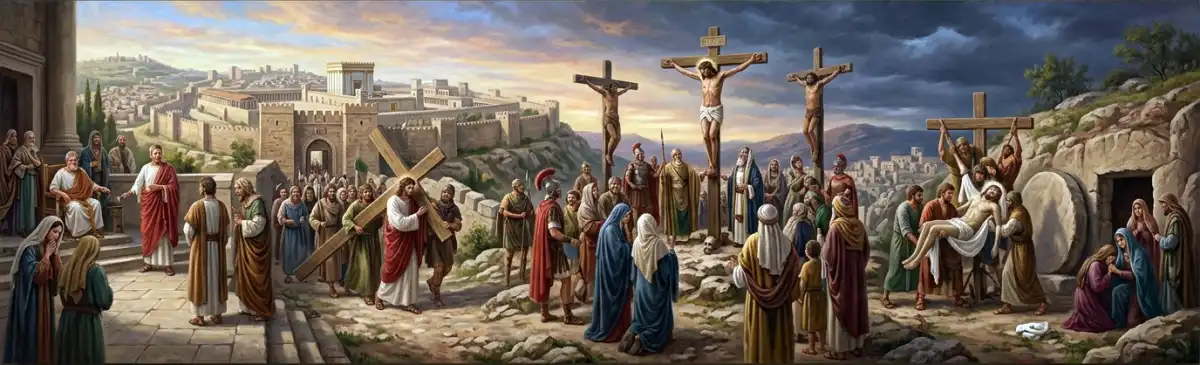
To truly grasp the weight of these global traditions, one must understand the timeline of the original day. According to biblical accounts, the horrific events unfolded with dizzying speed.
- Early Morning (Dawn): Jesus is quickly brought before Pontius Pilate, the Roman governor. Despite finding no valid legal charges, Pilate bows to angry political pressure. Consequently, he sentences Jesus to death by crucifixion.
- Mid-Morning (Around 9:00 AM): Roman soldiers ruthlessly mock and beat Jesus. Following this, they force him to carry his own heavy wooden cross toward Golgotha. Because he is physically exhausted from the floggings, a bystander named Simon of Cyrene is pulled from the crowd to help him.
- Noon to 3:00 PM: Jesus is brutally nailed to the cross. Suddenly, the Gospels record that a supernatural, eerie darkness falls over the entire land. During these agonizing hours, Jesus speaks his famous “Seven Last Words.”
- Late Afternoon: Jesus breathes his final breath. Immediately, the massive, heavy curtain in the Jewish Temple miraculously tears in two from top to bottom. Soon after, his devastated followers hastily take down his body and place it in a nearby tomb before the Jewish Sabbath begins at sundown.
This blow by blow historical account explains exactly why modern church services focus so heavily on the specific hours of noon to 3:00 PM. Moreover, it highlights the intense emotional rollercoaster that his early disciples experienced, moving rapidly from absolute confusion to crushing despair.
Holy week traditions
Because Christianity spans the entire globe, modern observances vary wildly. Depending on where you travel, you might encounter absolute, pin drop silence or incredibly loud, theatrical street processions. Let’s explore how different cultures respectfully honor this sacred day.
1. United Kingdom and Europe
In the UK, the overall tone stays distinctly serene and reflective. Typically, families gather to eat warm hot cross buns. These sweet, spiced pastries feature a distinct frosting cross on top, powerfully symbolizing the crucifixion. Meanwhile, in Germany, strict fasting rules apply. In addition to attending quiet church services, many German communities hold completely silent street processions to physically embody their grief.

2. Latin America and Mexico
Conversely, Latin American traditions heavily embrace intense visual drama. In Mexico, massive crowds gather to witness the Via Crucis (Way of the Cross). During these elaborate events, dedicated actors fully reenact the passion of Christ. Entire neighborhoods quietly watch as a man portraying Jesus carries a heavy wooden cross through the cobblestone streets. Similarly, Brazil hosts large scale passion plays that draw thousands of spectators. Sometimes, incredibly devout individuals even carry their own crosses or perform literal acts of penance to deeply connect with Christ’s suffering.
3. Philippines
Perhaps no country matches the sheer emotional intensity of the Philippines during Holy Week. Here, the local community procession is widely known as the Senakulo. Participants meticulously dress as Roman soldiers, biblical figures, and mourning disciples. Often, the vivid reenactments become so realistic that they blur the lines between theatrical performance and profound spiritual devotion. Truly, it is a sight that leaves a lasting, emotional impact on anyone who witnesses it.
4. India and Asia
Moving over to India, the focus shifts safely back to solemn indoor church rituals. Specifically, many Indian congregations hold special three hour services starting exactly at noon. Why noon? As mentioned earlier, darkness covered the land from noon until 3:00 PM when Jesus finally passed away. To visually symbolize this, churches gradually dim their interior lights throughout the service, eventually extinguishing them completely to represent his tragic death.
In China, where Christians represent a religious minority, observances feel much more private and intimate. Large public religious gatherings are quite rare. Instead, believers typically gather in private house churches for quiet introspection and scripture reading. Meanwhile, in Malaysia, states like Sabah and Sarawak officially recognize the day as a public holiday, allowing working families to attend peaceful morning worship services together.
5. Africa
Finally, African observances beautifully blend solemnity with vibrant local culture. In nations like Nigeria and Kenya, believers happily gather for incredibly long, immersive church services. Afterward, they often incorporate traditional drumming and call and response singing. Though the mood certainly remains respectful, the rich musical heritage adds a unique cultural twist to the sadness. Following the services, communities usually share a massive communal meal to foster unity.
Core rituals: Fasting, Prayer, and the Cross
Despite these vast cultural differences across continents, a few universal threads tie everyone together perfectly.
Dietary rules: why fish instead of meat?
Historically, abstaining from warm blooded meat on Fridays is a year round Catholic tradition, but it becomes especially strict on Good Friday. Why fish? Since biblical times, fish have actively served as a symbol of the Christian faith. Moreover, fish were traditionally considered an everyday, inexpensive food of the common people. By intentionally choosing a simple fish meal over a rich, expensive cut of beef, believers actively practice humility. Consequently, this simple dietary switch serves as a physical, rumbling stomach reminder of the solemnity of the day.

Protestant vs. Catholic observances
While Catholics lean heavily into visual rituals like the Veneration of the Cross, Protestant observances sometimes look a bit different. Often, Protestant churches heavily emphasize the spoken word and communal singing over physical symbols. For instance, a Methodist or Baptist service might strip the church altar completely bare and focus entirely on preaching the “Seven Last Words.” Despite these distinct stylistic differences, the core message remains totally identical. Ultimately, all denominations use the day to heavily reflect on the immense cost of spiritual redemption.
The stations of the cross
Additionally, the “Stations of the Cross” provide a remarkably powerful visual aid for Catholics and Anglicans. During this ritual, worshippers slowly walk past a series of 14 images or statues. Each station depicts a specific, heartbreaking moment from Jesus’s final hours. By physically moving from station to station, believers actively participate in the painful journey to Golgotha.
Modern observances
Today, our fast paced, digital world incredibly often distracts us from deep spiritual reflection. Consequently, truly observing this holy day requires serious, intentional effort. How can a modern person connect with an ancient, bloody tradition?
First, you might deeply consider stepping away from your screens. Because the original historical events involved deep suffering and isolation, turning off your phone for a few hours can profoundly shift your mental space. Second, you could quietly practice simple acts of charity. Since Jesus reportedly gave everything for humanity, donating your time or resources perfectly mirrors that selfless, sacrificial love.
Interestingly, some modern folks now focus heavily on eco conscious observances. For example, they might spend the afternoon quietly walking in nature, actively reflecting on the beauty of creation that God fought to redeem. No matter how you choose to spend it, the vital key is absolute mindfulness.
Finding the good in the grief
In conclusion, the linguistic mystery of the name “Good Friday” totally makes sense once you finally dig into the history. Though it simply began as an Old English synonym for “holy,” the title perfectly captures the ultimate Christian paradox. Yes, the historical day itself was horrific, brutal, and drenched in immense sorrow. However, the spiritual victory it achieved was undeniably, permanently good.
From the silent, candlelit altars of India to the vibrant, emotional streets of Mexico, millions of people still pause annually to remember this sacrifice. They fast, they pray, and they reflect. Believers eagerly eat hot cross buns and slowly walk the Stations of the Cross. Through it all, they tightly hold onto the promise that the story does not actually end in a dark tomb. After all, Sunday is coming.
If you found this explanation helpful, please share this article with a friend who always asks curious questions! Also, consider quietly checking out a local Good Friday service this year to personally experience these solemn, beautiful traditions for yourself.

