

Staying Inside vs. Outside Safari Parks: Costs, Convenience & Wildlife Access
Booking your first safari is an absolute thrill until you hit the accommodation page. Suddenly, you are staring at a map bisected by a random imaginary line. You face an immediate fork in the road: do you book a lodge directly inside the park boundaries, or do you stay in a gateway town just outside?
It seems like a straightforward choice based on your wallet. But is it really?
Choosing where to lay your head changes your entire vacation rhythm, from your morning coffee to your chances of spotting a rare leopard. Look at the real, raw trade-offs between cost, convenience, and pure wildlife access.
At a glance
- The Gate Trap: Staying outside saves you cash on rooms but costs you precious morning tracking time due to rigid gate hours and entry queues.
- The Cost Spectrum: In-park lodging ranges from ultra-budget state-run campsites to multi-thousand-dollar private concessions.
- The Boundary Myth: Animals do not read maps. Fences are rare in massive African ecosystems, meaning wildlife routinely crosses “outside” lines.
- The Hybrid Sweet Spot: Splitting your trip between an immersive in-park stay and a comfortable out-of-park lodge often delivers the best value.
The Myth of the Hard Boundary: Do Animals Care About Maps?
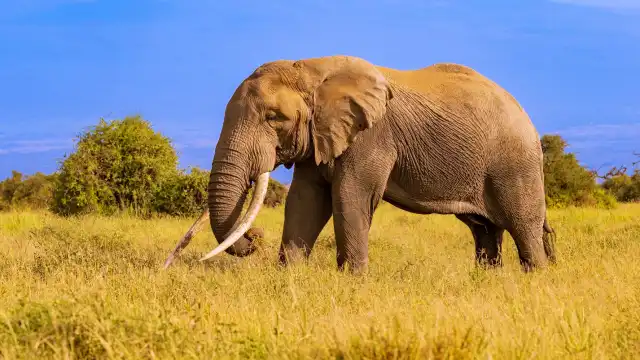
First-time travelers usually picture safari parks like mega-zoos. They imagine a giant, reinforced fence separating the wild animals from the human hotels. In reality, massive ecosystems like Kenya’s Maasai Mara or Tanzania’s Serengeti do not work that way at all. Fences are largely non-existent.
Elephants walk where they please. Lions hunt where the prey wanders. A pride of lions does not check its GPS before chasing an impala across an imaginary bureaucratic line.
   [THE OPEN ECOSYSTEM MATRIX]
               │
   National Park Core (State Managed)
               │
        ◄── NO FENCES ──►
               │
   Surrounding Conservancies & Private Land
This open layout means that staying “outside” the formal park boundaries doesn’t automatically mean you are missing out on animals. Guests staying at properties in private conservancies bordering the main reserves regularly report zebras grazing past their tents at two in the morning, or hyenas whooping right outside their windows. The wild doesn’t stop just because a map line says it does.
However, the rules governing human behavior change drastically depending on which side of that line you choose to sleep on.
Show Me the Money: Financial Reality of Safari Lodging
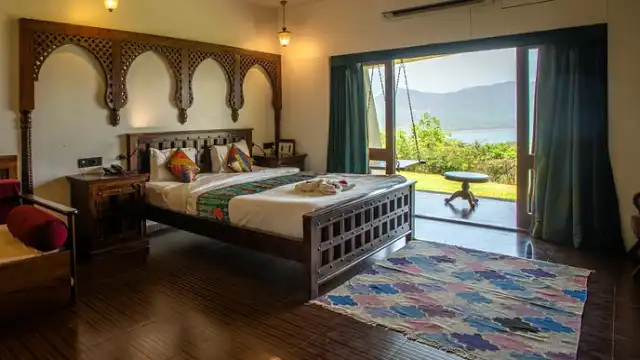
Let’s talk numbers, because safari lodging budgets scale up faster than almost any other type of travel. Your choice between staying inside or outside typically boils down to two entirely different pricing economies.
Inside the Park: State-Run vs. Luxury Concessions
If you choose to stay inside a national park, you generally have two choices. You can book an affordable, state-run rest camp or a highly exclusive private concession lodge.
In South Africa’s world-famous Kruger National Park, the state-run SANParks rest camps provide arguably the most affordable safari experiences on the planet. You can pitch your own tent at a campsite for around $24 a night, or book a fully equipped, en-suite family bungalow for $90 to $215. These camps are rustic, functional, and self-catering, meaning you buy your own groceries and cook your own meals on outdoor grills (braais).
[IN-PARK LODGING COSTS]
   │
   ├── SANParks Campsite: ~$24 - $43 / night
   ├── En-suite Bungalow: ~$90 - $215 / night
   └── Private Concession Lodge: ~$650 - $2,000+ / person / night
At the opposite end of the exact same park sit private concessions. These are massive tracts of land leased to luxury safari operators. Places like Lion Sands or Jock Safari Lodge run from $650 to well over $2,000 per person per night. These rates are entirely all-inclusive, covering master-chef meals, premium drinks, and highly trained private guides.
Outside the Park: Gateway Value and Hidden Fees
Stepping outside the gates opens up a massive world of budget flexibility. Towns like Hazyview or Hoedspruit outside Kruger offer comfortable boutique hotels, holiday villas, and bed-and-breakfasts for $100 to $200 a night per room—not per person. Families get significantly more square footage for their money here.
But wait. There is a catch that catches budget travelers completely off guard: the daily conservation fee.
National parks charge a mandatory entrance fee for every single day you spend inside their borders. For example, an international adult visiting Kruger pays a daily conservation charge of around $37 (R535) per day according to Kruger Gate Hotel’s fee guides.
If you sleep inside a SANParks bungalow, you simply pay your accommodation fee and your daily conservation rate. If you stay outside the park and drive in every morning, you have to pay that daily entry fee every single time you cross the gate. Over a five-day trip for a family of four, those gate fees pile up into a massive hidden expense.
The Clock is Ticking: Convenience and the Gate Trap
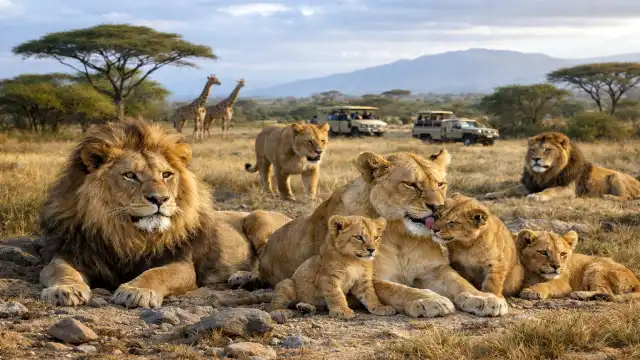
Why does convenience matter so much on a safari? It all comes down to the daily habits of the animals you are traveling thousands of miles to see.
Predators hate the heat. Lions, leopards, and cheetahs do their heaviest hunting during the cool, transitional hours of dawn and dusk. Once the sun climbs high into the sky, the African bush turns into an oven, and the cats melt away into the deep shade to sleep for the rest of the day.
If you want to witness a hunt, you must be out in the field at first light.
This is where staying outside the park creates a massive logistical headache known as the Gate Trap. National park gates have incredibly strict operating hours. They typically open exactly at sunrise and lock down tightly at sunset.
The Morning Commute Nightmare
If you sleep outside the park, your morning does not start with a peaceful drive through the bush. It starts with an aggressive wake-up call at 4:30 AM. You swallow a quick cup of coffee, load into your vehicle, and drive down public highways to reach the main entrance gate before it opens.
Once you arrive, you will likely find a massive line of safari vehicles, self-drivers, and supply trucks all waiting to clear security. Paying your fees, verifying your passports, and getting through paperwork takes time.
By the time you finally roll past the gate and navigate down the access roads to reach the prime wildlife-viewing areas, the golden hour is practically over. The sun is up, the shadows are shrinking, and the leopards are already climbing up into the trees to hide.
When you sleep inside an in-park rest camp, that entire layer of transit vanishes completely. You wake up surrounded by the sounds of the wilderness. The moment the internal camp gates open, you are already driving along the prime riverbeds while the outside crowds are still idling in line at the main perimeter gates. You trade a stressful morning commute for immediate, effortless access to the wild.
Wildlife Access: The Rules of the Road
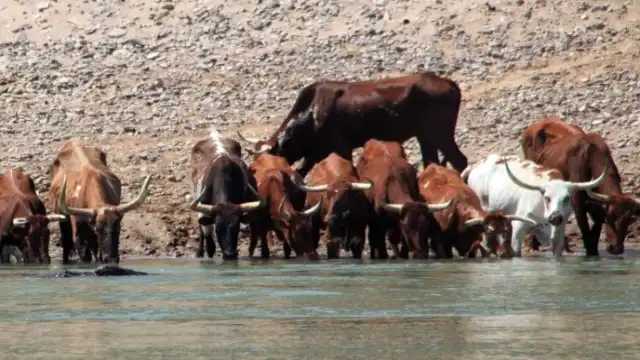
Where you sleep doesn’t just dictate when you see animals; it dictates how you see them. The rules of engagement vary wildly depending on your chosen accommodation base.
The Strict Grid of Public Parks
If you stay inside a standard state-run area or enter as a day visitor from the outside, you are bound by rigid park regulations. You must stay strictly on the designated asphalt or gravel roads. Leaving the road to get closer to a sighting is a serious offense that carries heavy fines.
If an elusive black rhino is resting 200 yards away behind a dense thicket of acacia bushes, you can only stare at it through binoculars from the road. If thirty other cars spot the same rhino, you will find yourself trapped in a frustrating, dusty traffic jam of minivans and cameras.
       [DRIVING RULES COMPARISON]
                  │
   Are you inside a Public National Park?
                  │
        ├── YES: Stay strictly on marked roads. No night driving.
        └── NO (Private Concession/Conservancy): Off-roading allowed. Night safaris permitted.
The Freedom of Private Concessions and Conservancies
This is where the massive premium for private concessions (inside the park) or private conservancies (outside the park borders) completely changes the game. Because these operators manage their own private land, their guides have the authority to drive completely off-road.
If your guide spots tracks tracker-fresh in the mud, they will spin the 4×4 off the trail, crashing directly through the brush to follow the animal. You can sit just feet away from a leopard devouring its kill in total isolation, with no other vehicles in sight.
Furthermore, private areas allow for exclusive activities that are completely banned for regular day visitors, such as:
- Guided Bush Walks: Stepping out of the vehicle to track big game on foot with armed rangers.
- Night Game Drives: Using powerful red-filtered spotlights to find elusive nocturnal predators like genets, civets, and hunting lions after dark.
The Perks of the Out-of-Park Stay: Culture and Flexibility
Reading through safari forums might make it seem like staying inside wins every single category. Why would anyone choose an outside lodge if it means dealing with gate lines and strict road rules?
Outside properties hold a few distinct, powerful advantages that have nothing to do with animals.
Access to Human Culture
In-park lodges are gorgeous, but they are highly insulated bubbles. If you spend your entire trip inside a national park, your only human interactions will be with lodge staff and other wealthy tourists.
Staying outside allows you to experience the actual heartbeat of the host country. According to regional itineraries mapped by Freka African Holidays, out-of-park lodges routinely host cultural evenings, coordinate visits to authentic local markets, and partner with village-based conservation projects. You can walk through local communities, try regional food, and see exactly how real people live alongside African wildlife.
Itinerary Freedom
Are you planning to visit multiple parks across a single week? Staying at a centralized hub outside the gates makes multi-park logistics substantially easier. You can use your outside base to day-trip into a national park on Monday, visit a scenic canyon on Tuesday, and explore a private reptile center on Wednesday.
You also escape the “food prison” of remote lodges. If you stay at an isolated in-park camp, you are stuck eating whatever the camp kitchen serves, often at heavily inflated prices because all supplies have to be trucked in from great distances. Staying outside means you can hit up local supermarkets, dine at indie cafes, or check out different neighborhood restaurants every single evening.
The Ultimate Safari Decision Matrix
To help you visualize the trade-offs before booking your flights, let’s look at how these three primary accommodation styles stack up across the board.
| Evaluation Metric | State-Run Rest Camp (Inside) | Private Luxury Concession (Inside) | Gateway Town Hotel / Lodge (Outside) |
| Nightly Cost Profile | Ultra-Budget to Mid-Range | High End to Ultra-Luxury | Budget Friendly to Mid-Range |
| Morning Gate Delay | None (Already inside) | None (Private tracks) | High (Must queue at main gate) |
| Off-Roading Ability | Strictly Prohibited | Allowed (Highly regulated) | Allowed only if booking a private reserve drive |
| Night Drives | Limited to state-run buses | Included via private open 4x4s | Prohibited inside the main park |
| Dining Flexibility | Self-Catering or basic camp cafes | All-inclusive (No external choice) | High (Supermarkets and local restaurants) |
| Crowd Exposure | Moderate to High near main hubs | Extremely Low (Exclusive tracks) | High during peak gate entry hours |
The Expert Hack: How to Build a Hybrid Safari Itinerary
What if you don’t have to choose just one? The most seasoned safari travelers rarely stay in a single location for their entire trip. They beat the system by building a hybrid itinerary that captures the best of both worlds.
If you are planning a six-night trip to a major reserve like Kruger, break your stay into two distinct chapters:
Chapter 1: The Immersive Push (Nights 1-3)
Book your initial three nights inside a state-run rest camp or an in-park lodge. Use these days to focus entirely on high-intensity wildlife viewing. Wake up at the crack of dawn, hit the roads instantly, and maximize your chances of spotting the Big Five during the prime hunting hours. Live in the dirt, grill your dinners over an open fire, and fall asleep listening to the distant roaring of lions.
Chapter 2: The Decompression Phase (Nights 4-6)
Move your base to a beautiful safari resort or a private villa just outside the park gates for your remaining three nights. Use this half of the trip to slow down and indulge in comfort. Sleep in past sunrise, enjoy a long gourmet breakfast, lounge by a swimming pool, and take a cultural tour of a nearby village. You get to wash the bush dust out of your clothes, save your budget on accommodation, and experience the local community without sacrificing your wildlife goals.
Final Verdict: Where Should You Book?
The decision between staying inside or outside a safari park ultimately depends on your primary travel goal for the trip.
Go ahead and book inside the park if your absolute top priority is maximizing animal sightings, minimizing long transit drives, and feeling completely immersed in the sights and sounds of nature twenty-four hours a day. It is worth every extra penny to ensure you are out on the roads the exact second the sun hits the savanna.
On the other hand, choose a base outside the park if you are traveling with a large family on a strict budget, value modern amenities and restaurant variety, or want a flexible holiday that balances wildlife viewing with rich, local cultural experiences.
The wilderness is waiting for you either way. Pick the style that matches your rhythm, pack your binoculars, and get ready for an adventure that will stay with you for the rest of your life.
Let’s Plan Your Adventure!
Are you team immersion or team value? Would you rather wake up to lions roaring right outside your in-park bungalow, or do you prefer the space and restaurant choices of a luxury outside villa?
Drop your thoughts in the comments below! If you found this breakdown helpful, share it with your favorite travel partner to start planning your dream African getaway.

