

Taking the God Out of Godzilla: Why Toho Renamed the 1998 Monster to Zilla
Remember the summer of 1998? You couldn’t escape the marketing machine. Billboards screamed “Size Does Matter.” Taco Bell commercials featured a tiny chihuahua trying to trap a giant lizard. Toys flooded every single retail shelf across the country. Hollywood promised us the ultimate monster movie.
Then the movie actually hit theaters.
Die-hard kaiju fans sat in dark cinemas and watched a giant, mutated iguana run away from basic military helicopters. It got tangled in the Brooklyn Bridge. It died from a few standard missile strikes. The audience felt completely betrayed. This wasn’t the King of the Monsters. This was a terrified, oversized lizard looking for a place to lay eggs.
Japanese studio Toho, the original creators of the franchise, absolutely agreed with the furious fans. They hated this Hollywood adaptation so much that they executed one of the most petty, hilarious, and brilliant legal maneuvers in cinematic history. They officially stripped the creature of its godly title.
At a glance
- A Radical Departure: Director Roland Emmerich stripped away Godzilla’s atomic breath, invincibility, and god-like aura.
- The Ultimate Insult: Toho producer Shogo Tomiyama famously stated the American film “took the ‘God’ out of ‘Godzilla’.”
- Legal Rebranding: In 2004, Toho officially trademarked the 1998 creature design as a legally distinct monster named Zilla.
- On-Screen Revenge: The real Japanese Godzilla obliterates Zilla in just 13 seconds during the 2004 film Godzilla: Final Wars.
- A Surprising Legacy: The backlash to the 1998 movie single-handedly triggered the creation of the beloved Japanese Millennium era of films.
The Summer of 1998
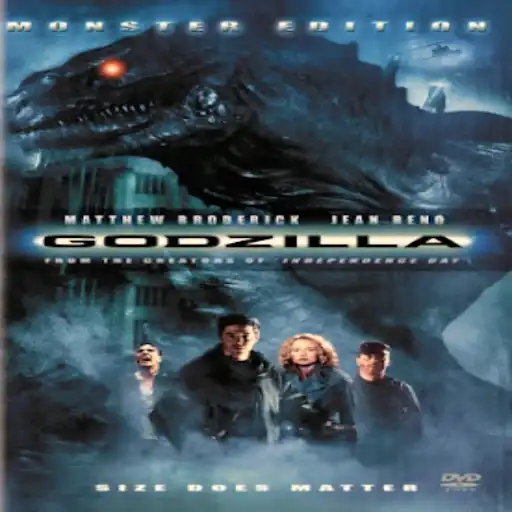
To understand the sheer scale of this name change, we have to look back at the expectations. Hollywood threw massive amounts of cash at Roland Emmerich and Dean Devlin. The directing duo had just dominated the global box office with Independence Day. Sony Pictures trusted them completely. They expected a massive blockbuster smash.
The hype train ran at full speed. Trailers teased just the foot of the beast. We saw crushed cars. We heard deafening roars.
Then came opening weekend. Fans immediately noticed massive problems with the creature’s core identity.
Classic Godzilla acts as an unstoppable force of nature. He represents the terrifying wrath of nuclear weapons. Conventional military forces mean absolutely nothing to him. Bullets bounce off his thick, radioactive hide. When he gets angry, he fires a devastating atomic heat ray that levels entire city blocks.
The 1998 version did none of those things. It ran from the military. It hid inside subway tunnels. Instead of an atomic breath, it blew a flammable gust of wind. Worst of all, it died a deeply pathetic death. F-18 fighter jets shot it down with basic missiles on a suspension bridge.
Kaiju fans loudly rejected the movie. They coined a brutal nickname online: GINO, an acronym for Godzilla In Name Only.
A Radical Redesign
How did we get such a weird version of the character? You can trace it back to the design room.
Special effects artist Patrick Tatopoulos handled the creature design. Emmerich gave him a very specific mandate: make the monster incredibly fast. Tatopoulos moved away from the traditional upright, vertical stance of a man in a rubber suit. He created a lean, digitigrade, bipedal creature. It looked heavily inspired by marine iguanas and modern T-Rex reconstructions.
The studio leaned heavily into CGI rather than traditional suitmation. They wanted agility. They wanted realism.
They completely missed the point of the franchise. By focusing on biological realism, they stripped away the mythical, god-like terror of the character. The script even introduced a biological twist: parthenogenesis. The monster could lay hundreds of eggs asexually. The third act of the film suddenly turns into a Jurassic Park knockoff with baby raptor-like creatures chasing the main characters around Madison Square Garden.
It was a generic monster movie wearing the skin of a legendary franchise.
Enter Shogo Tomiyama
You might assume Toho quietly accepted the Hollywood money and ignored the backlash. That didn’t happen. The Japanese studio executives felt massive disappointment.
Shogo Tomiyama managed the Godzilla franchise for Toho during this era. He understood exactly why the fans felt betrayed. He knew the American movie failed to capture the soul of the character. Years later, he delivered a quote that cemented his status as a legend within the fandom.
When discussing the 1998 creature, Tomiyama dropped a perfectly calculated insult. He noted that the American filmmakers “took the ‘God’ out of ‘Godzilla’.”
That single sentence perfectly summarized the entire situation. The TriStar beast acted like a mere animal. It lacked the divine, terrifying presence of the true King of the Monsters. It didn’t earn the word “God” in its name.
Legal Rebranding: A New Monster is Born
Toho couldn’t snap their fingers and erase the 1998 movie from existence. Sony legally owned the rights to that specific film. The movie itself would always carry the title Godzilla.
However, Toho completely owned the physical design of the creature.
When the licensing rights eventually reverted back to Toho, they saw an opportunity. They decided to adopt the creature into their official roster of kaiju. They didn’t bring it back as Godzilla. They legally trademarked the character design under a brand new name: Zilla.
From 2004 onward, any official appearance of the 1998 creature design operated under this new identity. Toys, comic books, video games, and official encyclopedia entries all used the new moniker. Toho made it crystal clear. This monster is a separate, legally distinct entity.
It looks like the 1998 creature. It sounds like the 1998 creature. But it is definitely not Godzilla.
Godzilla: Final Wars (2004)
![GODZILLA FINAL WARS (ゴジラ_FINALWARS) - Official Japanese Trailer [HQ]](https://www.gsnsp.com/wp-content/cache/flying-press/54b26b0c36260342ceeb426545535fa4.jpg)
Toho didn’t just rename the monster. They wanted to publicly humiliate it on the big screen.
In 2004, Toho released Godzilla: Final Wars. Directed by Ryuhei Kitamura, this movie served as a massive 50th-anniversary celebration of the franchise. It featured aliens mind-controlling classic kaiju and sending them to destroy major cities across the globe.
Kitamura decided to have some fun. He dropped Zilla into Sydney, Australia. The CGI monster leaps out of the water, roars, and starts trashing the city.
Then, the true Japanese Godzilla shows up.
What happens next is pure, unadulterated fan service. Kitamura pits the rubber-suit Godzilla against the fully CGI Zilla. A heavy rock track by the band Sum 41 blasts in the background. Zilla charges forward, attempting to pounce. The real monster swats the fake aside with a brutal tail whip. Zilla crashes directly into the Sydney Opera House.
Before the American lizard can even stand up, Godzilla unleashes his iconic atomic breath. Zilla explodes in a massive fireball.
The entire fight lasts exactly 13 seconds. Kitamura intentionally designed the squash match to end the debate forever. He visually proved which monster truly deserved the crown.
The Butterfly Effect on the Kaiju Franchise
While fans love to hate the 1998 film, we actually owe it a massive debt of gratitude. The failure of that movie directly shaped the next two decades of kaiju cinema.
Before 1998, Toho had planned to put the franchise on ice for a long time. They killed off their famous monster in the 1995 film Godzilla vs. Destoroyah. They wanted to clear the stage for the Hollywood trilogy to take over.
When the American movie crashed and burned with fans, Toho panicked. They realized they couldn’t leave the franchise’s legacy in that dismal state. They immediately rushed a brand new Japanese film into production.
Godzilla 2000 hit theaters in 1999. It launched the highly praised Millennium era of films. Toho aggressively redesigned their monster to look as spiky, menacing, and destructive as possible. They wanted to wash the bad taste of 1998 out of everyone’s mouths. The movie even features a villain named Orga, an alien clone whose hunched, large-jawed design subtly mocks the American iguana.
If the TriStar movie had never failed, we might not have gotten the Millennium series. We certainly wouldn’t have gotten legendary modern hits like Shin Godzilla or the incredibly successful Legendary MonsterVerse. Sometimes, a colossal failure paves the way for a spectacular comeback.
Zilla’s Surprising Redemption Arc in the Comics
Believe it or not, Zilla actually has fans today. Over time, the raging hatred cooled off. People started to realize something important. If you treat the 1998 movie as a standalone 90s monster flick, it’s actually pretty fun. The creature design itself looks fantastic. It just shouldn’t carry that iconic name.
Once Toho officially separated Zilla from the main legacy, fans started to embrace the mutant iguana.
This acceptance really gained traction in the comic book world. IDW Publishing released a brilliant series called Godzilla: Rulers of Earth. The comic featured a massive roster of classic Toho monsters. The writers decided to bring Zilla into the fold, and they treated the creature with genuine respect.
In the comics, Zilla doesn’t die in 13 seconds. It uses its incredible speed, burrowing abilities, and intelligence to fight effectively. It even teams up with Godzilla to battle alien threats. Fans loved seeing the two distinct monsters fight side-by-side.
Zilla carved out its own unique niche. It isn’t a lumbering, invincible tank. It acts as an agile, glass-cannon brawler. It dodges attacks, digs massive underground tunnels, and relies on ambush tactics. By embracing what made the 1998 design unique, the creators finally gave the monster a valid reason to exist within the broader universe.
Why Zilla Matters to the Kaiju Fandom
The story of Zilla represents everything we love about pop culture history. It shows what happens when Hollywood wildly misinterprets a legendary icon. More importantly, it highlights how fiercely a creator will defend their intellectual property.
Toho didn’t issue a boring press release to fix the problem. They took legal action, renamed the monster, and then blew it up on screen just to prove a point. You have to respect that level of cinematic spite.
Today, you can find Zilla action figures sitting proudly on collector’s shelves right next to Mothra, King Ghidorah, and Rodan. The monster successfully transitioned from an embarrassing mistake into a beloved piece of franchise trivia. It serves as a permanent reminder that you simply cannot take the “God” out of Godzilla and expect to get away with it.
Are you a fan of the 1998 movie as a standalone creature feature? Do you think Toho went too far by blowing Zilla up in 13 seconds, or was it the perfect revenge? Drop your thoughts in the comments below, and don’t forget to share this article with your fellow kaiju fanatics!

