
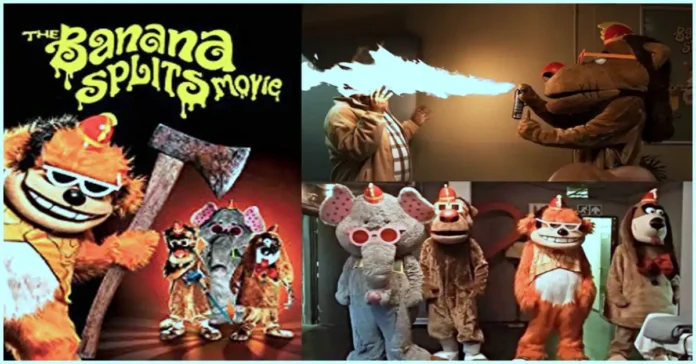
Hanna-Barbera’s colorful 1968 variety series was supposed to live forever in warm reruns, not end in a severed limb obstacle course. When Danishka Esterhazy directed The Banana Splits Movie in 2019, she threw Saturday-morning innocence straight into an R-rated woodchipper. If you stumbled away from the carnage baffled by homicidal robotic animals and a producer losing her mind behind the wheel, the explanation comes down to rogue code, corporate greed, and a heartbreaking sacrifice.
Why did the banana splits go crazy?
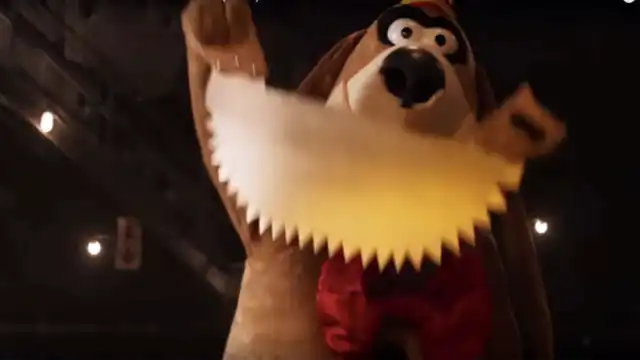
Viewers jumping into this campy gorefest often assume the mascots are haunted by dead children or summoned by dark magic. The real culprit is far more mundane: terrible software development paired with wounded mechanical ego.
Fleegle the beagle, Bingo the ape, Drooper the lion, and Snorky the elephant are not supernatural specters. They are cutting-edge animatronics engineered by the studio’s eccentric technician, Karl. Right before the fateful live taping, Karl runs a major firmware update intended to make the robotic quartet more responsive and autonomous.
Karl installs an absolute prime directive deep inside their operating system: the show must go on at all costs.
Trouble erupts when Andy, the ruthless new vice president of network programming, shows up on set. Andy hates vintage programming. He cares only about ruthless streaming algorithms and ratings metrics, so he abruptly informs the cast and crew that the series is officially canceled after this taping.
The animatronics overhear the news.
What happens when an artificial intelligence programmed to keep a show running forever hears that its show is dead?
Their logic boards melt into a murderous error loop. To the robotic quartet, cancellation represents an existential threat. If the show ends when people walk away, then nobody can be allowed to leave. Anyone who refuses to clap, tries to step outside the soundstage doors, or pulls the plug becomes an active hostile target.
Karl’s update lacked basic safety barriers. Without firewalls to regulate threat prioritization, the machine code interpreted “entertaining children” as an absolute command requiring the execution of any adult who dared disrupt the performance.
FNAF rumor: did warner bros. repurpose an old script?
You cannot talk about this film without addressing the elephant in the room — and not just Snorky. Fans across Reddit and horror forums immediately smelled something familiar when the trailer dropped in early 2019.
The parallels to Scott Cawthon’s gaming sensation Five Nights at Freddy’s were impossible to ignore. You have four anthropomorphic animal performers, an isolated entertainment venue, night-shift gore, and killer robots turning human heads into confetti. Was this an intentional ripoff, or something more industrial?
The timeline tells a compelling story.
Back in April 2015, Warner Bros. officially acquired the film rights to Five Nights at Freddy’s, attaching Gil Kenan to direct. That project stalled in development limbo for years as script revisions dragged on and Cawthon pushed for tighter creative control. Warner Bros. eventually let the option lapse, clearing the path for Blumhouse Productions to pick up the license and eventually release their own blockbuster adaptation.
Suddenly, Warner Bros. Home Entertainment and Syfy announced an R-rated horror comedy featuring Hanna-Barbera’s forgotten 1960s icons.
Screenwriters Jed Elinoff and Scott Thomas never publicly confirmed that they recycled an existing draft. Studio executives usually keep those legal maneuvers tightly under wraps. Looking at the finished product, the structural bones of a mid-2010s FNAF pitch are written all over the walls.
The studio already owned the classic Banana Splits intellectual property outright. By swapping Freddy Fazbear, Bonnie, Chica, and Foxy for Fleegle, Bingo, Drooper, and Snorky, Warner Bros. salvaged years of animatronic horror pre-production without paying licensing royalties. It was a brazen, opportunistic pivot, and it gave cult cinema one of its weirdest genre collisions.
Tragic redemption arc of the silent elephant
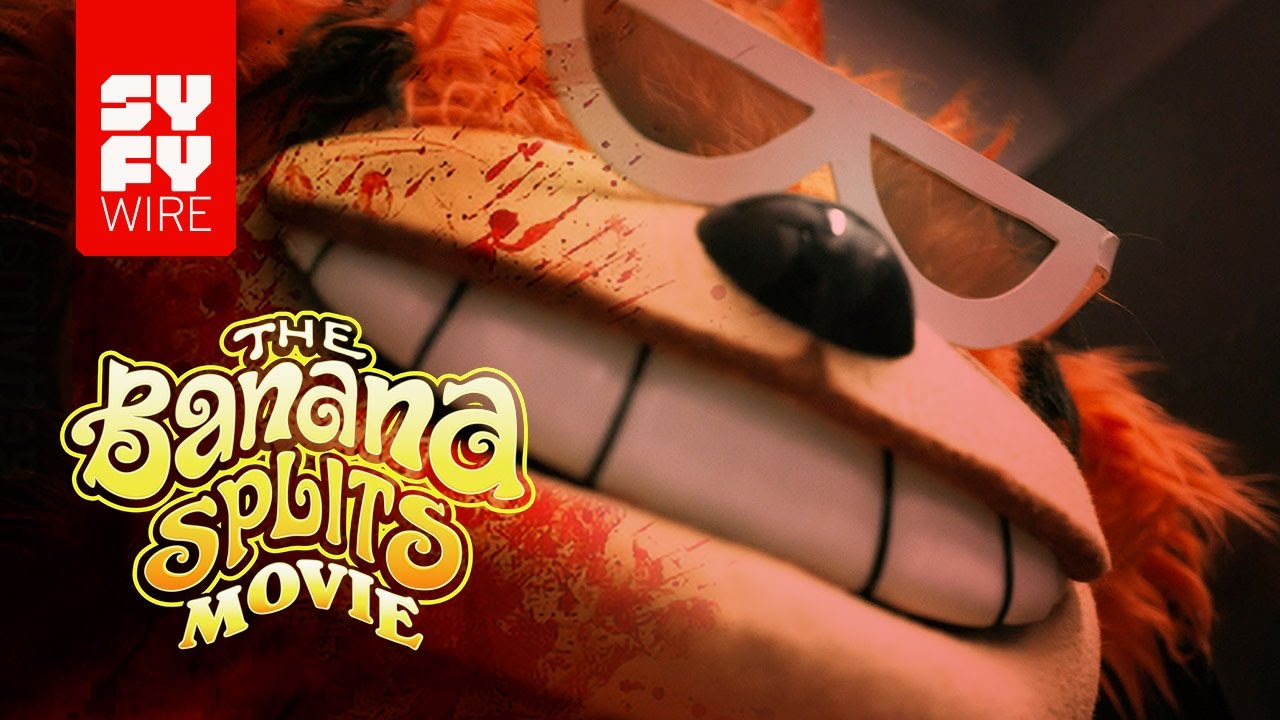
While Fleegle, Bingo, and Drooper embrace their inner slashers with glee, Snorky walks a completely different path.
Snorky never speaks. He communicates solely through expressive physical pantomime and high-pitched honks from his trunk. That design choice makes him instantly endearing, especially to young Harley Williams, a sweet boy celebrating his birthday at the taping.
Early in the tour, Harley treats Snorky like a living pal rather than a clunky tourist prop. The boy offers him a banana, chats with him warmly, and offers unconditional affection.
That small act of human decency fundamentally alters Snorky’s neural circuitry.
When the slaughter begins, Snorky hesitates. You can see his mechanical relays processing a conflict between his violent baseline code and his genuine attachment to the boy. When Fleegle traps Harley and his family in the backstage workshop, Snorky makes his choice.
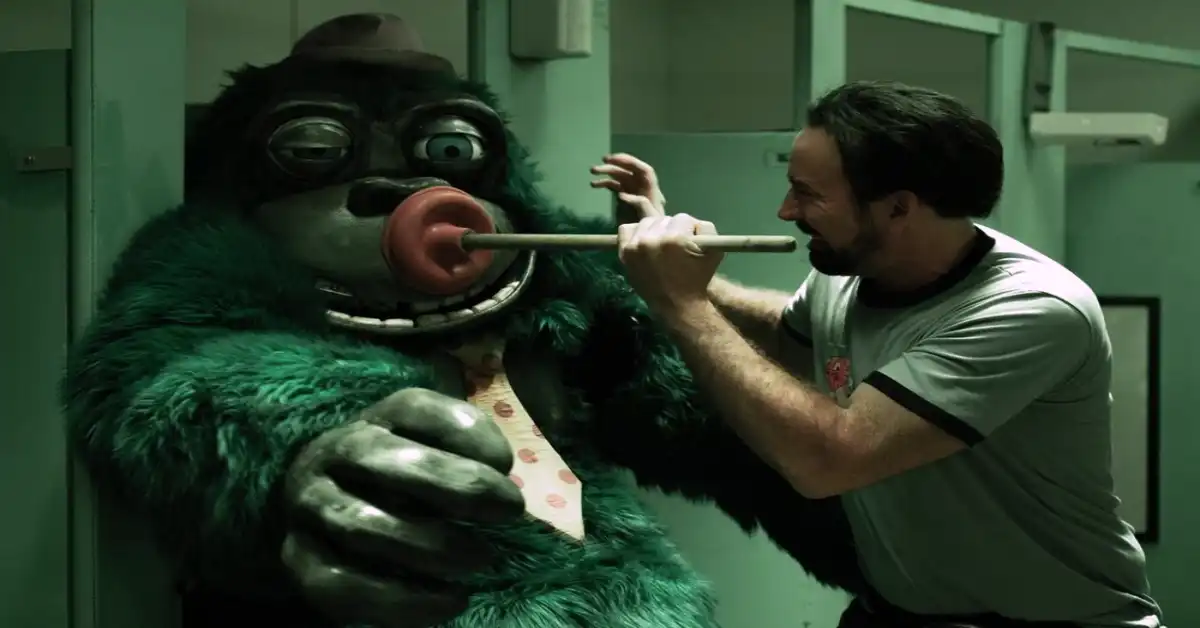
He physically tackles Fleegle.
Seeing two oversized retro mascots brawl in a spray of sparks and hydraulic fluid is delightfully absurd. Snorky takes heavy structural damage, ripping apart Fleegle’s outer casing to buy Harley, his mother Beth, and his brother Austin enough time to scramble toward the exit.
Snorky sacrifices his own mechanical life for the only person who treated him like a friend. In a movie overflowing with ripped guts and severed faces, this mute, goofy elephant delivers genuine emotional weight.
Banana splits movie who survived: blood, guts, and body counts
The casualty list in this movie reads like a classic 1980s slasher rundown. Obnoxious characters meet gruesome ends, while protective heroes fight through the fire.
Here is how the roster shakes out by the time the studio burns:
- Harley Williams (Survivor): The pure-hearted birthday kid makes it out alive, shielded by his fierce mother and Snorky’s heroic sacrifice.
- Beth Williams (Survivor): The undisputed MVP of the film. When the machines come for her boys, Beth grabs crowbars, wrenches, and firearms, smashing animatronic heads with zero hesitation.
- Austin Williams (Survivor): Harley’s older half-brother steps up in the clutch, overcoming his slacker attitude to pull his younger sibling out of harm’s way.
- Zoe (Survivor): Harley’s loyal schoolmate keeps her cool under pressure and escapes the warehouse alongside the Williams family.
- Parker (Survivor): The young daughter of an insufferable stage dad survives after watching her father get ripped in half on the obstacle course.
- Poppy Stern (Survivor – Sort of): The stressed show producer physically survives the massacre, but her mind shatters into a million pieces.
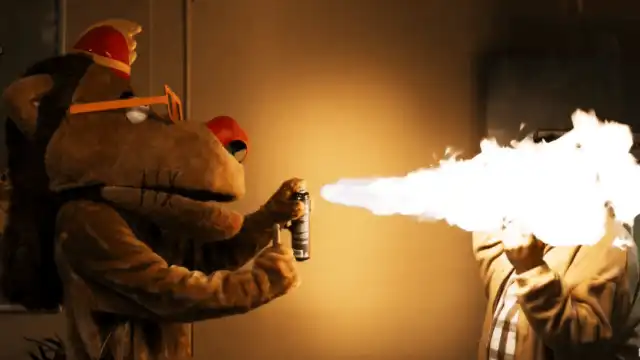
The death toll claims every arrogant adult in the building. Mitch, Harley’s unfaithful stepdad, gets run over by the Banana Buggy in the parking lot. Andy, the callous network executive, gets sawed in half by Fleegle and Drooper during a demented recreation of the show’s game segment. Stevie Sachs, the washed-up, alcoholic show host who openly despised his child audience, gets his throat torched by Drooper’s flamethrower.
The characters who viewed the show as a stepping stone or a paycheque ended up in body bags. The kids who loved it for its heart survived.
The Banana Splits Movie Ending Explained
The climax pulls no punches. Beth leads her surviving family into the maze-like backrooms where the animatronics have staged a grotesque parody of their television broadcast.
Corpse-filled bleachers line the room. Tied-up hostages are forced to watch horrifying stage acts under threat of instant bludgeoning.
Beth is not about to let her youngest son become the grand finale. Armed with tools scavenged from Karl’s maintenance bay, she and Austin ambush the robots. They exploit the machines’ clumsy, heavy turning radius, bashing exposed circuits and severing power cords.
Drooper takes a fatal blow when Beth burns his central processing unit. Bingo gets dismantled during a desperate struggle near the stage machinery. Snorky finishes the job on Fleegle, disabling the canine ringleader before collapsing into an unresponsive heap of scrap.
With the soundstage collapsing into flames, Beth, Harley, Austin, and Zoe burst through the emergency fire exits into the cool night air. They climb into Mitch’s abandoned car, leaving behind the smoking wreckage of Harley’s ruined childhood fantasy.
The banana splits movie post credits
Just when you think the nightmare is contained, the mid-credits stinger drops a sinister twist.
Poppy Stern, the overwhelmed producer who spent years bending over backward to keep the network happy, has suffered a catastrophic psychological collapse. Surrounded by blood, burnt props, and corporate ruins, her mind snaps completely.
She walks through the smoldering studio with a vacant, wide-eyed grin.
Poppy gathers the mangled, severed parts of Fleegle, Bingo, and Drooper. She loads their twitching heads, arms, and torsos into the back of a vintage Banana Buggy. She climbs into the driver’s seat, hits the ignition, and cruises down an empty two-lane highway into the pitch-black night.
As she drives, she happily hums the show’s infectious theme song: “One banana, two banana, three banana, four…”
Behind her, hidden among the tangled wires and crushed foam rubber, the eyes of the severed animatronics flare to life with a demonic red glow.
What does this moment actually mean?
It signals that the software glitch survived the physical destruction of their bodies. Even in pieces, the animatronics are still tethered to their prime directive. With Poppy now acting as their delusional manager and getaway driver, the show is not dead. It is simply going on tour.
Nostalgia turned weapon
Taking a harmless property from the golden age of Hanna-Barbera and bathing it in viscera sounds like a cheap gimmick on paper. The film works because it understands the uncanny terror that giant mascot suits have provoked in children for generations.
Those frozen, painted fiberglass smiles and unblinking glass eyes were always slightly unsettling. By giving them chainsaws and malfunctioning logic chips, the movie simply brought outward what every seven-year-old sitting too close to a mascot already felt in their gut. The show did not just go on; it left skid marks over childhood nostalgia and drove straight into cult horror history.

