
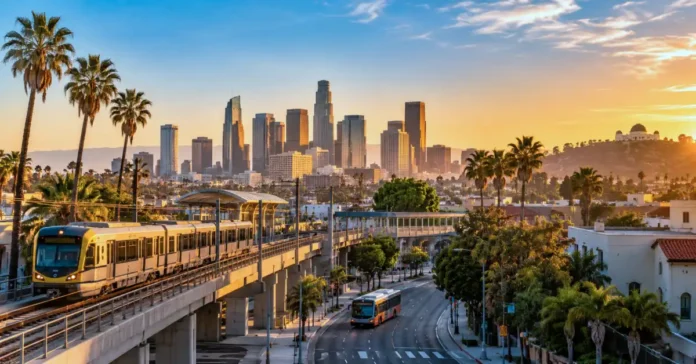
Everyone told you that visiting Los Angeles without a car is an absolute nightmare. They lied. With major light rail expansions connecting the coast to downtown, touring Southern California on foot and rail is surprisingly smooth once you stick to the right routes.
The secret
Can you jump randomly between Malibu, Pasadena, and Anaheim in a single afternoon? Not without losing your mind. Los Angeles County spans more than four thousand square miles, so treating it like compact Manhattan will only bring frustration.
Smart car-free travelers navigate LA using a corridor approach. You pick a single east-west or north-south rail line for the day, exploring the distinct neighborhoods clustered along that path. That gives you zero highway gridlock, predictable arrival times, and plenty of walking between stops.
When you organize your days along specific transit lines, getting around los angeles without a car stops feeling like a chore and actually becomes an adventure. You get to watch neighborhoods shift outside your train window, sip coffee without hunting for expensive parking spots, and skip the dreaded valet fees at your hotel.
Mastering the TAP Card and fares
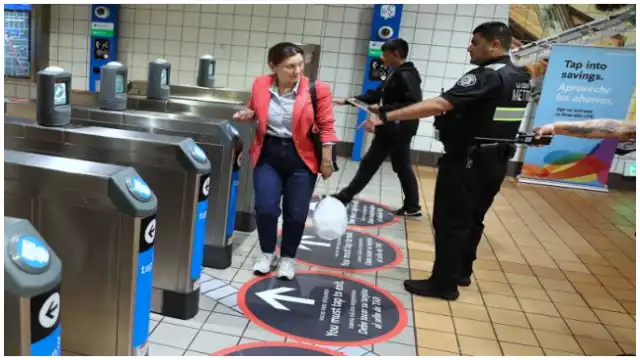
You only need one payment method for nearly every train and bus in the region: a TAP Card.
You can buy a physical card at any station vending machine, but loading a digital TAP card straight into your Apple Wallet or Google Wallet takes about thirty seconds. Just open your digital wallet, choose transit cards, search for Los Angeles, and add funds. You simply tap your phone against the validator turnstile as you walk through.
Here is why transit in LA is one of the cheapest travel hacks in North America:
- Standard Base Fare: A single ride on any Metro bus or train costs just $1.75.
- Two-Hour Free Transfers: Once you tap to start your trip, transfers to other Metro lines within two hours are automatic and free.
- Daily Fare Capping: You will never pay more than $5.00 in a calendar day on Metro services. Once your rides total five dollars, every additional Metro ride that day is completely free.
- Weekly Fare Capping: Riding constantly over a longer stay? Your expenses max out at $18.00 over seven days.
- Tap-to-Exit: Keep your phone or card ready when getting off the train. Many underground stations now require you to tap at the fare gates both when entering and exiting to curb fare evasion.
Leaving LAX without an expensive Uber
Landing at Los Angeles International Airport used to mean waiting forty minutes in a crowded line for a shuttle just to pay sixty dollars for an Uber. Things are much better now.
The LAX/Metro Transit Center Station serves as the central springboard into the city’s rail grid. Located at 96th and Aviation, this multi-modal hub links airport terminal shuttles directly to the Metro C Line and K Line platforms.
If your hotel is in Downtown LA, you also have the classic LAX FlyAway Bus. This dedicated coach runs non-stop between airport terminals and historic Union Station in Downtown LA for $9.75. You buy the ticket on your phone, board outside baggage claim, and roll straight downtown in a dedicated express lane.
E Line Corridor: Downtown to Santa Monica Beach
The Metro E Line is the crown jewel of any car-free los angeles itinerary. It runs completely above ground or elevated, tracing an east-to-west path from East LA through Downtown, passing trendy mid-city spots, and finishing three blocks from the Pacific Ocean.
Riding the E Line end-to-end takes roughly 48 minutes. That is often faster than driving on the congested Interstate 10 during rush hour.

Key stops to build an afternoon around:
- Downtown Santa Monica Station: The western end of the line lands you at 4th and Colorado. From here, walk five minutes to Santa Monica Pier, grab fresh fish tacos, or rent a beach cruiser to pedal the beachfront bike path down toward Venice Boardwalk.
- Culver City Station: Step off right into Culver City’s historic core. Walk through the creative district, browse independent art galleries, or grab dinner at the buzzing restaurants inside Platform outdoor mall.
- Expo Park / USC: Perfect for museum lovers. This station opens directly onto the California Science Center (home to the Space Shuttle Endeavour) and the Natural History Museum of Los Angeles County.
- 7th St / Metro Center: The primary underground transfer hub in the heart of Downtown LA, connecting directly to the A, B, and D lines.
B Line Corridor: Downtown, Hollywood, and Universal Studios
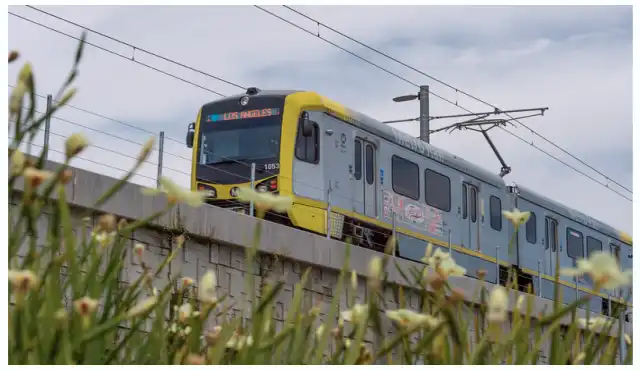
Want to see classic Hollywood sights? The subway-style B Line (formerly the Red Line) runs underground from Union Station straight through Hollywood and over the Cahuenga Pass into the San Fernando Valley.
What should you explore on this route?
- Grand Central Market (Pershing Square Station): A century-old open-air food hall packed with wood-fired pupusas, craft smash burgers, and fresh fruit juices.
- Hollywood & Highland: The station exits right onto the Hollywood Walk of Fame. You will pop out right in front of the TCL Chinese Theatre and Dolby Theatre.
- Universal City / Studio City: This stop drops you right across the street from Universal Studios Hollywood, where a free park shuttle picks riders up every ten minutes.
- Griffith Observatory Connection: Get off at the Vermont / Sunset Station. Right outside, catch the local 50-cent LADOT DASH Observatory bus, which snakes up through the hills and drops you at the front doors of the Griffith Observatory for iconic views of the Hollywood Sign.
Hybrid strategy: when to mix rail with rideshare
Does going car-free mean you are forbidden from ever stepping into a car? Not at all.
Smart visitors use a hybrid transit model. You take light rail for 80% of your distance to bypass clogged freeways, then call an Uber or Lyft for the final two or three miles into hilly or transit-light pockets.
Consider a trip to the Getty Center museum. Sitting in an Uber all the way from Downtown LA can cost $65 and burn an hour in bumper-to-bumper traffic. Instead, take the E Line west to the Expo/Sepulveda station for $1.75. Step outside, request a rideshare, and you will arrive at the Getty tram entrance in ten minutes for under fifteen bucks.
The same trick works when visiting scenic spots tucked away in the hills:
- To visit Silver Lake or Echo Park: Take the B Line to Vermont/Beverly, then catch an eight-minute rideshare to Sunset Junction.
- To explore West Hollywood: Ride the B Line to Hollywood/Vine, then hop the local #4 bus down Santa Monica Boulevard or grab a short rideshare.
- To see Abbott Kinney in Venice: Ride the E Line all the way to Santa Monica, then take a $6 scooter ride or quick bus south along Main Street.
Local secret buses: DASH and Big Blue Bus
Do not ignore local municipal bus lines. Metro operates the big red buses, but individual neighborhoods fund their own pocket transit networks that are clean, friendly, and dirt cheap.
- LADOT DASH Buses: These small, clean neighborhood circulators run through Downtown LA, Hollywood, Los Feliz, and Midtown. Rides cost just 50 cents, and they run frequent loops around local sights.
- Santa Monica Big Blue Bus (BBB): Serving the entire Westside, these bright blue buses connect Santa Monica to Venice Beach, Westwood, UCLA, and Century City. They accept your TAP card and have clean interiors with crisp air conditioning.
- Culver CityBus: An easy way to navigate between the Culver City rail station, Marina del Rey, and local shopping hubs.
A realistic 3-day car-free LA itinerary
Need a plug-and-play plan? This three-day blueprint lets you experience beaches, movie history, and world-class dining without stepping foot in a rental car facility.
Day 1: Downtown architecture and little tokyo
- Morning: Start at historic Union Station. Walk across Alameda Street to explore the historic stalls and taquerias of Olvera Street.
- Afternoon: Walk or ride one stop on the A Line to Little Tokyo/Arts District. Grab authentic tonkotsu ramen on 1st Street, visit the Japanese American National Museum, and grab iced matcha.
- Evening: Take the Regional Connector to Grand Ave Arts/Bunker Hill. Walk through The Broad contemporary art museum, then stroll downhill for dinner at Grand Central Market.
Day 2: Culver city arts and santa monica sunset
- Morning: Board the E Line heading west. Stop at Culver City to explore the design boutiques and grab lunch around the historic Culver Hotel.
- Afternoon: Hop back on the E Line and ride it straight to Downtown Santa Monica. Walk down to the ocean breeze along Palisades Park.
- Evening: Walk the historic Santa Monica Pier, grab fish and chips, and watch the sun dip below the Pacific horizon. Take the E Line back whenever you are ready.
Day 3: Hollywood glamour and stargazing
- Morning: Hop on the underground B Line to Hollywood & Highland. Snap photos of the handprints at the Chinese Theatre and look up at the Hollywood hills.
- Afternoon: Ride the B Line east two stops to Vermont / Sunset.
- Evening: Board the DASH Observatory bus up Mount Hollywood. Explore the exhibits inside Griffith Observatory, look through the historic telescopes, and watch the endless carpet of Los Angeles city lights twinkle across the basin below.
Street smarts and safety on LA metro
Like any massive transit system in a major world city, riding the rails in Los Angeles requires standard urban awareness.
Travel during daylight and regular evening commuting hours when stations and cars are well populated. Look for the Transit Ambassadors wearing bright green vests; they are stationed on platforms and trains throughout the network specifically to assist riders, answer navigation questions, and maintain a welcoming environment.
Choose the front railcar where the train operator sits if you are traveling later in the evening. Keep your phone tucked away when standing near open train doors, avoid empty cars, and download the Transit App on your phone to track real-time train arrivals. With just a little preparation and your TAP card ready to go, exploring the City of Angels on your own terms is simple, cheap, and surprisingly fun.

