

How to Use the Venice Vaporetto: Water Bus Routes, Tickets, and Passes
Navigating Venice means accepting one basic reality: you will be traveling on water. Cars stop at Piazzale Roma. Ubers do not exist. You either walk, or you float.
The vaporetto is the city’s floating public transport system. It can feel intimidating at first, but mastering it unlocks the entire lagoon.
Key takeaways
- Single rides are pricey: A one-way ticket costs €9.50.
- Passes save cash: Unlimited passes range from €25 (24 hours) to €65 (7 days).
- Validate always: Tap your ticket on the white reader before boarding. Fines are brutal.
- Know the lines: Line 1 is the scenic slow route. Line 2 is the express.
What Exactly is a Vaporetto?
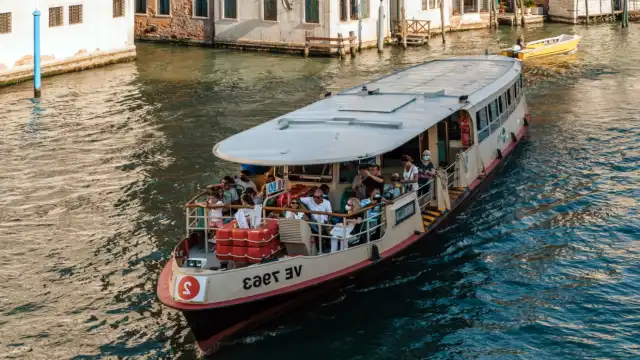
The word translates to “little steamer,” a nod to the old coal-powered boats of the past. Modern vaporetti run on diesel. They are wide, flat-bottomed vessels operated by ACTV, the local transit authority.
Do not confuse them with romantic gondolas or sleek wooden water taxis. These are purely functional public transit machines. They get crowded. They chug along loudly. But they offer the absolute best, most affordable way to cruise down the Grand Canal.
Ticket Prices: Single Fares vs Passes
ACTV ticket prices jump occasionally, but as of 2026, the rates remain stable. Buying a single ticket hurts the wallet. Shelling out €9.50 for a five-minute hop across the canal feels aggressive. If you plan to ride more than twice a day, a multi-day pass pays for itself immediately.
| Ticket Type | 2026 Price | Validity & Best For |
| Single Ride | €9.50 | 75 minutes. Only good for a one-off trip. |
| 24-Hour Pass | €25.00 | Pays off after 3 rides. Great for a day trip. |
| 48-Hour Pass | €35.00 | Solid choice for a standard weekend visit. |
| 72-Hour Pass | €45.00 | Perfect for three days of exploring. |
| 7-Day Pass | €65.00 | Unbeatable value for week-long stays. |
Kids under six ride entirely free. Wheelchair users pay a drastically reduced single fare of €1.50, and their companion travels at no cost.
Are you aged between 6 and 29? Buy the Rolling Venice card for €6. It unlocks a discounted 72-hour transport pass for just €27. That brings your total to €33 for three days of unlimited travel — a massive steal.
Complete Venice Vaporetto Network
Navigating the ACTV water bus system is much easier when you break it down by category. Here is the complete list of the essential vaporetto lines you will encounter in Venice, including where they go and when to use them.
1. The Grand Canal & City Center Lines
These are the most popular routes. They travel down the iconic Grand Canal and the Giudecca Canal.
- Line 1 (The Scenic Local):
- Route: Piazzale Roma ↔ Ferrovia (Train Station) ↔ Rialto ↔ San Marco ↔ Lido.
- The Vibe: Slow and scenic. It stops at every single dock along the Grand Canal. It takes about 45 minutes to get from the train station to San Marco.
- Best for: First-time sightseeing and traveling short distances between adjacent neighborhoods.
- Line 2 (The Grand Canal Express):
- Route: San Zaccaria (San Marco) ↔ Giudecca ↔ Tronchetto ↔ Piazzale Roma ↔ Ferrovia ↔ Rialto ↔ San Marco.
- The Vibe: The fast track. It follows the same general path as Line 1 through the Grand Canal but skips the smaller neighborhood stops.
- Best for: Getting from the train station or bus terminal to Rialto or San Marco as quickly as possible.
2. The Circular Lines (City Perimeter)
These lines circle the outer edge of the main islands of Venice. They are marked with decimals. “.1” routes travel counter-clockwise, and “.2” routes travel clockwise.
- Lines 4.1 & 4.2 (The Murano Commuters):
- Route: Circles Venice and heads out to Murano. (Piazzale Roma ↔ Giudecca ↔ San Marco ↔ Fondamente Nove ↔ Murano).
- Best for: Traveling between completely opposite sides of the city without dealing with Grand Canal traffic, or getting to Murano from the southern docks.
- Lines 5.1 & 5.2 (The Lido Express Circlers):
- Route: Circles Venice and heads to the Lido. (Piazzale Roma ↔ Zattere ↔ San Marco ↔ Lido ↔ Fondamente Nove ↔ Piazzale Roma).
- Best for: Getting to the beach (Lido) fast, or zipping around the northern edge of the city. Note: These lines do NOT go to Murano.
- Line 6 (The Speedy Commuter):
- Route: Piazzale Roma ↔ Zattere ↔ Giardini ↔ Lido.
- Best for: The absolute fastest way to get from the parking garages/bus station (Piazzale Roma) to the Lido or the Biennale Gardens. Only runs during the day on weekdays.
3. The Northern Islands (Murano, Burano, Torcello)
If you are hunting for glass, lace, or ancient mosaics, you need these lines. Most depart from Fondamente Nove on the northern edge of Venice.
- Line 3 (Murano Direct):
- Route: Piazzale Roma ↔ Ferrovia ↔ Murano.
- Best for: Beating the crowds. If you arrive by train or bus and want to go straight to Murano without transferring, this is your boat.
- Line 12 (The Northern Trek):
- Route: Fondamente Nove ↔ Murano ↔ Mazzorbo ↔ Burano ↔ Torcello ↔ Treporti.
- Best for: The classic island-hopping day trip. This is the main line you take to see the brightly colored houses of Burano.
- Line 13 (The Farm Islands):
- Route: Fondamente Nove ↔ Murano ↔ Vignole ↔ Sant’Erasmo.
- Best for: Exploring Venice’s agricultural side. Sant’Erasmo is the “orchard of Venice” where they grow the famous purple artichokes.
- Line 7 (Seasonal Murano Express):
- Route: San Zaccaria (San Marco) ↔ Murano.
- Best for: A fast, direct shot from the tourist center of San Marco straight to the glass factories during the busy summer months.
4. The Eastern Lagoon & Beaches
- Line 14:
- Route: San Zaccaria ↔ Lido ↔ Punta Sabbioni ↔ Burano.
- Best for: Reaching the mainland beach resorts at Punta Sabbioni, or taking a scenic, longer route to Burano from San Marco.
- Line 20 (The Southern Monasteries):
- Route: San Zaccaria ↔ San Servolo ↔ San Lazzaro degli Armeni.
- Best for: Visiting the historic monastery on San Lazzaro or the university/museum on San Servolo.
5. The Night Shift
Venice doesn’t sleep, but it does slow down. When the regular lines stop running around 11:30 PM, the night boats take over.
- Line N (Notturno):
- Route: Covers the major stops of Line 1 and Line 2 (San Marco, Rialto, Ferrovia, P. Roma, Giudecca, Lido).
- The Vibe: Runs roughly every 20-30 minutes from midnight to 5:00 AM.
- Best for: Getting back to your hotel after a late dinner or a very early start for a flight.
- Line N-Murano / N-Lagunare:
- Route: Connects Fondamente Nove with Murano, Burano, and the outer islands during the night.
Pro Tip for Reading the Docks: Every floating vaporetto stop has a map and a yellow digital sign hanging overhead. The digital sign will always tell you the Line Number and the Final Destination (Terminus). Always check the final destination to ensure you are boarding the boat going in the correct direction!
The Essential Venice Water Bus Routes
Looking at the full ACTV map feels like deciphering a bowl of neon spaghetti. Over 30 lines crisscross the lagoon. You really only need to understand a handful.
Line 1 is the undisputed king of sightseeing. It starts at Piazzale Roma, hits the train station (Ferrovia), and weaves down the entire Grand Canal to San Marco before heading to the Lido. It stops at every single dock. The journey takes about 45 minutes. Grab a seat at the front or back for an unbeatable tour of the palazzos.
Line 2 runs the same primary corridor but acts as an express service. It skips the smaller neighborhood docks. Need to get from the train station straight to the Rialto Bridge? Take Line 2. It cuts your travel time in half.
The Island Hoppers (Lines 12 and 14)
Want to see the glassblowers of Murano or the brightly painted houses of Burano? Line 12 is your chariot. It departs from Fondamente Nove on the northern edge of the city. Be prepared for a long ride, as Burano takes about 45 minutes to reach. Line 14 leaves from San Zaccaria (near San Marco) and heads out to the beach island of Lido, then onwards to Punta Sabbioni.

The City Perimeter (Lines 4.1, 4.2, 5.1, 5.2)
These routes circle the outer edge of Venice. The “.1” routes travel counterclockwise. The “.2” routes travel clockwise. They are incredibly useful for bypassing the congested Grand Canal entirely. If you want to jump from the train station directly to Murano, Line 4.2 gets you there without fighting the tourist crowds.
How to Board Like a Local
Tourists stick out when they fumble at the docks. Follow this exact process to keep traffic moving and avoid heavy penalties.
- Buy Your Pass in Advance: Skip the massive kiosk lines.
Purchase your ticket online via the Venezia Unica app before you even arrive. If you prefer paper, use the automated machines at Piazzale Roma or Santa Lucia station. Tobacco shops (tabacchi) also sell them.
2. Tap the White Validator: Do not board without a green light.
Hold your pass against the electronic reader located just before the floating dock. Listen for the beep. Look for the green light. A ticket is totally useless until validated. Inspectors board randomly, and the fine for an unvalidated ticket is roughly €60 plus the original fare.
3. Verify the Direction: The same dock often serves both ways.
Floating platforms (imbarcaderi) can be confusing. Check the yellow electronic signs hanging overhead. They display the boat line number and the final destination. If you want to go toward San Marco, ensure the sign lists San Marco as the terminus.
4. Let Passengers Off First: Basic transit etiquette.
Wait for the crew member to secure the thick rope. Stand back. Allow everyone to exit before you step onto the boat. Once aboard, move directly into the cabin or seating areas to clear the boarding zone.

The Airport Trap: Alilaguna vs ACTV
This catches thousands of travelers every year. You buy a €35 ACTV pass, land at Marco Polo Airport, and walk down to the water expecting a free ride.
Not quite.
The boats running directly from the airport to central Venice are operated by Alilaguna, a completely separate private company. Your ACTV vaporetto passes hold absolutely no value on an Alilaguna boat. A one-way Alilaguna ticket costs €15.
If you strictly want to use your ACTV pass from the airport, you must take the ACTV AeroBus (Line 5) on land from the airport terminal to Piazzale Roma. From there, you can hop on a standard vaporetto. You will need the specific €18 “Bus + Boat” ticket to make this terrestrial-to-water transfer work.
Unspoken Rules and Etiquette
Locals rely on these boats to commute, grab groceries, and live their lives. Respecting a few basic norms makes the ride better for everyone.
- Take your backpack off. The aisles are incredibly narrow. If you leave a bulky pack on your shoulders, you will smack a Venetian in the face every time you turn around. Place it between your feet.
- Mind your luggage. Your ticket includes transport for up to three pieces of luggage (typically one large suitcase and two smaller personal items). Try to keep your bags tucked away from the main exit doors.
- Move into the cabin. Tourists tend to freeze as soon as they step onto the deck, clogging the entrance. Walk down the steps into the covered seating area.
- Watch your pockets. Pickpockets thrive in the crushing crowds of Line 1 during the summer rush. Keep your valuables zipped up and held securely against your chest.
Wheelchairs and Accessibility
Venice is notorious for its steep bridges and stairs. Navigating it with mobility issues requires serious planning. Thankfully, the vaporetto system is surprisingly accessible.
Almost all major stops on Lines 1 and 2 feature ramps. If the tide creates a large height difference between the dock and the boat, the crew will manually lay down a metal plate for safe boarding. Sticking to the vaporetto to jump between accessible flat neighborhoods is the smartest strategy for wheelchair users.
Taking the public water bus is a rite of passage. You will probably get on a boat going the wrong direction at least once. The deck will sway. The engine will rumble. Just laugh it off. The views from the water are exactly why you came here in the first place.
Grab that multi-day pass, validate it properly, and claim a spot on the back deck at sunset. There is genuinely no better public commute on earth.

