

Love, Death, and the Lantern: Deconstructing Japan’s Most Tragic Ghost Story, Botan Dōrō
Some ghost stories are about vengeance. Others are about a terrifying, malevolent force. And then there’s Botan Dōrō (牡丹燈籠), The Peony Lantern. This one is different.
This isn’t just a story meant to make you jump. It’s a story that crawls under your skin because it’s about something deeply, dangerously human: love. It’s a chilling, tragic, and frankly messed-up tale about a lonely man who falls for a ghost, and the horrific consequences of a love that refuses to accept the boundary between life and death.
Forget what you think you know about haunted houses. This is about a haunted heart.
So,We’re going to explore where this legendary kaidan (ghost story) came from, what makes it tick, and why the sound of wooden sandals in the night should probably make you lock your door.
From Chinese Morality Tale to Japanese Nightmare
First thing’s first: like some of the best Japanese folklore, The Peony Lantern isn’t originally from Japan.
Its roots trace back to 14th-century China, in a collection of supernatural tales called Jiandeng Xinhua (New Tales Under the Lamplight). In its original form, it was a Buddhist morality lesson—a straightforward parable about the dangers of desire and a reminder about karma. It was didactic, a bit preachy.

Then, in 1666, a Japanese writer named Asai Ryoi got his hands on it. Japan was in its Edo period, a time of artistic flourishing and near-total isolation from the outside world. There was a craze for hyakumonogatari kaidankai—a game where 100 people would gather to tell ghost stories and extinguish a candle after each one, plunging the room further into darkness. People were hungry for horror.
Ryoi adapted the Chinese tale, stripping out the heavy-handed Buddhist morals and giving it a Japanese setting and sensibility. He made it less about a lesson and more about the raw, terrifying emotion. But the story truly became a legend in 1884, when a famous rakugo (storyteller) artist named San’yūtei Enchō created a dramatic, sprawling version. He added subplots, fleshed out the characters’ backstories, and turned it into the definitive epic we know today.
It’s Enchō’s version that cemented Botan Dōrō as one of the Nihon san dai kaidan—Japan’s “Big Three Ghost Stories,” alongside the tales of Okiku and Oiwa.
The Story: A Love That Crosses the Grave
So, what actually happens in The Peony Lantern? While there are many variations, the core of the story is hauntingly consistent.
It begins with a man. Let’s call him Ogiwara Shinzaburō, a handsome but lonely young samurai, recently widowed and living a quiet life.
One night during the Obon festival—a time when the spirits of ancestors are believed to return to the world of the living—Ogiwara sees two women walking in the dark. One is a breathtakingly beautiful young woman named Otsuyu (“Morning Dew”). The other is her maid, O-Yone, who carries a distinctive peony lantern.
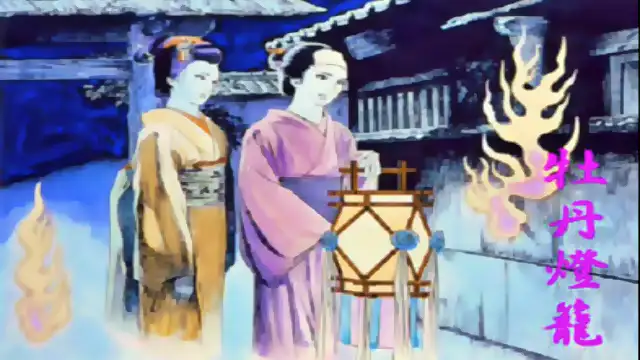
Kara-kon, kara-kon. The clacking sound of their wooden geta sandals is the only thing breaking the silence.

Ogiwara is instantly captivated by Otsuyu. He invites them into his home, and a passionate love affair begins. For twenty nights, the women visit him as soon as the sun sets and leave just before dawn. Ogiwara is consumed by this new love. He stops eating, stops leaving his house, and his health begins to fail. He looks pale, gaunt, and exhausted. Why? Because he’s spending his nights with the dead, and they are literally draining the life out of him.
An elderly neighbor or a concerned servant grows suspicious. Peeking through a crack in the wall, he expects to see Ogiwara with a beautiful woman. Instead, he is met with a vision of pure horror: his master is locked in a passionate embrace with a rotting, skeletal corpse. Beside them, another skeleton sits patiently, holding the peony lantern.
The neighbor confronts Ogiwara and drags him to a nearby temple. There, the priest shows him the truth: the graves of Otsuyu and O-Yone. They died months ago, heartbroken over Otsuyu’s unrequited love for a man she could not have. The priest, seeing the danger, covers Ogiwara’s house in protective paper charms (ofuda) to ward off the dead.
And it works.
The charms create a barrier the spirits cannot cross. Night after night, Otsuyu and her maid return, standing outside his home, weeping and calling his name, their voices filled with desperate longing. The kara-kon, kara-kon of their sandals is a nightly torment.
Ogiwara is safe, but he is miserable. He is heartbroken. The love he felt was real, and he cannot bear her sorrow. Eventually, his grief and longing get the better of him. In some versions, he removes the charms himself. In others, a greedy servant is bribed by the ghosts with gold to take them down.
Either way, the barrier is broken.

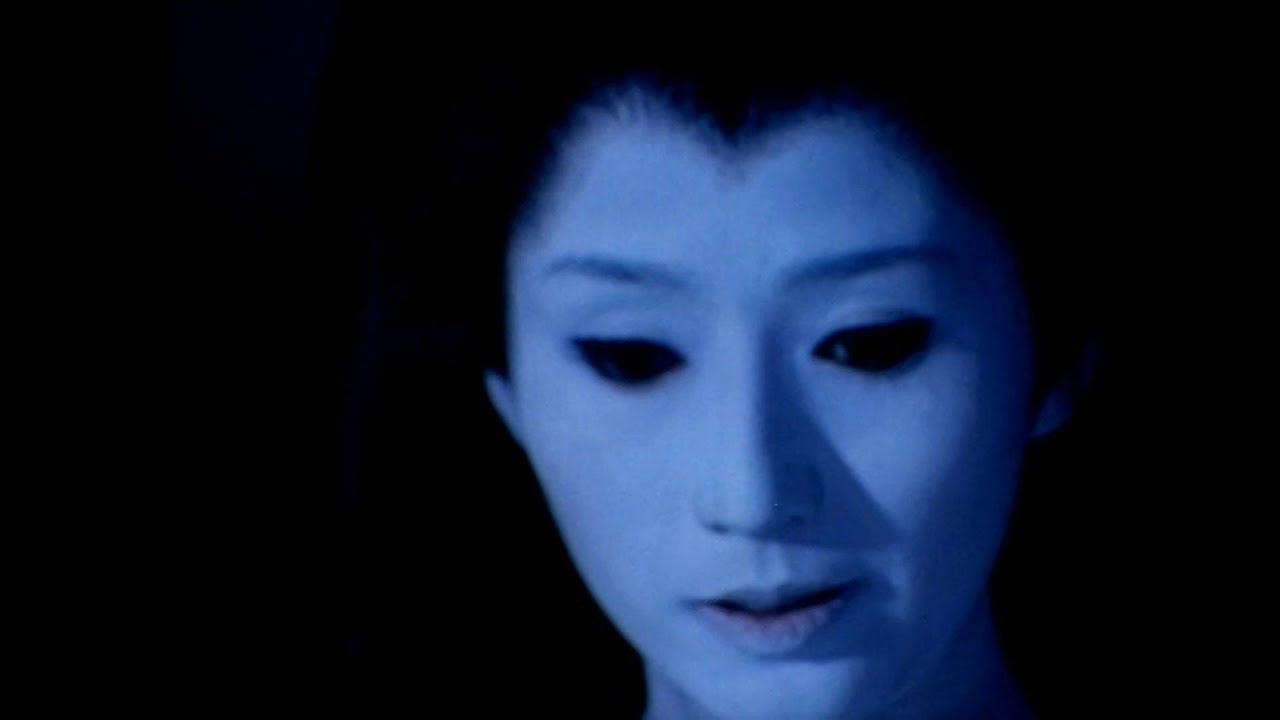
The next morning, the house is silent. The servants enter Ogiwara’s room to find him dead. His body is entwined with the skeletal remains of Otsuyu, a look of pure bliss frozen on his face.
What Does It All Mean? The Layers of the Lantern
Is this just a spooky story about necrophilia? Not even close. Botan Dōrō is a complex tapestry of cultural anxieties and profound themes.
- Love vs. Logic: At its heart, this is a story about the battle between emotion and reason. Ogiwara knows his love is dangerous. He’s been warned. He’s seen the graves. But the pull of his heart is stronger than the logic of his mind. Have you ever wanted something you knew was bad for you? That’s the core of this tale. It’s the ultimate toxic relationship.
- The Power and Peril of Female Desire: In Edo-period Japan, female desire was often seen as dangerous and destructive. Otsuyu isn’t a traditional vengeful ghost like those in other kaidan. She isn’t seeking retribution for a wrong done to her. She is seeking love. Her desire is so powerful that it transcends death itself. She embodies a tragic paradox: her devotion and loyalty, virtues praised in women, become monstrous in their supernatural intensity. She’s not evil; she’s just relentless.
- The Symbol of the Peony Lantern: The lantern isn’t just a spooky prop.
- Peonies in Japanese culture often symbolize wealth, honor, and courage, but also ephemeral beauty. They are gorgeous, but they wilt. This perfectly mirrors Otsuyu—beautiful, alluring, but representing the transient nature of life and love.
- The lantern itself, used during the Obon festival, is a direct link to the world of the dead. It’s a beacon that guides spirits. Every time you see that lantern, you’re being reminded that this love story is taking place on the threshold of the afterlife.
Why It Still Haunts Us
Botan Dōrō has been adapted into countless kabuki plays, films, and anime. There’s even a superstition that actors who play the ghosts of Otsuyu and O-Yone are cursed to have short lives.
But its endurance comes from its relatability. It taps into a fundamental human fear that is much deeper than ghosts or skeletons. It’s the fear that our own desires, our own capacity for love and obsession, can lead us to our ruin.
It asks a chilling question: if the love of your life returned from the grave to be with you, would you have the strength to turn them away? Or would you open the door?
The story of Ogiwara and Otsuyu is a brutal reminder that some flames are so intense, they don’t just warm you. They consume you entirely.
So, what do you think? Is this a tragic romance or a terrifying horror story? Let me know your take in the comments.

