
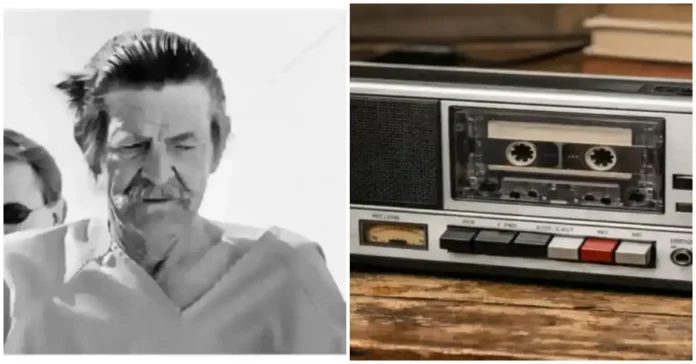
If you follow true crime podcasts or investigative documentaries, chances are you have mixed up the Toy Box Killer and the Tool Box Killers at least once. Their rhyming monikers sound almost identical, yet they represent two completely separate chapters of American criminal history. Sorting out the facts behind these notorious names reveals how different their motives, hunting grounds, and legal outcomes actually were.
Who was David Parker Ray?
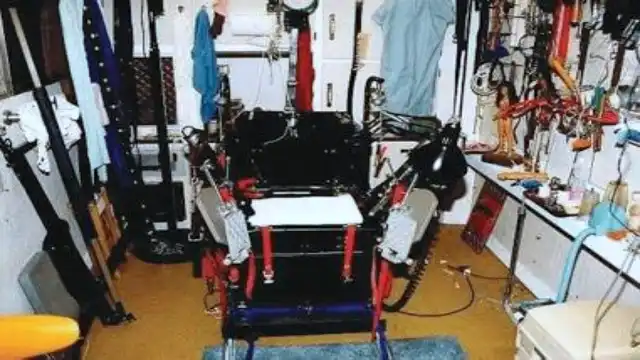
David Parker Ray operated out of Elephant Butte, a small, sunbaked lake town in southern New Mexico. On paper, he looked like an ordinary, quiet state employee. He worked as a heavy-equipment mechanic for the New Mexico State Parks Division and spent his free time working on home mechanics. Beneath that mundane exterior lived a compulsive sexual sadist who spent decades planning and executing elaborate abductions.
Ray did not hunt from the back of an alley on impulse. He built a stationary torture facility out of a modified, twenty-foot semi-trailer parked on his private desert property. He nicknamed this trailer the “Toy Box”. He soundproofed the interior walls with heavy acoustic foam and sheets of wood, outfitting the space with surgical lamps, a medical gynecological chair, pulleys, electrical stimulation machines, whips, and chains. It looked less like a crime scene and more like an underground operating theater.
His criminal method relied heavily on psychological disorientation and chemical control. Ray routinely targeted women he knew from local bars or casual neighborhood gatherings. After drugging a victim’s drink with potent sedatives — frequently veterinary tranquilizers or barbiturates like sodium pentothal — he would transport her to his compound.
When victims regained consciousness strapped to his chair, Ray would play an audio cassette tape he had prerecorded. In a cold, monotone voice, the tape outlined the rules of captivity, told the listener that her life as a free human was over, and described the torture she would endure. Ray often relied on female enablers, including his live-in girlfriend Cindy Hendy and his daughter Jesse Ray, to help capture and manage his captives.
His operation crumbled in March 1999. A captive named Cynthia Vigil managed to grab an ice pick while Hendy was briefly distracted. Barefoot, bleeding, and wearing only an iron dog collar padlocked around her neck, Vigil ran into the street and flagged down a passing motorist. Police swarmed the compound, arrested Ray, and uncovered a catalog of homemade torture devices that shocked state investigators.
Ray was eventually convicted of multiple counts of kidnapping and aggravated sexual assault, receiving a prison sentence of more than 224 years. He died of a heart attack in 2002 at the Lea County Correctional Facility without ever revealing where unrecovered bodies might be buried.
FULL STORY: The Toy-Box Killer Audio Tape: David Parker Ray Transcript
Who were Lawrence Bittaker and Roy Norris?
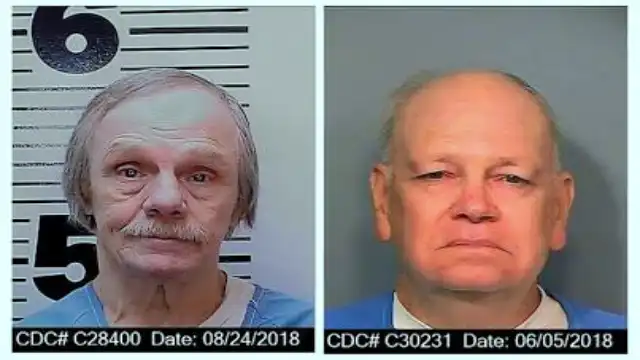
Across the country, two decades before Ray was caught, a deadly predatory duo terrorized Southern California. Lawrence Sigmund Bittaker and Roy Lewis Norris met in 1978 while serving sentences at the California Men’s Colony in San Luis Obispo. Bittaker was exceptionally intelligent with an IQ above 130, but he lacked any trace of human empathy. Norris was a convicted sex offender who shared Bittaker’s violent sexual fantasies.

Behind bars, they made a pact to execute a murder spree once they were paroled. They stepped out into the free world during late 1978 and early 1979, quickly putting their scheme into motion.
Bittaker purchased a silver 1977 GMC cargo van with no rear windows. The pair nicknamed this vehicle “Murder Mac”. Inside, they placed an ordinary metal hardware toolbox filled with everyday supplies: pliers, vice grips, screwdrivers, ice picks, sledgehammers, and wire coat hangers. Those everyday utility items gave them their moniker: the Tool Box Killers.
Between June and October 1979, the pair cruised Southern California highways, beach communities, and suburbs targeting young women and teenage hitchhikers. Their method was mobile, rapid, and lethal. Norris would lure or force young women into the back of the van. Bittaker would then drive high into the remote fire roads of the San Gabriel Mountains, where the two carried out horrific physical abuse before strangling their victims.
Unlike Ray, who kept his captives for days or weeks in isolation, Bittaker and Norris usually murdered their victims within hours of abduction. They also brought an audio cassette recorder into the back of the van. Bittaker recorded live audio of their final victim, sixteen-year-old Shirley Ledford, as she was tortured.
Their spree unraveled within five months. Norris bragged about their crimes to an acquaintance named Bob Risley, who immediately alerted police. Investigators arrested both men in November 1979.
Norris struck a deal to avoid execution, confessing in full and testifying against his partner in exchange for a sentence of 45 years to life. Bittaker went to trial, where prosecutors played the Ledford cassette tape. Spectators and seasoned officers wept or fled the courtroom in distress. Bittaker was sentenced to death in 1981, living on California’s death row at San Quentin until he died of natural causes in December 2019. Norris died just two months later in a state medical prison.
FULL STORY: The Toolbox Killers Tape: Audio That Shook FBI Profilers
Why their names are confused
Why do casual true crime fans constantly swap these two stories? The confusion happens for very understandable reasons:
- Near-Identical Nicknames: The words “Toy Box” and “Tool Box” differ by only one vowel. In conversation, people easily mix up the noun that describes their hardware.
- The Container Element: Both cases center on an enclosed container. Ray used an enclosed trailer room; Bittaker and Norris used a literal metal hardware box inside an enclosed van.
- Chilling Audio Cassette Recordings:Both cases feature infamous audio tapes. Ray recorded an instructional tape to brainwash and terrify conscious captives. Bittaker recorded a live tape of physical violence.
- Shared Psychological Pathology:Both cases represent extreme sexual sadism. Criminologists often study both perpetrators in the same academic discussions on coercive control and lethal gratification.
- Podcast and Streaming Adjacency: True crime shows frequently cover both cases back-to-back because they represent the darkest corners of modern criminal psychology.
Side-by-Side Comparison: Toy Box Killer vs Tool Box Killers
Looking at the logistics of each case highlights how little they actually had in common.

- Perpetrators:
- Toy Box Case: David Parker Ray, an older solitary planner supported by peripheral accomplices.
- Tool Box Case: Lawrence Bittaker and Roy Norris, an equal-opportunity predatory partnership formed in prison.
- Primary Location:
- Toy Box Case: Elephant Butte, Sierra County, New Mexico.
- Tool Box Case: Los Angeles County and the San Gabriel Mountains, California.
- Active Timeframe:
- Toy Box Case: Suspected from the late 1950s through March 1999 (arrested at age 59).
- Tool Box Case: June 1979 through October 1979 (a condensed five-month spree).
- The Physical “Box”:
- Toy Box Case: A customized, soundproofed stationary utility trailer.
- Tool Box Case: A portable metal Sears Craftsman toolbox carried inside a cargo van.
- Confirmed Fatalities:
- Toy Box Case: Zero confirmed murder convictions against Ray himself, though police suspect up to 60 deaths.
- Tool Box Case: Five confirmed murders of teenage girls.
- Legal Convictions:
- Toy Box Case: Multiple counts of kidnapping, false imprisonment, and sexual torture.
- Tool Box Case: First-degree murder, kidnapping, and rape.
- Apprehension Catalyst:
- Toy Box Case: Cynthia Vigil’s desperate physical escape from the trailer.
- Tool Box Case: A careless brag by Norris to an acquaintance who went to police.
- Final Destination:
- Toy Box Case: Died of a heart attack in 2002 after serving about one year in prison.
- Tool Box Case: Bittaker died on death row at San Quentin in 2019; Norris died in prison in 2020.
Victims and Investigations
Examining the victim timelines shows two entirely distinct investigative challenges.
In Southern California, Bittaker and Norris focused their fury on five young victims over five months in 1979: Cindy Schaefer (16), Andrea Hall (18), Jacqueline Lamp (13), Jackie Gilliam (15), and Shirley Ledford (16). Their disappearance touched off a desperate manhunt across the South Bay and suburban Los Angeles.
Ledford’s body was dumped on a suburban lawn on Halloween night in 1979, providing physical evidence that helped seal their fate. After Norris confessed, he guided detectives into the rugged canyons of the San Gabriel Mountains. Investigators recovered the skeletal remains of Gilliam and Lamp, though the bodies of Schaefer and Hall were never located.
New Mexico presented a completely different puzzle. Because Ray drugged his victims with amnesia-inducing chemicals, many women survived his trailer without fully understanding what had happened to them. One survivor, Kelli Garrett, awoke in a remote park with strange bodily injuries and scattered memories, yet initial police reports failed to piece the pattern together. Ray would convince victims that reporting anything would only result in their own embarrassment or prosecution.
When Cynthia Vigil broke free in 1999, the Federal Bureau of Investigation and local deputies spent months cataloging thousands of individual items from Ray’s property. They excavated his lakeside compound, sifted through old mining shafts across the desert, and dredged lake bottoms looking for human remains.
Despite recovering dental records, women’s clothing, and journals detailing suspected crimes, search teams found remarkably few bodies. Ray took his secrets to the grave, leaving dozens of families in the American Southwest without closure.
Key differences in criminal psychology
Forensic profilers view these killers through very different lenses.
Ray functioned as a ritualistic controller. He derived satisfaction from prolonged domination, sensory deprivation, and elaborate medical roleplay. He took pride in convincing women they were powerless. He spent thousands of dollars outfitting his compound, treating it like a permanent, grotesque laboratory.
Bittaker and Norris were impulsive thrill killers. They did not want to manage long-term prisoners; they wanted quick gratification, extreme physical terror, and immediate disposal. Their partnership fit the classic psychological model of a dominant predator (Bittaker) directing a weak-willed follower (Norris) who sought approval.
Consider also how they used audio technology. Ray made a utility tape — a prerecorded script designed to crush a captive’s hope before he began his abuse. Bittaker made a souvenir tape — a live audio track recording his victim’s agony so he could replay it later in private.

Legacy in true crime history
Both cases permanently reshaped American law enforcement practices.
The Tool Box Killers became a foundational case study for the FBI’s Behavioral Analysis Unit. Legendary profiler John Douglas famously used the Shirley Ledford recording at the FBI Academy in Quantico, Virginia. Douglas believed that hearing the unvarnished reality of violent sexual sadism was necessary to prepare field agents for the genuine darkness of psychopathic predators.
The Toy Box Killer case triggered major changes in how police handle sexual assault investigations involving chemical incapacitation. Ray’s extensive use of sedatives demonstrated that an assault survivor who seems confused or lacks linear memories is not lying. Today, forensic nurses and detectives are trained specifically to spot the biological markers of drug-facilitated sexual assault.
These cases also serve as a reminder of why sensational true crime nicknames matter. When the media reduces complex atrocities to catchy, rhyming headlines, critical facts get blurred. Remembering the distinct details honors the investigators who brought them down and keeps the focus where it belongs: on the courage of the survivors who escaped.
Frequently Asked Questions
Did David Parker Ray ever get convicted of murder?
No. Ray was convicted on dozens of felony charges of kidnapping, rape, and torture, but he was never legally convicted of homicide. Authorities suspect he murdered numerous victims, but finding verifiable human remains in the desert proved extraordinarily difficult.
Why did Lawrence Bittaker receive the death penalty while Roy Norris avoided it?
Norris agreed to cooperate immediately after his arrest. He offered prosecutors a full confession, walked detectives to the disposal sites in the mountains, and testified directly against Bittaker in exchange for a life sentence with parole eligibility. Bittaker refused to cooperate, pleaded not guilty, and received a death sentence from the jury.
Are the audio tapes from these cases available to the public?
Transcripts of Ray’s introductory audio warning have been published in court records and investigative books. The graphic torture tapes recorded by Lawrence Bittaker have never been released to the public. They remain sealed evidence in the custody of the Los Angeles County District Attorney’s Office and the FBI.
How many total victims did each case involve?
Bittaker and Norris were convicted of murdering five teenage girls. Ray was convicted of assaults against several surviving women, though investigators estimate his victim count over four decades could range from 40 to 60 people.
Understanding the divide between the Toy Box Killer and the Tool Box Killers comes down to geography, methods, and forensic reality. One was a reclusive mechanic in the New Mexico desert using chemical amnesia and a stationary trailer. The other was a predatory pair roaming California highways in a cargo van carrying carpenter’s tools. Their nicknames sound nearly the same, but the truth of what happened tells two very different stories.

