

A PG-13 Predator movie.
When that news broke, the collective groan from franchise fans was loud enough to be heard from space. This is the series built on skinned bodies, spinal cord trophies, and Arnold Schwarzenegger yelling at a “goddamn sexual tyrannosaurus.”
The only other times we got a PG-13 Predator were the Alien vs. Predator films. And, well… we don’t like to talk about those.
So, when 20th Century Studios announced that Predator: Badlands—the official follow-up to the 2022 masterpiece Prey—was also getting the PG-13 treatment, it felt like a betrayal. It felt like the studio was defanging one of cinema’s most iconic monsters just to sell more tickets.
I went into this movie expecting a watered-down, sanitized, studio-mandated mess.
Friends, I am thrilled to report: I was wrong.
Predator: Badlands is not only a great Predator film, it’s one of the most inventive, thrilling, and surprisingly heartfelt sci-fi adventures in years. It’s a film that understands why the Predator is scary, proving that terror doesn’t come from the color of the blood.
It comes from the hunt.
What’s the Hook? (No, Really)
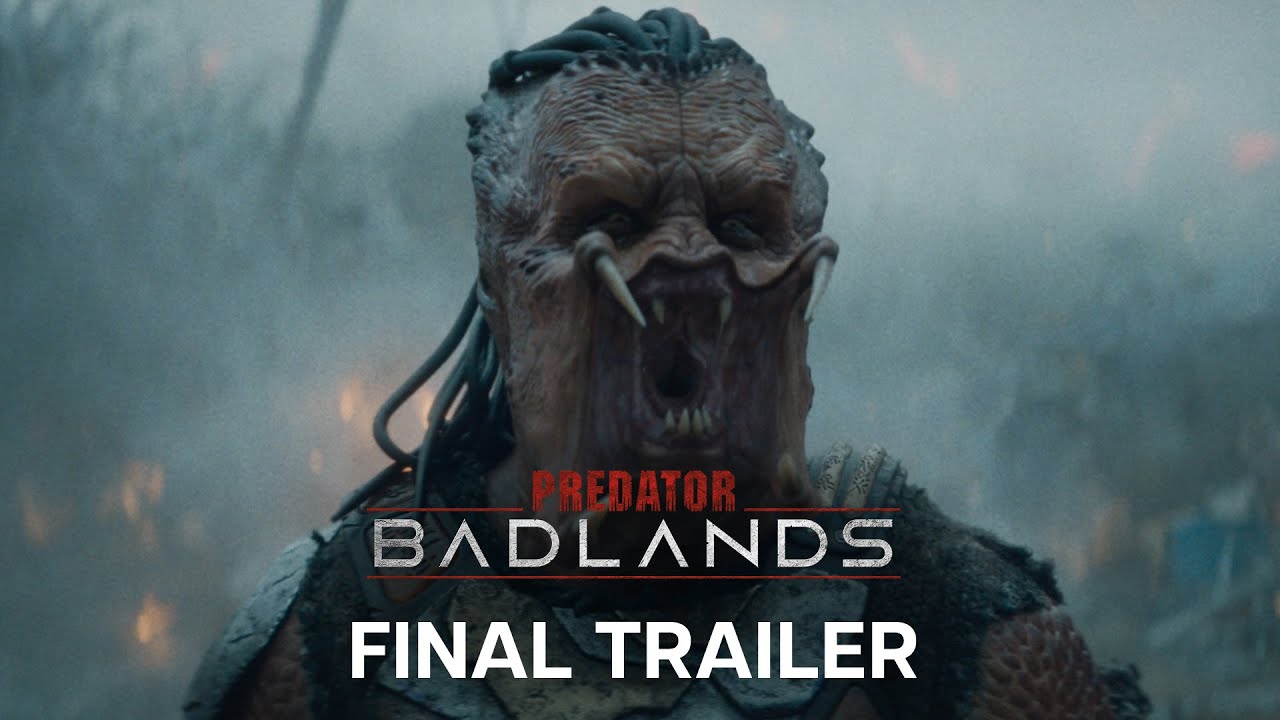
Badlands is directed by Dan Trachtenberg, the same guy who directed Prey. This is the most important fact you need to know. The man gets this franchise. He doesn’t just re-create; he re-invents.
After taking us to the Comanche Nation in 1719, Trachtenberg now slingshots us far into the future, to a hostile alien world named Genna.
The story follows Dek (played by Dimitrius Schuster-Koloamatangi), a young Yautja who is, for lack of a better term, a runt. He’s an outcast from his clan, undersized and desperate to prove he’s not a failure. To do this, he steals a ship and heads to the most dangerous planet he can find to hunt the local apex predator, a terrifying beast called the Kalisk.
This is not a good plan.
Almost immediately, Dek is in over his head. His ship is damaged, and he’s wounded. And that’s when he stumbles upon Thia, played by Elle Fanning.
Thia is a Weyland-Yutani synthetic, but she’s… incomplete. When Dek finds her, she is just a head, a torso, and one arm. She’s been stranded for a long time, and her twin synth, Tessa (also Fanning), is missing.
They are two broken pieces of a puzzle. He needs a guide who understands the planet and its tech. She needs, well, legs.
What follows is a brilliant “buddy movie” premise: the disgraced Predator, Dek, ends up carrying the damaged, hyper-chatty synth, Thia, on his back. It’s The Defiant Ones or C-3PO on Chewbacca’s back, but if Chewie was a 7-foot-tall alien killer who sees Thia as either “useful tool” or “acceptable-in-a-pinch trophy.”
This odd-couple dynamic is the absolute soul of the movie.
How Can a PG-13 Predator Film Actually Be Violent?
Okay, let’s talk about the rating. How did they pull this off?
Trachtenberg and his team found the ultimate loophole in the MPAA ratings system. The R rating for Predator movies is almost always triggered by one thing: red-blooded human gore.
Badlands cleverly removes that one ingredient.
The film has zero human casualties. Think about that. The only “people” in the movie are synthetics.
- When a synth gets hurt, they don’t bleed red. They “bleed” a milky, white fluid.
- When a Yautja gets hurt, they bleed neon green.
- When the alien creatures get hurt, they bleed… well, all sorts of other colors.
Because there is no human blood, the movie gets a PG-13. But make no mistake, this movie is brutal.
It is packed with dismemberment, impalements, and savage kills. We see limbs torn off, heads crushed, and bodies shredded by plasma casters. The action is relentless and visceral. It just… isn’t red.
By forcing this creative constraint, the film feels even more alien. It’s a “PG-13 that feels like an R,” pushing the boundary right to the breaking point without ever crossing the MPAA’s one magic line. It’s a genius move that sacrifices none of the franchise’s intensity.
Why This Movie Just Works
Predator: Badlands succeeds on three main levels where so many other sci-fi sequels fail.
1. The Characters Click. Hard.
This movie lives or dies on the “backpack” dynamic, and it soars. Elle Fanning is phenomenal as Thia. She’s not just a damsel or a sidekick; she’s the brains of the operation. She’s pragmatic, sarcastic, and relentlessly talkative, which drives the silent, honor-bound Dek insane.
The real magic is in the suit performance for Dek. Through subtle head-tilts, frustrated growls (subtitled for our benefit), and pure physical acting, he conveys more emotion than some human actors. You watch these two total opposites—one a logical machine, the other a primal warrior—slowly forge a bond. They go from seeing each other as objects to, eventually, partners. It’s a “hunter’s code” meeting “programmed logic,” and it’s fantastic.
2. The World-Building is Smart, Not Just Big
This isn’t just a generic jungle or a dusty planet. The planet Genna is a character. Trachtenberg builds a full ecosystem where everything is a threat. The flora and fauna are inventive and deadly.
More importantly, the film expands the Yautja lore in a way that feels earned.
- We get to see a Predator who isn’t an alpha. Dek is an underdog. He fails. A lot.
- We see a Yautja interact with advanced human tech (Thia) with a mix of disgust and curiosity.
- The connection to the Alien franchise via Weyland-Yutani is direct but doesn’t hijack the movie. It serves the plot, not the other way around.
3. The Action is Clean
If you’re tired of “shaky cam” action where you can’t tell what’s happening, this movie is the antidote. Trachtenberg is a master of clear, creative, and legible action.
Every fight is a story.
- The stakes are clear: What does the creature do? How does it hunt?
- The geography is clear: Where are the characters? Where is the exit?
- The solution is creative: Dek and Thia have to think their way out of fights, not just blast through them. They combine Yautja weapons with synth-hacking in ways that are incredibly satisfying.
What’s Not to Like?
Is it a perfect movie? No.
Some of the “side-quest” creatures they fight on the way to the main boss (the Kalisk) feel a little video-gamey. “Oh, now it’s the flying-creature level. Now it’s the vine-monster level.”
And for some franchise purists, the very idea of a “buddy” Predator will be a non-starter. If you only want to see the Yautja as an unstoppable, mysterious slasher, this film’s attempt to give one a character arc might not work for you. It humanizes the monster, which is a bold swing.
Finally, some of the CGI, particularly on a few of the wider-shot alien animals, looks a little less polished than the practical suit work. But these are minor gripes in a film that gets so much right.
The Verdict: Should You Watch It?
Yes. Absolutely. See this on the biggest screen you can.
Predator: Badlands is a massive win. It proves that Prey was not a fluke and that Dan Trachtenberg is the perfect custodian for this franchise.
He successfully threaded an impossible needle:
- He made a Predator movie that feels fresh and new.
- He made a buddy movie where one of the buddies is a monster.
- He made a PG-13 movie that feels just as savage and intense as its R-rated brothers.
The film is a tight, kinetic, and wildly entertaining sci-fi adventure that respects the franchise’s DNA while having the courage to evolve it. This isn’t just a good Predator movie; it’s a great movie, period.
The franchise is in the best hands it’s been in since 1987.
What Do You Think?
Are you on board with a PG-13 Predator? Did the “buddy” dynamic work for you, or do you miss the R-rated gore? Drop your (spoiler-free!) thoughts in the comments below!

