

Antarctica Pyramid: The Nunatak Mountain Peak Explanation
Wait, aliens built a pyramid in Antarctica?
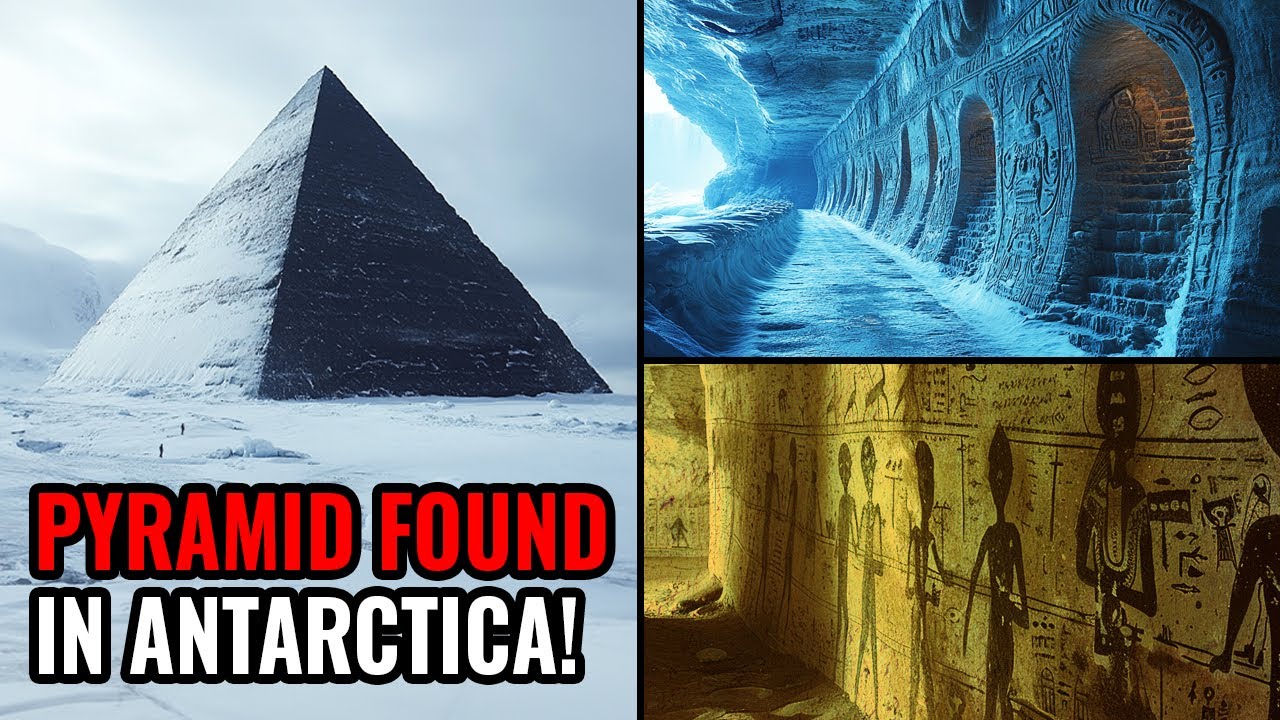
If you’ve been scrolling through TikTok or X (formerly Twitter) lately, you’ve probably seen that image. You know the one a snowy, perfectly symmetrical pyramid jutting out of the Antarctic ice, looking like it was dropped there by the same guys who built Giza. The captions are wild: “Secret government base,” “Remnants of Atlantis,” or my personal favorite, “Alien landing pad.”
this conspiracy theory is somehow still racking up millions of views. But before you pack your bags to hunt for extraterrestrial artifacts at the South Pole, let’s take a breath. As cool as a frozen alien fortress sounds, the truth is actually way more interesting and it’s 100% natural.
Let’s break down the Antarctica Pyramid (which is actually just a very photogenic mountain) and explain the science behind it without the boring textbook jargon.
The “What”: It’s a Nunatak, Not a Necropolis
First off, let’s get the terminology straight. That “pyramid” has a name in geology: it’s called a nunatak.
What’s a nunatak?
Imagine a massive glacier swallowing a mountain range whole. The ice gets so deep that it buries almost everything valleys, ridges, foothills. But the very tips of the tallest mountains? They poke through the top of the ice sheet like islands in a frozen ocean. That jagged, exposed peak is a nunatak.
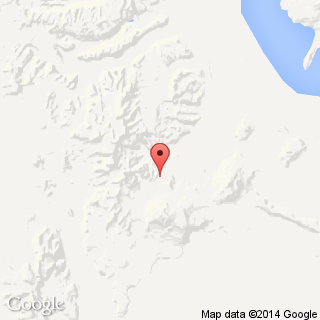
The specific “pyramid” everyone is freaking out over is an unnamed peak in the Ellsworth Mountains of Antarctica.
- Location: Heritage Range, Ellsworth Mountains
- Coordinates: 79°58’39.25″S 81°57’32.21″W (Go ahead, check it on Google Earth!)
- Height: Approx. 4,150 feet (1,265 meters)
It’s not some hidden structure located at the exact magnetic pole. It’s just one peak in a range of mountains that stretches for over 200 miles.
The “How”: Nature is the Ultimate Sculptor

So, how does a chaotic pile of rocks turn into a perfect four-sided pyramid? Did an ancient civilization chisel it? Nope. The artist here is Freeze-Thaw Erosion.
Think of this mountain like a rock that’s been stuck in a geological blender for millions of years.
1. The Freeze-Thaw Cycle
Antarctica isn’t just cold; it’s brutal. During the day (when the sun actually shines), snow melts or sublimates just enough to let water seep into tiny cracks in the mountain’s rock. At night, temperatures plummet, and that water freezes.

Here’s the physics part: Water expands when it freezes.
When that trapped water turns to ice, it pushes against the rock from the inside out, acting like a slow-motion jackhammer. Crack. Snap. Pop. Over time, this shatters the rock, causing pieces to flake off.
2. Glacial Carving
This peak isn’t just being eroded from the inside; it’s being carved from the outside. Glaciers are essentially slow-moving rivers of sandpaper. As ice flows down the sides of the mountain, it scours the rock faces flat.
When you have glaciers eroding a mountain from three or four different sides simultaneously, they whittle the peak into a sharp, pointed shape. Geologists call this a glacial horn.
Real-World Example:
Ever heard of the Matterhorn in the Swiss Alps? It’s one of the most famous mountains on Earth, and guess what? It’s a jagged, pyramid-shaped glacial horn. Nobody claims aliens built the Swiss Alps (well, mostly nobody), yet the process is exactly the same.
“Pyramid shapes are not impossible-many peaks partially look like pyramids, but they only have one to two faces like that, rarely four.” – Dr. Eric Rignot, Professor of Earth System Science, University of California, Irvine.
While four symmetrical faces are rare, they are a statistical inevitability when you have enough mountains and enough time. The Ellsworth Mountains have been eroding for hundreds of millions of years. Nature had plenty of time to get this one right.
Why Our Brains Want to Believe It’s Aliens
If it’s just a rock, why does it look so artificial?
You can blame your own brain for that. Humans are hardwired with something called pareidolia. It’s the psychological phenomenon that makes us see faces in clouds, Jesus on a piece of toast, or man-made structures in random geological formations.
We love patterns. We love symmetry. When we see a mountain that looks “too perfect,” our brains scream, “Intelligent Design!” because we assume nature is always messy and chaotic. But nature loves geometry, too. Crystals, snowflakes, honeycombs-geometry is everywhere in the natural world.
| Claim | Reality / Scientific Response |
|---|---|
| It’s built by ancient humans / aliens | No archaeological artifacts or evidence – just rock. Geologists studied it; shape explained by glaciers. |
| Ice melted to expose pyramid quickly (recently) | Antarctic ice dynamics are slow; glacial erosion + freeze-thaw over millions of years produces such peaks. |
| Patterns are too perfect / symmetrical to be natural | Uniform rock + uniform erosion can (rarely) create symmetrical shapes. That’s plausible and documented. |
The “Who”: Debunking the Myths
Let’s tackle the most popular internet theories with some cold, hard facts.
Theory #1: “It’s a secret base built by the Nazis/Illuminati/Aliens.”
The Reality: The Ellsworth Mountains were discovered in 1935 by American aviator Lincoln Ellsworth. We’ve had eyes on this range for nearly a century. If there was a base there, it would be the worst hiding spot in history because the peak is visible from satellite imagery available to literally anyone with an internet connection.
Theory #2: “It’s a remnant of a civilization from when Antarctica was warm.”
The Reality: It’s true that Antarctica used to be warm and lush (we’re talking dinosaur era, millions of years ago). In fact, the Heritage Range is full of trilobite fossils from the Cambrian period, over 500 million years ago.
However, humans have only been around for a tiny fraction of Earth’s history. By the time humans started stacking stones, Antarctica was already a deep freeze. Unless you think trilobites were excellent masons, the timeline just doesn’t add up.

Theory #3: “The symmetry is mathematically perfect.”
The Reality: It’s actually not. From one specific angle (the one in the viral photos), it looks perfect. But if you rotate the view on Google Earth or look at aerial photography from other angles, the “pyramid” illusion falls apart. The eastern side is much steeper than the others, and the base is irregular. It’s a classic case of forced perspective.
Why This Matters (Beyond the Memes)
Why should we care about a pointy rock in the middle of nowhere?
Because understanding nunataks helps us understand climate history. These peaks are vital for scientists. By studying the rocks exposed above the ice, geologists can figure out how thick the ice sheet was in the past. They act as “dipsticks” for the ice age, recording the history of our planet’s climate fluctuations.
Plus, simply knowing the difference between a glacial horn and an alien bunker makes you the smartest person in the group chat when this conspiracy pops up again (and it will pop up again).
The Verdict
Is the Antarctica Pyramid cool? Absolutely.
Is it mysterious? Kind of.
Is it man-made? Zero chance.
It is a masterpiece of geological erosion, a survivor of millions of years of grinding ice and freezing winds. It’s a reminder that nature is capable of sculpting shapes that rival anything human hands can create.
So, next time you see that grainy photo circulating with a spooky caption, you can smile and say, “Chill, it’s just a nunatak.”
FAQs
Is the “Antarctica Pyramid” a real structure?
Yes, the mountain is real but it’s not a human-made pyramid. It’s a nunatak, which is a rocky mountain peak sticking out above Antarctica’s ice sheet. Its pyramid-like shape is natural.
Where is the Antarctica Pyramid located?
It sits in the Ellsworth Mountains, specifically within the Heritage Range. This area hosts several steep, angular peaks that look geometric from certain angles.
How did the mountain get its pyramid shape?
The shape comes from glacial erosion. When glaciers grind away at a mountain from multiple sides over millions of years, they carve sharp ridges and steep faces creating a pyramidal peak (also called a glacial horn).
Could ancient civilizations have built it?
No. There is zero archaeological evidence of human activity in Antarctica before modern scientific expeditions. The rock composition, erosion patterns, and geological history all confirm it’s a natural feature.
Did aliens build the Antarctica Pyramid?
Nope. Alien involvement has no scientific support. The mountain’s shape is fully explained by standard geological processes.
Why do photos make it look like a perfect pyramid?
Because of camera angles, lighting, and perspective. From the right viewpoint, only the most symmetrical side is visible, making it appear more precise than it is in reality.
What exactly is a nunatak?
A nunatak is an exposed rocky peak poking up through an ice sheet or glacier. Think of it as a mountain island surrounded by ice instead of water.
Are there other pyramid-shaped peaks in Antarctica?
Yes. Antarctica has several naturally angular peaks, including:
The Pyramid (Koettlitz Glacier area)
Stephenson Nunatak
Mount Paterson
These formations are common in glaciated landscapes.
Has anyone studied the Antarctica Pyramid mountain directly?
Scientists have studied the broader region’s geology, ice behavior, and rock formations. Everything observed matches natural glacial processes, not artificial construction.
Is the mountain hollow or hiding something underneath?
No investigations show anything unusual underground. Like other mountains, it’s solid rock shaped by erosion and tectonics.
Why do conspiracy theories about Antarctica spread so easily?
Because Antarctica is remote, hard to access, and visually dramatic. Pair that with viral satellite images and our tendency to look for patterns, and myths grow quickly.
Can tourists or researchers visit the site?
Access is extremely limited. Only specialized Antarctic scientific teams or rare expedition flights come near the Heritage Range. It’s not on common tourist routes.
What can we learn from nunataks like this?
Nunataks help scientists study: Past climate conditions, Ice sheet movement, Ancient rock formations, They’re valuable windows into Antarctica’s geological history.
Is climate change revealing new pyramid-like shapes?
Climate change is exposing more rock in some areas. But these shapes aren’t new or hidden structures they’re just mountains becoming more visible as ice retreats.
So, what’s the final verdict on the Antarctica Pyramid?
It’s natural, not artificial. A stunning example of what glaciers can sculpt, but not evidence of lost civilizations or extraterrestrial architecture.
Found this explanation helpful? Share this post to spread the science!

