

Khmaoch Sângkât: When History Pushes You Down in Your Sleep
Imagine waking up in the dead of night. Your mind is alert, screaming for you to move, but your body is dead weight. You can’t lift a finger. You can’t make a sound. And then, you see it. A dark shadow looming in the corner of your room, inching closer. Or worse—it’s already sitting on your chest, crushing the air out of your lungs.
If you’re in the West, you might call this sleep paralysis. But if you’re Cambodian, you know this visitor by a different name: Khmaoch Sângkât (ខ្មោចសង្កត់).
It literally translates to “the ghost pushes you down.”
For most of us, sleep paralysis is a scary biological glitch. But for survivors of the Cambodian genocide and their descendants, it’s often a terrifying spiritual assault—a haunting reminder of a past that refuses to stay buried.
Why does this specific nightmare plague the Cambodian community at such alarming rates? And how did a 1970s regime of terror turn a common sleep disorder into a cultural epidemic? Let’s dive deep into the intersection of trauma, culture, and the science of the sleeping mind.
More Than Just a Bad Dream
Sleep paralysis happens when your brain wakes up before your body does. During REM sleep, your muscles are paralyzed to stop you from acting out your dreams. Sometimes, the switch gets stuck. You’re awake, but your body is still in “off” mode.

Panic sets in. Your brain, trying to make sense of the helplessness, hallucinates a threat.
But in Cambodia, this isn’t just neurons misfiring. It’s personal.
The “Ghost Pressure”
In Khmer culture, Khmaoch Sângkât is almost always interpreted through a spiritual lens. It’s not a hallucination; it’s a visitation. The entity sitting on your chest might be:
- A deceased relative angry about being neglected.
- A malevolent spirit (neak ta) warning you of bad luck.
- A victim of the Killing Fields seeking acknowledgement.
This cultural belief changes everything. If you think your paralysis is just a brain glitch, you might go back to sleep. If you believe a ghost is trying to suffocate you? You stay awake, terrified, scanning the room for shadows.
The Genocide Connection: A National Trauma
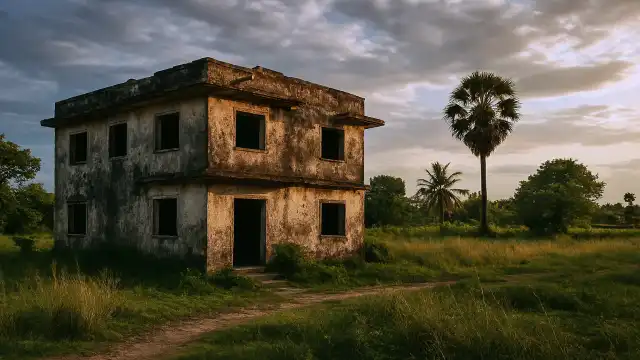
Here is where the story gets heavy—and necessary. To understand Khmaoch Sângkât today, we have to look back at the Khmer Rouge regime (1975–1979).
Under Pol Pot, nearly 2 million Cambodians died from starvation, execution, and overwork. It was a “Year Zero” that shattered the psyche of a nation. But the horror didn’t end when the regime fell. It followed survivors into their nightmares.
The Statistics Don’t Lie
Research by Dr. Devon Hinton, a psychiatrist at Harvard Medical School who has spent decades working with Cambodian refugees, uncovered some staggering numbers:
- 42% to 49% of Cambodian refugees surveyed reported experiencing sleep paralysis at least once a year.
- Compare that to the general global population, where chronic rates hover around 3% to 6%.
- 90% of these episodes involved seeing an approaching figure.
Dr. Hinton’s work suggests that Khmaoch Sângkât isn’t just a sleep disorder; it’s a somatic (physical) manifestation of PTSD. The “ghost” pushing down on them often wears the black pajamas of a Khmer Rouge cadre, or resembles a lost loved one.
“The ghost pushes you down because you have bad karma, or because you forgot the ancestors.” — Common belief among survivors.
For these survivors, the paralysis mimics the helplessness they felt during the genocide—bound, silenced, and at the mercy of a merciless force.
Why Is It So Common?
You might ask, “Why doesn’t this happen to every traumatized group?” It’s a mix of biology and belief.
- Hyperarousal: PTSD keeps the brain on high alert, disrupting sleep cycles and making you more prone to waking up during REM sleep.
- The “Panic Loop”: Because the culture defines the event as a dangerous spirit attack, the fear response is dialed up to 11. This intense fear actually increases the likelihood of it happening again. It’s a vicious cycle.
- Survivor’s Guilt: Many survivors feel immense guilt for living when so many died. The “ghost” becomes a physical weight of that guilt, pressing down on their chest.
Fighting Back: Spirit Houses and Amulets
So, how do you fight a ghost? You don’t use a pill; you use a prayer.
Since the cause is seen as spiritual, the cure must be too. Even in 2025, many Cambodian families—both in Cambodia and the diaspora—rely on traditional methods to ward off Khmaoch Sângkât.

- Spirit Houses (Neak Ta): Walk past a Khmer home, and you’ll likely see a small, ornate shrine outside. These jeung ju (spirit houses) are where families make daily offerings of fruit, incense, and water to appease the spirits so they don’t come inside to “press” them.
- The Kru Khmer: Traditional healers, or Kru Khmer, are often consulted before doctors. They might prescribe specific protective amulets, often waistbands or necklaces tied with sacred Pali knots, to create a spiritual shield.
- Sleeping Posture: Many elders warn against sleeping on your back, a position known to trigger sleep paralysis. They’ll tell you it leaves your chest vulnerable to spirits. Science backs this up—supine sleeping does increase the risk of paralysis.
The Next Generation: “2 Khmerican Sisters”
It’s not just the older generation. The trauma has rippled down. Second-generation Cambodian-Americans (often called “Khmericans”) experience Khmaoch Sângkât too, though they often bridge the gap between spiritual dread and scientific skepticism.
Podcasts like “2 Khmerican Sisters” (an episode from 2020 specifically tackled this) have opened up a safe space for younger people to discuss these “paranormal” encounters without fear of being called crazy. They blend the spooky anecdotes of their parents with modern mental health awareness, proving that while the ghost might still visit, it doesn’t have to rule their lives.
Younger people are asking: Is this my anxiety, or is this my ancestor? The answer is often: It’s both.
How to Cope (If the Ghost Visits You)
Whether you believe it’s a neuron misfire or a visitation, the experience is terrifying. If you ever find yourself frozen in bed, here are a few tips from both sleep experts and cultural wisdom:
- Wiggle the Small Stuff: You can’t move your arms, but you can often move your eyes or toes. Focus all your energy on wiggling a big toe. This can send a “wake up” signal to the rest of your body.
- Change Your Sleeping Position: Stop sleeping on your back. Seriously. It’s the #1 trigger.
- Mental Reframing: Dr. Hinton’s therapy often involves teaching patients to reframe the “ghost” as a biological event. “This is just a dream. I am safe.”
- Spiritual Comfort: If it helps, keep a protective object nearby. The placebo effect is powerful. If an amulet makes you feel safe enough to sleep deeply, then it works.
Honoring the Past, Healing the Present
Khmaoch Sângkât is a stark reminder that trauma doesn’t just disappear when a war ends. It seeps into the soil, the culture, and even our sleep. For the Cambodian community, these nightly visitations are a testament to a resilience that has survived unspeakable horrors.
Understanding this phenomenon helps us approach mental health with more empathy. It’s not enough to tell someone “it’s just a dream” when their culture and history tell them it’s a ghost. We have to listen to the story the ghost is telling.
Have you ever experienced the “ghost pushing down”? Or do you have a family remedy that keeps the nightmares away? Share your story in the comments below—let’s turn on the lights together.

