

Cloverfield: Where the Monster Came From (Satellite Drop Theory)
You remember the final seconds of Cloverfield, right? Rob and Beth are filming their date on the Ferris wheel at Coney Island, totally oblivious to the nightmare awaiting them. But in the background blink and you’ll miss it something falls from the sky and splashes into the Atlantic Ocean.
For over 15 years, that falling object has been the “Zapruder film” of sci-fi horror. Was it a satellite? A meteor? The monster itself?
If you’ve been scratching your head (or arguing in Reddit threads) about where the beast actually came from, grab a Slusho and buckle up. We’re diving deep into the Satellite Drop Theory, the insane viral marketing lore that fueled it, and the recent bombshells from director Matt Reeves that turned everything upside down.
The “Satellite Drop” Theory Explained

For over a decade, the gold standard for Cloverfield lore was the Satellite Drop Theory. This wasn’t just fan fiction; it was built on one of the most elaborate Alternate Reality Games (ARGs) in movie history.
According to this theory, the object falling into the ocean was not the monster. It was a piece of a Japanese government satellite named ChimpanzIII.
The ChimpanzIII Incident
Here’s the rundown of what the hardcore fans the ones digging through fake corporate websites in 2008 discovered:
- The Object: A rogue piece of the ChimpanzIII satellite fell out of orbit.
- The Crash: It splashed down off the coast of New York (the exact footage seen at the end of the movie).
- The Awakening: The crash didn’t deliver the monster; it woke it up.
In this version of the story, the monster (affectionately nicknamed “Clover” by the production team) wasn’t an alien. It was a terrestrial, deep-sea creature that had been hibernating on the ocean floor for thousands of years. The satellite debris was just the cosmic alarm clock that startled the baby beast from its slumber.
Tagruato, Slusho, and the Deep Sea Cover-Up
You can’t talk about the satellite theory without mentioning Tagruato, the fictional Japanese mining corporation that serves as the “Umbrella Corporation” of this universe.
The ARG revealed that Tagruato wasn’t just drilling for oil. They were hunting for a substance called Seabed’s Nectar a secret ingredient used in their addictive slushy drink, Slusho! (You might remember Rob’s brother, Jason, wearing a Slusho t-shirt in the film).
Chuai Station: Ground Zero
- The Drill Site: Tagruato built the Chuai Station oil rig specifically to harvest this nectar.
- The Nest: Turns out, the nectar was concentrated on the back of the dormant monster (or was its food source).
- The Mistake: By drilling too greedily and too deep, Tagruato disturbed the creature. The satellite crash might have been the final straw, or perhaps a cover story for the military action trying to contain the breach.
This deep-sea origin made Clover a tragic figure a confused, agitated animal defending its territory, not a malicious invader.
The “Paradox” Twist: A Ripple in Time
Then came 2018. Netflix dropped The Cloverfield Paradox, and suddenly, the “ancient deep-sea creature” theory got a multiverse makeover.
The film introduces the Shepard Particle Accelerator. When the crew aboard the station fires it up, they accidentally shatter the barriers between dimensions.
How does this fit the Satellite Theory?
The movie suggests that the accelerator accident didn’t just mess up their timeline (2028); it rippled backward and forward through time. This implies that the monster might have been “dropped” into the ocean in 2008 from another dimension.
So, under this theory:
- The monster did fall from the sky (via a dimensional rift).
- It dormant underwater until the events of the first movie.
- The “Satellite” seen falling might have been debris from the dimension-shattering event.
It was a messy explanation, but it technically kept the “dormant deep-sea” and “sky-fall” ideas alive simultaneously.
The 2023 Retcon: Matt Reeves Drops the Mic
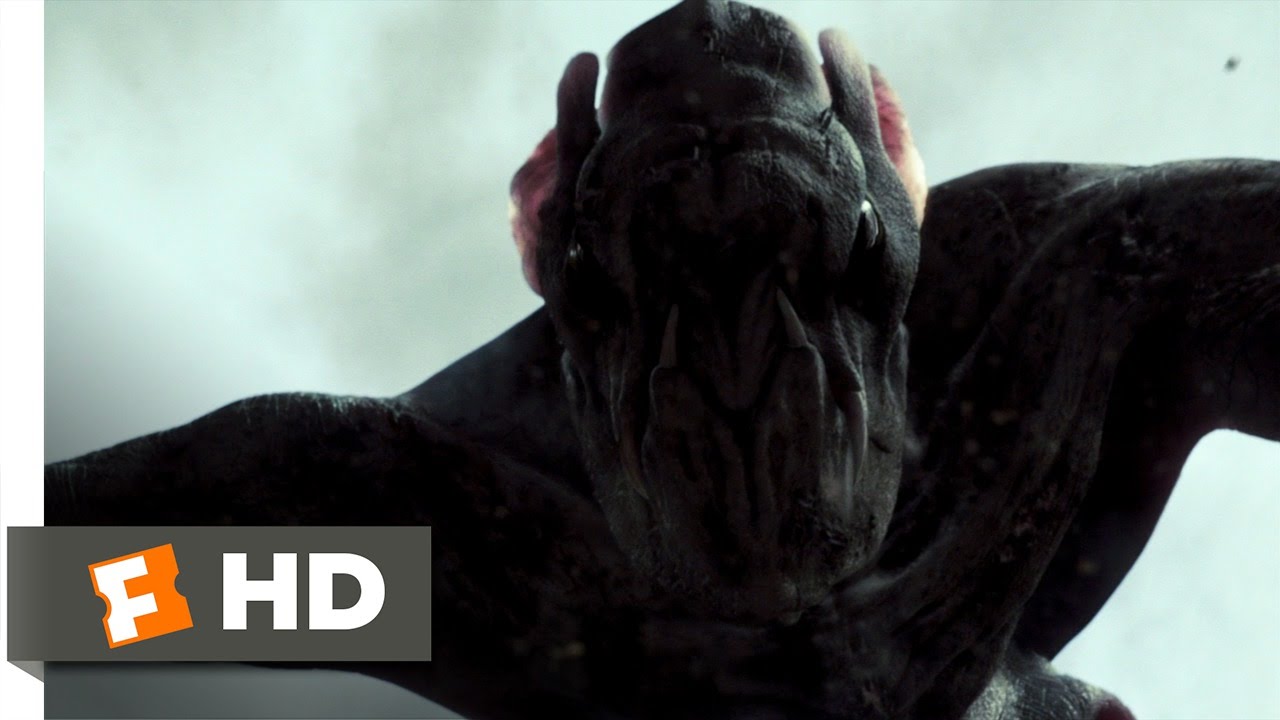
Just when we thought we had it all figured out, director Matt Reeves came out in a 2023 interview with SyFy and completely shook the foundation of the lore.
The Revelation:
“It’s alien. In fact, at the end of the movie, you can see the moment when it comes to [Earth]. It’s another one of those little Easter egg moments… you can see the meteor flying down and hitting the ocean. That’s actually the beginning of the baby being on Earth.” — Matt Reeves
Wait, what?
Alien vs. Ancient
Reeves’ statement directly contradicts the ARG lore that fans had treated as gospel for 15 years.
- Old Canon (ARG): Monster is ancient, terrestrial, and woke up. The falling object was a satellite.
- New “Word of God” (Reeves): Monster is an alien. The falling object was the monster (or its egg/pod).
This created a massive rift in the fanbase. Did the director just forget the intricate backstory his own marketing team built? Or was the ARG always just a “smoke screen” to mislead us?
Synthesizing the Truth: What Should You Believe?
So, where did the monster really come from? Here is the most balanced way to look at it in 2025/2026:
1. The “Death of the Author” Approach
If you love the depth of the Cloverfield universe, stick to the ARG/Satellite Theory. It’s richer, makes the monster more sympathetic, and connects the dots with 10 Cloverfield Lane (Tagruato satellites are mentioned there too). In this version, the falling object is definitely the ChimpanzIII satellite, and Clover is an Earth-born ancient biological entity.

2. The “Director’s Cut” Approach
If you prefer a simpler, literal interpretation, listen to Matt Reeves. The monster is an extraterrestrial biological weapon or animal that crash-landed off Coney Island inside a meteor/pod. The drilling and Slusho angles are just coincidences or secondary elements.
3. The “Paradox” Glue
If you want to make everyone happy, blame the multiverse. Maybe in one timeline, it’s an ancient sea creature. In another, it fell from the sky. The Cloverfield Paradox allows all these origins to be true in parallel realities.
Re-watching Cloverfield
Why are we still obsessed with a 3-second clip of a splash in a movie from 2008? Because Cloverfield mastered the art of the Mystery Box.
It didn’t spoon-feed us answers. It gave us a shaky camcorder, a headless Statue of Liberty, and a website for a fake Japanese soft drink. Whether it was a satellite waking a dragon or an alien pod crashing down, the terror remains the same.
What do you think? Are you Team Deep-Sea Ancient or Team Alien Invader?
Key Takeaways for the Timeline
- Dec 2007: Chuai Station is destroyed (according to ARG).
- April 2008: Rob and Beth film at Coney Island; object falls into the ocean.
- May 2008: The “Cloverfield” attack destroys New York City.
Note: The discrepancy between the December station destruction and the April satellite crash is often cited as proof that the satellite didn’t wake the monster it was already awake. Reeves’ new comment that the object was the monster arriving actually fixes this timeline error, even if it ignores the station lore!
Ready to dive deeper into the mystery?
Start your own investigation. Search for “Tagruato Corp” or “Slusho!” on the Wayback Machine and see the digital crumbs left behind. Just don’t drink the nectar.
Check out the official Wikipedia entry for the film’s marketing or dive into the Cloverfield Wiki for a granular breakdown of every ARG clue.

