

Sinister Ending Explained: How Bughuul Travels Through Super 8 Footage
Have you ever screamed at a horror movie character to just pack up and leave? We all have. Ellison Oswalt actually listens to that advice in the 2012 film Sinister. He nopes right out of the haunted house. Yet, leaving is exactly what gets him killed. Scott Derrickson’s modern thriller flips the classic haunted house trope on its head. Instead of a physical location, the haunting lives inside an artistic medium. Specifically, it thrives inside a box of terrifying Super 8 home movies.
Key Takeaways
- Moving triggers the trap: Fleeing the crime scene is the final, fatal step of the cursed ritual.
- Images are literal gateways: Bughuul doesn’t just exist on film; he uses it as a physical door to our world.
- Bughuul is entirely fictional: Despite feeling like real ancient mythology, the demon was created solely for the movie.
- Analog media matters: Physical film anchors the spiritual corruption to the real world.
- Ashley completes the cycle: Ellison’s youngest daughter becomes the latest killer, adding House Painting ’12 to the box.
Why moving doomed the oswalts

Ellison Oswalt, played by Ethan Hawke, makes legendary bad choices. Seeking inspiration for his next true crime book, he uproots his wife Tracy and their two kids. They move into a seemingly normal suburban home. But there’s a massive catch. The previous homeowners were brutally hung from a tree in the backyard. Ellison keeps that little detail a tight secret. He assumes he can solve the cold case to revive his dead career. Consequently, he walks his family blindly into a supernatural meat grinder.
After enduring ghostly footsteps and terrifying attic encounters, Ellison finally snaps. Grabbing the cursed box of Super 8 films, he soaks them in gasoline and strikes a match. Next, he packs his family into the car and speeds back to their old house. Relieved, he thinks the nightmare is over. We, the audience, briefly share that exact relief.
However, a late night phone call shatters that illusion. Deputy So & So (James Ransone) rings him up with a horrifying realization. The previous murder victims didn’t just die in random locations. In fact, every single family was slaughtered after they moved out of the house where the prior murders occurred.
Therefore, by moving back to his old home, Ellison literally placed the final puzzle piece on the board. Escaping wasn’t a victory. It was the trigger. He didn’t break the timeline; his actions simply advanced it to the bloody conclusion.
Lore of bughuul
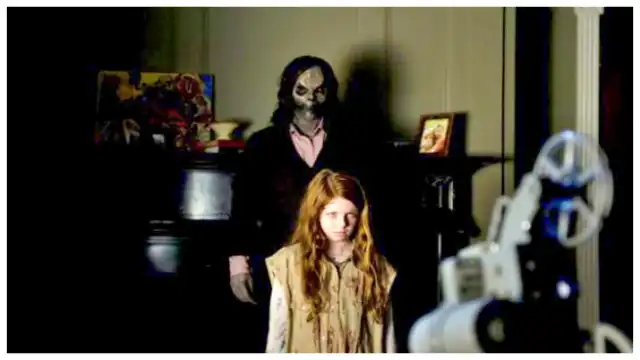
So, who exactly is pulling the strings? Enter Bughuul. Kids colloquially call him Mr. Boogie. Looking like a black metal rocker wearing a rotting mask, he is pure nightmare fuel. Co-writer C. Robert Cargill actually dreamed him up after watching the 2002 horror hit The Ring.
During the film, Ellison consults an occult expert named Professor Jonas. Played brilliantly by Vincent D’Onofrio, Jonas drops some incredibly heavy lore. He explains that Bughuul is an ancient Babylonian deity. This pagan god literally consumes the souls of human children. To sustain himself, he tricks kids into his netherworld, slowly feeding on their life force over time.

Is Bughuul real? Thankfully, no. Derrickson and Cargill invented him completely from scratch. Still, the monster feels intensely real because he borrows heavily from actual historical fears. For instance, promotional material directly compared him to Moloch, a Canaanite deity historically associated with child sacrifice. We inherently dread things that corrupt innocence. Thus, Bughuul bypasses our logical brain and strikes directly at our primal anxieties.
Three animal harbingers
Before Mr. Boogie ever steps out of the shadows, he sends messengers. Throughout the narrative, Ellison encounters three specific animals. First, he discovers a scorpion in his attic. Next, a snake slithers around a box of files. Finally, a massive, snarling dog traps him in his own backyard.
According to Professor Jonas, these aren’t just random suburban pests. Ancient carvings of the Babylonian deity always depict him alongside these exact three creatures. They function as dark harbingers. Thus, Bughuul’s influence bleeds into the physical world long before the final axe swings. Nature itself becomes warped by his approaching presence.
How bughuul travels: The super 8 footage explained
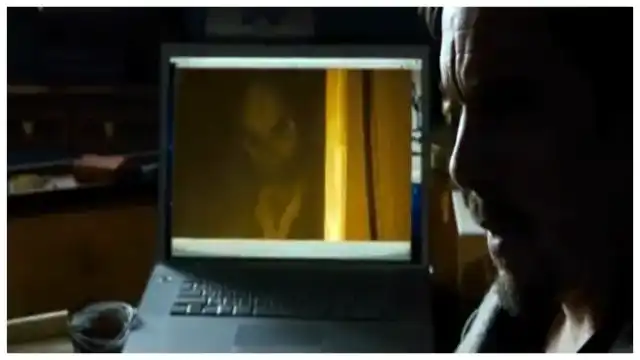
Here is the wildest mechanic of the Sinister ending. Bughuul isn’t a standard ghost haunting a hallway. He lives inside the images themselves.
Professor Jonas points out a terrifying belief held by early Christians. They thought images of demons could act as literal gateways to the mortal world. This is exactly how Mr. Boogie operates. You don’t summon him by speaking Latin or drawing a pentagram in salt. Looking at him is what does the trick.
Once Ellison watches those grim Super 8 films, he opens a supernatural door. The projector beams light onto a screen, creating a physical bridge. Every time a tape plays, Bughuul’s influence leaks into the house. It infects the most vulnerable mind available. In this specific case, that fragile mind belongs to seven year old Ashley (Clare Foley).
Analog media as a physical anchor
Why use Super 8 film? Why not a cursed digital file or an evil flash drive? The answer lies in the medium itself. Derrickson shot those snuff films on real Super 8 cameras to make them look incredibly authentic. Analog media possesses a physical texture. You can touch it. Furthermore, you can burn it. Yet, the supernatural images somehow survived Ellison’s fire.
Digital files are just weightless data. Film is tangible memory. By forcing the possessed children to record their murders on physical celluloid, Bughuul anchors his realm to ours. He demands a physical tribute. The child must kill their family, film the act, and leave the tape behind for the next victim to find. Essentially, it operates like a viral chain letter written in blood.
Tapes that built the curse
Let’s briefly examine the other films Ellison watches to fully understand the scope of this curse.
- Pool Party ’66: A family is dragged underwater strapped to heavy lawn chairs.
- BBQ ’79: Victims are locked tightly in a car and burned alive.
- Lawn Work ’86: Perhaps the most infamous jump scare in modern horror, involving a running lawnmower and a tied up face.
- Sleepy Time ’98: Throats are brutally slit while a family sleeps in bed.
- Family Hanging Out ’11: The backyard tree hanging that kicked off Ellison’s nightmare.
Each title serves as a sick, twisted joke. A family barbecue? A summer pool party? Bughuul mocks the wholesome concept of American home movies. Taking the happiest moments of suburban life, he turns them into snuff films. Consequently, the contrast makes the horror feel deeply invasive.
To make matters worse, the audio design amplifies the terror. Derrickson didn’t use standard orchestral jump scare music. Instead, he layered ambient, industrial black metal tracks from bands like Ulver and Aghast over the silent footage. The grinding, mechanical noise creates a deeply unsettling dissonance. It sounds fundamentally cursed. As a result, the viewer experiences the exact same sensory overload that slowly drives Ellison insane.
“House painting ’12”: Ashley’s grisly final act
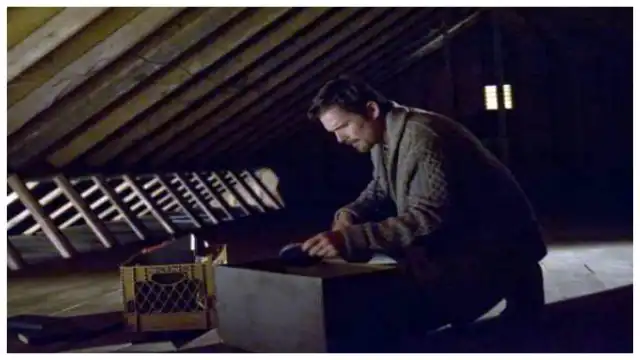
Everything comes to a head on the writer’s final night. Sitting at his desk, Ellison drinks his coffee. Suddenly, the room begins to spin wildly. Glancing down, he notices a neon green liquid settled at the bottom of his mug. Beside it lies a sweet little note written in child’s handwriting: “Good Night, Daddy.”
Ashley poisoned him. She fell completely under the spell of the ghost children, specifically a dead girl named Stephanie Stevenson. Soon, Ellison wakes up bound and gagged on the living room floor. Tracy and his son Trevor are tied up helplessly beside him.
Ashley walks into the room carrying an axe. The Super 8 camera rests securely in her other hand. Murdering her family isn’t enough; she absolutely butchers them. Afterward, the little girl dips a brush into their pooling blood. Cats, dogs, and unicorns are casually painted on the hallway walls. Additionally, she paints Bughuul’s ancient, cryptic symbol on a door. It stands as a sickening contrast. We witness a child’s innocent art project constructed entirely from ultimate violence.
The title of her specific film reel? House Painting ’12. The franchise confirms that each missing child adds their own tape to the cursed box. Ashley officially became the newest contributor to the collection.
Final scene
The closing moments of Sinister remain burned into the brains of horror fans everywhere. Sitting quietly in the hallway, Ashley watches the film projector clatter away. She observes her own gruesome handiwork flickering on the wall.
Suddenly, the ghostly missing children appear in the projected footage. Staring at her intently, they linger for a moment. Then, they instantly scatter. Why? Because Bughuul arrives.
Rather than walking down the physical hallway, the monster steps directly out of the film projection. Lifting Ashley into his arms, he turns around smoothly. With a chilling finality, the demon carries her right back into the movie screen. The physical world and the analog gateway merge into one.
The screen abruptly goes black. Slowly, the camera pans down to the infamous box of home movies resting in the attic. A brand new reel sits neatly on top. Waiting for the next curious homeowner. Just begging to be watched.
Why we can’t look away (and why the ending hits hard)
Sinister works flawlessly because it punishes the protagonist for his sheer hubris. Ellison wasn’t a heroic dad trying to save the world. Fame was all that mattered to this arrogant writer. Placing his career above his family’s safety permanently sealed their fate.
Furthermore, the film cleverly indicts the audience. Ellison keeps watching the snuff films, even though they destroy his mental health. We judge him for it. Yet, as viewers, we are doing the exact same thing. Buying a ticket to watch a horror movie means we are voluntarily staring at a screen, watching families get murdered. Bughuul’s curse relies entirely on human obsession with the macabre. We simply cannot look away from a car crash. Consequently, the monster uses our own morbid curiosity as his primary weapon.
Additionally, the ending feels ruthlessly bleak. No last minute rescue saves the day. Holy water doesn’t work here. The bad guy wins completely. Realizing that Ellison’s selfish obsession literally handed his daughter over to a child eating monster leaves viewers with a massive pit in their stomachs. He dug his own grave the exact moment he laced that first strip of film into the projector.
Next time you find a box of creepy old tapes in an attic? Just leave them alone. Seriously. Walk away. Actually, given the rules of this movie, don’t move away either. Maybe just don’t go poking around in the attic in the first place.
What did you think of the Sinister ending? Did you guess the dark twist before Ellison found that green liquid in his coffee cup? Drop your thoughts in the comments below, and let’s debate which Super 8 tape is objectively the most terrifying. If you love deep dives into cinema lore, share this article with a fellow thrill seeker today!

