

Event Horizon Warhammer 40K Prequel Theory Explained: Where the Ship Went
Have you ever watched a movie and thought it secretly belonged to a completely different universe? You are definitely not alone. For decades, nerds and movie buffs have obsessed over one specific, mind bending idea. they believe the 1997 sci-fi horror film Event Horizon is actually an unofficial prequel to the Warhammer 40K tabletop game.
It sounds absolutely crazy at first glance. Initially, the movie features Laurence Fishburne and Sam Neill dealing with a haunted spaceship. Meanwhile, the tabletop game is a grimdark universe filled with giant Space Marines, alien bug swarms, and literal space demons. However, once you look closely at the lore, the connections become impossible to ignore. humanity’s first attempt at faster than light travel in the film perfectly matches the darkest lore of the game.
Did a Hollywood studio secretly make a Warhammer prequel without owning the rights? Let’s dive down the rabbit hole.
Key takeaways
- The Shared Concept: Both the movie and the game feature faster than light travel that routes ships through a chaotic, hellish alternate dimension.
- The Fatal Flaw: The Event Horizon lacked a protective barrier (known in 40K as a Gellar Field), exposing the crew to demonic possession.
- The Visuals: The ship’s Gothic architecture perfectly mirrors the floating cathedral designs of the Warhammer universe.
- Creator Confirmation: Screenwriter Philip Eisner explicitly confirmed in 2017 that playing Warhammer 40K heavily influenced his writing.
- Comic Lore: The 2025 comic series Event Horizon: Dark Descent expanded the lore, further exploring the demonic entities behind the massacre.

What is the Event Horizon movie actually about?
Before we connect the dots, we need to understand the film. In 1997, director Paul W.S. Anderson gave us pure sci-fi nightmare fuel. Right off the bat, the story places us in the year 2047. A rescue crew aboard the Lewis and Clark travels to Neptune. their mission is to investigate a missing ship called the Event Horizon.
Interestingly, this massive vessel had vanished seven years earlier during a top secret test. The ship carried a revolutionary “Gravity Drive” designed to fold space and time. Therefore, it was supposed to travel vast distances instantly. But things went horribly wrong.
Instead of jumping to another star system safely, the ship went somewhere else entirely. It punched a hole into a dimension of pure, unadulterated chaos. As a result, the ship returned empty of life but fully possessed by a malevolent intelligence. Basically, the ship itself became a demon.
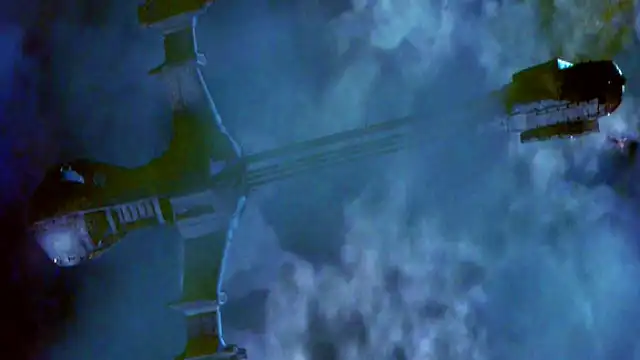
The warp: Explaining warhammer 40K lore
Now, let’s switch gears. In order to grasp this theory, you need a quick crash course in Warhammer 40K. Games Workshop launched this massively popular tabletop strategy game in 1987. Essentially, it takes place 40,000 years in the future. Humanity spans the entire galaxy, but they face endless, brutal wars.
Furthermore, space travel in this universe is absolutely terrifying. You see, spaceships do not just fly really fast like they do in Star Wars or Star Trek. Rather, they tear a hole in reality and travel through an alternate dimension called the Immaterium. Fans usually just call it “The Warp.”
The dangers of the immaterium
What exactly is The Warp? Well, it is a parallel universe made entirely of raw psychic energy. Unfortunately, it is also home to nightmarish entities known as the Chaos Gods. Thus, traveling through it without proper protection is a massive death sentence. The Warp feeds on negative human emotions. Consequently, it twists sanity, mutates flesh, and turns people into bloodthirsty monsters.

Sound familiar?
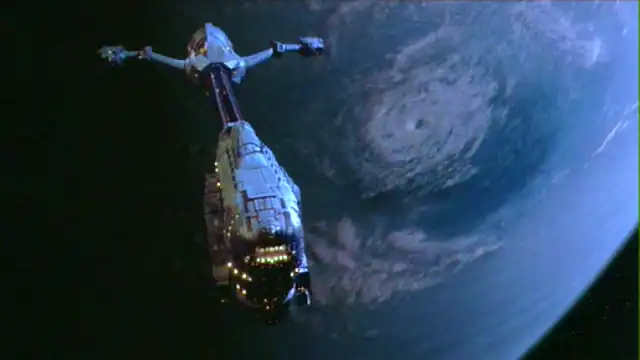
The gravity drive vs. The warp drive
Undeniably, the core of the theory rests on the ship’s engine. In the movie, Dr. William Weir (Sam Neill) explains the Gravity Drive. He famously pokes a hole through a folded piece of paper. Specifically, he shows that the fastest way between two points is to fold space so that those two points occupy the same physical area.
Similarly, this is exactly how a Warp Drive operates in the Warhammer universe. Instead of utilizing smooth hyperspace lanes, humanity must slice through the fabric of reality. The Event Horizon was Earth’s very first prototype for this technology. Because the scientists of 2040 had no idea what they were doing, they blindly ripped a hole straight into a demonic realm. They didn’t just travel through space; they traveled through Hell.
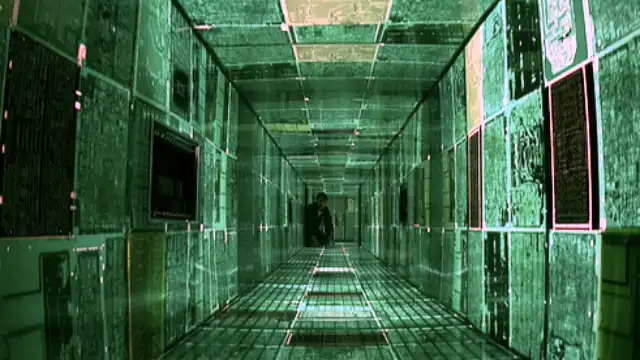
Where are the gellar fields? The fatal flaw
Hold your horses. If traveling through the Warp is so dangerous, how does humanity survive in the 40K universe?
Thankfully, in the tabletop lore, human ships use a piece of technology called a “Gellar Field.” Essentially, this device projects a bubble of normal reality around the spaceship while it navigates the Warp. As long as the shield holds, the demons stay outside. However, if a Gellar Field flickers or fails even for a second, all hell breaks loose inside the ship.
the Event Horizon did not have a Gellar Field. Since it was an early prototype, Dr. Weir did not even know the hellish dimension existed. He just wanted to travel fast. the ship plunged naked into the Immaterium. The demonic forces of the Warp flooded the decks instantly. Ultimately, this single oversight doomed the entire crew.
The infamous “Blood Orgy” video
Perhaps the most disturbing piece of evidence lies in the recovered video log. When Captain Miller (Laurence Fishburne) accesses the ship’s final recordings, he witnesses pure horror. the original crew is shown tearing each other apart, mutilating themselves, and engaging in a horrific blood orgy.
Shockingly, they seem to be enjoying the agony. They scream in a mix of pure terror and twisted ecstasy.
Is it Slaanesh or Khorne?
In the context of Warhammer, this scene is a textbook example of demonic corruption. The Warp is ruled by four primary Chaos Gods.
- First, there is Khorne, the god of blood, violence, and murder.
- Second, there is Slaanesh, the god of excess, pain, and twisted pleasure.
Undoubtedly, the video log displays a horrifying mix of Khornate violence and Slaaneshi excess. The crew wasn’t just murdered by aliens. Instead, their minds were completely shattered by the psychic weight of the Chaos Gods. The Warp weaponized their deepest desires and fears against them.

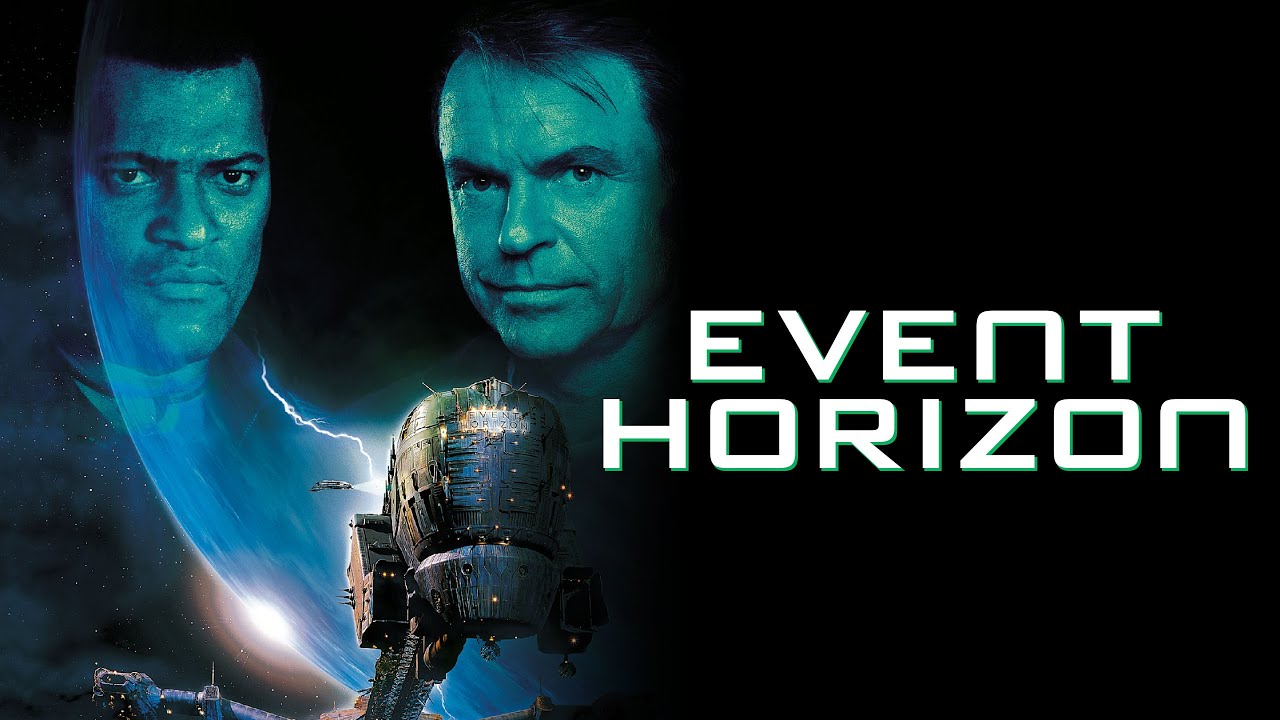
Dr. Weir’s dark transformation
Furthermore, we must look at the tragic fate of Dr. Weir. As the rescue mission drags on, the possessed ship begins to mess with his head. Eventually, Weir succumbs to the dark whispers. He mutilates himself, violently gouging out his own eyes.
He then delivers the most chilling line of the movie: “Where we’re going, we won’t need eyes to see.”
From a lore perspective, Dr. Weir completely transforms into a Chaos Cultist. In the Warhammer universe, mortals who stare directly into the Warp often carve out their own eyes. They realize that physical sight is useless compared to the chaotic “truth” of the Immaterium. Moreover, Weir gains unnatural strength and psychic abilities. He literally becomes a human vessel for the demonic entity, ensuring the ship can return to the dark dimension.
Gothic architecture in deep space
Beyond the plot, the visual design practically screams Warhammer. Most sci-fi movies in the 90s featured sleek, clean spaceships like the USS Enterprise. Conversely, Paul W.S. Anderson took a different route.
He designed the interior of the Event Horizon to look like a floating medieval cathedral. In fact, he drew heavy inspiration from the Notre Dame Cathedral. The ship is filled with spiked archways, cruciform designs, and long, claustrophobic corridors. Additionally, the space suits worn by the rescue crew look bulky and metallic, heavily resembling knight armor.
Coincidentally, this is the exact aesthetic of the Imperium of Man. Warhammer 40K spaceships are literally described as flying Gothic cathedrals. They blend hyper advanced technology with brutal, dark age religious iconography. Therefore, visually, the movie feels right at home on a tabletop battlefield.
Did the writer actually confirm the theory?
So, is this all just fan fiction? Did the creators do this on purpose?
Surprisingly, the answer leans heavily toward yes. The screenwriter of the film, Philip Eisner, was directly asked about this connection on social media. On May 4, 2017, Eisner posted a revealing tweet:
“I played the shit out of 40K, so it was definitely an influence, conscious or otherwise.”

Clearly, the creator of the story was deeply embedded in the tabletop community. Moreover, he practically admitted that the grimdark lore bled directly into his script. While he didn’t explicitly write it as a legally binding prequel mostly due to copyright laws he fully embraced the inspiration. Thus, the fan theory evolved from a wild internet rumor into a highly validated creative truth.
The 2025 comic book expansion
Recently, the lore expanded even further. In 2025, IDW Publishing released a prequel comic book series titled Event Horizon: Dark Descent. Interestingly, this comic gave fans their first proper glimpse into what truly happened to the original crew during those missing seven years.
The comic implied that the demonic entity pulling the strings behind the massacre is named Paimon. Although this introduces a specific, named demon outside of standard Warhammer lore, it still fits the broader theme. The Warp is filled with millions of lesser demons serving the greater gods. Furthermore, the success of this series led to the announcement of a sequel comic, Event Horizon: Inferno, set 200 years after the film. Fans eagerly await to see if more grimdark elements bleed into this new storyline.
Why we love this dark Sci-Fi crossover
Ultimately, why does this theory remain so incredibly popular almost three decades later?
It works because it bridges two massive fandoms perfectly. On one hand, horror movie buffs get a deeper, richer backstory to a cult classic film. On the other hand, tabletop gamers get a high budget, live action visualization of their favorite fictional universe.
Event Horizon explores the terrifying “what if” of space travel. What happens when humanity pushes the boundaries of science too far? Instead of finding a bright, Star Trek style utopia, we found a blender of souls. We found out that the universe doesn’t just hate us; it actively wants to consume us. That is the very definition of grimdark.
Clock that never stops ticking
To sum up, Event Horizon stands as one of the greatest accidental prequels in cinematic history. Whether you view it as a standalone sci-fi masterpiece or the canonical first step of the Imperium of Man, its terrifying legacy holds up. The lack of Gellar Fields, the visual descent into Chaos, and the architectural nods make it a perfect fit for the Warhammer 40K universe.
Next time you watch Dr. Weir rip a hole through that piece of paper, remember what he is actually doing. He isn’t just folding space. He is inviting the Chaos Gods into our reality.
What do you think?
Now, it’s your turn to join the debate. Do you firmly believe Event Horizon takes place in the 40K universe? Which Chaos God do you think possessed the ship?
Drop a comment below and let us know your thoughts! If you enjoyed this deep dive, share it with your favorite sci-fi group and keep your Gellar Fields fully powered.

