

Tusk (2014) Ending Explained: Is the Walrus Suit Really Possible?
Tusk (2014) is arguably one of the most bizarre, unhinged horror movies of the 21st century. Directed by Kevin Smith, the film takes body horror to an entirely new, uncomfortably absurd level. Consequently, audiences are still scratching their heads years later. Furthermore, the final scene leaves viewers with a massive pit in their stomachs. Specifically, what does that final tear mean? More importantly, is the human walrus suit actually medically possible?
We have all wondered if a crazy surgeon could actually pull this off. Therefore, it is time to break down the ending, analyze the gruesome anatomy, and separate Hollywood fiction from medical reality.
Key takeaways
- The Final Tear: Wallace cries because a tiny shred of his human consciousness is still trapped inside his mutated body.
- Medical Impossibility: The surgical transformation into a walrus defies every law of human anatomy and survival.
- Fatal Complications: In reality, severe trauma, massive blood loss, and instant infection would kill a victim within hours.
- Tissue Rejection: Sowing dead human skin over living flesh would rapidly trigger systemic shock and rotting.
- Psychological Break: The film accurately depicts how extreme trauma can completely shatter a person’s identity, forcing them into dissociation.
Bizarre ending of tusk explained
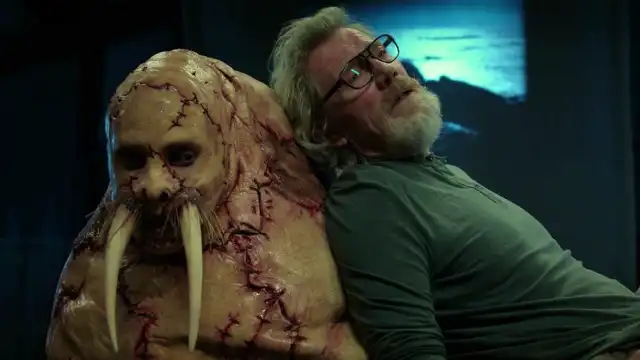
Eventually, the movie reaches a deeply unsettling climax. Wallace ends up impaling his deranged captor, Howard Howe, on his own bone tusks. Subsequently, his friends Ally and Teddy burst into the room alongside eccentric detective Guy Lapointe. However, the rescue comes far too late. Wallace is no longer human.
Instead of a heartwarming hospital recovery scene, the movie cuts to one year later. Ultimately, Wallace lives out his days in a private animal sanctuary. His friends visit him. In a gut wrenching moment, Ally throws him a raw fish. He catches it in his mouth. Finally, a single tear rolls down his mangled, scarred face.
Why didn’t wallace turn back into a human?
Naturally, the biggest question viewers ask is why doctors didn’t just fix him. Realistically, there was absolutely nothing left to fix. Howard had fundamentally destroyed his body. Think about it. He amputated Wallace’s legs below the knee, completely removed his tongue, and entirely mutilated his facial structure. Furthermore, the psychological trauma had permanently broken his mind.
Essentially, returning to society as a severely mutilated, mute amputee was too unbearable for his psyche. Therefore, the sanctuary was the only place he fit in. Society simply doesn’t know what to do with someone that broken. Consequently, throwing him a fish is Ally’s tragic way of accepting his new reality.

Symbolism of the final tear
Admittedly, the tear is the emotional gut punch of the movie. Did he cry because he misses his old life? Alternatively, did he cry because he realizes how far he has fallen? Unquestionably, that tear proves a tiny fragment of Wallace’s human soul remains trapped inside the walrus.
Earlier in the film, Ally reminds him that crying is the sole trait that separates humans from animals. Consequently, that single drop of water is a devastating confirmation. He is still undeniably human. Yet, he must live forever as a beast. Chew on that for a second. It is the ultimate nightmare.
Is the walrus suit medically possible?
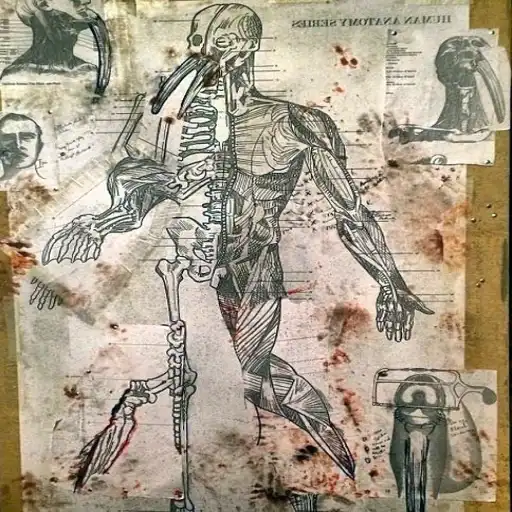
Now, let’s tackle the science. Could a twisted, underground surgeon actually pull off the walrus suit? Simply put, absolutely not. Although extreme body modification exists in the real world, the scale of Howard’s operation is utterly ridiculous. Here is exactly why the Tusk transformation is purely fictional.
1. Leg amputations and Bone tusks
First, Howard amputates Wallace’s legs to create makeshift flippers. Technically, double amputations are survivable with immediate, top tier medical care. However, Howard goes a massive step further. Specifically, he extracts Wallace’s tibia bones, files them down into sharp tusks, and forces them into his mouth.
Realistically, implanting large, unsterilized leg bones into the jawbone would entirely destroy the palate. Furthermore, the human mouth lacks the structural integrity to support massive, heavy bone tusks. Consequently, the jaw would shatter under the weight. Moreover, the sheer amount of bacteria involved would push a massive infection directly to the brain within hours.
2. Sewing arms to the torso
Next, Howard surgically attaches Wallace’s arms to his sides to mimic a walrus’s blubber bound limbs. Medically, this is an absolute anatomical disaster. If you sew an arm tightly to the torso, you severely restrict vital blood flow. Moreover, human skin desperately needs mobility and oxygen to prevent necrosis.
Eventually, the trapped sweat, total lack of circulation, and constant skin on skin friction would cause the tissue to rot. Therefore, his arms would become gangrenous almost immediately. You simply cannot fuse functioning limbs to a ribcage without destroying the muscle tissue.
3. Human skin suit
Undeniably, the most horrifying aspect of the movie is the skin suit itself. Howard sews a patchwork quilt of flesh taken from his previous murdered victims over Wallace’s body. Scientifically, this is laughably impossible.
Cross species or even human to human skin grafting requires highly matched donors. Additionally, patients require heavy, lifelong immunosuppressant drugs. Without these precautions, the body’s immune system immediately attacks the foreign tissue. According to the National Institutes of Health (NIH), severe graft rejection leads to rapid systemic shock. Furthermore, dead skin stitched over an open wound will aggressively rot. Consequently, Wallace would essentially be wearing a decomposing, highly toxic corpse. The smell alone would be lethal.

Surviving the surgery
Let’s discuss the absolute logistics of this nightmare. Howard performs this massive, multi stage, highly invasive surgery in a dusty, isolated mansion. He has no team of anesthesiologists. He has no sterile operating room. Initially, the sheer physiological shock of having your legs removed, arms pinned, and tongue severed would trigger fatal neurogenic shock. The nervous system would literally just shut down.
Furthermore, the blood loss would be undeniably catastrophic. You cannot saw off two legs and reshape a face without gallons of blood replacement. Wallace would have bled out on the table during step one.
Moreover, even if Howard somehow miraculously managed the bleeding, infection would be the ultimate killer. Sepsis is a massive, life threatening bodily response to severe infection. According to the Centers for Disease Control and Prevention (CDC), sepsis rapidly causes tissue damage, organ failure, and eventual death. Thus, undergoing unregulated butchery with zero sterile protocols guarantees a fast, agonizing demise from septic shock. Realistically, Wallace wouldn’t have lived long enough to bark for a single fish.
Could a mind break like that?
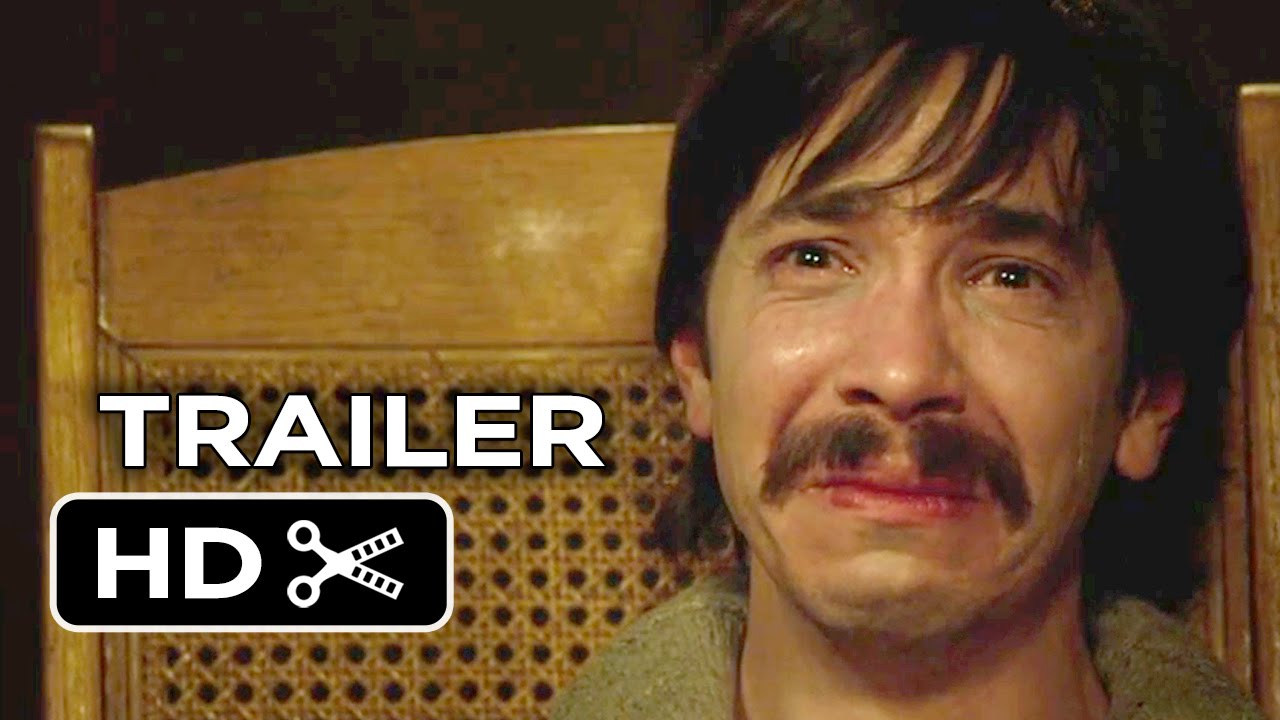
Psychologically, Tusk dives incredibly deep into the dark concept of identity dissolution. Realistically, could a person’s mind snap to the point where they truly believe they are an animal? Yes, to a certain extent. Extreme, prolonged trauma often triggers severe dissociation.
Essentially, the human brain protects itself by forcefully disconnecting from reality. When physical pain becomes unbearable, the mind checks out. Furthermore, Howard subjects Wallace to relentless, cruel operant conditioning. Let’s look at his exact methods:
- He starves Wallace for days on end.
- He brutally beats him with a stick.
- He forces him to swim in a dark, freezing indoor pool.
- He aggressively rewards him only when he acts like a walrus.
Consequently, Wallace’s psyche violently splinters. He naturally adapts to survive his environment. Therefore, when Howard ultimately forces him to fight to the death, Wallace fully embraces the walrus persona. The human version of Wallace literally cannot process the horror. It’s a twisted, accelerated form of trauma bonding and total identity erasure. He didn’t just lose his body; he lost his humanity.
Karmic retribution
Interestingly, the movie paints Wallace as a deeply unlikable protagonist. Initially, he is a highly arrogant, cynical podcaster. Specifically, he makes a living off mocking other people’s misery. For instance, he openly laughed at the “Kill Bill kid” who tragically committed suicide. Furthermore, he relentlessly cheats on his loving girlfriend.
Therefore, his horrifying transformation acts as a dark, twisted form of karmic retribution. He built his entire career on making a joke out of others. Consequently, the universe (or rather, a crazy old man) turns him into a literal, grotesque joke. However, does anyone deserve to be mutilated into a human walrus? Probably not. Nevertheless, Kevin Smith ensures that the viewer feels deeply conflicted about Wallace’s ultimate fate.
Why kevin smith’s tusk still haunts us today
Surprisingly, the origin of this movie is almost as bonkers as the plot itself. Specifically, Kevin Smith and Scott Mosier were just spitballing ideas on their SModcast podcast. They openly discussed a bizarre online ad where a man offered free rent to anyone willing to dress up as a walrus. Naturally, they took the absurd concept, ran wildly with it, and birthed a cinematic nightmare.
However, the film walks a razor thin, precarious line between dark comedy and pitch black horror. Admittedly, the rubbery, stitched together suit looks a little bit goofy in certain lighting. Yet, the deep existential dread it provokes is completely real. Tusk brilliantly taps into our primal, innate fear of losing bodily autonomy.
Furthermore, it violently highlights the terror of being permanently trapped inside your own skin while the outside world moves on without you. It’s an absolutely wild ride. Sure, it feels completely insane. Still, it undeniably leaves a dark, lingering stain on your memory.
Fiction over fact
Ultimately, Tusk is a cinematic fever dream. Medically, the human walrus suit belongs purely in the realm of twisted fiction. The human body simply cannot endure that profound level of unregulated trauma, rampant infection, and extreme anatomical restructuring. Gravity, biology, and bacteria would win every single time.
Psychologically, however, the film paints a hauntingly accurate, deeply disturbing picture of how severe trauma irrevocably breaks a person’s soul. So, the next time you decide to watch it, you can rest incredibly easy knowing Howard Howe’s surgery is physically, scientifically impossible. Your legs are safe.
Have you watched Tusk recently? Did the ending leave you deeply disturbed, or were you laughing at the sheer absurdity of it all? Drop your honest thoughts in the comments below, and definitely share this medical deep dive with your favorite horror loving friend!

