

The Descent (2005): Evolution of the Crawlers (Human Ancestry?)
Have you ever watched a horror movie that completely ruins your desire to go outside? If you have seen the descent, you probably crossed spelunking off your bucket list forever. When director neil marshall released this terrifying masterpiece in the summer of 2005, it absolutely shocked audiences. First, you get a deeply claustrophobic thriller about six women trapped underground. Then, out of nowhere, the movie morphs into a brutal monster flick.
But what exactly are those pale, screeching monsters lurking in the dark? Fans casually refer to them as “Crawlers.” however, their origin story is far more disturbing than your average hollywood demon. They are not aliens. They are not supernatural ghosts. Actually, they are something much closer to home.
Dark lore behind the monsters of the descent. We will break down their biology, explain the chilling evolutionary theory behind them, and explore why they remain some of the scariest creatures in modern cinema.
Key takeaways
- Human Ancestry: The Crawlers are technically human. They are essentially ancient cavemen who never left the underground.
- Extreme Evolution: Over thousands of years, they adapted to the pitch-black environment by losing their eyesight and developing bat-like echolocation.
- Family Units: Unlike mindless zombies, these creatures operate in feral colonies that include mothers and children.
- Psychological Terror: A popular fan theory suggests the creatures might just be hallucinations cooked up by the traumatized main character.
- Box Office Smash: Made on a tiny budget of £3.5 million, the film grossed over $57.1 million worldwide thanks to its terrifying practical effects.
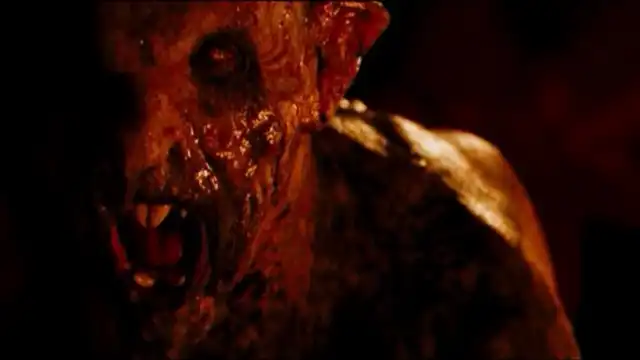
What exactly are the crawlers?
If you just want the quick answer, here it is. Yes, the Crawlers are evolved humans.
Director Neil Marshall has explicitly stated in multiple interviews that these monsters are simply cavemen who decided to stay in the dark. While the rest of humanity ventured out to build fires, invent the wheel, and eventually construct modern houses, this specific group stayed deep within the earth’s crust.
Consequently, human evolution took a wildly different path for them. They adapted to their harsh surroundings. Because there is absolutely no sunlight underground, they entirely lost their sense of sight. To compensate, their hearing and sense of smell became incredibly acute. Ultimately, they devolved into feral, flesh-eating predators that function perfectly in total darkness.

Biological evolution of the crawlers
How does a regular human turn into a wall-climbing, screeching nightmare? The concept relies heavily on extreme biological adaptation. The Descent does not spoon-feed you this information. Instead, it shows you how these creatures operate.

Sightless predators and echolocation
Have you noticed how the Crawlers look? Their skin is translucent and sickly pale. Without exposure to the sun’s UV rays, they lost all melanin. Furthermore, their eyes are completely clouded over. They are completely blind.
So, how do they hunt our main characters so effectively? They use a form of echolocation, similar to bats or dolphins. Throughout the movie, you can hear them making distinct clicking and screeching noises. These sounds bounce off the cave walls, allowing them to map out the cavern perfectly. When the terrified women stay absolutely silent, the monsters struggle to find them. However, the minute someone screams, it is game over.
Wall-crawling experts
Human bodies are definitely not designed to scale sheer rock faces upside down. Yet, the Crawlers do it effortlessly. Over thousands of generations, their physical anatomy shifted. Their limbs grew slightly longer, and their grip strength increased exponentially.
Marshall designed them to be expert climbers. They use the stalactites and stalagmites like monkey bars. This vertical mobility makes them incredibly unpredictable. You aren’t just looking in front of you; you constantly have to check the ceiling.
Pack mentality
Here is the detail that makes them truly unsettling. They are not just random, solitary beasts. They operate as a functioning society.
During the bloody climax of the movie, the main character, Sarah (played by Shauna Macdonald), stumbles into a larger cavern. There, the audience catches a quick glimpse of female Crawlers and even Crawler children. Neil Marshall specifically wanted to include families. Why? Because it makes the threat feel deeply grounded in reality. They are not hunting the women out of sheer malice. Instead, they are simply gathering food to feed their starving kids. It is a brutal, animalistic survival tactic.
Why didn’t they just leave the cave?
This is the million-dollar question. If life underground is so miserable, why did these ancient humans stay down there in the first place?
While the movie leaves the exact history ambiguous, we can make some educated guesses based on evolutionary biology. Thousands of years ago, during the last Ice Age, an ancient tribe of early humans likely sought shelter in the Appalachian cave system. As massive glaciers covered the surface, the caves offered consistent temperatures and protection from harsh blizzards.
Eventually, the surface world thawed. But perhaps this specific tribe wandered too deep. Maybe a massive rockslide trapped them inside. Forced to survive on whatever crawled or swam in the subterranean rivers, they slowly adapted. Over millennia, the memory of the surface world faded entirely. The cave simply became their entire universe.
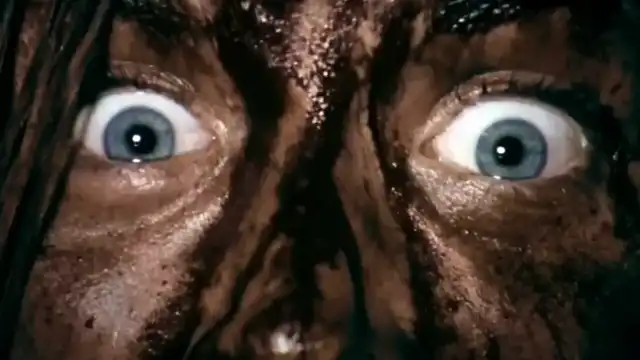
Hallucination theory: are the crawlers even real?
Now, let’s look at a completely different perspective. What if the monsters are entirely fake?
Since the film hit theaters, a massive fan theory has fiercely debated whether the Crawlers actually exist. Many viewers believe they are nothing more than violent hallucinations created by Sarah’s fractured psyche. Let’s look at the evidence.
A year before the cave trip, Sarah loses her husband and daughter in a horrific, bloody car crash. She suffers from severe PTSD, takes heavy medication, and experiences frequent nightmares. When her friends take her spelunking to cheer her up, things go terribly wrong. A tunnel collapses, trapping them.
The theory suggests that the crushing claustrophobia, total darkness, and lack of oxygen cause Sarah to suffer a complete psychotic break. As she descends into the physical cave, she simultaneously descends into utter madness. Therefore, she imagines the pale monsters. In reality, she is the one violently hunting down and murdering her friends one by one.
Does this theory hold up? Neil Marshall intentionally left the narrative slightly ambiguous to mess with our heads. He admits the movie is heavily about a descent into madness. However, he also confirms he wrote the script with the intention that the creatures are 100% physically real. Still, the psychological ambiguity adds a brilliant, terrifying layer to the viewing experience.
How the descent changed monster movies forever
We cannot talk about the Crawlers without respecting the absolute genius of the filmmaking process. In the early 2000s, horror movies heavily relied on cheap CGI. Neil Marshall completely rejected that trend.
Practical makeup over CGI
The director wanted the actors to be genuinely terrified. Therefore, he used incredible practical makeup effects to bring the Crawlers to life. Professional actors and dancers wore full-body prosthetics. They spent hours practicing animalistic movements to ensure they didn’t just look like guys in rubber suits.

Element of surprise
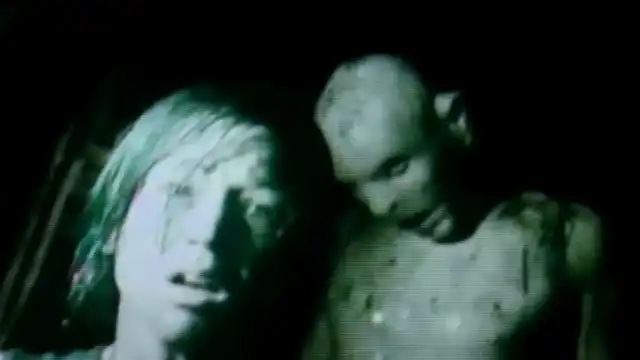
Did you know Marshall kept the monster actors completely hidden from the main cast during filming? The actresses had no idea what the Crawlers looked like until the exact moment they shot the first major attack scene. When that pale face suddenly appears in the glow of the night-vision camera, the screaming you hear from the cast is completely genuine. They were absolutely terrified.
Massive financial success
You don’t need a Marvel-sized budget to scare people. The production team built the entire cave system out of foam and fiberglass inside Pinewood Studios in the UK. They filmed the whole thing for roughly £3.5 million.
When it premiered on July 8, 2005, word of mouth spread like absolute wildfire. Audiences praised the slow-burn tension and the horrifying reveal of the evolved humans. It ultimately grossed nearly $60 million globally. Today, critics widely consider it one of the greatest horror films of the 21st century.
Tragic duality of survival
What makes The Descent so memorable is how it compares the civilized women to the feral Crawlers. By the end of the film, the line between human and monster completely blurs.
In order to survive, Sarah has to devolve. She literally bathes in a pool of blood. She brutally fights with animalistic rage. She even violently betrays her own friend, Juno, leaving her behind as bait. To beat the cavemen, Sarah has to become a cavewoman herself. It is a bleak, uncompromising look at what human beings are capable of when pushed to their absolute limits.
Unseen horrors below
Ultimately, the Crawlers represent the darkest, most primal parts of humanity. They are a twisted reflection of what we could become without sunlight, society, or morality. By making the monsters evolved humans, Neil Marshall created a villain that feels unsettlingly grounded. They aren’t magical. They are just incredibly hungry.
The next time your friends suggest a fun weekend trip exploring some uncharted underground caverns, maybe just suggest grabbing brunch instead. You never know what evolutionary secrets are quietly waiting in the dark.
What do you think? Do you believe the Crawlers are genuine evolutionary cavemen, or do you fully buy into the theory that Sarah hallucinated the entire bloodbath? Drop your wildest theories in the comments below! If you loved this deep dive into horror lore, be sure to share this article with your fellow movie-obsessed friends. Stay out of the caves!

