

From Sedgemoor to the Scaffold: The Capture, Trial, and Execution of the Duke of Monmouth
History is rarely as neat as the textbooks suggest. Often, it is messy, poorly planned, and covered in mud.
Take the 1685 rebellion, for example. It had all the ingredients of a blockbuster movie. You have a handsome, popular, illegitimate royal son. Furthermore, you have an unpopular king. Finally, you have a midnight battle that goes terribly wrong.
Let’s explore the tragic, somewhat clumsy, and ultimately fatal downfall of James Scott, the Duke of Monmouth. We will track his journey from the muddy fields of the Battle of Sedgemoor to his gruesome end on Tower Hill.
Key takeaways;
- The Spark: James Scott (Duke of Monmouth) rebelled against his Catholic uncle, King James II, to claim the English throne in 1685.
- The Defeat: The Battle of Sedgemoor was a botched midnight surprise attack that ruined Monmouth’s chances.
- The Capture: Royal forces found the Duke hiding in a ditch, disguised as a shepherd and eating raw peas to survive.
- The “Trial”: Parliament passed an Act of Attainder. Consequently, Monmouth received no trial and was instantly sentenced to death.
- The Execution: On July 15, 1685, the infamous executioner Jack Ketch took five horrific swings to behead the Duke.
Why did the monmouth rebellion happen?
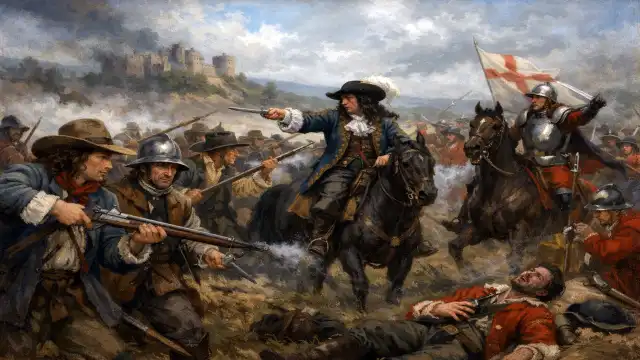
To understand the Monmouth Rebellion, we must look at a family feud.
In 1685, King Charles II died. Charles had no legitimate children with his queen. However, he had a favorite illegitimate son named James Scott, the Duke of Monmouth. Monmouth was Protestant, charming, and highly popular.
Meanwhile, the actual heir to the throne was Charles’s brother, James II. James was a Catholic. During this era in England, religion was a massive political flashpoint. Most of the country was fiercely Protestant. Consequently, many folks were terrified of a Catholic monarch taking control.
When James II took the crown, Monmouth saw an opening. Therefore, he sailed from the Netherlands and landed in Dorset, England, in June 1685. He claimed his parents had actually been secretly married. By his logic, this made him the rightful king.
Thousands of ordinary workers, farmers, and tradesmen flocked to his banner. They grabbed pitchforks, scythes, and whatever weapons they could find. The James II rebellion was officially on.
The Battle of Sedgemoor
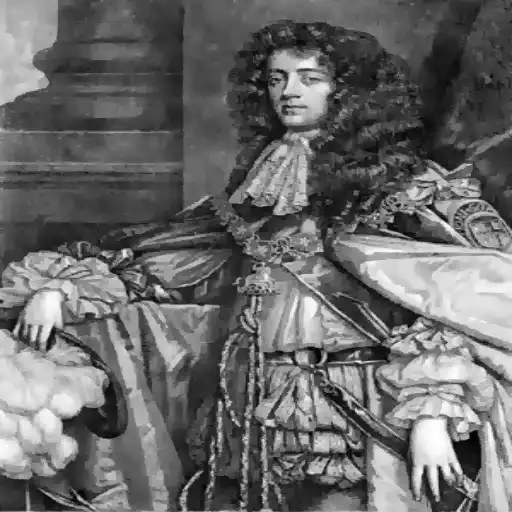
Every rebellion needs a decisive victory. Sadly for Monmouth, he got a decisive defeat instead.
By early July, the royal army had cornered Monmouth’s rebel forces near Bridgwater in Somerset. The royal troops were highly trained. On the other hand, Monmouth’s men were mostly passionate but untrained locals.
Monmouth knew he couldn’t win a fair fight in broad daylight. Thus, he planned a risky, secret night attack. On the night of July 6, 1685, the rebels marched silently toward the royal camp on the Moor.
It was a brilliant plan. Until it wasn’t.

What went wrong at sedgemoor?
The Somerset levels were heavily crossed with deep water ditches known as rhynes (pronounced “reens”). These ditches acted like natural moats.
- The Bussex Rhine: In the dark, the rebel guides failed to navigate around a massive drainage ditch called the Bussex Rhine.
- The Gunshot: Suddenly, a pistol discharged. Historians still debate who fired it, but the loud crack echoed across the moor.
- The Awakening: The royal army woke up instantly.
Surprise was gone. The royal troops, commanded by John Churchill (who later became a famous general), simply lined up on their side of the ditch. They fired brutal, disciplined volleys into the panicked rebels.
The Battle of Sedgemoor turned into a massacre. According to the National Army Museum, over 1,000 rebels died on the battlefield. The rest scattered into the night. Monmouth’s rebellion was crushed in mere hours.
Monmouth’s capture
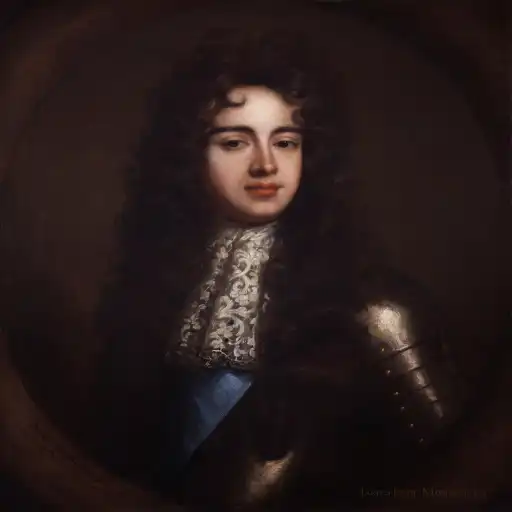
When the battle was lost, Monmouth did what anyone fearing for their life might do. He ran.
He ditched his armor. He abandoned his loyal followers. Eventually, he traded his expensive aristocratic clothes for the ragged outfit of a local shepherd. His goal was to reach the coast and escape back to Europe.
However, King James II had placed a massive bounty of £5,000 on Monmouth’s head. That was a life-changing amount of money in 1685. Consequently, soldiers scoured the countryside like bloodhounds.
On July 8, 1685, search parties found Monmouth in Dorset. It was not a dignified capture. Soldiers discovered the once-glamorous Duke hiding in a muddy ditch under some ferns and brambles.
He looked terrible. He was starving, exhausted, and terrified. In fact, when they searched his pockets, they found a few raw peas he had gathered from fields to stay alive. The grand rebellion ended not with a sword fight, but with a hungry man cowering in a hedge.
Trial (Or Lack thereof)
So, how did the trial go? Well, there wasn’t one.
Normally, an accused traitor gets a trial. However, Parliament had already passed something called an Act of Attainder against Monmouth.
What is an Act of Attainder?
In simple terms, this act is a legal shortcut. It allows a parliament to declare someone guilty of treason without a trial. Because the government caught Monmouth actively leading an army against the king, they skipped the courtroom. As noted by the UK Parliament archives, his death sentence was automatic.
Still, Monmouth desperately wanted to live. King James II agreed to meet with him in London.
The meeting was incredibly awkward and sad. Monmouth fell to his knees. He wept. He literally crawled across the floor to kiss his uncle’s feet, begging for mercy. He even offered to convert to Catholicism if it would save his neck.
James II was a hard man. He coldly rejected the pleas. The king only agreed to the meeting to ensure Monmouth officially confessed to the treason. Once James got what he wanted, he sent his nephew back to his cell.
The date for the Duke of Monmouth execution was set.
Tower Hill execution
If you think Monmouth’s capture was grim, his execution was a nightmare.
On the morning of July 15, 1685, Monmouth was led to the scaffold on Tower Hill in London. A massive crowd gathered. Executions were public entertainment back then.
Monmouth was determined to die with dignity, hoping to erase the memory of his cowardly escape. He gave a calm speech. Then, he spoke to the executioner, a man named Jack Ketch.
Jack Ketch was notorious. He had a reputation for messing up beheadings. Monmouth handed Ketch six golden guineas. This was basically a tip to ensure the executioner used a sharp axe and did the job in one clean swing.
“Do not hack me as you did my Lord Russell,” Monmouth warned him.
He laid his head on the block. Ketch raised the heavy axe. He swung.
Gruesome historical fact
He missed the vital spot.
The axe bit into Monmouth’s neck, but it did not sever the head. The crowd gasped. Monmouth reportedly lifted his bleeding head off the block and glared at Ketch, as if to say, “Are you kidding me?”
Ketch panicked. He swung a second time. Again, he failed. He swung a third time. The crowd started screaming in horror.
“I can do no more!” Ketch yelled, dropping the axe. “My heart fails me.”
The sheriffs overseeing the execution threatened to kill Ketch if he didn’t finish the job. Consequently, Ketch picked the axe back up. He swung two more times. Finally, the axe still couldn’t cut through the tough sinews of the neck.
Ultimately, Ketch had to pull out a butcher’s knife to saw the head completely off. According to Historic Royal Palaces, it was one of the most brutal executions in English history.
The Brutal aftermath
Monmouth’s suffering was over. However, the suffering of his followers had just begun.
King James II wanted to send a terrifying message to anyone else thinking of starting a 1685 rebellion. Therefore, he sent the ruthless Judge George Jeffreys to western England to punish the surviving rebels.
This series of trials became known as the Bloody Assizes.
Judge Jeffreys showed zero mercy. Let’s look at the terrifying statistics:
- Over 300 people were hanged, drawn, and quartered.
- More than 800 people were transported to the West Indies to work as slaves on plantations.
- Hundreds more died of disease in filthy prisons waiting for their trials.
The west of England was left traumatized. Body parts of the executed rebels were dipped in tar and hung from trees, town gates, and churches as a warning.
Quick timeline of the monmouth rebellion
Let’s break down the chaos into a quick timeline:
- February 6, 1685: King Charles II dies. James II takes the throne.
- June 11, 1685: Monmouth lands at Lyme Regis, Dorset, and claims the crown.
- July 6, 1685: The Battle of Sedgemoor takes place. The rebel army is destroyed.
- July 8, 1685: Monmouth capture occurs. He is found hiding in a ditch.
- July 15, 1685: The Tower Hill execution happens. Jack Ketch butchers the job.
- Autumn 1685: The Bloody Assizes severely punish the remaining rebels.
Monmouth’s rebellion
You might be asking yourself, “Why should I care about an uprising from over 300 years ago?”
The Monmouth Rebellion is crucial because it paved the way for the modern world. King James II successfully crushed Monmouth. However, his brutal response specifically the Bloody Assizes made the king deeply hated across England.
Consequently, just three years later, in 1688, the English people rebelled again. This time, they invited William of Orange to take the throne in what became known as the Glorious Revolution. This revolution permanently shifted power away from kings and queens and gave it to Parliament.
Without Monmouth’s failed attempt, the successful revolution that gave birth to modern democratic ideas in Britain might never have happened. Monmouth was a flawed man. He was an awful military commander. Yet, his spectacular failure helped change the course of history.
What do you think about the Duke of Monmouth’s doomed rebellion? Was he a brave hero who fought against a tyrant, or just an ambitious prince who got his followers killed for nothing? Let us know your thoughts in the comments below, and be sure to share this article with your fellow history buffs!

