

The Clover bottom massacre of 1783: the Real story behind west virginia’s “Cursed” amusement park
If you’ve ever heard of Lake Shawnee Amusement Park in West Virginia, you’ve probably heard it called cursed, haunted, or “one of the most terrifying places in America.” That reputation didn’t come out of nowhere. It traces back to a single, brutal day in 1783 — a day that ended with three dead children and a grieving father who never got over it.
Who was Mitchell Clay?
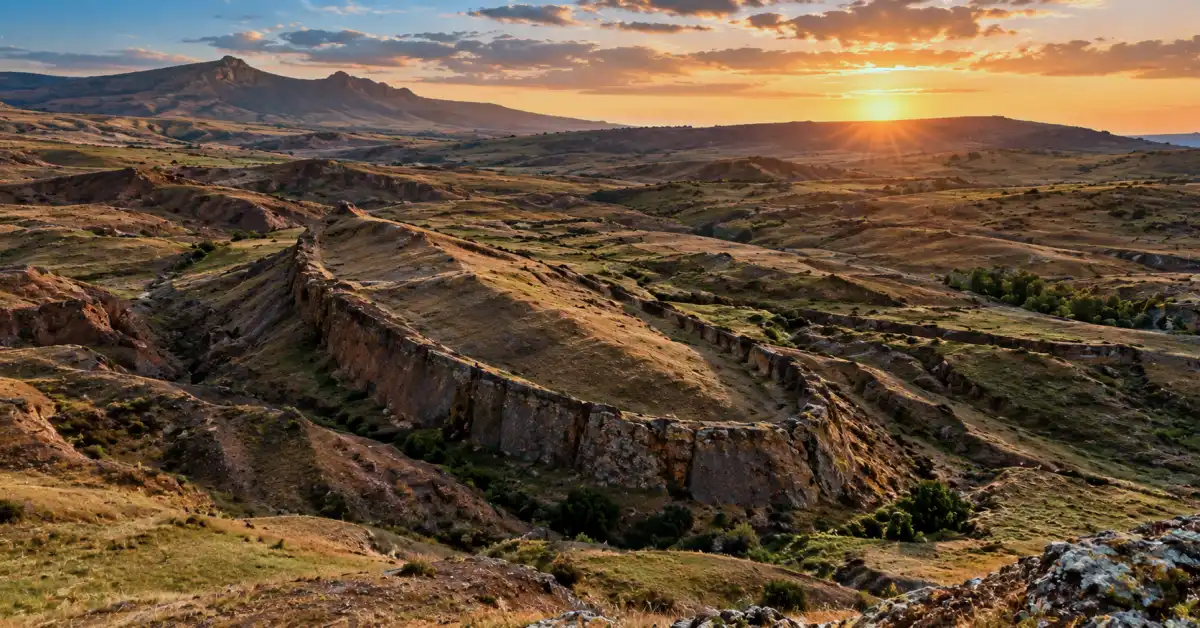
Mitchell Clay wasn’t some random settler passing through. In April 1774, he received a Crown Grant of 803 acres from Lord Dunmore, then the Royal Governor of Virginia. The land covered both banks of the Bluestone River in a spot called Clover Bottom — territory that would eventually become Mercer County, West Virginia. Clay and his family moved onto it the following year, making them the very first white settlers in the county.
This wasn’t a rough cabin in the woods, either. The Clays built a real homestead: livestock pastures, a tobacco field, a wheat field, an orchard, a kitchen garden. Between Mitchell and his wife Phoebe, they raised somewhere between 14 and 16 children on that land, depending on which historical account you check. It was, by frontier standards, a genuinely prosperous farm.
What happened on that august day in 1783
Here’s where the story turns. In August 1783, after Clay had brought in his grain harvest, he assigned two of his teenage sons — Bartley and Ezekiel — to build fences around the grain stacks so livestock wouldn’t get to them. Mitchell himself went out hunting that day. He had no idea what he’d come home to.
While the boys worked the fences, their sisters washed clothes down by the river, and their mother stayed inside with the younger kids. Eleven Shawnee warriors approached the property. A gunshot rang out. Bartley was dead.

His sister Tabitha heard it and ran straight toward the danger instead of away from it — she saw a warrior attempting to scalp her brother and physically attacked him, trying to wrestle away his knife. She lost that fight. Both Bartley and Tabitha were killed and scalped. Ezekiel was taken alive.
There’s a grim postscript here too. A neighbor named Liggon Blankenship happened to be at the house when the attack began. Mrs. Clay begged him to help defend her children. Instead, he ran — straight to the nearest settlement, where he reported that the entire Clay family had been killed. His name carried the weight of that decision for the rest of his life.
The search, the revenge, and a second death
Mitchell Clay came home that evening to find two of his children’s bodies and a wife in shock. Believing his whole family might be gone, he fled through the woods that night to raise a search party, all while the same Shawnee band trailed him on stolen horses. He outran them until morning and reached Captain Matthew Farley, who assembled a posse: Clay himself, his relatives, and several neighboring settlers.
The Shawnee had split into two groups after the attack. The posse tracked one group down at the Pond Fork of the river, waited until dawn for the advantage of high ground, then attacked. Two warriors were killed outright; a third was wounded and begging for mercy when 12-year-old Charles Clay — Mitchell’s own son — killed him anyway, in retaliation for what had happened to his siblings.
The other group of Shawnee, the one holding Ezekiel, made it all the way to Chillicothe, Ohio. There, according to the historical record, they burned him at the stake. Three of Mitchell and Phoebe Clay’s children died within that single episode.
Phoebe never returned to the farm again. She relocated to be near her oldest daughter and refused to set foot on the property for the rest of her life. Can you blame her?
From family tragedy to amusement park curse
Here’s the part that turns a grim piece of frontier history into a modern legend. Over a century later, in 1926, an entrepreneur named Conley T. Snidow bought that same stretch of land and built an amusement park on it — Ferris wheel, swing rides, a dance hall, a swimming hole, the whole package. For decades it was a beloved local spot for Mercer County families, especially coal-mining communities in the area.
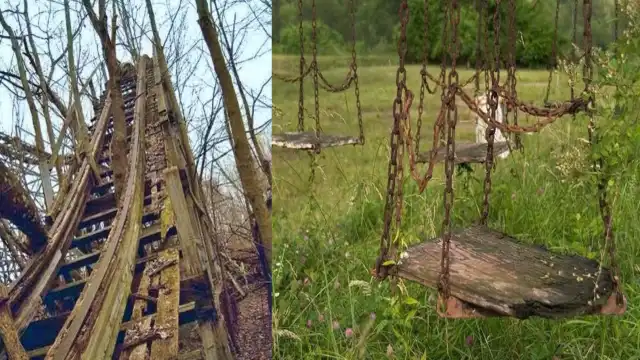
Then the deaths started stacking up. A young boy drowned in the park’s pond. Later, a truck backing up struck a swing seat and killed a small girl riding it. Between those incidents and others, at least six people died on the property during its operating years. The park finally shut its gates in 1966, and by most accounts it sat abandoned for roughly two decades after that.
In the 1980s, a developer named Gaylord White bought the land, planning to build a new neighborhood on it. Construction crews broke ground — and stopped almost immediately. What they found underneath wasn’t just old amusement-park debris. It was human remains, mostly children, from an ancient Native American burial ground that predates the Clay family by centuries. Archaeological work later confirmed the site had been a Shawnee settlement and burial ground going back over a thousand years, long before Mitchell Clay ever set foot there.
White chose not to develop the land after that discovery. Instead, the rusting rides were left standing, and the property now opens for guided tours — drawing paranormal investigators and curious visitors from well beyond West Virginia’s borders.
Why people call it cursed
Layer it all together and it’s easy to see why the site earns its reputation. You’ve got a Native American burial ground disturbed twice — first by an unwitting settler family, then by an unwitting amusement park developer. You’ve got three children killed in 1783. You’ve got at least two more children who died on the same ground during the park’s operation in the 20th century.
Visitors report hearing footsteps with nobody around, catching what sound like children’s voices, and — in one detail that’s become part of the site’s modern folklore — noticing that one particular swing on the old ride occasionally moves on its own. Some visitors leave toys and stuffed animals on the rides as informal tributes to the children believed to be buried there, a tradition that keeps renewing itself year after year.
None of that is provable in any scientific sense, and it’s worth being upfront about that. But the history underneath the ghost stories is solidly documented — real land records, real court and settlement accounts, a real gravestone still standing on the property today in memory of Bartley and Tabitha.
The bigger picture
It’s tempting to flatten a story like this into a simple ghost tale, but the full picture is messier and more human than that. The Clover Bottom Massacre happened during a period of relentless, mutual violence along the frontier — much of it tied to broader conflicts like Dunmore’s War just years earlier. Settlers were pushing onto land that had belonged to Native people for generations, and retaliation cut in both directions, over and over, for decades. Neither side of that conflict gets to claim clean hands.
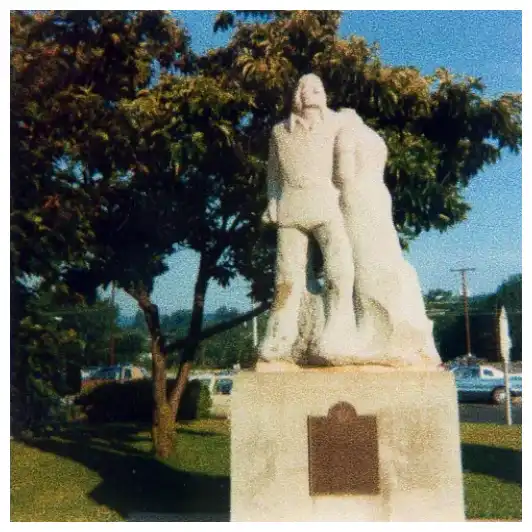
What’s left today is a small stone marker, a statue outside the Mercer County Courthouse called “Agony in Stone” dedicated to the Clay children, and an abandoned amusement park that’s become one of the most talked-about “haunted” locations in the country. Whether you’re drawn to the history, the tragedy, or the ghost stories, Lake Shawnee is a rare case where all three are tangled together into the exact same patch of ground.

