

Robin Hardy’s 1973 folk horror masterpiece The Wicker Man doesn’t end with a heroic rescue; it ends with a calculated trap snapping shut. Sergeant Neil Howie flies to the secluded Hebridean island of Summerisle believing he is tracking down a missing child, completely unaware that he is the actual quarry. When the flames climb the giant wooden effigy on the cliff edge, the film delivers one of cinema’s most brutal subversions of righteousness, faith, and institutional power.
Missing girl hoax: how summerisle engineered the trap
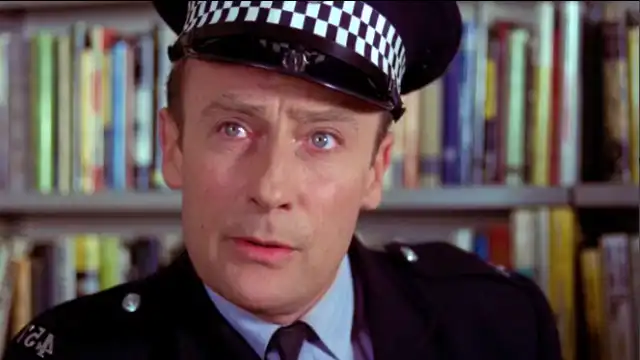
The disappearance of young Rowan Morrison was never a mystery to solve. It was bait.
From the moment Howie receives an anonymous letter claiming a young girl has vanished, every resident on Summerisle is playing an assigned role in an elaborate piece of theater. Why go through such theatrical lengths? The island’s agrarian economy was facing catastrophic ruin.
Two generations prior, Lord Summerisle’s grandfather — a Victorian agronomist — introduced specially cultivated fruit crops that flourished in the island’s microclimate. To secure the loyalty of the workforce, he systematically replaced traditional Christianity with a reconstructed version of ancient Celtic polytheism. The islanders truly believe their bountiful harvests are tied to the favor of the old gods: Nuada of the Sun and the Earth Goddess.
| Step | Event | Note |
|---|---|---|
| 1 | Crop Failure | |
| 2 | Pagan Ritual Demands | A specific human sacrifice |
| 3 | The Rowan Morrison Bait | Anonymous letter lures police officer |
| 4 | The 4 Ritual Criteria Met | King’s power, virgin, devout believer, free will |
| 5 | The Wicker Man Immersion |
When the previous year’s harvest fails, the entire social and economic order of Summerisle begins to crack. Minor animal offerings will no longer cut it. To appease the gods and prevent total starvation, Lord Summerisle (Christopher Lee) determines that only an extraordinary offering will suffice: an outsider who meets four ancient, non-negotiable requirements.
The 4 specific criteria sergeant howie fulfilled
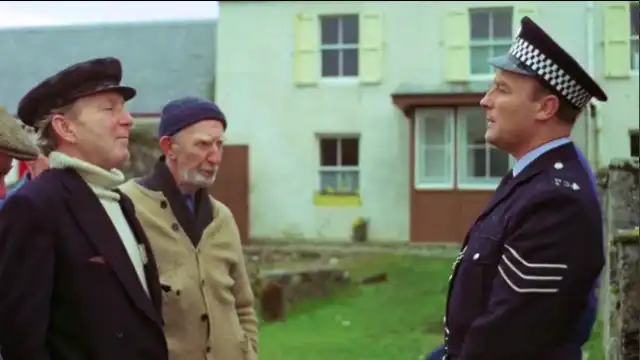
Lord Summerisle and his community did not select Neil Howie (Edward Woodward) by chance. They scouted him, tested him, and confirmed his eligibility at every step of his investigation.
- He carried the power of a king: The ritual required someone who embodied sovereign authority. Howie is not just an ordinary civilian; he is a mainland police sergeant operating with the full legal authority of the British Crown and the law.
- He was chaste: Ancient sacrificial rites often demanded sexual purity. Howie is an observant, conservative Christian saving himself for marriage. When the islanders send the landlord’s daughter, Willow, to tempt him with a hypnotic naked dance through the adjoining wall, Howie recites scripture and resists, unknowingly locking in his own death warrant.
- He was a devout believer: The offering could not be an atheist, a cynic, or a casual churchgoer. The gods required a true, devoted believer of an opposing faith — a genuine religious martyr whose spiritual conviction gave the sacrifice immense metaphysical weight.
- He came of his own free will: Force would invalidate the ritual. Howie had to walk into the trap entirely through his own volition. He chose to fly to the island, refused every polite suggestion to abandon the case, disguised himself as Punch (the Fool) during the May Day festival, and personally “rescued” Rowan from the stone circle, leading her straight into the arms of the waiting townsfolk.
Clash of absolute dogmas: Puritan vs Pagan
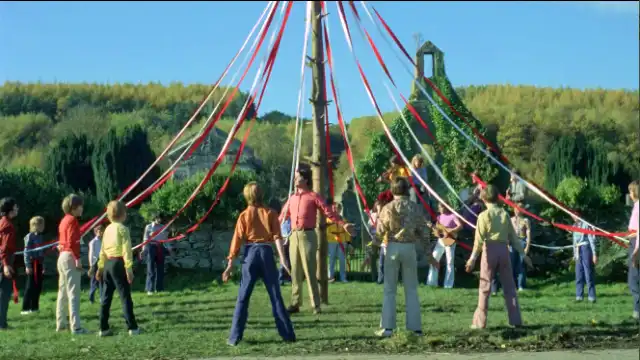
At its thematic core, The Wicker Man is a collision between two uncompromising worldviews. Neither side exhibits a single drop of doubt.
| Dimension | Sergeant Neil Howie | Lord Summerisle & The Islanders |
| Spiritual Framework | Rigid, dogmatic Scottish Presbyterianism | Reconstructed agrarian Celtic paganism |
| Source of Authority | Mainland law, scripture, British Crown | Ancestral heritage, nature cycles, community survival |
| Morality & Sex | Sin-conscious, repressed, strictly marital | Joyous, communal, fertility-driven |
| Fatal Flaw | Arrogant self-righteousness blinded by duty | Desperate superstition masking biological reality |
Howie views the islanders not merely as suspects, but as blasphemous heretics who need legal and spiritual correction. He is disgusted by their open celebration of sexuality, their phallic Maypoles, and their casual embrace of natural cycles. His moral indignation blinds him.
He assumes his badge and his God make him invincible.
Lord Summerisle, meanwhile, presents a chilling contrast. He is cultured, articulate, charming, and deeply educated. He does not view Howie with malice. To Summerisle, burning Howie alive inside a giant wicker structure alongside sheep, goats, and birds is not an act of murder — it is an agricultural necessity and a profound honor.
The folk horror subversion of christian righteousness
![The Wicker Man (1973) ORIGINAL TRAILER [HD 1080p]](https://www.gsnsp.com/wp-content/cache/flying-press/82c22e34b844e86dbf89fd07ea22b84e.jpg)
Traditional detective stories and classic horror films follow a reliable formula: the righteous protagonist investigates darkness, overcomes temptation, and defeats the pagan or monstrous evil through moral fortitude.
The Wicker Man pulls the rug out from under this trope.
| Arc | Sequence |
|---|---|
| Standard Horror Arc | Moral Purity + Piety → Overcomes Evil → Righteous Victory |
| The Wicker Man Arc | Moral Purity + Piety → Fulfills Criteria → Consumed by the Ritual |
Every classic virtue Howie possesses becomes a direct liability. His strict chastity confirms his purity. His devotion makes him the ideal martyr. His stubborn dedication to justice ensures he refuses to leave when he still has the chance. His faith does not save him — it dooms him.
Even in his final moments inside the burning colossus, Howie sings Psalm 23 (“The Lord is my shepherd…”) while the villagers joyfully sing the Middle English folk tune Sumer Is Icumen In. Howie dies convinced of his heavenly reward, while the villagers sing with genuine delight, completely detached from the agony taking place above them.
What happens next year?
Before the torches touch the straw, Howie delivers a frantic, razor-sharp logical deduction that rattles Lord Summerisle for a brief, telling second.
Howie points out the undeniable biological reality: the fruit trees failed because the climate and soil simply could not sustain Victorian grafts, not because the sun god was angry. He warns Summerisle:
“If the crops fail again next year, Lord Summerisle, what then? They will need a more exalted sacrifice… Next year, they will burn you.”
Summerisle dismisses the warning with a forced smile, but the camera catches a flicker of dread across Christopher Lee’s face. The community’s belief system is an escalating cycle of desperation. If the orchard remains barren after burning a royal, virginal, devout police officer, the only logical step left for the islanders will be to sacrifice their own king.
The horror of The Wicker Man doesn’t end when the wooden head collapses into the sea against the setting sun. The true horror is that the fire solves nothing, changes no agricultural science, and guarantees another harvest of ashes.

