

On its candy colored surface, Nobuhiko Obayashi‘s 1977 cult classic Hausu (House) plays like a psychedelic cartoon with killer pianos and flying severed heads. Look beneath the frantic pop-art visuals, though, and you will find an intensely personal scream of post-war grief. The bizarre haunted mansion does not just devour schoolgirls for cheap thrills — it consumes an entire carefree generation that forgot the horrors of World War II.
The surreal climax: what actually happens at the end?
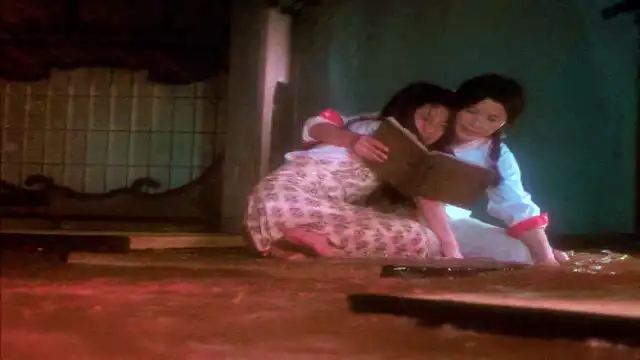
The final act of Hausu strips away any lingering sense of ordinary reality. One by one, seven bubbly schoolgirls travel to a rural countryside estate, only to be systematically slaughtered by everyday household objects.
By the time the climax arrives, only two girls remain: Gorgeous (Oshare), the vain daughter seeking an escape from her father’s new fiancée, and Fantasy, the hopeless romantic. Fantasy watches in horror as Gorgeous undergoes a complete possession. Gorgeous sheds her contemporary clothing, slips into a traditional white kimono, and fully merges with the spirit of her late mother’s sister, Auntie.
| Event | Note |
|---|---|
| Arrival at the Country Manor | |
| Supernatural Household Attacks | Piano bites, flying heads, suffocating mattresses |
| Spiritual Absorption / Possession | Gorgeous assimilates into the Aunt’s spirit |
| The Blood Flooded Room | Fantasy drowns; Blanche the cat survives |
| The Cycle Restarts | Stepmother Ryoko arrives with watermelons |
Fantasy tries to survive, but the room rapidly fills with a tidal wave of red blood. She drowns, leaving only the white Persian cat, Blanche, and the newly reborn Gorgeous behind.
The next morning, morning sunlight floods the estate. Gorgeous sits peacefully on the veranda, radiating serene, aristocratic elegance. When her father’s fiancée, Ryoko, arrives carrying watermelons, Gorgeous greets her with a chilling smile. When Ryoko asks where the other girls went, Gorgeous casually hands her a freshly cut slice of fruit containing a charred piece of clothing, remarking that love makes everything taste delicious. The trap resets. Another woman walks straight into the slaughterhouse.
Why does the aunt eat the girls? the ghost bride of WWII
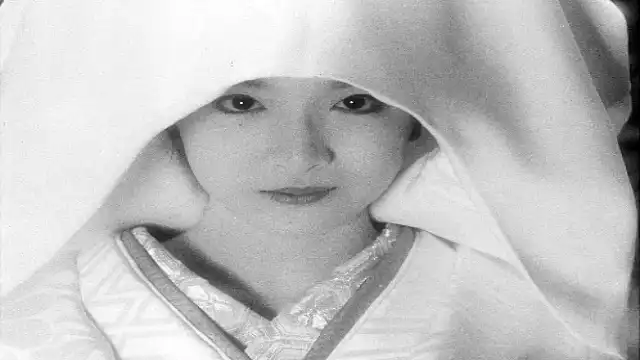
Why targeting innocent schoolgirls? The answer lies in the aunt’s tragic history, framed through the Pacific War.
Decades before the events of the film, Auntie was a radiant young woman deeply in love. Her fiancé was drafted into the Imperial Japanese military during World War II. Before shipping out, he promised he would return so they could marry.
He never came back.
He was killed in action — vaporized or lost during the wartime destruction. Instead of moving on, Auntie stayed trapped inside the family estate, waiting indefinitely for a dead man. Over decades of isolation, her unbearable sorrow curdled into pure, unadulterated rage.
She transformed into an onryō — a vengeful Japanese spirit tethered to the physical world by bitter trauma. To sustain her ghost-like existence and maintain her youth, she must feed on the life force of unmarried, virgin women. Why virgins? Because they possess the one thing stolen from her: an unblemished future full of romantic possibilities. Every young girl she devours represents a life she was denied.
Obayashi’s lived experience

To understand the tonal whiplash of Hausu, you have to understand where director Nobuhiko Obayashi came from.
Obayashi was born in 1938 in Onomichi, a coastal city in Hiroshima Prefecture. As a young boy, he watched his childhood friends get drafted or evacuated to Hiroshima, only to be instantly erased when the atomic bomb detonated on August 6, 1945. Obayashi grew up surrounded by widows, empty homes, and families that vanished overnight.
By the late 1970s, Japan had transformed into an economic juggernaut. Tokyo was awash in consumerism, pop idol culture, Western fashion, and glossy commercial optimism. The new generation of teenagers grew up in comfortable luxury, completely divorced from the smoldering ash their parents and grandparents clawed their way out of.
Hausu is Obayashi’s collision between those two realities:
- The Schoolgirls: Bright, frivolous, pop-music-loving archetypes of 1970s consumer paradise.
- The House: A crumbling relic of imperial, wartime Japan that refuses to be forgotten.
When the girls walk into the mansion, they treat the post-war countryside like an amusement park. They sing, dance, giggle, and pose. The house responds with merciless, cannibalistic fury. It is the past physically consuming the future for daring to forget the dead.
The 7 archetypes devoured by the past

Each of the seven girls represents a specific virtue or personality trait of carefree post-war youth. Their bizarre deaths are tailor-made destructions of those identities.
| Girl’s Name | Defining Quality | Surreal Demise | Metaphorical Meaning |
| Gorgeous (Oshare) | Vanity & Family Pride | Possessed; loses her individual identity | The lineage gets sucked back into ancestral grief. |
| Melody | Musical Passion & Joy | Chewed to pieces by a grand piano | Artistic expression crushed by wartime sorrow. |
| Kung Fu | Physical Strength & Action | Sliced apart by floating furniture | Athletic vitality cannot fight historical trauma. |
| Prof (Gari) | Logic & Intellectualism | Melted down inside a wooden tub | Modern rationality fails against emotional haunting. |
| Mac | Hunger & Consumerism | Swallowed by a watermelon in the well | Endless modern appetite consumed by the soil. |
| Sweet | Domesticity & Kindness | Bound and smothered by mattresses | Innocent gentleness suffocated by household traps. |
| Fantasy | Imagination & Romance | Drowned in a sea of blood | Romantic idealism drowned in historical slaughter. |
Every tool modern youth uses to cope with reality — logic, art, physical strength, daydreaming — is completely useless against the house. The past does not negotiate with the present.
Chigumi obayashi’s child logic: Why the horror feels like a cartoon
When Toho Studios commissioned Obayashi to make a horror film following the massive Japanese box office success of Steven Spielberg’s Jaws, Obayashi did something unusual: he turned to his 11-year-old daughter, Chigumi.
He realized adults try to make fear make sense. Adults fear taxes, sickness, social embarrassment, or conventional monsters. Children, on the other hand, fear the mundane objects in their immediate environment turning against them.
Chigumi gave him a list of childhood nightmares:
- What if your reflection in the mirror steps out and attacks you?
- What if the lid of the piano slams down and eats your fingers while you practice?
- What if the futon blankets wrap around you in your sleep and squeeze you to death?
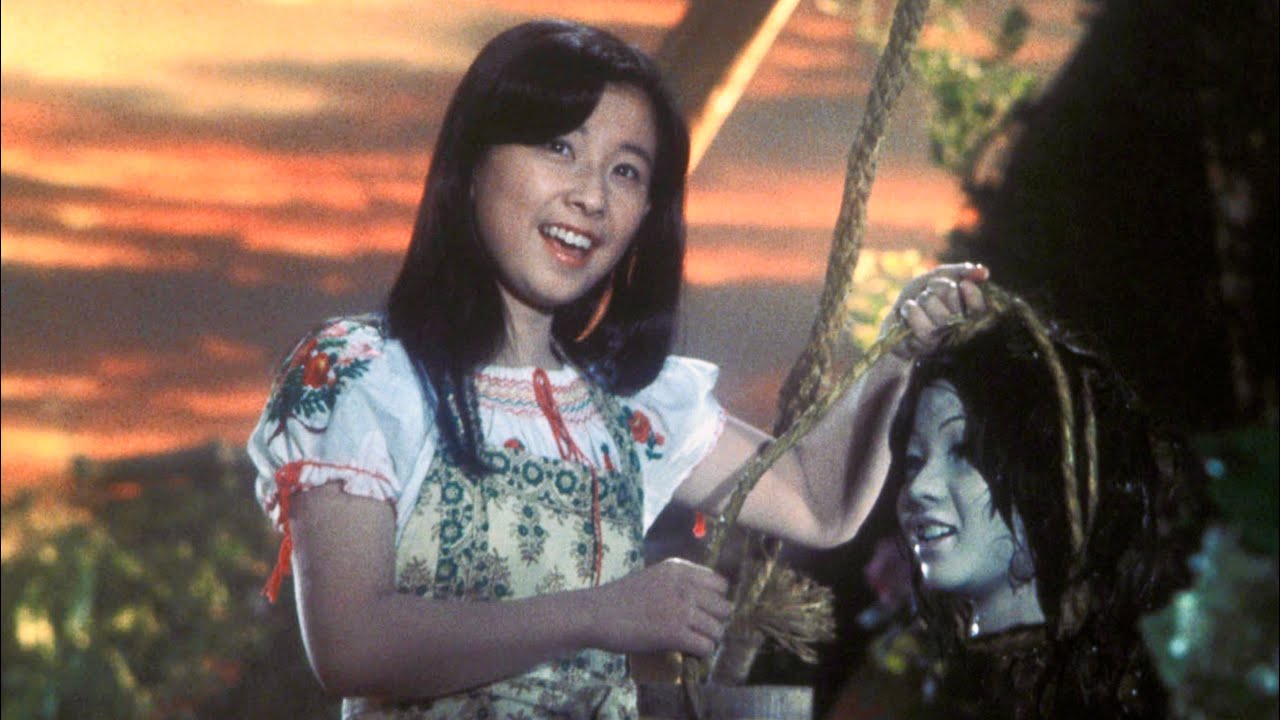
- What if you pull a severed head out of the well instead of a cold watermelon?
Obayashi took these pre-teen anxieties and shot them using practical in-camera tricks, vibrant matte paintings, stop-motion animation, and theatrical sets. The result feels like a live-action manga. That surreal, cartoonish tone is not an accident; it captures how war and death look through the eyes of an innocent child. The bright colors make the underlying tragedy even more jarring.
Trauma never leaves
The tragedy of Hausu is that the nightmare does not resolve with a hero saving the day. There is no exorcism. No priest arrives with holy water. Nobody burns the mansion down.
Instead, Gorgeous takes her aunt’s place as the new guardian of the estate. The wound left by the war remains wide open, permanently demanding fresh sacrifices to numb the pain. When Ryoko steps onto the porch at the end, she is walking into the exact same machinery of death that claimed the girls before her.
Obayashi’s film reminds us that you cannot simply wallpaper over national trauma with pop music, fashion, and commercial bliss. Unprocessed grief does not vanish into thin air — it waits quietly in the country house, hungry for the next generation to arrive.

