

Shinya Tsukamoto’s 1989 cult masterpiece Tetsuo: The Iron Man hits like a blast of industrial noise straight to the nervous system. What begins as a petty hit-and-run quickly spirals into an agonizing physical mutation where steel pipes, scrap metal, and rusty bolts erupt directly through human flesh. When the film culminates in a roaring, two-headed biomechanical tank charging into Tokyo, it delivers the ultimate cyberpunk statement on modern alienation.
How the infection starts
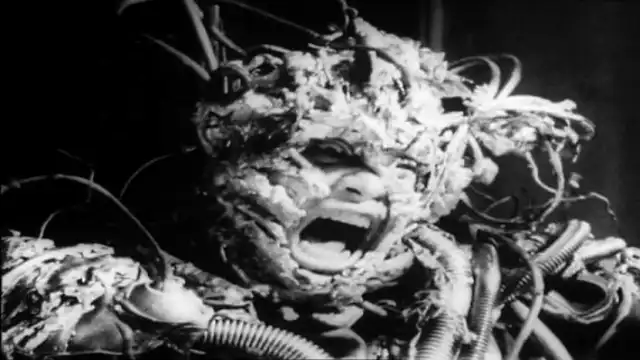
The entire nightmare begins with an act of radical self-mutilation. An unnamed man known as the Metal Fetishist (played by director Shinya Tsukamoto himself) slices open his own thigh to shove a heavy threaded steel rod into his muscle. When the wound festers with maggots, he runs screaming into the street and gets mowed down by a car.
Behind the wheel is an ordinary corporate Salaryman (Tomorowo Taguchi) and his girlfriend.
| Event | Note |
|---|---|
| Metal Fetishist Implants Steel Rod | |
| Hit-and-Run by the Salaryman | |
| Cover-Up & Forest Copulation | Guilt & arousal fuel the psychic curse |
| The “Metal Sickness” Spreads | Shaving metal, drills, scrap consumerism |
Instead of calling an ambulance, the panicked couple drags the bleeding fetishist into the woods. Believing he is dead, they become overcome by perverse adrenaline and have sex right in front of his battered body.
That single moment seals their fate. The dying fetishist uses his psychic affinity with metal to place a vengeful biomechanical curse on the Salaryman. Days later, the Salaryman nicks his cheek while shaving, only to discover a jagged piece of steel wire growing out of his skin. The machine age has marked him.
Climax: two flesh-engines collide
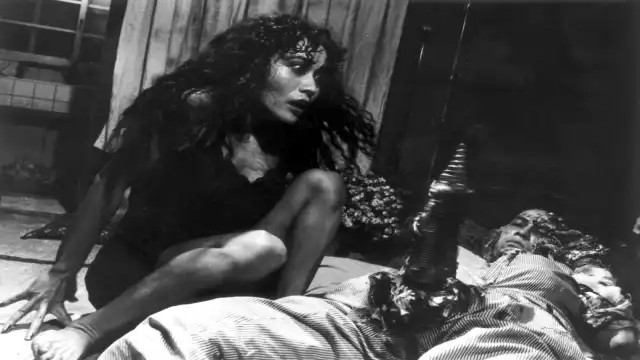
The mutation doesn’t stop at a stray wire. As the Salaryman’s body progressively replaces cells with iron rods, hydraulic tubes, and drills, he accidentally kills his girlfriend during a frenzied, nightmare-fueled sexual encounter. He is no longer an office worker; he is a walking scrap heap.
Soon after, the Metal Fetishist tracks him down for their final showdown.
Unlike the Salaryman, who fought his transformation at every step, the Fetishist fully worships the steel. He possesses full telekinetic mastery over wires, appliances, and televisions. Their confrontation isn’t a typical superhero duel; it is a chaotic, stop-motion clash of raw aggression, homoerotic tension, and mutual obsession.
| Character | Relationship to Metal | Ultimate Transformation |
|---|---|---|
| The Salaryman | Resists mutation; bound by domestic & corporate conformity | Mutates out of guilt, fear, and repressed masculine rage |
| The Metal Fetishist | Desires metal; uses pain as spiritual elevation | Commands machinery telepathically to force human evolution |
As they beat, impale, and tear into each other across the industrial wastelands of Tokyo, something unexpected happens: they stop fighting.
Instead of destroying one another, their scrap-metal bodies weld together. Flesh fuses with iron, circuitry knots together, and the two mortal enemies merge into a single massive, dual-headed, phallic war machine.
Ending meaning: “Let’s Turn This Whole World to Rust”
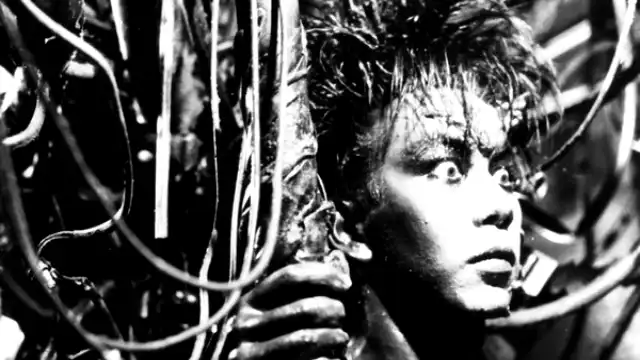
The climax delivers one of the most iconic lines in underground cinema:
“Our love can destroy this whole fucking world. Let’s turn the whole world into rust.”
Why do they declare their love and vow to rust the earth?
The ending represents absolute surrender to the machine age. Throughout the film, the Salaryman tried desperately to cling to his boring, sterile domestic life. He wore his neat suit, lived in a cramped apartment, and pretended to be a normal cog in the corporate machine.
By merging with the Fetishist, he discards his human identity entirely. The anger, lust, and trauma that society forced him to bottle up breaks out in a tidal wave of biomechanical power.
| Sequence | Note |
|---|---|
| Repressed Salaryman Identity | Corporate Drone |
| Painful Mutation | Body Horror |
| Biomechanical Merger | World-Ending Titan |
Their “love” is not conventional romance. It is the ecstatic union of two alienated souls who decide that if society is going to reduce humans to cold machinery, they will become the most monstrous machines alive. Rolling out into the streets of Tokyo, their goal isn’t profit or survival — it is apocalyptic destruction.
Post-war japan: modernization consuming flesh
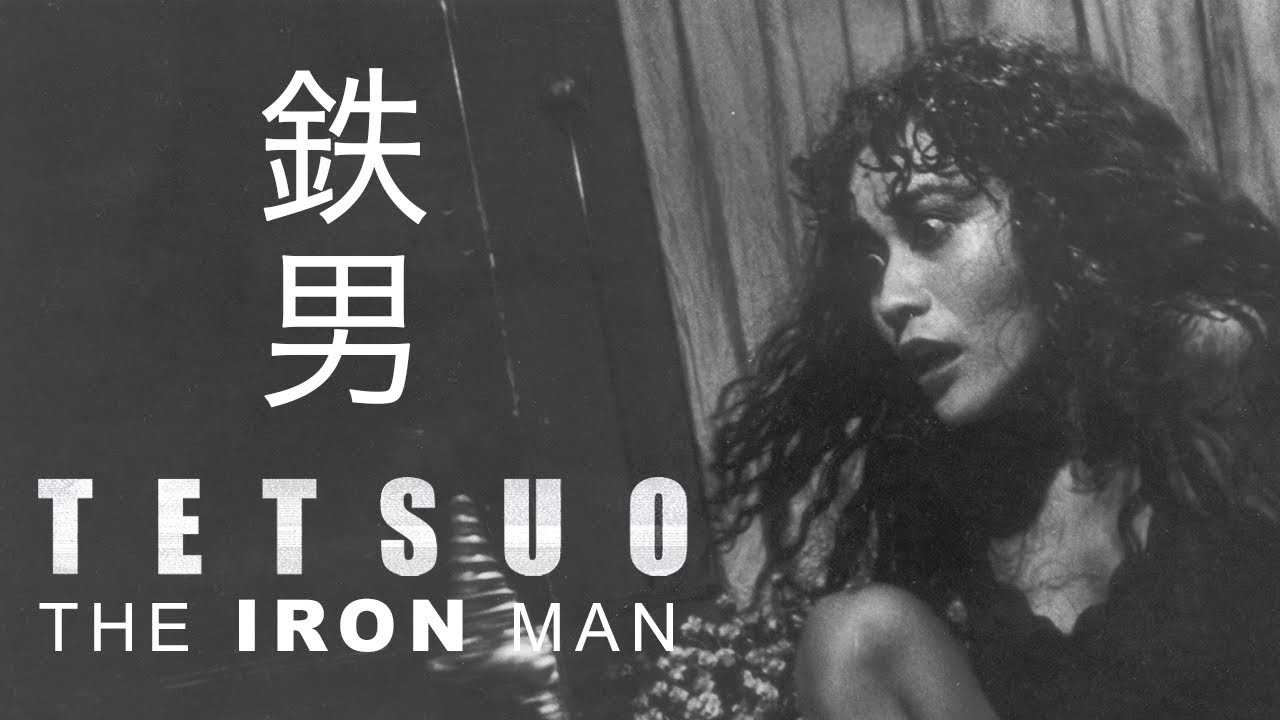
Tetsuo: The Iron Man didn’t emerge in a vacuum. Released in 1989 at the height of Japan’s economic bubble, the film acts as a visceral critique of hyper-industrialization.
Following the devastation of World War II, Japan pulled off an economic miracle, rapidly transforming into a global hub for technology, electronics, and mass manufacturing. That breakneck growth came with a steep psychological cost. Millions of men became salarymen — exhausted corporate workers who traded personal freedom for lifelong company loyalty.
Cities like Tokyo transformed into dense concrete mazes of subways, factories, and power grids. Tsukamoto captures this suffocating atmosphere by shooting on gritty 16mm black-and-white film, blending industrial noise tracks by Chu Ishikawa with hyperactive stop-motion animation.
The Iron Man suggests that when human beings spend all their waking hours surrounded by steel, circuits, and concrete, the environment eventually invades the body. Technology stops being a tool we use and becomes a parasite that eats us from the inside out.
The verdict on Tsukamoto’s metal nightmare
Is Tetsuo: The Iron Man a warning or a celebration? The brilliance of the film is that it is both.
Tsukamoto portrays the bodily transformation as excruciatingly painful, disgusting, and terrifying. Yet, there is an undeniable sense of euphoric release when the flesh finally gives way to steel. The fragile human body is weak, vulnerable to disease, guilt, and social humiliation.
Metal, on the other hand, is indestructible.
The Salaryman and the Fetishist lose their humanity, but they gain raw, unchecked agency. They roll off toward the horizon not as victims of the city, but as its final reckoning.

