

Thailand to Cambodia Border Crossing: Poipet Guide & Scam Avoidance
Rumble along the dusty tracks of eastern Thailand, walk through a surreal gauntlet of neon border casinos, and step straight into the ancient kingdom of Cambodia. Crossing the overland border at Aranyaprathet and Poipet is an iconic Southeast Asian backpacking rite of passage. It is also notorious for being a high-pressure maze of visa hustlers, touts, and transportation scams.
The Route at a Glance
The overland journey from Bangkok to Siem Reap covers roughly 400 kilometers (250 miles). While flying takes under an hour, doing it on the ground costs less than a fancy cocktail and drops you right into the local rhythm of Southeast Asia.
| Step | From | To | Notes |
|---|---|---|---|
| 1 | Bangkok: Hua Lamphong | Ban Klong Luk Border Station | SRT Train #275 — 49 THB — ~5.5 hrs |
| 2 | Ban Klong Luk Border Station | Thai Departure Immigration | Walk 200m through Rong Kluea Market |
| 3 | Thai Departure Immigration | The Neutral Zone / Casino Strip | Stamp out of Thailand; walk past Khmer stone arch |
| 4 | The Neutral Zone / Casino Strip | Cambodian Visa on Arrival & Entry Point | Get $30 VoA sticker & immigration stamp |
| 5 | Cambodian Visa on Arrival & Entry Point | Poipet Roundabout | Private taxi — $35–$45 — ~2.5 hrs via NH6 |
| 6 | Poipet Roundabout | Siem Reap / Angkor Wat | Final destination |
Leg 1: The 49-Baht train from bangkok to the border
Forget overpriced tour buses from Khao San Road that strand you at fake visa shacks for three hours. The smoothest, most honest way out of Bangkok is the ordinary morning train operated by the State Railway of Thailand (SRT).
The morning train schedule
- Train Number: Ordinary #275
- Departure Station: Bangkok Railway Station (Hua Lamphong) at 05:55 AM
- Arrival Station: Ban Klong Luk Border Station at 11:17 AM
- Ticket Cost: 49 THB (roughly $1.40 USD)
- Booking Window: Same-day purchase at the station ticket window (no advance reservations required or permitted for 3rd class)
Pro-Tip: While many long-distance trains have migrated north to Krung Thep Aphiwat Central Terminal, eastern line commuter trains to the border still run out of historic Hua Lamphong Station. Arrive at the ticket window by 5:20 AM, buy your ticket for 49 Baht, and grab a window seat on the right-hand side.
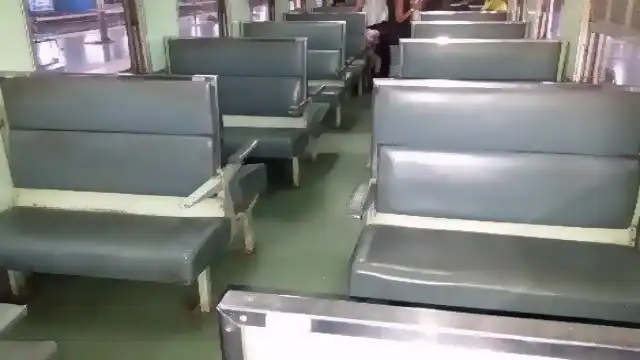
The train features open-air windows, ceiling fans, and bench seating. Wandering food hawkers hop on and off at rural stations selling iced coffee in plastic bags, skewers of grilled chicken with sticky rice (gai yang), and cut fresh fruit for 20 to 30 Baht.
The train terminates directly at Ban Klong Luk Border Station, mere steps from the border checkpoint. You do not even need a tuk-tuk into Aranyaprathet town anymore.
Leg 2: Clearing thai customs at ban klong luk
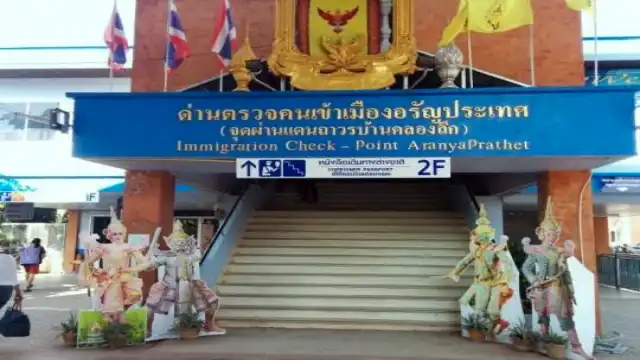
Step off the train at Ban Klong Luk and follow the blue pedestrian overhead signs pointing toward the border. You will walk through a section of the sprawling Rong Kluea Market.

- Ignore the Tuk-Tuk Drivers: Drivers standing outside the train platform will insist the border is 5 kilometers away. It is literally 200 meters ahead. Walk straight past them.
- Head Up the Escalators: Look for the two-story building marked “Passport Control / Foreigner Exit”.
- Get Your Thai Exit Stamp: Hand your passport and boarding pass/travel details to the Thai border officer. They will scan your passport, snap your photo, stamp you out of Thailand, and direct you down the ground-floor exit ramp.
The Big Scam: fake “Consulates” & Visa offices
The stretch between Aranyaprathet and the border gate contains the highest concentration of visa hustlers in Southeast Asia.
| Step | Description | Notes |
|---|---|---|
| Friendly Touts / Drivers | “Need visa! Embassy is here!” | |
| FAKE Visa Agency Shack | Charges: 1,500–2,000 THB | Overpriced scam trap |
| Official Walkway | Keep walking past market stalls | |
| Thai Departure Gate | Get stamped out of Thailand | |
| Cambodian Neutral Zone | Official VoA Office | $30 USD |
The Hustle
If you take a bus or minivan from Bangkok instead of the train, the driver will almost certainly pull off Highway 33 into a private restaurant or office building marked “Consulate General of Cambodia” or “Government Visa Processing Center”.
Men in neckties or official-looking uniforms will board the vehicle with clipboards, telling passengers that all visas must be processed immediately before entering the border zone. They charge 1,500 to 2,200 THB ($45 to $65 USD) for a visa that costs exactly $30 USD.
How to bypass it
- Never hand your passport to anyone at a roadside restaurant or travel agency.
- There are no official visa checkpoints on Thai soil for entering Cambodia.
- You can only get an official Cambodian Visa on Arrival after you have physically stamped out of Thailand and walked across the international boundary line.
Walking the neutral zone: the casino strip
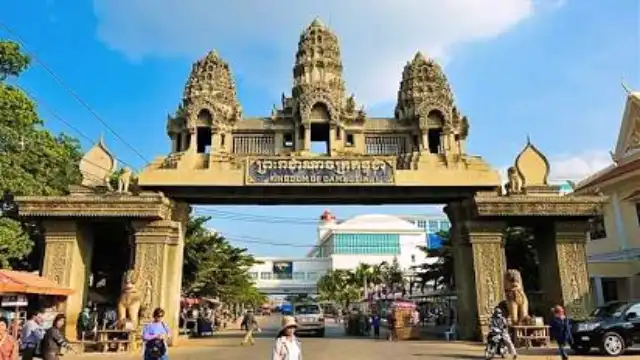
Once you pass through Thai exit immigration, you enter a surreal no-man’s-land.
Because gambling is strictly illegal inside Thailand, massive casino resorts like the Grand Diamond City and Star Vegas were erected right on this neutral border strip to cater to Thai weekend gamblers.
Walk along the right-hand covered pedestrian walkway past the flashy casino lobbies, rumbling freight trucks, and pushcart porters lugging towering bales of secondhand clothing. Looming above the road ahead is a carved sandstone arch inspired by the towers of Angkor Wat. This marks the entry point to Cambodia.
Leg 3: Cambodian visa on arrival & immigration
Before passing the final archway into Poipet town, you will encounter the official Cambodian border facilities.
Option A: Official Visa on Arrival (VoA)
Look for a small, single-story government building on your right with an official sign reading “Department of Immigration – Visa on Arrival”.

- Official Tourist Visa (Type T) Cost: $30 USD
- Payment Method: Crisp, clean US Dollar banknotes. (Torn, folded, or marked bills will be rejected).
- Required Documents:
- Passport with at least 6 months validity.
- One recent passport-sized photo (if you lack a photo, they will scan your passport photo for a nominal 100 THB / $2 fee).
- Completed visa application slip (handed to you at the counter).
The “Tea Money” Stamping Bribe: Immigration officers at the VoA desk frequently point to a handwritten sign or verbally demand a 100 to 200 THB “processing fee” or “stamping fee.” This is not an official legal fee.
How to handle it: Hand over exactly $30 USD in cash with your documents with a polite smile. If they ask for 100 Baht, calmly say “I only have US Dollars for the official visa.” They might make you wait an extra five minutes while processing other passports, but they will hand over your visa sticker without conflict.
Option B: Cambodian e-Visa (Speed Pass)
If you prefer skipping the visa counter paperwork entirely, apply for a Cambodia e-Visa (Type T) online at the official government portal (evisa.gov.kh) at least four days before your trip.
- Cost:$30 USD (plus a standard $6 online processing fee).
- Usage: Print two hard copies (one for entry immigration, one for departure). You can walk straight past the Visa on Arrival office and proceed directly to the final immigration queues.
The Mandatory Cambodia e-Arrival Card (CeA)
Cambodia uses a digital e-Arrival Card system for all travelers.
- Submit your declaration online at arrival.gov.kh or through the official Cambodia e-Arrival app within 7 days prior to arrival.
- The digital form merges immigration details, health declarations, and customs info into a single free QR code.
- Take a screenshot of the generated QR code on your phone or print a copy to present at the passport stamping counter.
The final passport stamp
Walk 100 meters past the visa office to the main Cambodian Passport Control hall. Join the foreigner line, present your passport, your new visa sticker (or printed e-Visa), and your e-Arrival QR code. The officer will capture your fingerprints on an optical scanner, stamp your passport with a 30-day entry permit, and send you out into Cambodia.
Leg 4: Poipet to Siem Reap transport breakdown
Step through the exit doors of the immigration hall and you are officially in Poipet town. Immediately, touts will surround you offering transport.
| Transport Mode | Cost (USD) | Travel Time | Practical Reality |
|---|---|---|---|
| Private Taxi (Direct) | $35–$45 | 2–2.5 hours | Fastest; door-to-door hotel drop-off |
| Shared Taxi (Per Person) | $10–$12 | 2.5–3 hours | Waits until all 4 seats are filled |
| Local Minivan / Tourist Bus | $8–$10 | 3–4 hours | Slow; frequent roadside pickups |
| “Free” Transit Terminal Bus | Scam trap | Wastes 1 hr+ | Forces you into cartel pricing |
The “Government Bus Terminal” scam
Right outside the exit, uniformed men will direct all arriving tourists toward a large bus labeled “Free Shuttle to Tourist Passenger Terminal”.
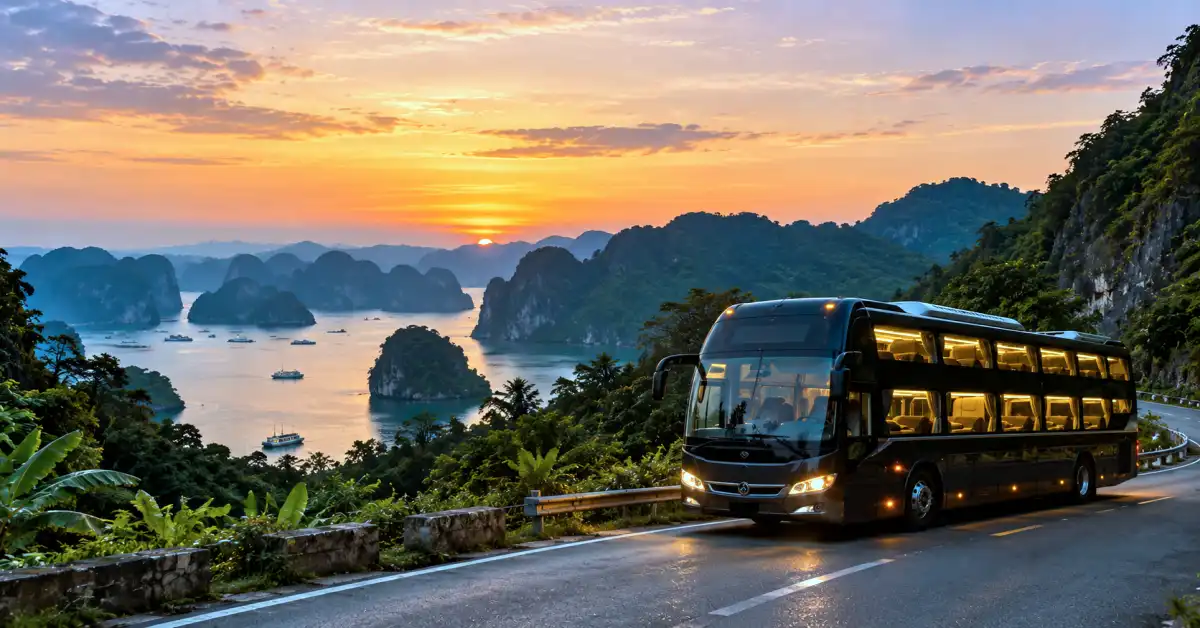
Do not get on this shuttle.
This shuttle drives tourists 10 kilometers out of town to an isolated, government-licensed bus terminal located in the middle of nowhere. Once you are trapped out there, private taxi prices jump to $60-$80 USD, and buses take hours to leave because they wait for full passenger loads.
How to get a fair-price private taxi
- Walk Past the Roundabout: Walk straight past the chaotic roundabout into the actual streets of Poipet town (near the gas station or coffee shops along National Highway 6).
- Hail a Local Driver: Multiple independent drivers will approach you.
- Negotiate Firmly: The standard market rate for a private, air-conditioned sedan (typically a Toyota Camry) to your hotel lobby in Siem Reap is $35 to $45 USD total per car.
- Group Up: If you are traveling solo, find two or three other backpackers at the immigration hall and split the taxi. That brings your individual cost to roughly $10 USD each.
- Payment Terms: Never pay the driver upfront. Agree on the total price in US Dollars, confirm that it includes all highway tolls, and pay only when you arrive safely at your hotel in Siem Reap.
The drive down National Highway 6 (NH6) is a smooth, paved two-lane highway taking roughly 2 to 2.5 hours through rural Cambodian villages and rice paddies.
Master Scam Checklist
Keep these seven golden rules front of mind while crossing the border:
| Tip | Guidance |
|---|---|
| Train Over Bus | Take the 49 THB train (#275) to avoid fake highway visa stops. |
| Walk the Market | Ban Klong Luk station is right at the border—no tuk-tuk needed. |
| No Thai-Side Visas | Never buy a Cambodian visa inside Thailand. |
| Carry Clean Greenbacks | Bring exactly $30 in crisp, uncreased US dollar bills. |
| Resist Petty Tea Money | Firmly state you have the exact $30 fee at the VoA desk. |
| Complete the CeA | Fill out arrival.gov.kh on your phone before arriving. |
| Skip the Free Shuttle | Walk past the Poipet circle to hail a direct $35–$45 taxi. |
Frequently Asked Questions
What are the operating hours of the Poipet border?
The Thai-Cambodian border crossing at Aranyaprathet / Poipet is open daily from 06:00 AM to 10:00 PM. Aim to cross before 3:00 PM so you have plenty of daylight to complete onward highway travel to Siem Reap.
What currency should I use in Cambodia?
Cambodia operates on a dual-currency system utilizing US Dollars (USD) and Cambodian Riel (KHR). US Dollars are widely accepted for accommodation, restaurant meals, transport, and temple passes. You do not need to exchange currency at the border. Any change for purchases under $1 USD will be handed back to you in Riel (fixed roughly at 4,000 KHR per $1 USD).
Can I do this entire journey in a single day?
Yes. Catching the 05:55 AM train from Bangkok puts you at the border around 11:30 AM. Budgeting one to two hours to clear both immigration checks and grab lunch means you will be in a taxi by 1:30 PM, pulling into your Siem Reap hotel around 4:00 PM—with plenty of time to catch the sunset over Angkor Wat.
The Poipet crossing may have a chaotic reputation, but navigating it on your own is straightforward once you know the playbook. Catch the morning train, decline the road touts, pay the official visa desk, and enjoy the smooth ride straight into the heart of Cambodia.

