

Borobudur Temple: Secrets of the World’s Largest Buddhist Monument
You’ve probably seen the picture. A lone figure, sitting at the top of a stone-grey pyramid, watching the mist burn off the jungle as the sun rises over a volcano.
It’s Borobudur. It’s epic. It’s on every “Top 10” travel list.
And honestly, most people get it wrong.
They show up, snap that sunrise photo, walk around the top, and leave. They treat it like a beautiful, ancient pile of rocks. That’s like visiting a library to admire the shelves.
But Borobudur isn’t a place. It’s a book. It’s a 3D-printed spiritual journey, a puzzle box of Buddhist philosophy, and a monument with secrets that were literally buried for centuries.
So, what’s the real deal with the world’s single largest Buddhist monument? How did it get lost? And what are the secrets that 99% of visitors walk right past?
I’m here to give you the rundown. Forget the fluff. This is the stuff you actually want to know.
So, What Is This Thing?
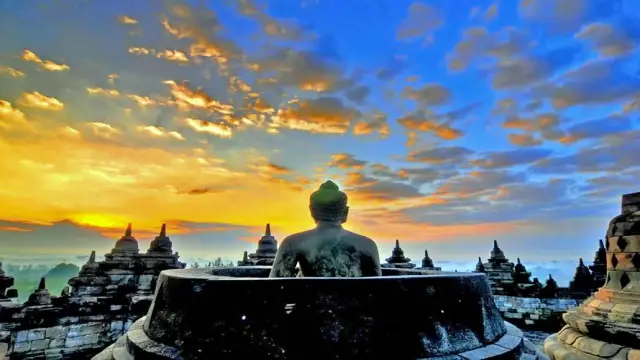
Let’s get the basics out of the way.
- What: Candi Borobudur (Borobudur Temple).
- Where: Central Java, Indonesia, about 42 km (26 miles) from the city of Yogyakarta.
- When: Built around the 8th-9th centuries. That’s before Angkor Wat in Cambodia.
- How Big: It’s massive. Built from over 2 million volcanic stones (56,600 cubic meters), all stacked, carved, and interlocked without a single drop of mortar.
Think about that. It’s a giant, complex Lego structure on a hilltop. This engineering alone is mind-blowing.
But the why is the real story. This wasn’t just built for a king to show off. It was built as a guide. A physical, three-mile-long path to guide the human mind from earthly desire to ultimate enlightenment.
The “Lost & Found” Vibe: How Do You Lose a Mountain?
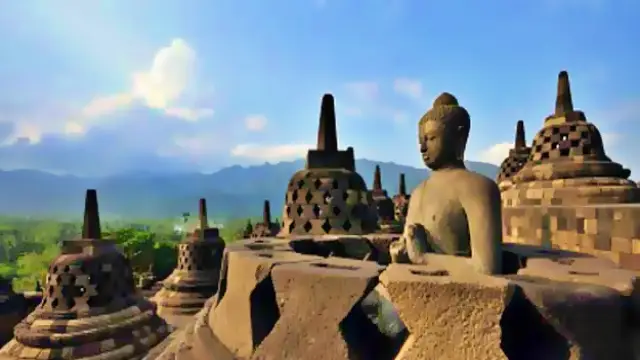
Here’s one of the craziest parts of the story. By the 15th century, Borobudur was… gone.
Poof.
How do you lose a 115-foot-tall (35m) stone mountain?
Easy. You have a very angry neighbor: Mount Merapi.
Merapi is one of the most active volcanoes on Earth. Eruptions, combined with earthquakes and the slow, steady creep of the jungle, buried the entire monument in volcanic ash and vegetation. For centuries, it was just another hill in a lush landscape, a local legend.
It stayed hidden until 1814, when the British ruler of Java, Sir Thomas Stamford Raffles (yes, the same guy Singapore is named after), heard the local stories. He sent a team to “the hill with the statues.” It took 200 men two months just to clear the jungle.
They didn’t just find a temple. They found a lost world.
Secret #1: The Temple Is a 3D Guide to Enlightenment
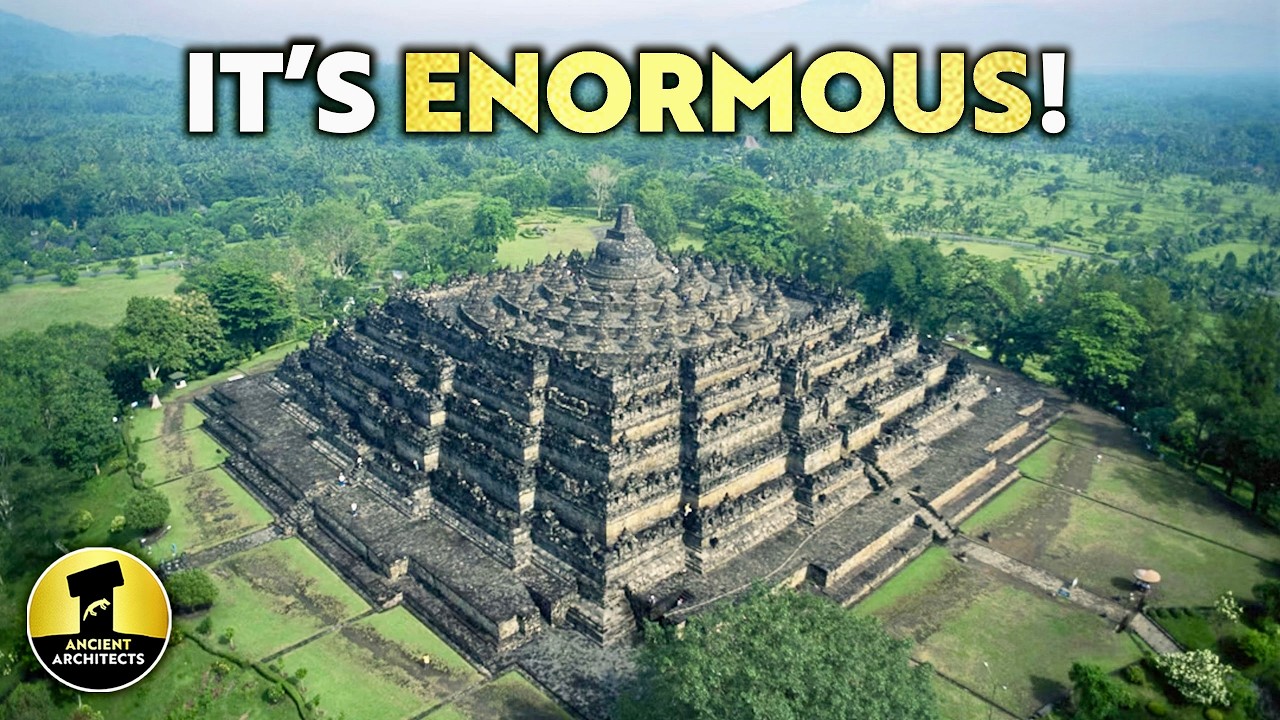
This is the main secret. If you only remember one thing, remember this. Borobudur is not a building you enter. It is a path you walk.
The entire structure is a mandala—a map of the Buddhist cosmos. You are meant to start at the bottom and physically walk your way to the top. As you climb, you are symbolically climbing through the three realms of Buddhist consciousness.
The Hidden Foot (Kāmadhātu): The World of Desire
This is the coolest, most literal secret. The actual base of the temple is buried.
When it was first built, the massive stone base featured 160 relief panels depicting the Kāmadhātu, or the “world of desire.” What’s that? It’s the messy, all-too-human world of greed, lust, anger, and gossip. It was a visual catalog of karma—do this (bad thing), get this (bad result).
So why is it hidden? We still don’t know for sure.
- Theory 1 (The Practical One): The temple was literally sliding. The whole thing was too heavy for the hill. This hidden base was covered by a massive stone encasement (the one you walk on now) to stabilize the entire structure and stop it from collapsing.
- Theory 2 (The Symbolic One): The architects intentionally “buried” the world of desire, hiding it from view to show that one must overcome it to begin the spiritual journey.
Today, you can see a small section of it, which was excavated in the southeast corner. It’s a literal hidden foot.
The Square Terraces (Rūpadhātu): The World of Forms
Once you “leave” the world of desire, you begin to climb. The next five square terraces are the Rūpadhātu, or the “world of forms.”
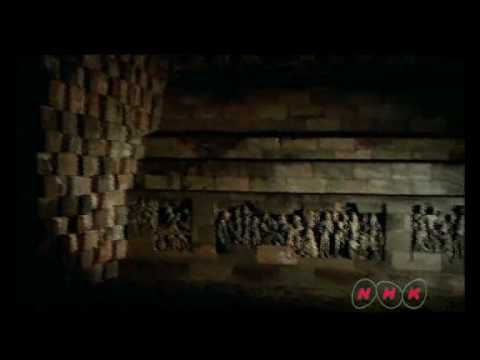
This is where the story kicks in. The walls are covered in 1,460 narrative panels—a stone-carved graphic novel stretching for miles. These reliefs tell the stories of the Buddha’s life (the Lalitavistara) and his previous incarnations (Jataka tales).
You are meant to walk pradaksina (clockwise), keeping the main wall on your right. As you walk, you are reading the story of how to break free from the “world of forms”—where you are still attached to your name, your body, and the “stuff” of the world.
The Circular Summit (Ārūpadhātu): The World of Formlessness
And then, you break through.
The architecture changes. The square corners, dark galleries, and endless stories suddenly stop. You emerge onto three wide-open circular terraces.
This is the Ārūpadhātu, the “world of formlessness.”

No more stories. No more carvings. No more earthly attachments.
It’s just you, the open sky, and 72 identical, bell-shaped stupas.
This is the payoff. It’s the architectural equivalent of a silent meditation. You have arrived.
Secret #2: The Mystery of the 72 Buddhas (and the Empty One)
This is what defines the skyline of Borobudur. Those 72 “bells” on the top.
But they aren’t just bells.
Inside each one, barely visible through the perforated (holey) stonework, is a statue of a seated Buddha. He is in the Dharmachakra mudra, the gesture of “turning the wheel of the dharma” (teaching).
They are intentionally veiled. You are not meant to see them clearly. It’s a symbol that in the realm of formlessness, “truth” or “enlightenment” is not something you can just point at and see. It’s a-bit-hidden, a-bit-abstract.
The Kicker: The “Unfinished” Buddha
At the very center of the summit is one massive, central stupa. It’s the peak. The crown.
For centuries, it was a mystery. When the temple was being restored, they opened it. And inside?
A single, “unfinished” Buddha statue.
Why? Was it a mistake? Did they run out of time?
Probably not.
This statue (now in a nearby museum) is believed to represent the transcendent state beyond all forms. It’s the ultimate truth, which is so far beyond our comprehension that it cannot be perfectly depicted.
Or, perhaps the main stupa was meant to be empty. A symbol of Śūnyatā (emptiness), the final, ultimate reality in Mahayana Buddhism. The answer is… nothing. And that’s the point.
Mind. Blown.
How to Save a Mountain (Twice)
This monument to human faith almost died.
By the early 20th century, it was crumbling. The lack of mortar, the insane tropical rainfall, and the unstable hill meant the whole thing was waterlogged. The walls were leaning, the reliefs were being eaten by algae.
It was a disaster.
So, the world stepped in. In the 1970s, UNESCO launched one of the most ambitious archaeological restoration projects in history.
- It cost $25 million (a fortune at the time).
- It took 10 years.
- They dismantled and cleaned 1 million individual stones. By hand.
- They installed a massive, modern drainage system inside the temple to stop it from flooding itself.
This project is a testament to global cooperation. It’s why we can even visit it today. Borobudur isn’t just a 9th-century marvel; it’s a 20th-century one, too.
Your Practical Guide: Don’t Just Be a Tourist (Rules)
Okay, you’re convinced. You want to go. But visiting Borobudur has changed. This is the critical, up-to-date info you need.
- You MUST Book in Advance: You can’t just show up. To protect the temple from overtourism, access is now limited to 1,200 people per day, in timed sessions. Book your “Temple Structure Ticket” online, way in advance.
- You CANNOT Go Alone: You are now required to go with a local guide. This is part of the new system. You’ll be put in a small group at the entrance. Don’t fight it—they actually provide great context.
- You CANNOT Wear Your Own Shoes: This is the big one. To protect the ancient stones from wear, you will be given special “Upanat” sandals. Everyone must wear them.
- No More “Free-Roam” Sunrise: The classic “climb to the top for sunrise” is… complicated. The “Temple Structure” tickets (to actually climb it) don’t start until 8:30 or 9:00 AM.
- The Solution: The best sunrise view is now from Setumbu Hill, a nearby viewpoint. You watch the sun rise over Borobudur and the volcanoes. It’s the photo everyone wants. Do this first (at 5 AM), then go to the temple for your 9 AM slot.
- What to Wear: This is a holy site. Cover your shoulders and knees. No tank tops, no short shorts. A simple sarong (which they often provide) or light, loose pants and a t-shirt are perfect. It gets hot, so think linen.
- How to Get There: Fly into Yogyakarta (YIA). Borobudur is about a 1.5-hour drive away. You can hire a driver for the day (easy and affordable) or rent a motorbike.
The Final Take: Why Should You Care?
Is Borobudur “worth it”? With the new rules, the cost, and the crowds?
Absolutely. 100%.
This isn’t just a “thing to see.” It’s a “thing to experience.”
It’s a story of profound faith, of human ambition, of how an entire worldview can be carved into a mountain. It’s a story of loss and rediscovery. And it’s a story of our shared, global responsibility to protect our history.
You don’t just see Borobudur. You read it. You walk it.
And if you pay attention, you just might leave with more than a photo.
Borobudur is a masterpiece of Buddhist art, but it’s not the only one. Just down the road is Prambanan, a towering, jagged complex of Hindu temples that is just as breathtaking.
Would you like me to write a similar “unfiltered guide” on how to visit Prambanan and what its secrets are? Let me know in the comments!

