
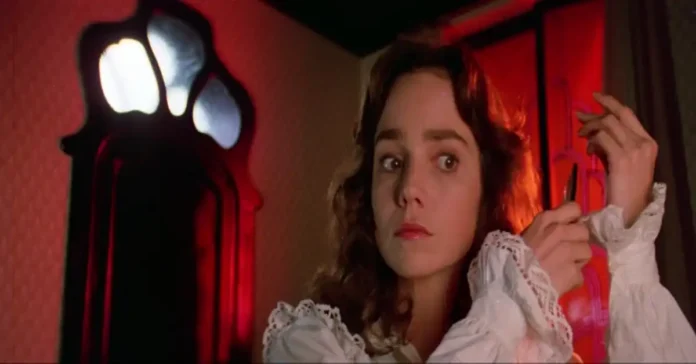
The Climax Inside the Secret Heart of the School
Before making sense of that final smile, look at the surreal chaos Suzy survives in the final ten minutes.
Throughout the film, Dario Argento treats the dance academy not as a normal boarding school, but as a trap. The students are constantly drugged with spiked red wine, stalked in the hallways, and harassed by bizarre indoor bat attacks and maggot infestations. Suzy Bannion, played with hypnotic wide-eyed vulnerability by Jessica Harper, spends days in a fog. She struggles to piece together the panicked warning whispered by a student named Pat on her first night: “The secret… iris”.
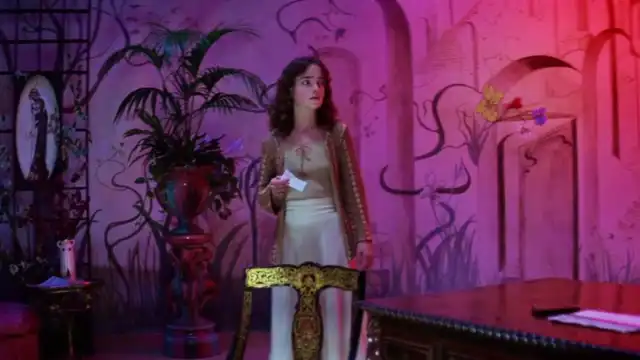
When Suzy finds the hidden entrance behind an ornamental peacock on the wall, she stumbles into the private quarters of the school’s inner circle. The staff members are not just strict instructors. They are a coven of ancient witches.
Tiptoeing through sheer crimson drapery, Suzy accidentally awakens the ancient founder of the academy: Helena Markos, also revered in occult lore as Mater Suspiriorum (The Mother of Sighs).
What happens next defies standard movie logic:
- The Invisible Enemy:Markos turns completely invisible, cackling mocking insults from the shadows while magically reanimating the throat-slashed corpse of Suzy’s friend Sara.
- The Lightning Strike: A flash of lightning illuminates the grotesque silhouette of the witch behind the bed curtains.
- The Glass Quill:Grabbing a decorative peacock feather made of jagged glass, Suzy plunges it directly into Markos’s neck.
- The Chain Reaction: The instant Markos chokes on her own blood, the entire school violently begins to self-destruct.
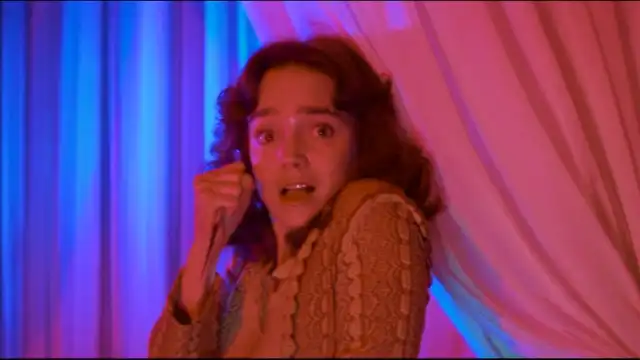
Suzy weaves through exploding walls, crashing statues, and roaring walls of fire to burst out into the storm. Outside, the rain drenches her face. Her shoulders drop. A grin spreads across her lips.
The Dark Fairy Tale: Snow White Meets Witchcraft
To decode why that smile feels so right, you have to realize that Suspiria is not a gritty detective story or a realistic slasher. It is a twisted Brothers Grimm bedtime story.
Co-writer Daria Nicolodi based parts of the script on childhood stories her grandmother Yvonne told her about being enrolled in a Swiss boarding school where teachers supposedly dabbled in the occult. When pitching the story to Argento, Nicolodi drew direct inspiration from classic fables like Alice in Wonderland, Bluebeard, and Snow White and the Seven Dwarfs.
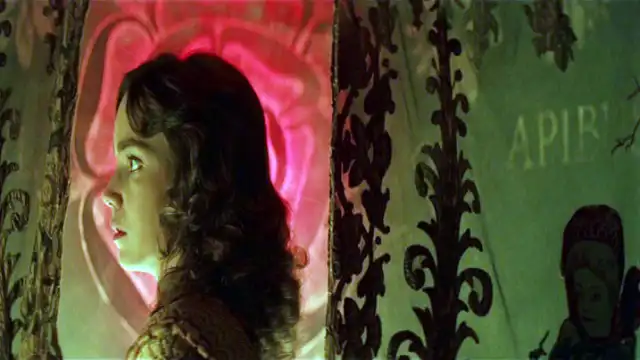
Argento took that idea literally. He instructed cinematographer Luciano Tovoli to study Walt Disney’s animated Snow White (1937) before shooting. They pushed early Eastman Color 35mm film through an obsolete three-strip Technicolor dye-transfer process. That decision drenched every scene in unmixed, candy-colored primaries: hyper-saturated reds, cobalt blues, and acidic yellows.
Notice how the school feels built for children rather than adults?
Originally, Argento wanted the ballet students to be young girls aged eight to ten. Producers pushed back, terrified of the commercial backlash of depicting brutal violence against children on screen. Argento reluctantly recast the parts with young adult actresses, but he refused to rewrite the script.
He left the dialogue simple, petty, and childlike. Even more cleverly, he built the sets with door handles placed at eye level instead of waist height. The actresses had to reach up like toddlers just to open a room.
Seen through this lens, Suzy Bannion is the ultimate Snow White. She is the innocent girl wandering into an enchanted forest. She bites the metaphorical poisoned apple each night when drinking the drugged wine prepared by her wicked stepmothers.
In a traditional fairy tale, the princess relies on a wandering prince to slay the witch and wake her from sleep. Argento subverts that trope entirely. Suzy wakes herself up. She rejects the drugged wine, uncovers the witch’s chamber, and drives the blade home herself.
Her smile in the rain is the triumphant grin of a fairy-tale protagonist who broke the spell on her own terms.
The Living Architecture of Tanzakademie Freiburg
Why does the entire building collapse the second Helena Markos dies?
Earlier in the movie, Suzy consults Professor Milius, an occultist who lays down the supernatural rules of the film: a coven derives all its power from its head queen. If you cut down the queen, the entire coven rots.
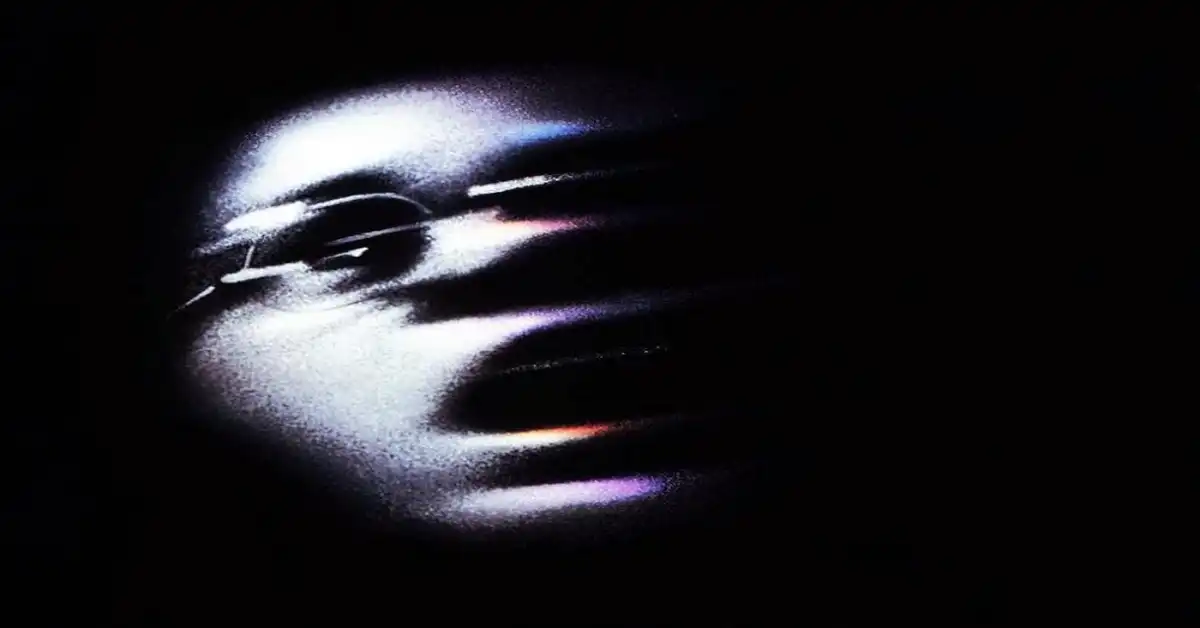
In Suspiria, the Tanzakademie Freiburg is not just an old German building where witches happen to meet. The building is Helena Markos.
The architecture operates like a physical body:
- The Lungs: The constant rattling, wheezing wind heard through the walls matches Markos’s deathly breathing.
- The Veins: Hallways are painted in pulsing crimson, winding through the academy like arteries carrying prey directly to the center.
- The Teeth: The attic contains a literal death trap — a room piled high with tangled razor wire that ensnares and slices open Sara.
- The Mind: The teachers maintain absolute control over the students’ schedules, bodies, and diets.
The academy functions as a carnivorous organism designed to lure young artists from across the globe and slowly digest them. Markos uses the girls’ youth and vital energy to prolong her unnatural lifespan.
When Suzy pierces Markos’s throat with the glass plume, she pierces the biological anchor of the entire estate. Pillars snap like brittle bones. Plaster crumbles like shedding skin. Chandeliers crash down like falling teeth.
The building does not just burn; it dies. Suzy running through those corridors is not just fleeing a house fire. She is escaping the belly of a dying beast.
The Rain as Baptism and Pure Psychological Relief
Some fan theories suggest that Suzy smiles because the evil spirit possessed her, turning her into the new Mother of Sighs. That theory confuses the 1977 original with Luca Guadagnino’s 2018 remake, where the character arc follows a completely different mythos.
In Argento’s original film, Suzy remains human from first frame to last.
Her smile represents three specific psychological victories:

- Waking Up from the Dream: Film critic Maitland McDonagh noted that Suspiria operates entirely on dream logic. The horrors feel thick, inescapable, and irrational. Escaping the burning grounds feels like jolting awake from a suffocating nightmare. The relief of finding yourself alive in the real world naturally brings a wave of nervous laughter.
- Washing Away the Filth: Throughout the story, Suzy is coated in decay. She breathes stale dust, drinks drugged brew, steps on writhing worms, and gets splattered with blood. The torrential downpour outside acts as a cleansing baptism. The cold German rain washes the grime, blood, and supernatural sickness right off her skin.
- Defeating the Corrupt Mother Figures: The academy is run entirely by older women who claim to be maternal mentors — Madame Blanc (Joan Bennett) and Miss Tanner (Alida Valli).Instead of nurturing young talent, they betray, poison, and slaughter the girls entrusted to their care. Suzy’s victory represents an escape from toxic, parasitic maternal control.
She survived something nobody would ever believe. She conquered the ancient evil, kept her life, and walked away intact. That smile is pure, unfiltered adrenaline.
Goblin’s Score and the Release of Sensory Tension
You cannot talk about the ending without talking about the sound.
Italian progressive rock band Goblin, led by Claudio Simonetti, created one of the most abrasive and unnerving scores in cinematic history. Instead of standard orchestral strings, Goblin assaulted the audience with Greek bouzoukis, thumping tribal drums, distorted analog synthesizers, and real human voices whispering “Witch! Witch!” into the audio channels.
Argento blasted this music on loud speakers during filming to keep the cast constantly agitated. By the time the film reaches its final act, that relentless acoustic pounding has wound the viewer’s nerves into tight knots.
Watch how the audio shifts as Suzy reaches the front gate:
The thunderous acoustic score hits an operatic fever pitch as the academy crumbles, then gives way to the steady, natural rush of pouring rain.
That sudden acoustic shift from demonic frenzy to plain water falling on leaves mirrors Suzy’s internal calm. The nightmare has ended. Nature has taken over again.
Key Takeaways from the Climax
- The Fairy-Tale Victory:Suzy fulfills the Snow White archetype by defeating the wicked queen herself, shattering the curse without needing a rescuer.
- Symbiotic Architecture: The Tanzakademie collapses because it is a physical extension of Helena Markos’s supernatural body. Killing her instantly destroys the school.
- No Dark Twist: Suzy is not possessed. Her smile is an emotional discharge — euphoria, survival instinct, and sensory relief after days of psychological torture.
- The Three Mothers Legacy:The film kicked off Argento’s Three Mothers trilogy, which continued with Inferno (1980, set in New York) and wrapped with The Mother of Tears (2007, set in Rome), all loosely inspired by Thomas De Quincey’s 1845 essay Suspiria de Profundis.
Suzy Bannion walking into the dark rain with a grin remains one of horror’s greatest closing images. It flips the genre script: the final girl does not end up sobbing in the back of a police cruiser. She steps out into the cold night air, tastes the rain on her lips, and smiles because she won.

