
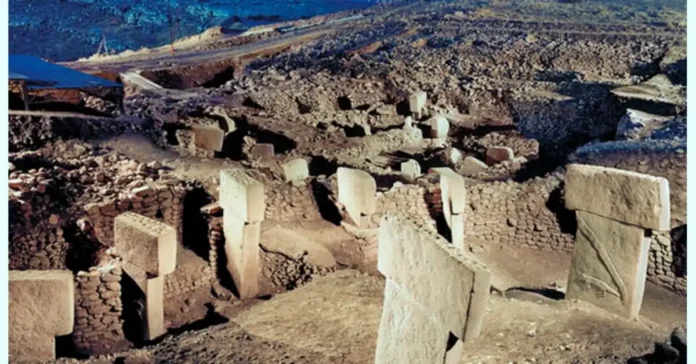
For nearly three decades, rumors swirled that Turkey’s 11,000 year-old sanctuary at Göbekli Tepe was home to a terrifying, blood-soaked skull cult.Those dark legends just took a massive hit thanks to two undisturbed graves uncovered beneath ancient building floors.Fresh evidence shows that centuries of natural mudslides and rolling limestone rubble — not sinister human sacrifice — scattered hundreds of human bone fragments across the monumental site.
The myth of the stone age skull temple
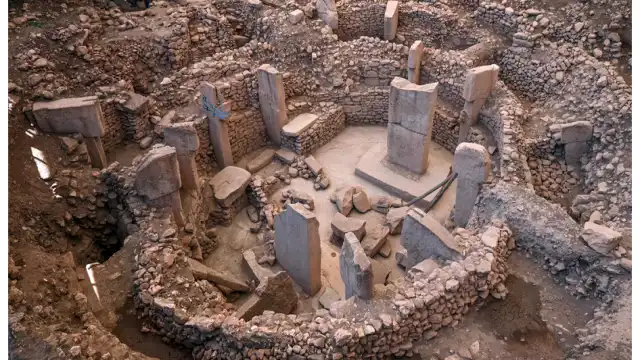
Ever since excavations kicked off in 1995 under German archaeologist Klaus Schmidt, Göbekli Tepe has carried an almost supernatural reputation. Perched on a high limestone ridge in southeastern Turkey, its massive T-shaped pillars, carved with prowling leopards, scorpions, and vultures, completely flipped our understanding of the Stone Age. Popular documentaries eagerly labeled it the “world’s first temple.” The prevailing story claimed nomadic hunter-gatherers trekked across harsh plains just to build this colossal ceremonial center, leaving immediately after finishing their mystical rituals.
Then came the bones.
Over the years, field teams sifted through the thick dirt filling the round enclosures and pulled out nearly a thousand scattered human bone fragments. Nearly two-thirds of those fragments were pieces of crania — broken skulls. In 2017, a landmark study analyzed three specific skull fragments that showed deep carved grooves, scraping marks, and a hole drilled right through the top.
Tabloids and sensationalist podcasts immediately had a field day. People began painting Göbekli Tepe as a macabre, flesh-stripping nightmare ground where decapitated heads hung from poles and shadowy priests practiced ritual executions.
Who doesn’t love a spine-chilling ancient mystery? The eerie image of an isolated mountaintop cult captivates our imagination far more than ordinary daily chores. Yet real anthropology demands hard data over spooky folklore. That spooky narrative started unraveling once researchers finally found where the people of the site actually slept — and where they buried their dead.
The first intact graves
That missing piece of the puzzle finally arrived in late September 2026. A peer-reviewed study spearheaded by Dr. Julia Gresky and Dr. Lee Clare of the German Archaeological Institute (DAI) was released in PLOS ONE. Their breakthrough work reveals the first two undisturbed, fully articulated burials ever documented at the complex.
These discoveries did not show up in the monumental circular arenas where the giant animal pillars stand. Instead, excavators uncovered them tucked beneath the plaster floors of rectangular domestic buildings dating back to the Early Pre-Pottery Neolithic B period (roughly 8700 to 8000 BC):

- The Family Tomb in Trench DR1: Dug directly under a sturdy lime-plaster floor, this collective burial held three individuals — an adult woman, an adult man, and an adolescent girl.While older bones had been gently shifted to the grave’s corners over time to make room for newer burials, the bodies entered the pit whole and intact.Delicate hand and foot bones were preserved right where they decomposed.
- The Young Woman in Trench L09-65: Found right against the wall of a domestic space, this grave contained the skeleton of a young adult woman lying on her left side in a flexed, fetal position facing east.
Finding intact, articulated skeletons changes the entire debate. When bodies decay out in the open during sky burials or ritual defleshing ceremonies, predators drag off the hands, toes, and jawbones. Those fragile parts vanish. Here, every tiny knuckle was accounted for. These individuals were carefully tucked into the floor of a home by people who loved them, following a respectful tradition seen across the prehistoric Fertile Crescent.
The new plos one gobeklitepe discovery proved that we are not looking at discarded victims of an altar sacrifice. We are looking at families laying their kin to rest right beneath their living rooms.
Taphonomy 101: how nature smashes skeletons
If these bodies were buried neatly in graves, why on earth were 928 jagged bone fragments found strewn through the dirt downslope?
To answer that, you have to understand taphonomy. Taphonomy is simply the science of what happens to a living organism after it dies — how soil pressure, plant roots, chemical decay, weather, and gravity alter bone over thousands of years.
When Dr. Gresky’s team placed the loose bone fragments next to the newly excavated gobeklitepe intact human remains, they spotted an unmistakable pattern.The bones from the undisturbed domestic graves had the exact same damage as the scattered pieces found down in the temple ruins.
- Horizontal Snap Fractures: The long limb bones inside the graves were broken straight across by the sheer weight of compressing dirt above them, not by human stone tools.
- Calcareous Crusts: Decades of seasonal rainwater dripping through limestone soil coated the bones with thick, chalky mineral layers.
- Rodent Scratches: Tiny mice and voles chewed identical tiny grooves into bones from both locations as they scavenged underground.
Look at how the site is built. Göbekli Tepe is situated on a steep hillside. Above the monumental enclosures sit terraces where Neolithic families built their domestic houses. When these ancient structures eventually collapsed, or when torrential rains triggered mudslides and slope wash, old burials buried beneath shallow floors gave way.
Dirt, stones, and skeletons tumbled downhill. The rushing debris slid right into the abandoned ceremonial pits below, filling them like a bowl. Over thousands of years, seismic tremors from active fault lines shattered the brittle remains even further.
Those scattered remains were not tossed around by crazed cultists during dark midnight rites. Good old-fashioned gravity, rainwater, and soil erosion dragged them down the slope.

Why were skulls everywhere?
One burning question still lingers. If erosion washed random skeletons down the slope, why did archaeologists find way more skull pieces than arm, rib, or leg bones?
Does that skull surplus prove an obsession with head-hunting?
Not necessarily. The answer comes down to anatomy and geology. Skulls are essentially durable, hollow, rounded stone-like spheres composed of thick cortical bone. Delicate ribs, thin shoulder blades, and porous vertebrae turn into unrecognizable dust when crushed under several tons of shifting rocks. Skulls, by contrast, fracture into distinct, curved curved plates that stay identifiable for thousands of years.
Neolithic domestic renovations also played a major role. When families decided to remodel a room or lay down fresh plaster floors, they routinely dug into previous strata. Encountering an ancestor’s skeleton was common. Across the ancient Near East, villagers would frequently lift the skull out to keep it as an heirloom or set it aside in a corner before resealing the floor.
Combined with slope landslides, these architectural modifications created an accidental concentration of crania. When science takes over from Hollywood-style speculation, the gobekli tepe skull cult debunked argument becomes remarkably clear and grounded.
A real town, not a deserted cathedral
For years, writers claimed Göbekli Tepe was an empty, eerie mountain temple where nobody lived. These new gobekli tepe burials demolish that outdated assumption once and for all.
Researchers are steadily uncovering domestic grindstones, food refuse pits, hearths, rainwater cisterns, and standard homes. People ate breakfast here. They knapped flint points on the doorsteps. They raised children and argued with their neighbors.
- Settlement Reality: Hunter-gatherers were transitioning toward sedentary living. Göbekli Tepe was a permanent village featuring monumental communal halls at its heart, similar to modern town squares or civic pavilions.
- Regional Parallels: Burying deceased family members under domestic floors was standard operating procedure at nearby sites like Nevalı Çori, Çayönü, and later Çatalhöyük. Keeping ancestors close provided psychological comfort and established legal ownership over living spaces.
- Cultural Continuity: The mortuary habits at Göbekli Tepe fit seamlessly alongside standard neolithic mortuary practices gobekli tepe neighbors used across upper Mesopotamia.
Our ancestors did not live in a perpetual state of grim ritual paranoia. They lived normal human lives. They built magnificent stone halls for feasts, communal gatherings, and storytelling, while maintaining humble homes nearby.
Honor, not horror
What should we make of those three skull fragments with carved lines and drilled holes discovered in 2017?
Those modifications are 100% genuine. Archaeologists are not denying that ancient Anatolians worked on human bone. The crucial difference lies in intent.
In the Neolithic world, handling the bones of dead relatives was an act of deep reverence, mourning, and ancestral connection. In sites like Jericho, families modeled lifelike facial features out of plaster onto the skulls of respected elders, inserting cowrie shells for eyes. At other settlements, skulls were washed, coated in bright red ochre, and displayed on small pedestals during seasonal gatherings.
Carving a groove or drilling a suspension hole into a deceased elder’s skull was likely done to hang it as a memorial, honoring their protective spirit inside the home or meeting hall.
Conflating respectful ancestor veneration with a violent, bloodthirsty “death cult” is a classic historical mistake. Just because an ancient ritual looks strange to modern eyes does not mean it was malicious. If future archaeologists dug up our cemeteries thousands of years from now, would they assume our glass display cases containing preserved ashes were signs of human sacrifice? Of course not.
The power of self correcting science
The ongoing work at Göbekli Tepe reminds us why archaeological field science is so exhilarating. A flashy headline can dominate the internet for a decade, but slow, painstaking excavation eventually sets the record straight.
Whenever new evidence surfaces, honest scientists update their models. When early excavators found only grand pillars and scattered bones, they dreamed up solitary mountaintop temples and gruesome rituals. Now, with intact domestic floor graves, soil mechanics, and taphonomic tracking in hand, we see a much richer, warmer picture.
Göbekli Tepe was not an ominous death factory. It was a vibrant village where early humans celebrated community, built enduring architecture, and laid their loved ones gently beneath the floorboards. The earth may have tumbled down the hillside over the millennia, but the human story resting beneath it is finally standing on solid ground.

