
Did Ancient Scythians Use Cannabis to Get High? What a 2,800-Year-Old Tomb Reveals
For centuries, historians wondered if the Greek writer Herodotus was exaggerating when he described nomadic steppe warriors getting wildly high inside smoky funeral tents. A breakthrough study published in Science in November 2026 just settled the debate with cold, hard forensic chemistry. Researchers excavating a frozen royal tomb in southern Siberia found direct molecular proof that ancient Scythians used cannabis 2,800 years ago.
Inside Tunnug 1: The Frozen Tomb in Tuva
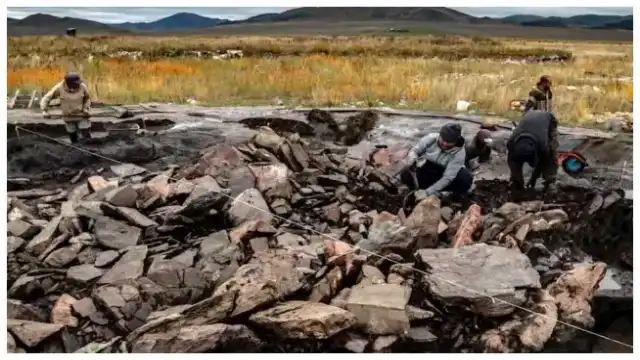
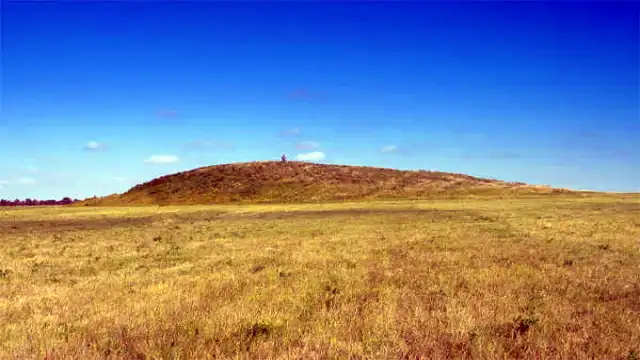
Tucked away in the Uyuk Valley of Russia’s Republic of Tyva — a remote region famously dubbed the “Siberian Valley of the Tsars” — sits a massive circular burial mound called Tunnug 1. Built in the early eighth century BCE (around 800 to 760 BCE), this monumental kurgan belongs to the earliest known horizon of Scythian culture.
The Scythians didn’t build stone cities or leave behind libraries. They were fierce, horse-riding nomads who ruled the vast Eurasian grasslands from Mongolia to the Black Sea. Instead of palaces, they poured their wealth into giant timber-and-stone tombs for their elite.
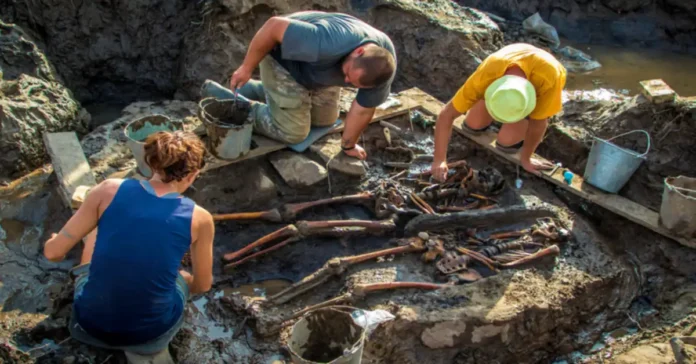
Because Tunnug 1 sat locked in the Siberian permafrost and wetland mud for nearly three millennia, organic materials that normally rot away survived in pristine condition. When an international team led by archaeologist Gino Caspari of the University of Bern and the Max Planck Institute of Geoanthropology peeled back the mound, they uncovered a chilling funeral scene:
- Massive animal sacrifices: Remains of dozens of sacrificed horses arranged across the burial structure, alongside weapons, horse gear, and gold jewelry.
- Potential human offerings: Scattered human bones alongside wooden log coffins, hinting at brutal funerary rituals.
- A botanical treasure trove: Roughly 1,500 small, dark cannabis seeds scattered right inside the coffins and around the bodies.
Radiocarbon dating locked those seeds firmly between 800 and 760 BCE. That single date pushes the oldest archaeological evidence of cannabis consumption back roughly 300 years earlier than previous discoveries in western China.

Mass spectrometry of ancient hair
Finding cannabis seeds in a grave is cool, sure. Skeptics could always argue those ancient nomads just grew hemp to weave tough rope, press cooking oil, or stitch clothing. Seeds alone cannot prove anyone actually got buzzed.
To prove real human consumption, Caspari’s team turned to modern forensic toxicology — the exact same science used in contemporary drug testing. Because the Siberian cold preserved actual braids of human hair from the Tunnug 1 burials, scientists didn’t have to guess.
They ran those 2,800-year-old hair strands through high-resolution mass spectrometry. Think of mass spectrometry as a molecular scale that weighs individual chemical compounds down to the atom. When you consume cannabis, your body metabolizes its main psychoactive ingredient, THC (tetrahydrocannabinol), which gradually breaks down over time into a stable chemical cousin called cannabinol (CBN).
Look at what the lab results revealed inside the ancient hair:
| Forensic Marker / Sample | Measured Concentration | What It Tells Archaeologists |
| Median CBN in Hair | 560 ppb (0.56 µg/g) | Every single tested hair sample contained measurable cannabinol breakdown products. |
| High-Exposure Sample A | 8,800 ppb (8.8 µg/g) | Shows heavy exposure — more than 15 times the median baseline. |
| High-Exposure Sample B | 100,000 ppb (100 µg/g) | Extreme concentration, nearly 180 times higher than the burial group’s median. |
| Parent THC Signals | Faint trace signatures | Matches the exact chemical profile seen in hair from modern cannabis users. |
“It’s extremely rare that we have both preserved plant parts and human soft tissue with the active compounds in it in the same context.” — Dr. Gino Caspari, University of Bern
Seeing 560 parts per billion (ppb) of cannabinol across every tested braid — plus faint traces of intact THC — is a forensic bullseye. Even better, the team started sequencing DNA from the preserved seeds, which look like wild varieties rather than modern cultivated strains.
Burial Braziers and Herodotus: Fact-checking ancient history
Long before mass spectrometers existed, a Greek historian named Herodotus wrote down a wild story around 450 BCE in Book IV of his Histories. Having traveled near the Black Sea, he described how Scythians purified themselves after burying a king.
According to Herodotus, the nomads pitched small wool-felt tents, placed red-hot stones inside a dish or brazier, and tossed handfuls of hemp seeds and flowers onto the scorching rocks. Thick, aromatic smoke filled the tent. Herodotus claimed the Scythians breathed in the vapor and “howled with delight”.
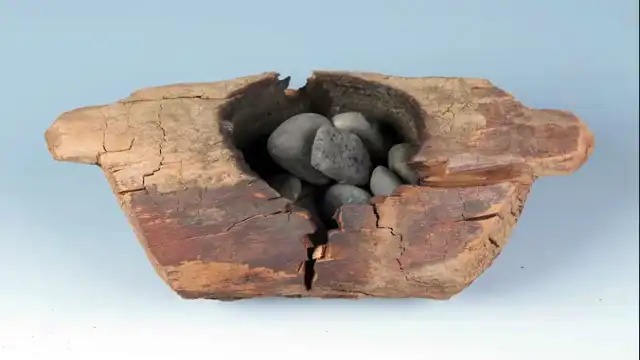
For two thousand years, classical scholars side-eyed that passage. Was Herodotus telling the truth, or was he spinning tall tales about “barbarians” at the edge of the world?
Piece by piece, archaeology has vindicated him:
- 2019 (Jirzankal Cemetery, China): Researchers found 2,500-year-old wooden braziers containing scorched stones and high-THC cannabis residue in the Pamir Mountains — proving people really did hotbox enclosed spaces using heated rocks.
- 2026 (Tunnug 1, Siberia): The new Science study pushes that timeline back another 300 years, proving these psychoactive funeral traditions were already thriving in the eighth century BCE — centuries before Herodotus ever picked up a pen.
Why did the Scythians bring weed to a funeral? Context matters here. Tunnug 1 wasn’t a Friday night party; it was a high-stakes royal burial complete with dozens of slaughtered horses and possible human sacrifices.
Dr. Caspari points out a few compelling possibilities. Shamans and mourners likely inhaled the smoke to enter trance states, commune with spirits, or ease collective grief. Burning fragrant plants also helped mask the overwhelming odor of decomposing bodies during multi-day steppe ceremonies. More chillingly, Caspari notes that attendants might have given cannabis to sacrificial victims to sedate them before their deaths — though chemistry alone cannot prove intent.
Why critics urge caution (and what happens next)
Good science always invites healthy pushback, and this study is no exception.
Some outside archaeologists point out a tricky forensic catch: human hair acts like a sponge for ambient smoke. If mourners burned huge piles of wild cannabis as ceremonial incense inside a closed tent or burial pit, cannabinoids floating in the air could bind directly to the outside of a person’s hair shaft. Mass spectrometry confirms the drug was on and in the hair, yet it cannot tell us with 100% certainty whether those individuals inhaled the smoke, drank an infusion, or simply sat next to a smoky ritual fire.
Still, those extreme outliers — two hair samples spiking to 8.8 µg/g and 100 µg/g of CBN — strongly suggest direct, heavy exposure rather than a faint whiff of background incense.
As researchers finish decoding the ancient DNA from Tunnug 1’s cannabis seeds, they are mapping out how humans first domesticated one of the world’s most famous psychoactive plants. Long before dispensaries, rolling papers, or modern lab tests existed, nomadic horsemen on the frozen Siberian steppe had already unlocked the plant’s mind-altering chemistry to navigate life, death, and the spirit world.

