

Dean Corll’s Unidentified Victims: The Candy Man Killer Case Today
During the early 1970s. Kids rode their bikes until the streetlights flickered on. Hitchhiking was completely normal. Families left their front doors unlocked. Then, teenage boys started vanishing.
At first, police brushed off the disappearances. They labeled the missing kids as runaways. But these boys weren’t running away. They were being lured into a living nightmare by a man they trusted — a friendly local electrician who used to hand out free sweets from his mother’s pecan praline company. They called him “The Candy Man.”
His real name was Dean Corll. Between 1970 and 1973, Corll, along with two teenage accomplices, abducted, tortured, and murdered at least 28 young men. The crimes became known as the Houston Mass Murders. When the bodies were finally discovered, the sheer scale of the horror stunned the entire nation.
Today, decades after the killer met his violent end, forensic scientists are still working to give the victims their names back. how modern DNA is solving decades-old mysteries, and why one boy still remains unidentified in 2026.
At a glance
- The Killers: Dean Corll operated with two teen accomplices, David Owen Brooks and Elmer Wayne Henley, to lure victims with promises of parties and rides.
- The Discovery: The murders stopped on August 8, 1973, when Henley shot and killed Corll.
- The Graves: Police recovered 28 bodies buried across a rented boat shed, Lake Sam Rayburn, and Texas beaches.
- DNA Triumphs: Advances in genetic genealogy have helped identify several victims previously known only as “John Does,” correcting tragic historical mix-ups along the way.
- The Final Mystery: Only one victim, known as “Swimsuit Boy” or John Houston Doe 1973, remains unidentified.
The Nightmare of “The Candy Man”
How does a serial killer operate right under a city’s nose? He hides in plain sight.
Corll didn’t look like a monster. He was polite, neatly dressed, and generous with his money. He targeted boys from the Houston Heights neighborhood, many of whom came from struggling, working-class families.
He didn’t act alone, either. Corll recruited two local teenagers, David Owen Brooks and Elmer Wayne Henley. These boys acted as bait. They brought their own friends and classmates straight to Corll’s doorstep. The promise was always simple: come over for a party, have some drinks, or get a ride. Once inside, the trap snapped shut.
The nightmare finally ended on August 8, 1973. Corll had moved to a house in Pasadena, Texas. That night, a violent argument broke out between the killers. Corll threatened Henley’s life. In a desparate panic, 17 year old Henley grabbed Corll’s .22 caliber pistol and shot him six times, killing him instantly.
When police arrived at the scene, Henley started talking. He didn’t just confess to a single shooting. He unravelled a string of serial murders that would permanently scar Texas history.
A Macabre Discovery: The Burial Sites
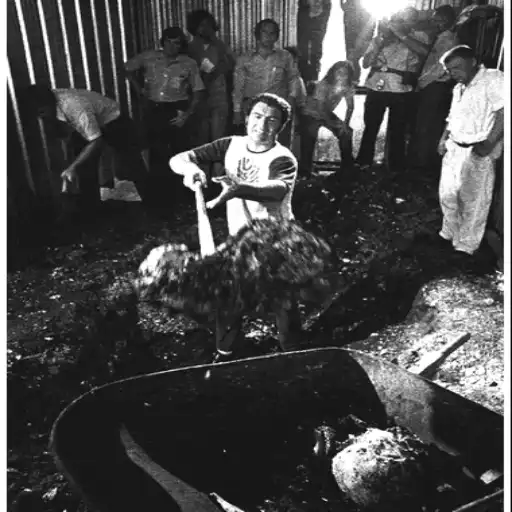
What followed was a grim, sweltering excavation process. Henley and Brooks led Houston investigators to multiple makeshift graveyards.
The most infamous location was a rented boat storage shed in southwest Houston. Inside, the heat was suffocating. Police dug through the dirt floor, eventually pulling 17 bodies from that single location.
But the killer didn’t keep all his victims in one place. Authorities found four more bodies buried in the dense woods near Lake Sam Rayburn. They discovered another victim on a beach in Jefferson County. At least six more boys were pulled from the sandy shores of the Bolivar Peninsula.

The final official body count hit 28. At the time, it stood as the worst case of serial murder in American history.
The Flaws of 1970s Forensics
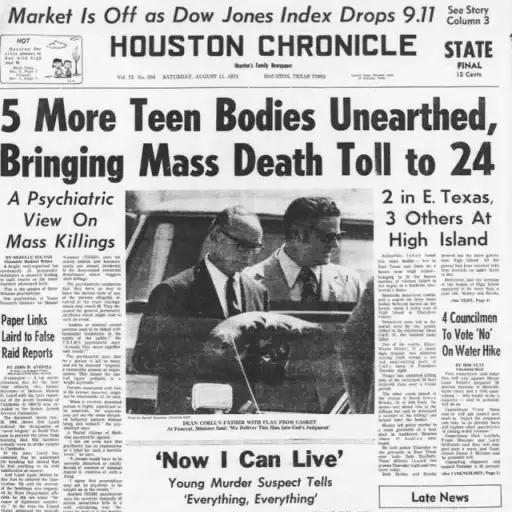
Imagine trying to identify 28 badly decomposed bodies without DNA technology. It sounds impossible, right? In 1973, it nearly was.
Investigators relied heavily on visual identification, personal items, and dental records. If a family couldn’t afford a dentist, there were no dental records to check. As a result, several boys were buried under tombstones marked “Unknown,” while others were handed over to the wrong grieving families.
For decades, the Harris County Medical Examiner’s Office kept the remains of the unidentified victims in a refrigerated storage unit. They were just numbers on manila folders.
Then came the DNA revolution.
Giving Names Back to the Nameless
In the late 2000s, forensic anthropologists like Dr. Sharon Derrick began applying modern science to the Houston Mass Murders cold cases. Her work proved that time doesn’t erase the truth — it just waits for science to catch up.
The Case of Randell Lee Harvey
For over 30 years, one victim was known only as ML73-3349. He was found in the notorious boat shed, shot in the head.
Dr. Derrick spent two grueling years digging through dusty police files. She found a missing persons report from March 1971 for a 15-year-old boy named Randell “Randy” Lee Harvey. Randy lived right in the neighborhood where Corll hunted.
The physical evidence matched up perfectly. Randy had an unusual overbite. He carried a plastic pocket comb. He wore square-toed boots. A belt found near the remains was buckled to fit a lean, 30-inch waist. All of these details mirrored ML73-3349.
Dr. Derrick tracked down Randy’s surviving sisters. They submitted DNA samples. Because the decades-old bones were highly degraded, the initial tests came back mathematically inconclusive. The DNA was “gently supportive,” but not a definitive lock.
However, by combining the mitochondrial DNA profile with the overwhelming circumstantial evidence — and ruling out every other missing boy who fit the profile — authorities officially identified Randy in 2008. His family finally got to bring him home.
Untangling a Tragic Mistake
Sometimes, DNA doesn’t just identify a Doe; it exposes a past mistake.
In the 1970s, a family buried remains they believed belonged to 17-year-old Michael Baulch. They placed him in a casket right beside his brother, Billy, who was also killed by Corll.
Fast forward to 2011. Advanced forensic testing revealed a heartbreaking truth. The boy in that grave wasn’t Michael at all. The remains actually belonged to Steven Sickman, another 17 year old victim. Because forensic science was so limited in 1973, the medical examiner had simply mixed up the bodies.
This meant Michael Baulch had been sitting in the morgue for nearly 40 years as an unidentified John Doe.
The discovery forced two families to grieve all over again. Jeff Scott, Michael’s brother, had to sign paperwork handing the exhumed remains over to Steven’s sister, Sandy Henrichs. Sandy had searched for her brother since she was 14. She finally walked through her childhood home holding the urn containing Steven’s ashes.
Science corrected the historical record, but it carried a heavy emotional price.
Who is John Houston Doe 1973? (The Last Unidentified Victim)
Thanks to relentless investigative genetic genealogy (IGG) and groups like the DNA Doe Project, every single victim of Dean Corll has been identified — except one.
He is known officially as John Houston Doe 1973, NamUs ID UP4547. Online sleuths often call him “Swimsuit Boy.”
Police discovered his body on August 9, 1973. Forensic experts believe he likely vanished in 1971 or 1972. Despite advanced facial reconstructions and massive media pushes, his name remains a mystery.
Here is exactly what we know about him:
- Age: 17 to 20 years old.
- Race: White / Caucasian.
- Height: Between 5’2″ and 5’7″.
- Hair: Dark brown, approximately 7 inches long.
- Dental: Excellent teeth with zero fillings.
The Clothing Clues
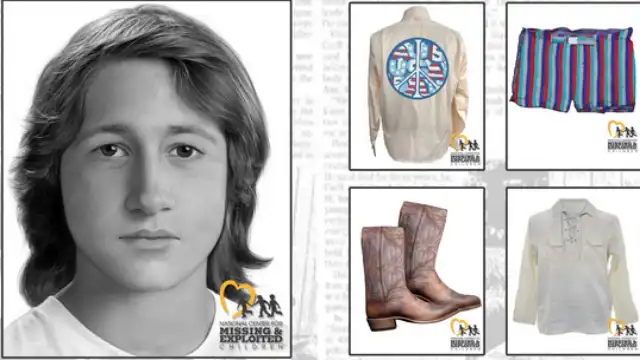
Often, what a victim wore speaks louder than their bones. This boy’s clothing was incredibly distinct, capturing the exact vibe of the early ’70s.
He wore multi-colored, striped swim trunks. He had on a khaki-colored, long-sleeved shirt that tied in the front. The back of the shirt featured a massive red, white, and blue peace symbol.
On his feet, he wore brown leather cowboy boots that reached above the calf, stamped with the word “NEOLITE” on the heel. He also wore a knotted leather ankle bracelet and dark blue corduroys.

Does any of this sound familiar? Did your uncle, brother, or friend own a shirt like that before vanishing in the early 70s?
As of 2025, his case moved from the DNA Doe Project to another genetic genealogy provider. Forensic genealogists are actively building family trees based on his DNA profile. They are searching for that one distant cousin who took a 23andMe or AncestryDNA test. It only takes one match to crack the case wide open.
Could There Be More Victims?
The official count sits at 28, but many investigators believe the true number is much higher.
Elmer Wayne Henley, who is currently serving six 99-year life sentences in a Texas maximum-security prison, has hinted that Corll may have killed up to 20 additional boys. The bodies were just never found.
Efforts to locate these rumored victims haven’t stopped. In late 2021, volunteers with the nonprofit search-and-recovery group Texas EquuSearch brought ground-penetrating radar to Corll’s former Pasadena home. Tim Miller, the group’s founder, even corresponded with Henley in prison to narrow down potential search grids.
They dug up the backyard. Unfortunately, they only found small animal bones.
Still, the search continues. Texas EquuSearch plans to continually evaluate other locations across East and Southeast Texas. If there is even a sliver of hope to bring closure to another grieving family, they will keep digging.
Why We Can’t Forget
It is incredibly easy to treat true crime like a fictional movie. We obsess over the mind of the killer. We memorize the gruesome details. But the Houston Mass Murders aren’t just a scary story.
These were 28 real boys. They liked riding bikes. They listened to Led Zeppelin. They had parents who left the porch light on for decades, waiting for them to walk back through the front door.
Forensic science has done incredible work giving these young men their identities back. Randy Harvey got his name. Steven Sickman got his name. Michael Baulch got his name.
Now, we just need one more.
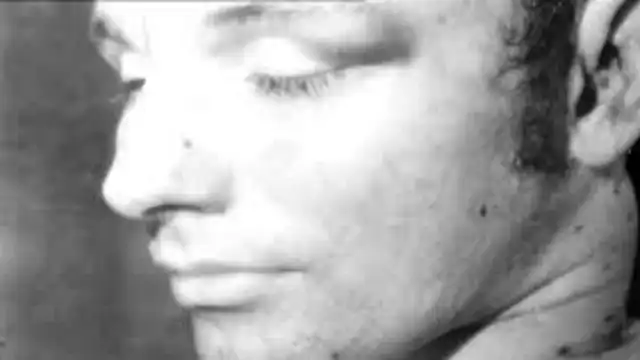
Can you help solve a 50-year-old mystery? Look closely at the facial reconstruction of John Houston Doe 1973. Share this article on your social media, in Facebook groups, and with true crime communities. Someone out there knows who he is. Let’s help him find his way home.

