

The Legend of Goody Hallett: Cape Cod’s “Witch of Eastham” and Her Pirate Lover
If you visit Cape Cod during the warm summer months, it feels like an absolute paradise. You will find sun-drenched sand dunes, peaceful seafood shacks, and tourists cycling lazily along the coast. But when the winter winds roll in and the Atlantic ocean turns a violent, frothy gray, a completely different side of the Cape emerges. This is a landscape shaped by ancient shipwrecks, howling storms, and dark, colonial secrets.
Among all the ghost stories told around New England campfires, none carries quite as much tragic romance as the tale of Goody Hallett, widely remembered as the “Witch of Eastham” (or the Witch of Wellfleet).
Her story isn’t just a campfire myth invented to scare children. It is a sweeping, historical drama that connects a strict Puritan community, the richest pirate captain in human history, and a real maritime disaster that lay hidden beneath the ocean floor for over two centuries.
Did a scorned woman really sell her soul to the devil to conjure a cataclysmic storm, or was she simply the heartbroken victim of a cruel society? the legend, the history, and the shocking archaeological truths behind this timeless Cape Cod mystery.
At a glance
- The Star-Crossed Lovers: The legend centers on the passionate, forbidden romance between a local Cape Cod girl, Maria Hallett, and the dashing sailor Samuel “Black Sam” Bellamy.
- The Prince of Pirates: Driven by a desire to prove his worth to her wealthy family, Bellamy became the most successful pirate of the Golden Age, capturing over 50 vessels.
- The Wrath of the Witch: Folklore claims that a pregnant, abandoned Maria went mad, turned to witchcraft, and personally summoned the 1717 nor’easter that destroyed Bellamy’s flagship.
- The Sunken Fortune: In 1984, underwater explorers proved the historical core of the story by discovering the authenticated wreck of Bellamy’s pirate ship, the Whydah Gally, off the coast of Wellfleet.
A Forbidden Love under the Apple Trees
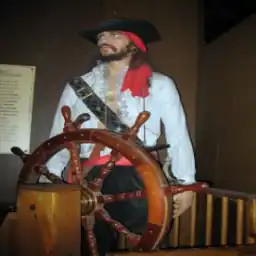
Our story kicks off in the early 1710s in the town of Eastham, an area on the Outer Cape that would later be divided to create the village of Wellfleet. Back then, the community was governed by rigid, deeply religious Puritan families who viewed outsiders with immense suspicion.
Enter Samuel Bellamy. He was a young, incredibly charismatic English sailor who arrived on the Cape looking for work. He was poor, cocky, and possessed a silver tongue that could charm just about anyone.
While wandering through the pastoral landscape of Eastham one bright June afternoon, Sam spotted a local teenager named Maria Hallett (often recorded as Mary). Historical accounts and folklore describe her as an absolute stunner, with deep blue eyes and long, straw-colored hair. She was sitting under an apple tree in full bloom when the young sailor introduced himself.
The attraction was instantaneous.
   [THE FORBIDDEN ROMANCE]
              │
  Samuel Bellamy (Poor, English Sailor)
              ▼
         Smitten By
              ▲
  Maria Hallett (Wealthy Puritan Farmer's Daughter)
The couple began meeting secretly in the dense woods of the Great Island, away from the prying eyes of the townspeople. However, Maria’s wealthy, status-conscious parents quickly caught wind of the relationship. They were absolutely horrified. They viewed Sam as a penniless drifter with zero long-term prospects, and they explicitly forbade their daughter from seeing him ever again.
The Black Flag: Sam Bellamy’s Quest for Fortune
Sam Bellamy wasn’t the type of man to take “no” for an answer. He wanted Maria, but he knew he needed serious wealth to prove his worth to her arrogant family. He hatched a wild plan with a local jeweler named Paulsgrave Williams to head south to Florida, where a massive Spanish treasure fleet had recently wrecked in a violent hurricane. The plan was simple: salvage the gold, return to Cape Cod as a millionaire, and marry the girl of his dreams.
Before marching down to the docks, Sam looked Maria in the eyes and swore a sacred vow that he would return to her with enough gold to buy her a palace. He had no idea that Maria was already secretly carrying his unborn child.
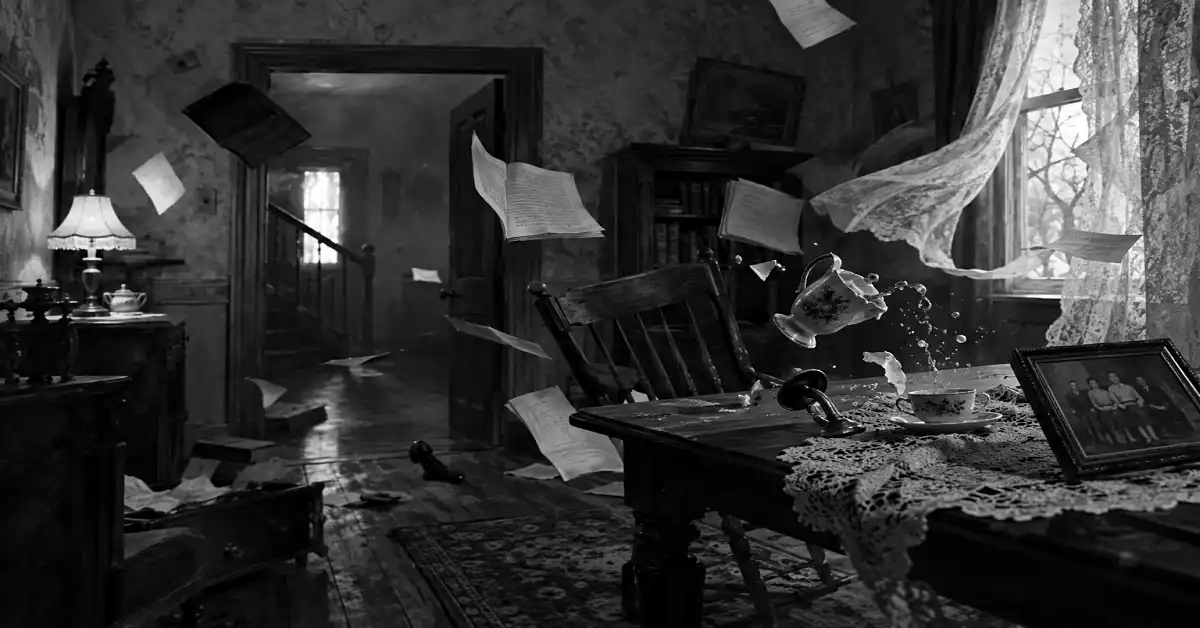
The treasure-hunting expedition in Florida turned out to be a total bust. Spanish warships guarded the wrecks tightly, leaving the New England adventurers empty-handed. Facing starvation and failure, Sam and his crew made a fateful choice. They decided to stop hunting for sunken treasure and start hunting active merchant ships instead.
The Rise of the “Prince of Pirates”
Bellamy joined forces with famous pirate captains like Benjamin Hornigold and Edward “Blackbeard” Teach before striking out on his own hook. He proved to be a natural military strategist. His crew loved him because he practiced a radical form of democracy onboard, allowing the men to vote on destinations and distribute stolen wealth completely equally.
He famously eschewed the cruel, sadistic torture tactics used by other pirates. He dressed in a long scarlet cloak, wore velvet sashes packed with four fine dueling pistols, and kept his long black hair tied back with a simple ribbon. The public began calling him “Black Sam” and the “Prince of Pirates.”
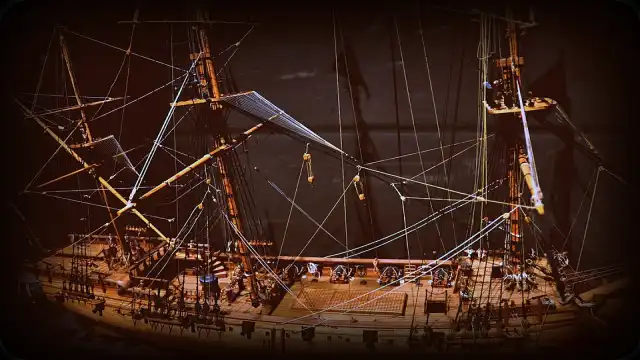
In early 1717, Bellamy achieved the ultimate criminal milestone. His crew chased down and captured the Whydah Gally, a state-of-the-art, British galley ship packed to the brim with ivory, indigo, and over four and a half tons of gold and silver coins. He stepped onto the deck of the Whydah as the commander of the most powerful flagship in the Atlantic Ocean. He was finally rich enough to go home and claim his bride.
The Shunning of Maria Hallett: A Colonial Tragedy

While Black Sam Bellamy was busy conquering the high seas under the skull and crossbones, life back on Cape Cod had transformed into a living nightmare for Maria Hallett.
As her pregnancy became impossible to hide, the strict Puritan community turned on her with terrifying ferocity. Bearing a child out of wedlock was a massive, unforgivable scandal in colonial Massachusetts. The local magistrates threatened to throw her into a cold prison cell, and the local church leaders publicly shunned her, treating her like a moral disease.
Her humiliated parents wanted nothing to do with the public shame. To avoid a prison sentence, they paid a hefty fine to the town on the strict condition that Maria be permanently banished from civil society.
Cast out by everyone she loved, Maria retreated into the lonely, wind-swept wilderness of the outer Cape. She constructed a crude wooden shack along the high clay cliffs overlooking the ocean. It was there, entirely alone in the dark, that she gave birth to Bellamy’s son.
Tragedy, however, wasn’t finished with Maria. One winter evening, while she was out foraging for firewood in the freezing snow, her newborn baby tragically choked on a wisp of bedding straw inside the cabin. When Maria returned and found her child dead, her mind completely shattered under the weight of the grief.
From Heartbroken Mother to the “Witch of Eastham”
Isolation, madness, and unyielding rage took the place of Maria’s grief. As the years crawled by, her appearance degraded. Her beautiful blonde hair became matted and wild, and her clothes turned to rags. Local villagers who spotted her wandering the desolate dunes began whispering that she was practicing dark magic.
Because she was an unmarried woman living on the fringes of society, the superstitious locals slapped her with a dangerous title: Goody Hallett (Goody was short for “Goodwife,” a title often used ironically by locals to denote a woman suspected of witchcraft).
[The Psychological Metamorphosis]
   │
   ├── Deep isolation on the Outer Cape cliffs
   ├── Indelible grief over her deceased newborn
   └── Unyielding bitterness toward an absent lover
   │
   ▼
[The Folk Legend Birth: The Witch of Eastham]
The rumors grew wilder with each passing season. Villagers claimed that Goody Hallett had made a literal blood pact with the Devil. The legend stated that Satan would visit her shack at night, transforming into a black cat or a shadowy figure, teaching her how to control the weather and weave curses into the ocean waves.
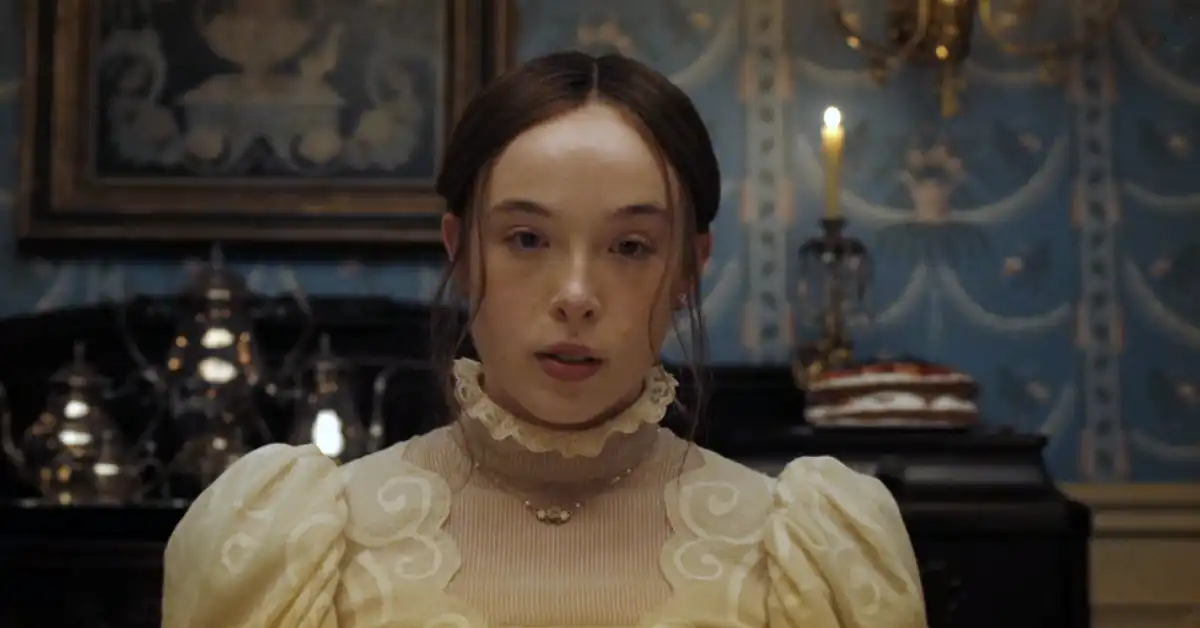
In her madness, Maria’s love for Sam Bellamy mutated into toxic bitterness. She believed he had completely abandoned her to enjoy his riches in the Caribbean, leaving her to suffer in the mud. She began spending her nights pacing the high cliffs of Marconi Beach, staring at the horizon, waiting for a chance to exact her revenge.
The Fatal Night: April 26, 1717
On the afternoon of April 26, 1717, Maria’s long vigil finally came to an end. Staring out across the gray Atlantic waters, she spotted a massive, three-masted ship flying black flags on the horizon. It was the Whydah Gally. Sam Bellamy had finally made it back to Cape Cod.
He was just miles away from the beach where they had first met, his cargo hold packed with enough treasure to secure their future forever. But the weather was shifting rapidly. A monstrous nor’easter — a massive, rotating Atlantic storm with freezing winds blowing violently from the northeast — was bearing down on the coast.
What happened next depends entirely on whether you believe the folklore or the history books.
The Conjuring of the Storm
The legend tells us that Goody Hallett climbed to the highest peak of the Wellfleet cliffs as the sky turned pitch black. As the rain began to pour, she unpinned her wild hair, raised her arms toward the heavens, and let out a blood-curdling scream into the gale.
She began chanting ancient curses, commanding the ocean waves to rise up and destroy the approaching vessel. Folk stories claim that the wind mirrored her laughter as she watched the massive flagship struggle against the changing currents.
   [THE PHYSCIAL MECHANICS OF THE CRASH]
                    │
     Savage 70-mph Nor'easter Winds
                    ▼
   ┌──────────────────────────────────┐
   │  The Whydah Gally's Main Frame   │ ◄── Blinded by blinding rain
   └──────────────────────────────────┘
                    ▲
     Treacherous Sandbars (The Graveyard)
The physical reality of that night was an absolute horror show. The storm packed hurricane-force winds of nearly 70 miles per hour, creating massive 30-foot waves that blinded the ship’s crew. Bellamy and his men were completely trapped. The fierce winds pushed the heavy, top-heavy slave ship directly toward the treacherous, shifting sandbars of the outer Cape — an area famously known as the “Graveyard of the Atlantic.”
At around midnight, the Whydah slammed violently into a sandbar just 500 feet from the shoreline of what is now Wellfleet. The impact was catastrophic. The main mast snapped like a toothpick, and the massive weight of the heavy cannons caused the ship to capsize instantly.
The ocean tore the vessel completely to pieces, spilling thousands of gold coins and 146 souls into the freezing, turbulent surf. Out of the entire crew, only two men managed to swim ashore alive. Captain “Black Sam” Bellamy drowned in the icy waters, his body claimed by the very ocean he had conquered.
The Aftermath: Ghosts on Marconi Beach
When the morning sun rose over the devastation, the beaches of Wellfleet were littered with timber, bodies, and fragments of pirate treasure. The local colonial governor immediately dispatched teams to salvage whatever gold they could find, but the shifting sands quickly swallowed the bulk of the fortune.
What became of Goody Hallett?
Like all good legends, her ultimate fate splits into several completely different paths:

- The Scavenger’s Life: Some old accounts say she survived the storm and spent the rest of her long life checking the shoreline every morning, collecting gold coins from the wet sand and hiding them inside her mattress.
- The Devil’s Payment: A darker, more puritanical version of the tale claims that the morning after the wreck, local villagers found her body lying dead at the base of the cliffs, her face twisted in terror, suggesting the Devil had come to collect her soul the moment her curse was fulfilled.
- The Romantic Twist: A fascinating modern theory proposed by local historians suggests that Sam Bellamy actually survived the wreck. In this version, he used the chaos to slip away into the woods, reunited with a sane Maria, and the two lovers escaped together to live out their days in total anonymity in Provincetown.
Despite the passing centuries, locals claim that Maria’s spirit has never truly left the Outer Cape. If you take a walk down Marconi Beach on a dark, stormy night when the wind is screaming through the grass, old-timers say you can still hear the phantom cries and manic laughter of Goody Hallett echoing across the dunes.
The Historical Truth: The Wreck is Found
For generations, skeptics dismissed the entire story of Goody Hallett and Black Sam Bellamy as a colorful piece of seaside mythology designed to entertain tourists. All of that skepticism evaporated into thin air in 1984.
A local Cape Cod diver and underwater archaeologist named Barry Clifford made international headlines by successfully locating the remains of the Whydah Gally. It stands today as the first fully authenticated pirate shipwreck ever discovered in North America.
Clifford’s team has spent decades recovering priceless historical artifacts from the shifting sands beneath the water, including:
- The Ship’s Bell: Cast with the clear, unarguable inscription: “THE WHYDAH GALLY 1716.”
- The Weaponry: Dozens of heavy iron cannons, elegant flintlock pistols, and hand-held grenades still packed with gunpowder.
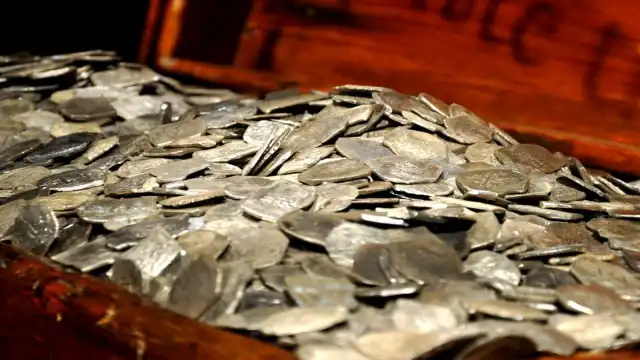
- The Wealth: Thousands of authentic silver Spanish pieces-of-eight and heavy gold bullion bars traded from merchant vessels.
Does Maria Exist in the Historical Record?
While the pirate ship is undeniably real, what about the witch? Local author and historian Kathleen Brunelle did extensive archival research for her book Bellamy’s Bride. She uncovered historical evidence indicating that a real Hallett family did indeed live in the Eastham/Wellfleet area during the early 18th century.
While colonial records are spotty regarding unwed mothers due to the immense social stigma of the era, the physical geography of the Cape still honors her memory. Old maps explicitly label a specific swampy, wooded section of Wellfleet as “Goody Hallett’s Meadow.” Why would a community name a piece of land after a fictional character unless a very real, unforgettable woman had once made that lonely landscape her home?
Unmasking the Myth
When you look closely at this incredible historical timeline, you realize that the legend of the Witch of Eastham is a classic example of human folklore processing deep historical trauma.
| The Folklore Myth | The Documented Historical Fact |
| A vengeful witch conjured a magical storm out of black magic. | A standard, violent Atlantic nor’easter hit a notoriously dangerous sandbar. |
| Goody Hallett was an evil servant of Satan who cursed the town. | Maria was an isolated, heartbroken woman suffering from extreme trauma and societal abuse. |
| The pirate treasure was completely vanished by a demonic spell. | Shifting sand currents buried the heavy wreckage under feet of dense ocean silt. |
The story continues to capture our collective imagination because it highlights the dark hypocrisy of our early colonial history. Maria Hallett wasn’t a monster; she was a woman broken by a ruthless social system that punished vulnerability and demonized independence.
Join the Legend!
The next time you stand on the windy shores of Cape Cod and watch the fog roll in, take a close look out at the waves. Do you see the ghost of a pirate ship trying to make its way home, or do you hear a lonely voice calling out from the cliffs?
Let us know your thoughts in the comments below! If you found this historical deep-dive absolutely spellbinding, share it with your favorite history buff or ghost storyteller.
To see the incredible physical evidence that proves this legendary tale is rooted in absolute reality, check out this fascinating audio journey through Goody Hallett: The Witch of Wellfleet. This documentary podcast explores the wind-swept beaches of the outer Cape on location, helping viewers separate historical maritime facts from classic New England ghost stories.

