

The Violent Career of Lawrence DeVol: Alvin Karpis’ Deadliest Partner
Think of Depression-era outlaws, and names like John Dillinger, Bonnie and Clyde, or Pretty Boy Floyd probably spring to mind instantly. Pop culture has spent decades turning these public enemies into tragic anti-heroes. Hollywood styles them in sharp suits, gives them witty dialogue, and paints their violent sprees with a brush of romantic rebellion.
But the real history of the 1930s underworld was far darker, uglier, and significantly more cold-blooded.
Step into the shadows of the Barker-Karpis Gang, a ruthless syndicate that stole more wealth than Dillinger and Bonnie and Clyde combined. While Alvin “Creepy” Karpis and the Barker brothers ran the show, their ranks included a rotating door of hyper-violent tactical muscle. Among these enforcers, one man stood out for his utter lack of empathy and a terrifying willingness to pull the trigger.
His name was Lawrence DeVol.
By the time his criminal run ended, DeVol had left a trail of ice-cold blood across the American Midwest. He didn’t just rob banks; he hunted the law. With at least eleven confirmed murders — including six law enforcement officers — he earned a reputation as a psychotic wildcard. This is the complete untamed history of his life, his crimes, and the explosive events surrounding Lawrence DeVol: The Depression-Era Outlaw’s Fatal 1936 Shootout.
Need to know
- A Prolific Cop Killer: DeVol took the lives of six law enforcement officers during his run, making him one of the most targeted public enemies of his time.
- The Barker Connection: He served as the primary heavy for the infamous Barker-Karpis gang during their most high-stakes, violent bank robberies.
- The Madhouse Breakout: After receiving a life sentence, DeVol escaped from an asylum for the criminally insane, kicking off a final, desperate crime wave.
- The Beer Tavern Stand: His criminal career ended in a spectacular gunfight in Enid, Oklahoma, sparked by a chillingly calm final request.
Early Life and the Making of a Mid-Western Outlaw
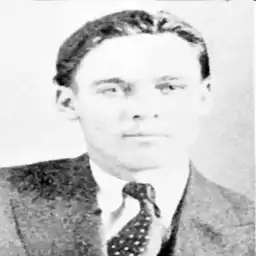
Born on November 17, 1903, in Ohio, Lawrence DeVol did not pick up a gun overnight. His youth was a slow-burning fuse of petty delinquency, minor thefts, and short-term jail stints. Like many young men of his generation, the economic collapse of the late 1920s offered him a choice: starve or turn to crime. DeVol chose the gun.
Moving throughout the American Midwest, he quickly graduated from small-time burglaries to high-stakes bank heists. Early on, he crossed paths with veteran bank robber Harvey Bailey, learning the mechanics of scouting targets, cutting telephone wires, and planning precision getaways.
The young criminal possessed a cold, calculating edge that older safe-crackers immediately noticed. He was quiet, unassuming, and carried himself like an ordinary blue-collar worker. Yet underneath that calm exterior lay a hair-trigger temper.
His first major brush with extreme violence occurred in April 1930. Authorities named DeVol as the prime suspect in a brutal double homicide at the Hotel Severs in Muskogee, Oklahoma, where two businessmen were robbed and executed. If the police needed proof that DeVol had crossed a line into psychopathy, they didn’t have to wait long.
Becoming a Public Enemy: The 1930 Bloodbath
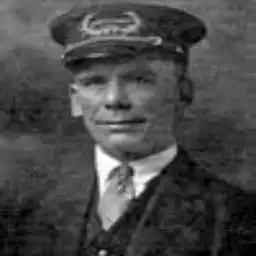
Summer of 1930 became a terrifying turning point in the young outlaw’s life. He was no longer just a thief trying to evade capture; he was actively hunting down anyone who wore a badge.
On June 25, 1930, DeVol rolled into the quiet town of Washington, Iowa. He wasn’t there for a social visit. Alongside a handful of associates, he target-locked a local business for a quick burglary. The local police force caught wind of the plot, intercepting the crew before they could execute the plan.
What should have been a standard arrest turned into a slaughter. DeVol drew his weapon without a hint of hesitation. Within seconds, Sheriff William Sweet and City Marshal Aaron Bailey dropped to the dirt, mortally wounded by DeVol’s gunfire. The gang tore out of town, leaving a community paralyzed with grief.
   [THE 1930 COP-KILLING SPREE]
               │
               ├── June 25: Kills Sheriff Sweet & Marshal Bailey (Iowa)
               │
               └── June 26: Kills Officer John Rose (Missouri)
The Kirksville Gas Station Gunfight
Fleeing the scene of the Iowa double-murder, DeVol drove through the night, crossing state lines into Missouri. By five in the morning on June 26, he stopped at a gas station in Kirksville to refuel his bullet-damaged getaway car.
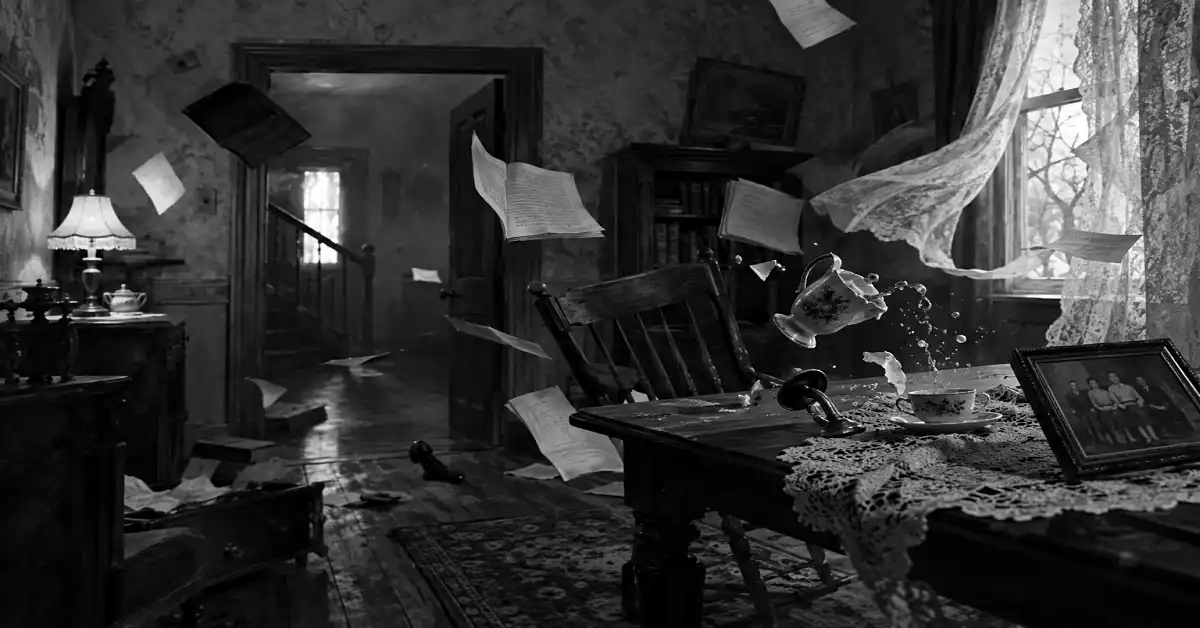
Local citizens grew suspicious of his erratic behavior around a nearby movie theater and phoned the police. Officers George Scriven and John Rose rolled up to the service station, completely unaware that they were approaching a man who had killed two lawmen less than twenty-four hours prior.
Officer Rose stepped toward the car and ordered the driver to get out. DeVol complied, but not with his hands up. He stepped out of the vehicle holding a loaded pistol in each hand, instantly unleashing a barrage of lead.
Rose died where he stood. Officer Scriven, though severely wounded in the initial volley, managed to draw his service weapon and fire back, but his shots missed as DeVol abandoned his vehicle and vanished into the dense Missouri woods on foot. Inside the abandoned car, investigators discovered a terrifying arsenal, including multiple shotguns and thousands of dollars in stolen cash.
DeVol went completely off the grid for over a year. He became a ghost, slipping through safe houses and relying on the corrupt underworld network of the Midwest to keep his name out of the papers.
Joining the Core Members of the Barker-Karpis Syndicate
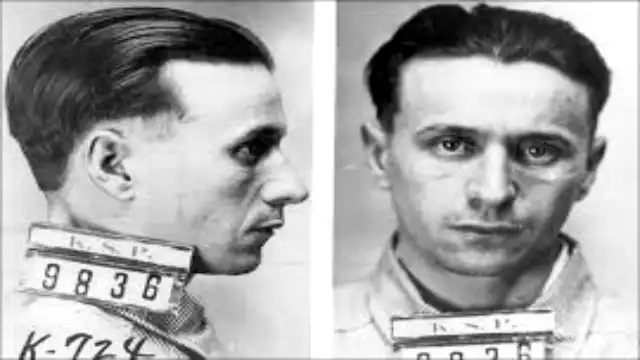
By Christmas of 1931, DeVol re-emerged in St. Paul, Minnesota, which was the premier safe haven for the American underworld at the time. Local political corruption allowed gangsters to rest, recover, and plan their next moves without fear of local police intervention.
It was here that he officially shook hands with Alvin “Creepy” Karpis and Fred Barker. The Barker-Karpis gang loved adding seasoned professionals to their roster, and DeVol’s terrifying resume made him a perfect fit for their upcoming bank operations. Karpis later described his new partner as a cold professional who never flinched when things went sideways.
The 1932 Minneapolis Bank Massacre
On December 16, 1932, the gang coordinated a massive assault on the Third Northwestern National Bank in Minneapolis. The team included a literal who’s-who of Depression-era underworld legends: Fred and Doc Barker, Alvin Karpis, Verne Miller, and Lawrence DeVol.
The bandits moved methodically inside the bank, netting roughly $22,000 in hard currency and another $92,000 in high-value bonds. But the clock ran out. An employee managed to trip the silent burglar alarm, summoning a nearby police cruiser to the scene.
Patrolmen Ira Evans and Leo Gorski pulled up to the Central Avenue entrance just as the gang was walking out the door. DeVol, carrying a high-powered automatic weapon, didn’t try to flee. He simply raised the barrel and sprayed the police car with a devastating rain of bullets.
The windshield shattered into millions of pieces. Officer Evans died instantly at the wheel, hit by at least ten slugs. Officer Gorski tumbled out of the passenger door onto the pavement, his body torn apart by gunfire.
As the gang sped away on a flat tire, Fred Barker shot and killed an innocent twenty-two-year-old bystander named Oscar Erickson, who had slowed his car down out of sheer curiosity. The robbery was a financial success, but the extreme brutality disgusted the public and put the federal government on maximum alert.
The Underwear, a Fur Coat, and a Prison Cell
With the entire state of Minnesota looking for the cop killers, the gang scattered to various apartments. DeVol’s downfall, however, didn’t come from a tactical tactical raid. It came from a bottle of whiskey.
On December 21, 1932, just days after the Minneapolis bloodbath, St. Paul police responded to a complaint about a drunk and disorderly tenant at a local apartment building. When two officers walked into the room, they were met by a bizarre sight.

DeVol stood in the center of the room, completely drunk, wearing nothing but his underwear and an expensive fur coat.
He lunged for a pistol hidden inside the coat pocket, but the responding officers acted fast, striking him over the head with a pistol butt before he could fire. A quick sweep of the apartment turned up over $11,000 in cash wrapped in distinctive bank bands.
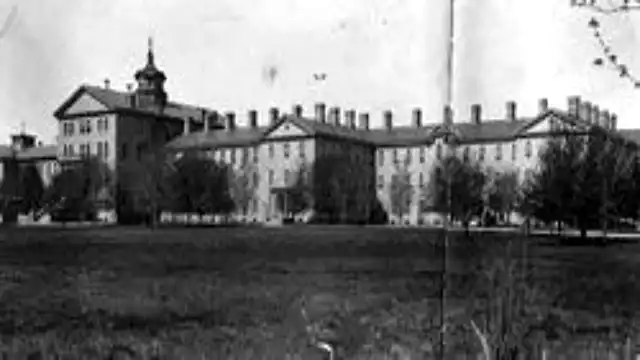
DeVol broke down during intense interrogation, admitting his involvement in the gang. Convicted of first-degree murder, a judge sentenced him to life imprisonment at the Minnesota State Prison in Stillwater. Due to his volatile, unhinged behavior behind bars, state officials eventually transferred him to the St. Peter Hospital for the Criminally Insane.
The Great Asylum Breakout of 1936
For over three years, the concrete walls of St. Peter kept DeVol away from civil society. But a man who survives on adrenaline and blood doesn’t sit quietly forever. He spent months studying the hospital guards, noting shifts, keys, and structural blind spots.
On June 6, 1936, DeVol orchestrated one of the most daring mass escapes in Minnesota history. Along with fifteen other high-risk inmates, he overpowered the night staff, unlocked the wards, and scaled the outer perimeters.
The dangerous escapees melted into the surrounding countryside. While law enforcement launched a massive multi-state manhunt, DeVol immediately linked back up with Don Reeder, a fellow escapee from the asylum. They needed money, cars, and weapons.
On July 8, 1936, the duo hit a bank in Turon, Kansas, escaping with a fresh stash of stolen cash. Eager to leave the territory before federal agents swarmed the area, DeVol pointed his steering wheel south, heading directly into the plains of Oklahoma. He was running out of road, and he knew it.
The Last Shootout of Lawrence DeVol: Barker-Karpis Gang Member
By the afternoon of July 8, 1936, DeVol and Reeder arrived in the city of Enid, Oklahoma. Exhausted from the high-speed escape from Kansas, DeVol decided he needed a cold drink to calm his nerves. He parked his car outside a popular local beer tavern and walked inside, pulling up a stool at the bar.
His criminal luck had finally run out. Someone in the tavern recognized his face from recent police flyers and slipped out to find a phone.
Enid Patrolman Cal Palmer and Officer Ralph Knarr received the tip and walked into the dimly lit tavern minutes later. They spotted the fugitive sitting calmly at the bar with a foaming mug of beer in front of him. The lawmen approached from behind, tap-stopping his shoulder, and quietly ordered him to step outside for routine questioning.
DeVol didn’t panic. He slowly turned his head, looked the officers dead in the eye, and uttered a chillingly casual line:
“Let me finish drinking my beer.”
What happened next took less than five seconds.
The Bloodbath Inside the Tavern
With his right hand, DeVol lifted the heavy glass mug and chugged the remaining alcohol. With his left hand, he slipped a loaded .38 caliber pistol out from beneath his jacket.

Before the officers could draw their weapons, DeVol opened fire at point-blank range.
Patrolman Cal Palmer took a bullet straight to the chest and dropped dead onto the tavern floor. Officer Ralph Knarr fell right beside him, severely wounded by the sudden explosion of gunfire. Screaming customers dove under tables as DeVol leaped over the fallen bodies and ran out the front door into the bright Oklahoma afternoon.
The Final Stand on the Running Board
DeVol sprinted down the streets of Enid, his heart pounding, looking for an escape vehicle. Two blocks away from the tavern, he spotted a civilian car slowing down at an intersection. He sprinted forward, jumped onto the wooden running board of the vehicle, and pounded on the window.
He yelled at the terrified driver to step on the gas, lying that he was a local Deputy Sheriff chasing an armed suspect.
But his lie died instantly. Two Enid police officers, who had heard the gunshots from the tavern, sped around the corner in their patrol cruiser, spotting the armed fugitive clinging to the side of the moving civilian car.
        [THE FINAL GUNBATTLE: ENID, OKLAHOMA]
                          │
  Enid Police Cruiser ───► ◄─── DeVol (Clinging to Car Running Board)
                          │
               [RESULT: DeVol hit 9 times]
A second wild gunfight erupted right in the middle of the street. DeVol leaned out from the running board, firing his pistol until the cylinder clicked empty, striking Officer Lelon Coyle in the hand.
The two lawmen returned fire with devastating accuracy. A barrage of heavy-caliber bullets tore through the air, shattering the glass of the vehicle and striking DeVol repeatedly across his torso and limbs.
The outlaw slipped from the running board, tumbling onto the gravel road as the civilian vehicle screeched away. The return fire by the two lawmen struck DeVol nine times in total. He died on the hot Oklahoma dirt before an ambulance could even turn its sirens on.
A Cold Analysis of a Depression-Era Outlaw
To understand how Lawrence DeVol died is to understand the violent end of an entire era. By the summer of 1936, the wild days of the motorized bandit were drawing to a close. The FBI had systematically hunted down the leadership of the Barker-Karpis gang, and J. Edgar Hoover’s G-men were transforming law enforcement into a modern, hyper-coordinated machine.
| Feature | The Romantic Myth | The Lawrence DeVol Reality |
| Motivation | Robin Hood ideals, helping the poor | Greed, survival, and personal enrichment |
| Tactics | Witty warnings, harmless bank hold-ups | High-powered automatic weapons, human shields |
| View of Law Enforcement | Playful rivalries with local sheriffs | Cold-blooded executions of responding officers |
| The Final End | Dramatic, slow-motion cinematic poetry | Dying face-down in the dirt outside a beer joint |
DeVol wasn’t a criminal mastermind; he was a human wrecking ball. His career shows us that the line between a colorful folklore outlaw and a cold-blooded sociopath was incredibly thin during the Great Depression. He didn’t leave behind a legacy of stolen gold or legendary capers. He left behind a collection of grieving families, ruined lives, and a permanent place on the list of America’s most violent cop killers.
What’s Your Take?
Why do you think history has largely forgotten enforcers like Lawrence DeVol while keeping figures like Bonnie and Clyde alive in pop culture? Does the unvarnished reality of these shootouts change how you look at the 1930s gangster era?
Drop your thoughts in the comments below, and share this piece of history with your favorite true crime enthusiast!

