

When you think of classic vampires, your mind probably flies straight to the dark forests of Transylvania. You imagine Dracula sweeping his velvet cape inside a gloomy Romanian castle. What if the oldest documented vampire story in European history actually took place somewhere else entirely?
Tucked away between the rocky Pyrenees mountains and the Mediterranean Sea lies Catalonia, a region in northeastern Spain with a deep identity and an incredibly eerie collection of myths. Long before Bram Stoker ever typed out a single word about Dracula, Catalan villagers were locking their doors at night to escape a blood-drinking nobleman.
Humanity has always used stories to explain the things that terrify them in the dark. In the old days, a mysterious illness or a sudden crop failure wasn’t just bad luck. It was the work of something monstrous.
Need to know
- The Pioneer Vampire: Count Estruch is considered by many historians to be Europe’s very first named vampire legend, predating Slavic tales by centuries.
- The Living Shield: The small village of Pratdip literally features a blood-sucking demonic hound on its official town shield.
- The Science of Nightmares: Monsters like the Pesanta perfectly show how ancient people used folklore to explain medical conditions like sleep paralysis.
- Living Traditions: Many of these ancient beasts aren’t just dead history; they are still celebrated as giant artistic statues in local street festivals.
The Legend of Count Estruch
(Check out this video on Count Estruch – The Vampire of Catalonia – Iberian Mythology)
Our journey into the shadows begins in the 12th century, right in the windy district of Alt Empordà. King Alfons II of Aragon was having a major problem. Paganism — ancient religions that rejected Christianity — and witch covens were reportedly thriving near the mountains. To stomp out these practices, the king sent an aging, fiercely loyal nobleman named Guifred Estruch (sometimes called Arnald Estruc) to take charge of Llers Castle.
The count was a harsh ruler. He aggressively hunted down anybody suspected of witchcraft, executing many heretics along the way. Before one targeted witch was killed, she placed a devastating, multi-generational curse on the old nobleman.
When Estruch died or was assassinated around 1173, the curse took hold immediately. He didn’t stay quiet in his grave. Instead, the elderly lord rose from the dead, completely transformed into a youthful, terrifying entity. He had become a hematophagic monster — a fancy scientific word for a creature that survives solely by drinking blood.
The Reign of Terror
The rejuvenated count began terrorizing the countryside around Llers. He didn’t just feast on livestock; he targeted the villagers themselves, drinking their blood under the cover of pitch-black nights.
If that wasn’t horrifying enough, the legend takes a bizarre twist. Estruch would seduce and impregnate young women from the local villages. Exactly nine months later, these poor mothers would give birth to monstrous, deformed babies who tragically died the very second they entered the world.
How do you stop an immortal monster when regular swords can’t pierce his skin? The villagers tried everything until they finally found a savior. In some versions of the tale, an elderly, deeply spiritual nun managed to corner the count and destroy him with holy symbols. Other local stories credit a Jewish hermit who used secret rituals from the Kabbalah — an ancient system of Jewish mysticism — to finally make the count rest in peace.
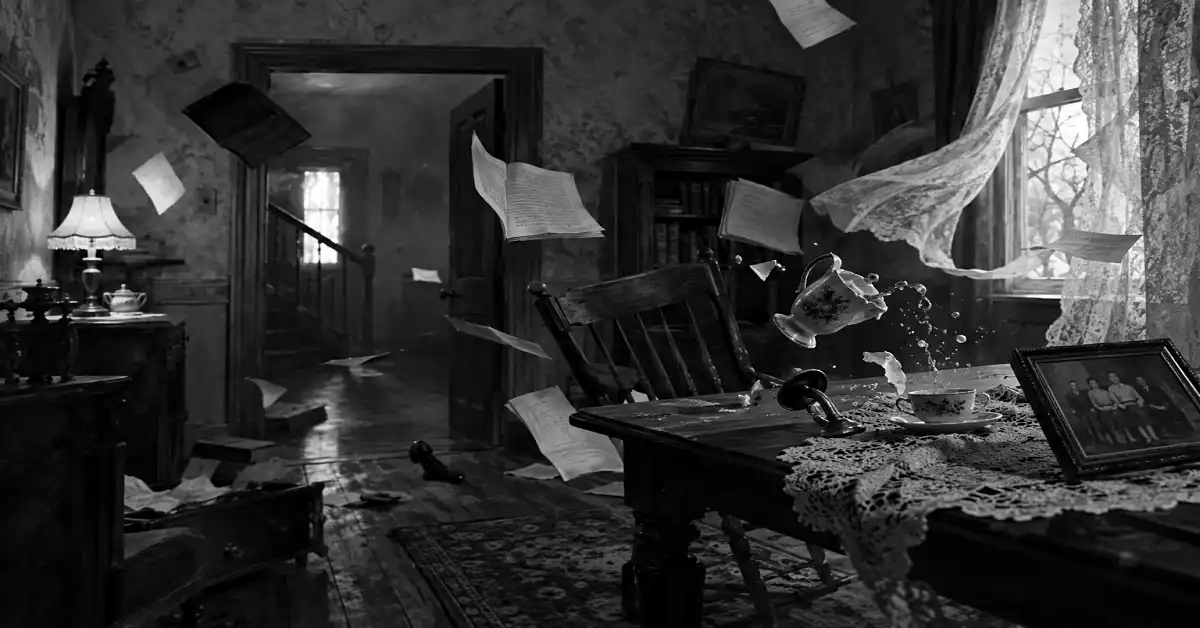
Though his legend faded out of the mainstream for a long time, it was beautifully revived in the 20th century by authors like Salvador Sáinz. Today, the crumbling stone walls of Llers Castle stand as silent monuments to Europe’s forgotten first vampire.
The Dip: The Devil’s Vampire Hound
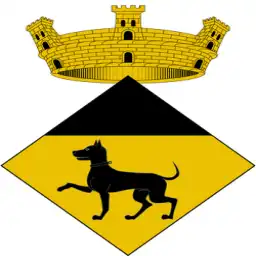
If you travel south from Llers toward the rugged mountains of the Baix Camp region, you will run into the quiet village of Pratdip. Look closely at the town’s welcome signs or its official government stamps, and you will spot a bizarre symbol.
Yes, that is a black dog. But this isn’t a friendly neighborhood pet. That is the Dip, a demonic beast that gave the village its literal name (Pratdip translates roughly to “Meadow of the Dip”).
According to Catalan demonology, the Dip is a massive, jet-black hound covered in shaggy, unkempt fur. It has burning, fiery red eyes and a menacing tongue that drips with saliva. Its most unique physical feature is a severe limp in one of its legs. In ancient European stories, a physical deformity or a limp was a classic visual giveaway that a creature was actually an emissary of the Devil.
The Blood-Drinker of the Meadows
The Dip would descend from the rocky peaks of the Serra de Llaberia mountains at night. Silently stalking through the mist, it hunted down cattle, goats, and sheep to drain them of their blood.
Human beings weren’t safe either. The legend warns that the Dip had a nasty habit of targeting drunk individuals who stayed too late at the local village taverns. It would ambush them along dark dirt roads, leaving distinct, terrifying fang marks on their necks.
[How to Spot a Dip]
   │
   ├── Large, coal-black canine body
   ├── Eyes that glow like hot embers in the dark
   └── A noticeable, dragging limp in its walk
Sightings of the legendary beast allegedly stopped somewhere during the 19th century, leaving behind a fascinating cultural footprint. Why would a town keep a literal vampire dog on its official coat of arms? It serves as a proud badge of local identity, proving that the people of Pratdip survived the wildest terrors of the old world.
The Pesanta: The Original Sleep Paralysis Daemon
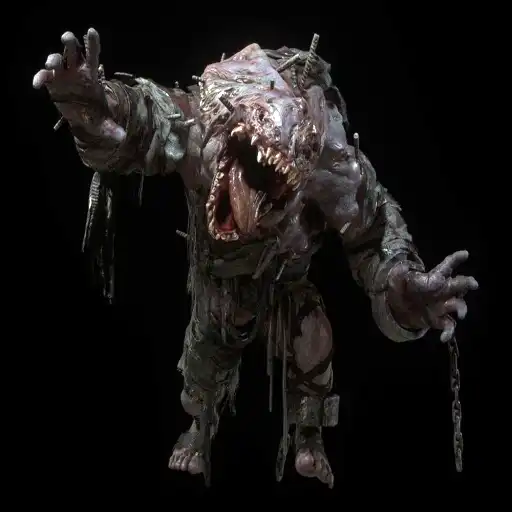
Have you ever woken up in the middle of the night feeling like your body is glued to the mattress, while a crushing weight sits right on your chest? Today, doctors call this terrifying experience sleep paralysis. It happens when your brain wakes up from a dream state before your muscles get the memo to unlock.
Centuries ago, people didn’t have access to modern sleep neurology. They needed an explanation for that suffocating nighttime horror, and their answer was the Pesanta.
The Pesanta is described as an enormous, unnaturally heavy, hairy black dog or cat. Its defining feature is its heavy paws, which are made of solid steel or stone. Crucially, these metal paws have large holes directly through the center, meaning the creature cannot actually grab or carry objects.

The Infiltration of the Home
The Pesanta is an absolute master of stealth. It lives in abandoned church ruins and rotting structures during the day. When night falls, it slips into human homes by flattening its body, sliding effortlessly through keyholes, under doors, or straight through microscopic cracks in the wall.
Once inside your bedroom, it climbs onto your bed while you are sound asleep. It slowly crawls up your body and sits directly on your chest. The massive weight of its iron paws makes it incredibly difficult for you to breathe, trapping you in a waking nightmare where you cannot scream or move.
If you manage to snap out of it and open your eyes, the Pesanta vanishes in the blink of an eye. The only thing you will catch is a dark shadow darting out of the room.
Ancient Countermeasures Against the Pesanta:
1. Scatter a handful of millet grains across your bedroom doorway.
2. Place a traditional straw broom upside down next to your bed.
3. Recite a rhythmic prayer that forces the beast to count the stars.
Why did these odd tricks work? According to the myth, the Pesanta suffers from an extreme form of obsessive-compulsive behavior. If it sees grains of millet on the floor, it is magically forced to stop and count every single one before it can cross the room. Because its metal paws have holes in them, it keeps dropping the seeds, getting frustrated, and restarting the count until the morning sun forces it to flee!
Lo Marraco: The Child-Devouring Dragon of Lleida
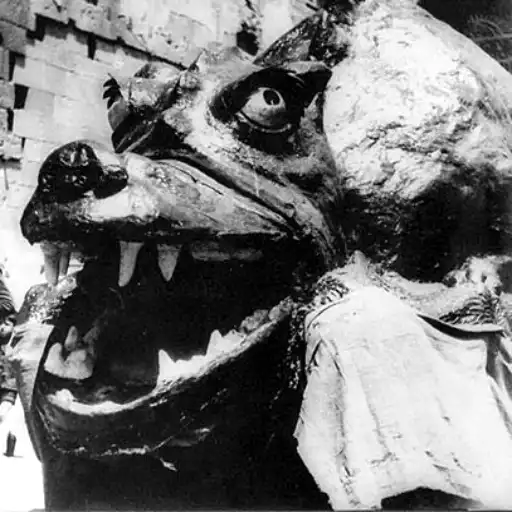
Not all monsters hide in the dark corners of tiny mountain villages. One of Catalonia’s most famous beasts belongs to the bustling city of Lleida. Meet Lo Marraco, a legendary monster whose roots track all the way back to the pre-Roman Iberian tribes who lived here thousands of years ago.
The Marraco is portrayed as a monstrous, wingless dragon-like beast. It has bright green scales, a long powerful tail, and a twisted snout. Its most famous attribute is an impossibly wide mouth lined with sharp, jagged fangs — a mouth explicitly designed to swallow prey completely whole.
The Ultimate Scare-Monster
For generations, parents in Lleida used Lo Marraco as an espantacriatures, a local Catalan term for a “boogeyman” designed to scare misbehaving children into listening to their elders. If a kid refused to eat their dinner or stay in bed, the parents would warn that the Marraco was listening from the riverbanks, ready to gobble them up.
What makes this dragon unique is how it transformed from a terrifying bedtime story into a beloved piece of festival art. Since the Middle Ages, Spanish communities have paraded giant monster effigies through the streets during religious celebrations like Corpus Christi.
In 1907, the city of Lleida built a massive, mechanical version of Lo Marraco on wheels. The engineers designed it so operators inside could move its neck, flash its glowing eyes, and make it emit a deep, roaring scream. Best of all? The giant mouth was built to literally “swallow” children during parades, sliding them safely down a hidden ramp inside its body and releasing them out near the tail!
The current version of the beast, rebuilt using lightweight fiberglass, still rolls through the city streets every year, bringing historical mythology to life for thousands of cheering families.

Other Strange Fiends of the Catalan Shadows
The monster manual of Catalonia doesn’t stop with vampires and dragons. The region’s geography is packed with smaller, highly specialized entities that added flavor to local life.
The Minairons: The Tiny Workers of the Needle Case
Imagine owning a tiny army of microscopic magical beings who can complete any task in seconds, but will completely destroy you if you leave them bored. Those are the Minairons.
These tiny, elf-like creatures live deep inside the Pyrenees mountains, often guarded by swarms of insects. According to legend, a clever person can trap thousands of them inside a regular sewing needle case. The moment you twist open the lid, they swarm out into the air, screaming a frantic demand in a tiny voice: “What shall we do? What shall we say?”
If you don’t give them a specific job immediately — like building a massive stone bridge or harvesting an entire field before sunrise — they will fly into a furious rage and pinch you to death. Many massive, unexplained ancient stone walls in the Catalan countryside were jokingly attributed to a lazy farmer accidentally opening a box of Minairons.
The Cuca Fera: The Monstrous Turtle-Dragon
Down in the riverside city of Tortosa, residents tell stories of the Cuca Fera. This bizarre creature looks like a cross between a giant prehistoric sea turtle and a snapping dragon. It features a hard, wide shell and a mechanical neck that can violently snap its jaws shut at passersby. Like the Marraco, the Cuca Fera has transitioned from a medieval warning tale into a star attraction at cultural parades, where it playfully snaps its wooden teeth to collect coins or candy from brave children.
A Quick Guide to Catalan Monsters
To help you keep track of this spooky cast of characters, here is a quick cheat sheet summarizing the major beasts we have uncovered:
| Monster | Primary Location | Type of Threat | Visual Identifiers |
| Count Estruch | Llers Castle | Vampire (Drinks human blood) | Rejuvenated young noble, pale, sharp fangs |
| The Dip | Pratdip / Llaberia | Vampire Hound (Hunts livestock) | Giant black dog, fiery red eyes, distinct limp |
| The Pesanta | Abandoned Ruins | Nightmare Spirit (Causes suffocation) | Black canine/feline form, heavy steel paws with holes |
| Lo Marraco | City of Lleida | Dragon Bogeyman (Eats unruly kids) | Wingless green dragon, massive fangs, smoke nostrils |
| Minairons | Pyrenees Mountains | Overactive Pixies (Demand constant labor) | Microscopic beings stored inside needle cases |
Why We Need the Monsters
It is easy for us to laugh at the idea of a vampire count or a dog with iron paws today. We have electricity to banish the dark, smartphones to look up medical symptoms, and advanced weather tracking to explain crop failures.
To the ancient peasants of Catalonia, these stories were vital survival tools. The Pesanta offered comfort to a person waking up paralyzed with fear, letting them know they weren’t going crazy. The Marraco taught children to stay close to home and avoid dangerous river banks. Count Estruch allowed communities to process the horrors of historical tyrants and political oppression through the safe lens of a fantasy story.
The next time you walk down a quiet road at night, listen closely to the wind whistling through the trees. Is it just a breeze from the Mediterranean, or is it the sound of a 12th-century count looking for his next meal? Keep an eye out for the shadows.
Let’s Hear From You! Which of these ancient Catalan monsters do you find the most terrifying? Would you dare to spend a night exploring the ruins of Llers Castle? Let us know your thoughts in the comments below, and share this dark piece of history with your favorite horror fan!

