

The Fascinating Timeline of Our Knowledge About Galaxies
Imagine stepping outside on a pitch-black night, looking up at the sky, and believing that every single thing you see is all that exists. For most of human history, that wasn’t just a scary thought. It was the absolute truth. People assumed our collection of stars was the entire sandbox of reality.
How did we find out we were completely wrong? The journey from thinking we were alone in the dark to realizing the cosmos is teeming with trillions of massive star-cities is one of the greatest detective stories ever told. It took centuries of arguments, accidental photographs, and some seriously massive glass mirrors.
Key takeaways
- The Single-Galaxy Myth: Until the 1920s, top scientists genuinely believed the Milky Way was the entire universe.
- The Cosmic Yardstick: Henrietta Swan Leavitt’s work on blinking stars gave astronomers the tape measure needed to map deep space.
- The Andromeda Breakthrough: Edwin Hubble proved the Andromeda “nebula” was actually an independent galaxy, instantly blowing up the known scale of reality.
- The Modern Frontier: Today, instruments like the James Webb Space Telescope are pushing our timeline back to the dawn of cosmic history.
The Milky Way
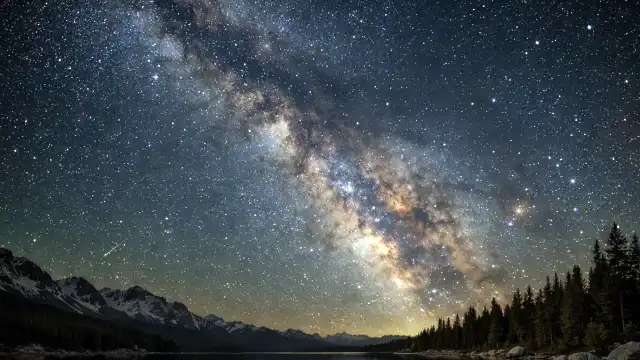
For millennia, humanity could only see a faint, glowing ribbon of light stretching across the night sky. The ancient Greeks called it galaxias, meaning “milky lane.” But nobody actually knew what it was. Some cultures thought it was a celestial highway, while others guessed it was atmospheric fire.
The real breakthrough came in 1610. Armed with a crude homemade telescope, Galileo Galilei pointed his lens toward that hazy cosmic smear. What he found blew his mind. The creamy blur wasn’t cloud or atmospheric gas at all. It was an uncountable swarm of individual stars packed incredibly close together.
Suddenly, humanity realized our celestial backyard was much bigger than anyone imagined. Yet, the consensus remained narrow. Astronomers assumed this giant disk of stars — our Milky Way — was the total boundary of everything. Anything else out there was just a minor footnote.
The “Nebula” Mystery: Cosmic Clouds or Distant Worlds?
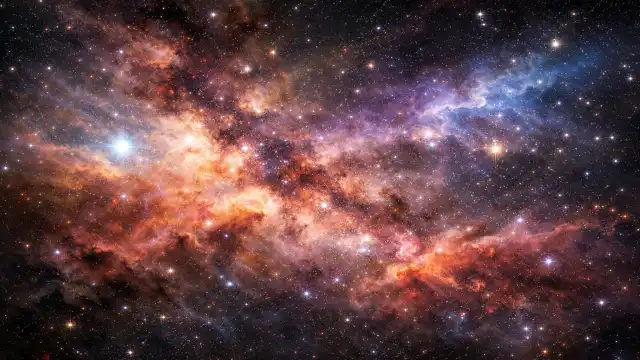
As telescopes improved during the 1700s, sky-gazers started noticing strange, fuzzy patches of light scattered among the sharp pinpricks of stars. They called these mysterious blurs nebulae, which is simply Latin for “clouds.”
A French comet hunter named Charles Messier got tired of confusing these stationary smudges with actual comets. To fix his frustration, he published a famous catalog in 1771 listing over a hundred of these blurs. Little did he know, some of those “annoying” smudges were actually massive systems located millions of light-years away.
The Birth of “Island Universes”
While observers logged the clouds, philosophers started dreaming. In 1755, the German philosopher Immanuel Kant proposed a wild theory. What if those faint, oval nebulae weren’t clouds of gas inside our neighborhood at all? What if they were massive, independent star systems located far beyond our own?
Kant used a beautiful phrase to describe them: “island universes.”
It was a brilliant intuition, but science requires hard proof, not just poetic philosophy. At the time, no telescope on Earth was powerful enough to resolve those distant smudges into separate stars. Without that detail, the island universes astronomy history remained a fascinating guess.

Seeing the Swirl: The Leviathan of Parsonstown
By 1845, an Irish astronomer named William Parsons, the Third Earl of Rosse, decided he needed a bigger eyescope. He built a monstrous instrument known as the “Leviathan of Parsonstown.” Featuring a mirror six feet wide, it was the largest telescope on Earth for decades.
When Lord Rosse aimed this giant beast at a smudge called Messier 51, he saw something no human had ever witnessed. The nebula wasn’t a featureless blob. It possessed distinct, elegant spiral arms, curling around a bright center like a cosmic whirlpool.
This discovery sparked a massive debate that divided the scientific community for generations. Were these beautiful spirals solar systems in the middle of being born? Or were they monstrously distant star-cities just like our own? The mystery deepens.
Henrietta Leavitt’s Cosmic Yardstick
You cannot figure out what a nebula is without knowing how far away it sits. If a smudge is close, it’s a gas cloud. If it’s incredibly distant, it’s a separate system. Measuring distances in the deep, dark void of space seemed almost impossible until a brilliant astronomer named Henrietta Swan Leavitt changed the game in 1912.
Leavitt worked at the Harvard College Observatory analyzing photographic plates. She focused her attention on a specific type of pulsating star called a Cepheid variable. These special stars don’t shine with a steady light; they blink, brightening and dimming in a highly predictable rhythm.
Leavitt discovered a groundbreaking rule: the brighter the star intrinsically is, the slower it blinks.
Think of it like a cosmic lighthouse pattern. If you know exactly how bright a light truly is based on its blink speed, you can compare that to how dim it looks from Earth. By doing that simple math, you can calculate its exact distance. This discovery handed astronomers the ultimate tape measure for the cosmos, famously known as the cosmic distance ladder hubble users would later rely upon.
(To visualize just how far our telescopes can see into the past, check out this fascinating breakdown of the James Webb Space Telescope MoM-z14 Discovery, which explains how astronomers measure redshift to find the oldest galaxies in existence. This video provides a great visual guide on how the JWST peers back to the dawn of time to see objects that formed right after the Big Bang.)
The 1920 Great Debate: A Clash of Cosmic Visions
By 1920, the tension reached a boiling point. On April 26, two elite astronomers took the stage at the Smithsonian Museum of Natural History for an event now known simply as The Great Debate.
   [THE GREAT DEBATE (1920)]
           │
           ├── Harlow Shapley: Milky Way is everything. Spirals are small, local clouds.
           │
           └── Heber Curtis: Milky Way is small. Spirals are separate "island universes."
In one corner was Harlow Shapley. He argued that the Milky Way was absolutely enormous — roughly 300,000 light-years across — and encompassed everything in existence. To Shapley, the spiral nebulae were just minor gas clouds trapped inside our galaxy’s borders.
In the opposite corner stood Heber Curtis. He maintained that the Milky Way was much smaller, and that the spiral nebulae were external “island universes” scattered across a vastly larger cosmos.

The debate ended in a virtual tie. Both scientists possessed excellent arguments, but neither had the killer piece of data to close the case. The universe had to wait for a young man with a pipe and access to a powerful mountaintop lens.
Edwin Hubble Shatters the Universe
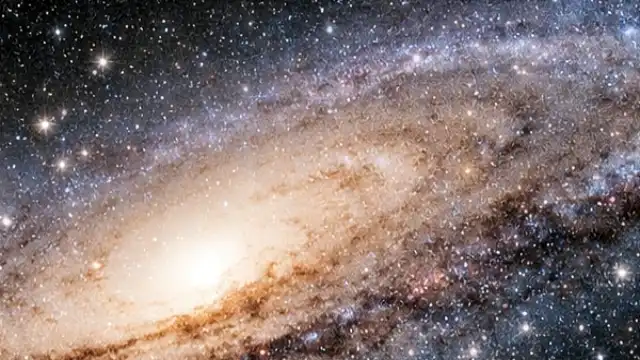
In 1923, astronomer Edwin Hubble was working at the Mount Wilson Observatory in California. He was using the brand-new 100-inch Hooker Telescope, which was the absolute pinnacle of technology at the time.
Hubble spent cold nights photographing the Andromeda Nebula, trying to find regular exploding stars called novae. On the night of October 5, 1923, he captured a particularly sharp photographic glass plate. At first glance, he spotted what looked like three ordinary novae and marked them with the letter “N”.
But when he compared it to older plates, he noticed something incredible. One of those little dots wasn’t a single explosion. It was blinking on and off over a few days. It was a Cepheid variable star.
Hubble crossed out the “N” and excitedly scribbled “VAR!” in bold letters.
Using Henrietta Leavitt’s mathematical formula, Hubble calculated the distance to this blinking star. The result was staggering. The star sat nearly a million light-years away (modern measurements put it at 2.5 million). This distance was far greater than even the largest estimate for the size of the Milky Way.
The debate was over. The Andromeda Nebula wasn’t a cloud inside our galaxy. It was a completely separate system — a twin galaxy to our own. In a single moment, the known universe expanded by factors of millions. This moment completely solidified the history of galactic discovery.
Chronological Timeline of Galactic Discovery
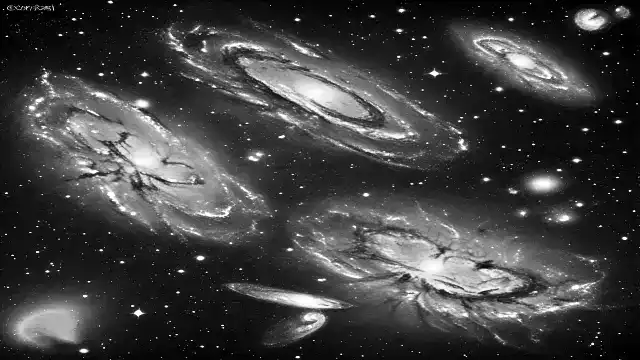
Here is the rapid-fire how were galaxies discovered timeline of how our view of the cosmos evolved over the centuries:
- 1610: Galileo proves the Milky Way is made of countless individual stars rather than a solid cloud.
- 1755: Immanuel Kant coins the concept of independent “island universes” existing outside our own.
- 1771: Charles Messier catalogs the mysterious blurry nebulae to avoid confusing them with comets.
- 1845: Lord Rosse discovers the stunning spiral structure of the Whirlpool Nebula using the world’s largest telescope.
- 1912: Henrietta Leavitt discovers the Cepheid variable yardstick, allowing astronomers to measure deep-space distances.
- 1920: The Great Debate leaves the astronomy world divided over the true size of the cosmos.
- 1923: Edwin Hubble isolates star V1 in Andromeda, proving it is an independent galaxy outside the Milky Way.
- 1995: The Hubble Space Telescope captures its iconic Deep Field, revealing thousands of ancient galaxies in an “empty” patch of sky.
- 2022-2026: The James Webb Space Telescope pushes the boundary to the absolute dawn of cosmic time, breaking distance records.
The Modern Era
Once Hubble opened the floodgates, astronomers realized the cosmos was packed with galaxies of all shapes and sizes. We discovered ellipticals, irregular blobs, and beautiful barred spirals. But looking from the ground has its limits. Earth’s atmosphere warps light, making distant objects look blurry.
To fix this, NASA launched the Hubble Space Telescope into orbit in 1990. In December 1995, directors pointed the telescope at a tiny, completely blank patch of sky near the Big Dipper for ten consecutive days. It was a massive gamble.

The result changed astronomy forever. The famous Hubble Deep Field image revealed over 3,000 distinct galaxies in that single, tiny speck of empty sky. It proved that no matter where you look in the deep void, the universe is crowded with worlds.
The Frontier: The James Webb Space Telescope (JWST)
Today, we are living through another massive revolution in galactic history. Launched in late 2021, the James Webb Space Telescope uses infrared vision to look farther back in time than any instrument before it. Because the universe is expanding, light from the earliest objects gets stretched out into infrared wavelengths.
Webb has shattered our previous records on a regular basis. In 2024, the telescope discovered a surprisingly bright galaxy named JADES-GS-z14-0, which existed just 290 million years after the Big Bang.
Then came an even wilder milestone in mid-2025. Scientists confirmed the discovery of an object nicknamed MoM-z14 (The Mother of All Early Galaxies). This cosmic miracle shines from an era when our universe was a mere 280 million years old! These stand as some of the earliest galaxies discovered jwst has ever logged.
These recent discoveries are turning our textbook theories upside down. These ancient galaxies are far brighter, bigger, and more chemically complex than anyone predicted. For example, astronomers recently found a massive galaxy from less than two billion years after the Big Bang that shows absolutely zero signs of rotation, moving instead with completely random star patterns. Another group of researchers used gravitational lensing to spot LAP1-B, a tiny primitive “fossil galaxy” that is nearly empty of heavy metals.
Every time we build a bigger eye, the universe reveals that it grew up much faster and more dynamically than our computer models estimated.
Why Cosmic Discovery Matters
When you look at this timeline, you realize something profound. Every major leap forward has knocked humanity down from the center of the stage. We found out Earth isn’t the center of the solar system. We learned the sun is just one ordinary star among billions. Finally, we discovered our entire galaxy is merely a drop in an endless cosmic ocean.
Does that make us insignificant? Not at all.
It proves that our small minds are capable of building instruments that can look across billions of light-years to decipher the very origins of time. We went from staring at a mysterious glowing band in the mud to mapping out the deep structure of the cosmos. That is a pretty spectacular upgrade.
What Do You Think?
Does the thought of trillions of hidden star systems blow your mind, or do you find it comforting that the universe is so vast? Let’s chat in the comments below! If you enjoyed this cosmic deep-dive, share it with a friend who loves looking at the stars.

