

How does a man go from terrorizing audiences with severed limbs and mad scientist formulas to becoming the warm, steady heartbeat of a multi-billion-dollar superhero franchise?
If you grew up in the nineties, Michael Gough was the absolute definition of elegance, loyalty, and dry wit. He was the man who served soup to Michael Keaton, patched up Val Kilmer, and shared quiet, emotional goodbyes with George Clooney. He was Alfred Pennyworth — the ultimate cinematic butler.
Yet, long before he ever set foot in Wayne Manor, Gough was famous for something completely different. He was one of British horror’s most reliable, cold-blooded villains.
Key takeaways
- The Universal Butler: Gough is one of only two actors to stay on through all four films of the initial Burton-Schumacher Batman anthology.
- Horror Royalty: Before playing the ultimate caretaker, he spent decades as a staple of Hammer Film Productions, often playing cruel, sadistic men.
- Award-Winning Roots: He wasn’t just a genre actor; Gough won a prestigious Tony Award in 1979 for his work on Broadway.
Gough’s Horror Legacy
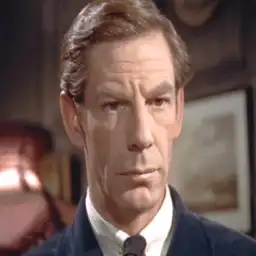
Born in Kuala Lumpur in 1916, Michael Gough spent his early career mastering the stage at the Old Vic before breaking into British cinema. By the late 1950s, a small studio called Hammer Films began rewriting the rules of horror with bright, vivid technicolor blood. Gough jumped right in.
In the legendary 1958 film Dracula (released as Horror of Dracula in the US), Gough played Arthur Holmwood. Instead of a helpless victim, he brought a stiff, arrogant, and slightly unlikable energy to the screen next to Christopher Lee’s towering vampire count.
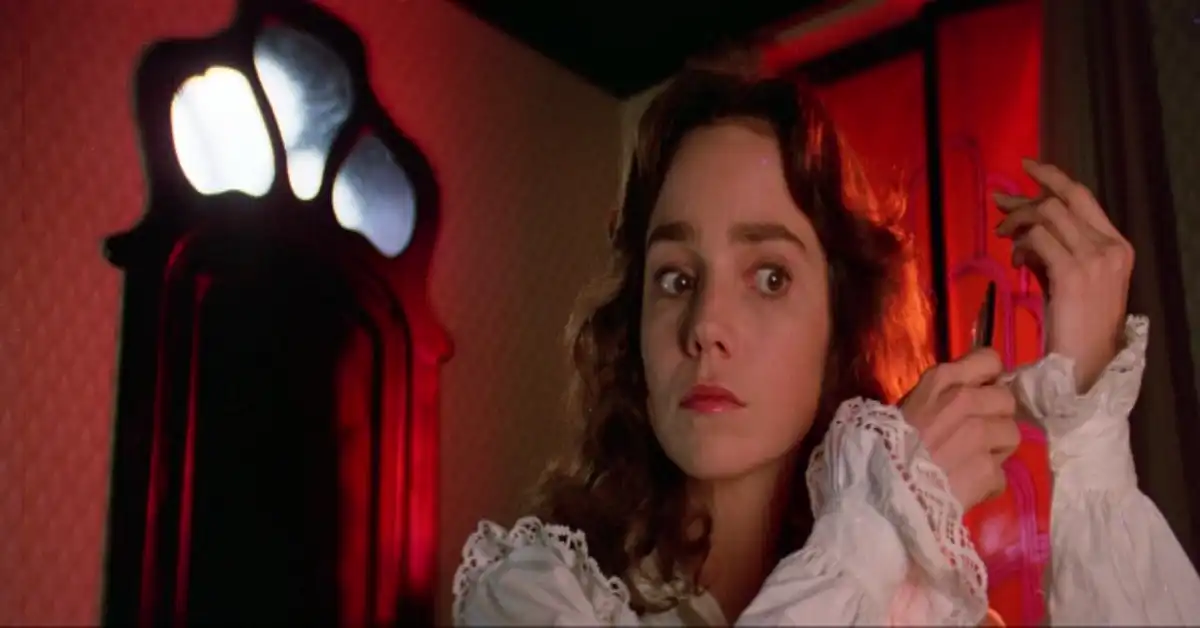
But it was outside of Hammer where Gough truly let his inner madman loose.
In Horrors of the Black Museum (1959), he played Edmond Bancroft, a sleazy crime journalist who uses a secret warehouse filled with torture devices to murder people for his stories. Ever seen a movie where a pair of binoculars shoots metal spikes into a woman’s eyes? That was Gough’s character.
[Gough's Horror Archetype]
   │
   ├── Cold, aristocratic arrogance
   ├── Unblinking, intense stare
   └── Cruel, calculated line delivery
He repeated this delicious, over-the-top villainy in cult classics like Konga (1961), where he played a mad botanist who turns a chimpanzee into a giant, city-destroying monster. He was campy, terrifying, and deeply memorable. He made a career out of being the guy you desperately wanted to see get his comeuppance.
Enter Tim Burton
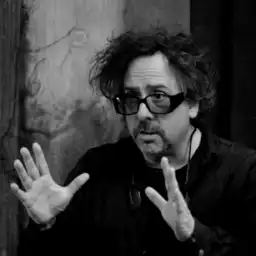
So, how did a guy known for playing sadistic mad scientists land the role of the comic book world’s most famous surrogate father? You can thank visionary director Tim Burton.
Burton, an avid fan of classic British horror and B-movies, knew exactly who Gough was when casting 1989’s Batman. He didn’t see a villain; he saw an actor with incredible poise, an expressive face, and a voice that commanded immediate respect.
Gough’s Alfred became the anchor for an incredibly dark, stylized Gotham City. When Michael Keaton’s Bruce Wayne is brooding alone in the shadows, it’s Alfred who brings him back to reality with a silver tray and a perfectly timed piece of sarcasm.
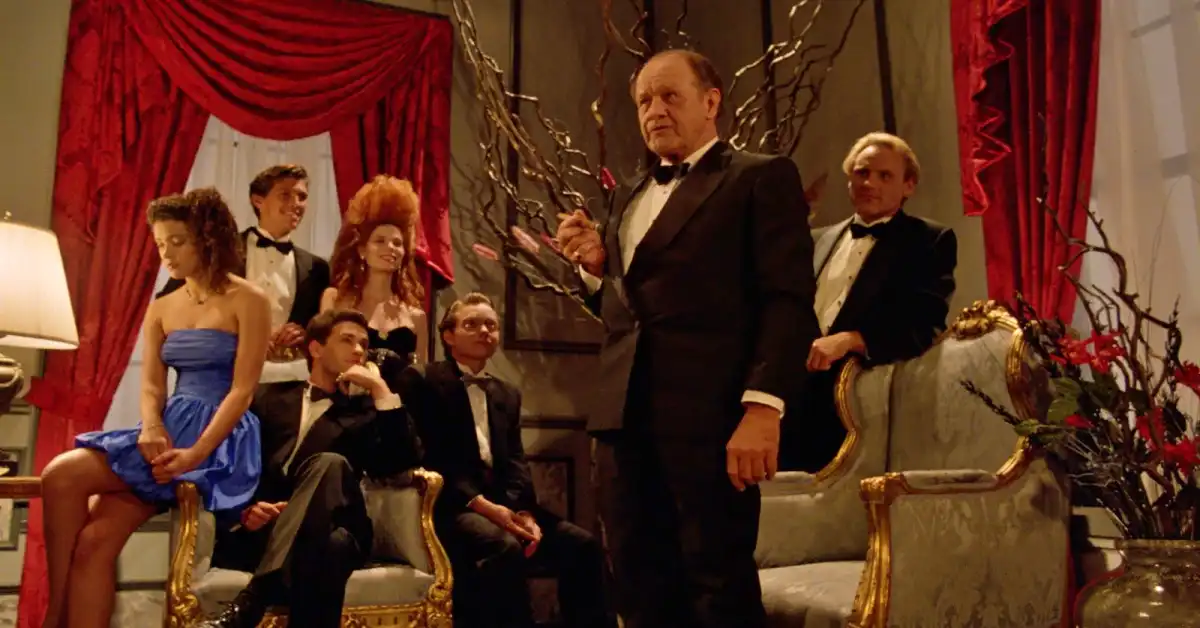
“Do pack a jacket, Master Bruce. It can get terribly cold in the Batcave.”
What made Gough’s performance so unique was his ability to balance classic British upper-class restraint with deep, unspoken love. He wasn’t just a servant. He was the guy who raised a broken orphan.
The Schumacher Years
When Tim Burton stepped away from the director’s chair and Joel Schumacher took over for Batman Forever (1995) and Batman & Robin (1997), the franchise changed drastically. The dark, gothic shadows were replaced with screaming neon lights, campy puns, and rubber suits with nipples.
Most of the cast jumped ship. Michael Keaton walked away. New Batmen came and went.
Through all the chaotic reboots, shifting tones, and bizarre creative choices, Michael Gough remained. He and Pat Hingle (who played Commissioner Gordon) were the only two actors to appear in all four original films.

Even when the scripts around him grew messy, Gough’s dignity never wavered. In Batman & Robin, when the plot takes a tragic turn and reveals that Alfred is dying of a fictional illness, Gough delivers a performance so sincere it grounds an otherwise ridiculous movie. It’s a testament to his skill that he could make audiences weep in a film featuring Arnold Schwarzenegger screaming ice puns.
(To see the incredible range of his performances across generations, check out this retrospective on the Evolution of Alfred in Movies & TV, which highlights how Gough set the standard for every live-action interpretation that followed. This video showcases clips of Gough alongside other legendary actors, highlighting how his performance defined the character’s signature dry wit.)
The Definitive Alfred
Michael Gough passed away in 2011 at the age of 94, leaving behind a massive filmography spanning over 150 roles. While younger generations might lean toward Michael Caine’s gritty ex-soldier take on Alfred, or Jeremy Irons’ tech-savvy handler, Gough remains the blueprint.
He bridged two entirely different eras of cinema. He carried the DNA of classic British horror into the modern age of the Hollywood blockbuster, transforming himself from a master of onscreen cruelty into the ultimate symbol of comfort, loyalty, and home.
Are you a fan of classic cinema? Which version of Michael Gough do you prefer — the mad scientist with a penchant for terror, or the gentle butler who kept Gotham’s greatest hero grounded?
Join the Conversation! Let us know your favorite Michael Gough moments in the comments below, and don’t forget to share this article with your fellow movie buffs.

