

Peter Falk didn’t just play Lieutenant Columbo. He transformed a poorly defined script archetype into a masterclass of character acting that completely flipped the television detective genre on its head.
Yet, the actor behind the iconic squint was much more than a collection of eccentric catchphrases and a beat-up car. Falk was a classically trained theater performer, a pioneer of independent cinema, and a man who spent decades overcoming a profound physical disability.
Need to know
- The Definitive Role: Peter Falk achieved global immortality playing Lieutenant Columbo, the seemingly absent-minded LAPD homicide detective in the iconic series Columbo (1968–2003).
- The Early Struggle: A childhood battle with cancer left him with a prosthetic right eye at age three. Rather than stopping him, this became a defining feature of his intense, squinting screen presence.
- Hollywood Acclaim: Before television fame, Falk earned two consecutive Academy Award nominations for Best Supporting Actor in Murder, Inc. (1960) and Pocketful of Miracles (1961).
- Indie Pioneer: He partnered deeply with director John Cassavetes, helping establish American independent cinema through raw, unscripted films like A Woman Under the Influence.
- The Final Chapter: Falk passed away on June 23, 2011, at age 83, following a devastating, public battle with Alzheimer’s disease and pneumonia.
The Boy from the Bronx with the Glass Eye
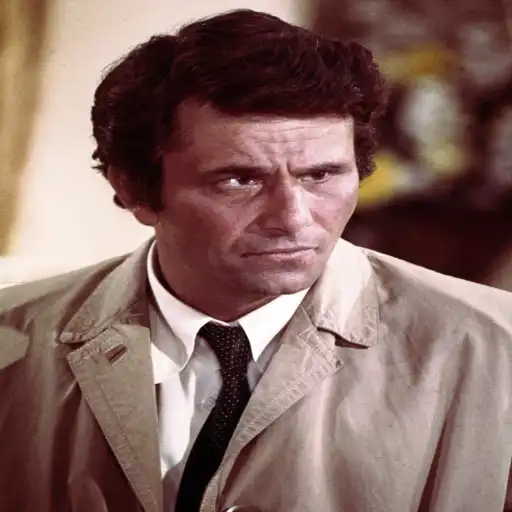
Born on September 16, 1927, in New York City, Peter Michael Falk grew up in the comfortable suburb of Ossining, New York. His parents, Michael and Madeline, ran a modest dry goods and clothing store. Life was ordinary until a sudden medical crisis altered his path forever.
At the tender age of three, a teacher noticed Falk’s right eye was turning strangely inward. A medical exam revealed a malignant tumor known as retinoblastoma. To save his life, surgeons removed the eye completely, replacing it with a glass prosthetic.
How did a hyperactive boy handle losing half his vision? He chose to treat it like a party trick.
Falk refused to let the prosthetic hold him back from a fiercely competitive childhood. He became a star athlete in high school, excelling in both baseball and basketball. During a particularly heated baseball game, an umpire called him out at third base. Convinced he was safe, Falk famously ripped his artificial eye out of its socket, handed it to the official, and barked, “Try this one!”
The bold stunt didn’t change the call, but it showed the world exactly who Peter Falk was. He possessed a relentless, self-deprecating wit that made people comfortable around his disability. That exact charm would eventually lay the groundwork for his legendary television career.
Bureaucracy to Broadway
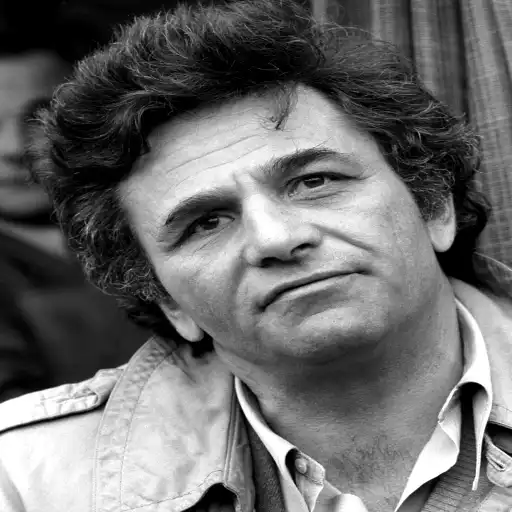
When World War II erupted, Falk tried to enlist in the armed forces. The military took one look at his medical history and immediately rejected him. Undeterred, he joined the United States Merchant Marine, serving as a ship’s cook for a year before returning to dry land to focus on his education.
Falk was a surprisingly intellectual young man, though he often joked that he lacked direction. He earned a bachelor’s degree from the New School for Social Research before pursuing a Master of Public Administration at Syracuse University in 1953.
Armed with his master’s degree, Falk landed a stable job as a management analyst for the Connecticut State Budget Bureau in Hartford. He called himself an “efficiency expert.” Ironically, his spatial awareness was so poor that on his very first morning, he wandered around for hours simply trying to locate the building.
While working his desk job, the acting bug bit him hard.
He joined a local community theater group and began taking professional acting classes under the legendary Eva Le Gallienne. When she told him he had raw, undeniable talent, Falk made a terrifying leap of faith. He quit his government job, packed his bags, and moved back to New York City to become a full-time actor at the age of 28.

Success arrived with remarkable speed. Falk made his Broadway debut in 1956, appearing in Diary of a Scoundrel. Hollywood quickly took notice of his sharp, gritty tone, which was perfect for the crime films dominating the era.
He scored an Academy Award nomination for playing a cold-blooded killer in Murder, Inc. (1960). The next year, Frank Capra cast him in Pocketful of Miracles (1961), landing Falk a second consecutive Oscar nod. He made history by becoming the first actor nominated for an Oscar and an Emmy in the exact same calendar year.
How Columbo Rewrote Mystery History
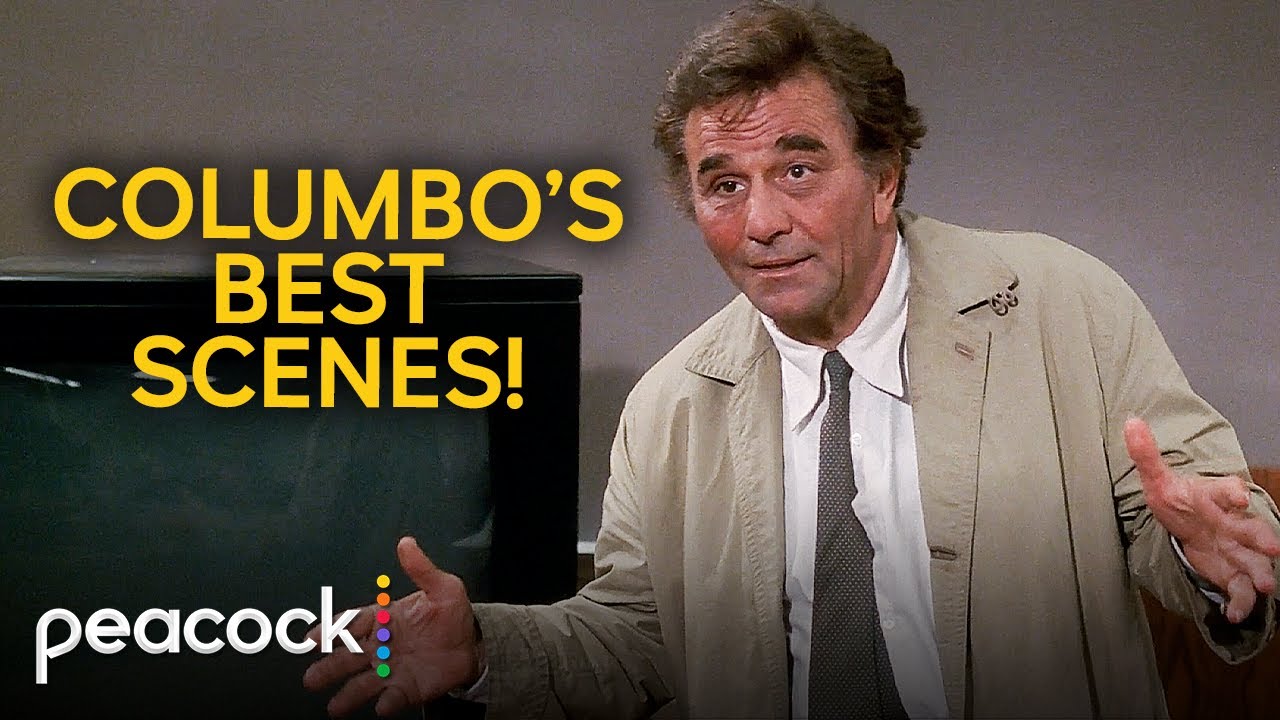
Despite his early movie success, Falk’s life changed permanently when creators Richard Levinson and William Link approached him with a television script. They had written a movie called Prescription: Murder (1968), centering on a brilliant, unassuming police lieutenant.
Interestingly, Falk wasn’t even close to their first choice.
The writers initially offered the part to legendary singer Bing Crosby, who turned it down because he preferred spending his retirement on the golf course. Falk practically begged for the role, recognizing that the character’s messy exterior hid a razor-sharp mind.
When Columbo officially launched as a regular series on NBC in 1971, it became an instant phenomenon. Mystery shows had always relied on a traditional “whodunit” structure. The audience watched the detective gather clues, waiting for a dramatic reveal in the final five minutes.
Columbo threw that playbook away.
The show pioneered the “inverted mystery” format, or the “howcatchem.” Within the first ten minutes of every episode, the audience watched the wealthy, arrogant killer commit the perfect murder. The joy of the show wasn’t discovering who did it. The thrill was watching this rumpled, working-class detective slowly dismantle the killer’s airtight alibi.
Falk brought a beautiful, calculated theatricality to the role. He played Columbo as a psychological predator disguised as an incompetent fool. The killer would look down on him, offering arrogant smiles, completely oblivious to the fact that they were walking straight into a trap.
The Coat, the Car, and the Dog
The magic of Columbo didn’t just come from the clever writing. Much of the detective’s eccentric universe was created directly by Peter Falk’s personal whims and real-life habits.
Consider the wardrobe. The network wanted a sleek, stylized look for their new leading man. Falk refused, walking onto the set wearing his own personal clothes. He bought the famous, wrinkled trench coat at a store in New York for $15 back in 1958. He wore that exact same coat on screen for decades until it practically rotted off his back.
The character’s transport was equally chaotic. The production crew took Falk to a backlot filled with rental vehicles to pick a police car. Every car looked too polished. On his way out, Falk spotted a battered, leaking 1959 Peugeot 403 convertible hiding in a corner. It was dented, faded, and perfect.
Then came the introduction of his sidekick.
Columbo's Entourage:
1. The Trench Coat (Bought for $15 in New York City)
2. The Car (A dilapidated 1959 Peugeot 403)
3. The Dog (A lethargic Basset Hound simply named "Dog")
The writers wanted the detective to have a canine companion to add visual texture to the scenes. Falk hated the idea at first, arguing that the character already had enough quirks. When he met an incredibly lazy, droopy Basset Hound at a local animal shelter, he relented. The hound refused to move, bark, or do anything besides sleep. Falk fell in love, named the character “Dog,” and created one of the most beloved dynamics in television history.
The Art of “Just One More Thing”
Why did audiences connect so deeply with this character? The answer lies in the subtle class warfare happening beneath the surface of every episode.
The villains were always members of the high-society elite: famous doctors, wealthy executives, brilliant tech gurus, and arrogant celebrities. They lived in sprawling Beverly Hills mansions. They viewed the police lieutenant as an uneducated nuisance, an annoyance to be swatted away.
Falk weaponized his character’s apparent stupidity. He would ramble on about his wife’s cooking, complain about his ulcers, or ask to borrow a pencil. Just as the killer relaxed, thinking the interrogation was over, Falk would walk toward the exit.
He would stop at the threshold. He would rub his forehead, turn around, and deliver the killer blow: “Just one more thing…”
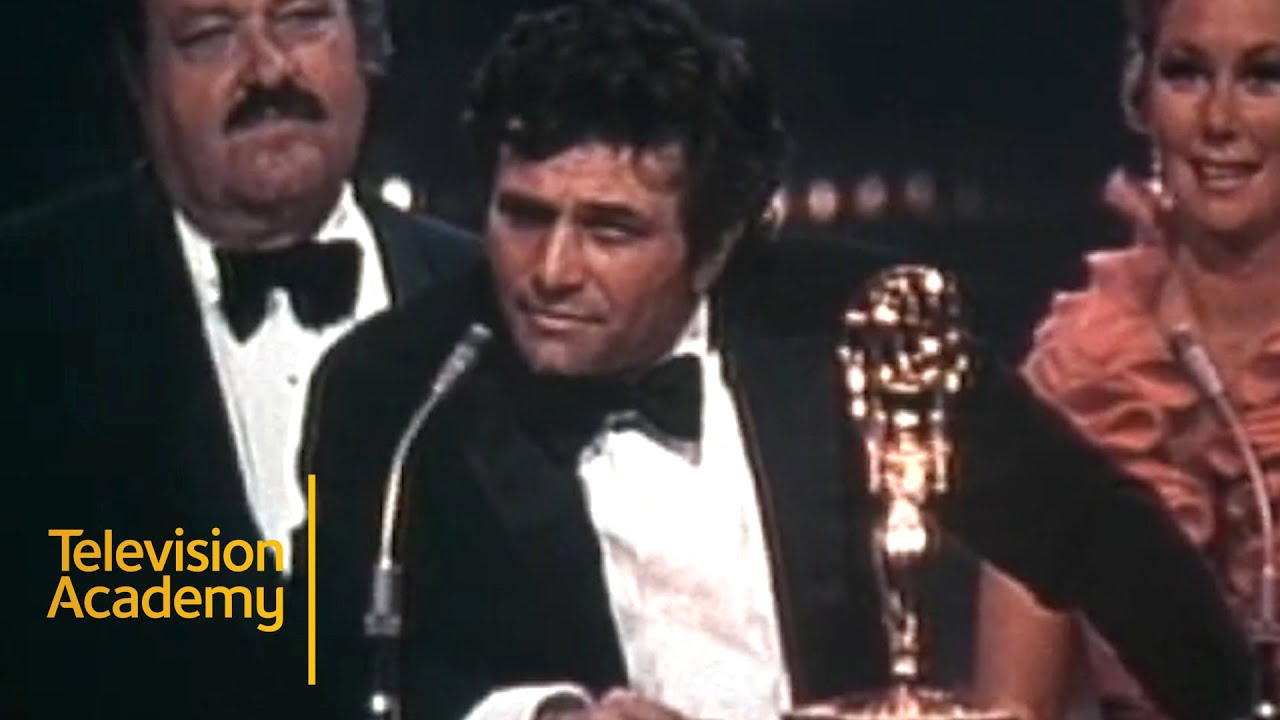
That phrase became Falk’s trademark. The line signaled that the trap had snapped shut. According to the Television Academy, Falk’s brilliant execution earned him four Primetime Emmy Awards specifically for playing the detective, cementing his place in the pantheon of television legends.
The Cinema Pioneer
It is easy to let the shadow of Columbo obscure the rest of Falk’s stunning career. He wasn’t content with just pulling in massive television paychecks. He used his fame to fund deep, challenging artistic endeavors in the world of film.
His most significant creative partnership was with filmmaker John Cassavetes. Together, they became the godfathers of American independent cinema.
Falk starred in Cassavetes’ raw masterpieces Husbands (1970) and A Woman Under the Influence (1974). These films didn’t follow Hollywood’s glossy rules. They relied heavily on intense improvisation, capturing devastating, hyper-realistic portraits of middle-class American life. Falk’s performance as a stressed, emotionally blocked construction worker trying to handle his wife’s mental breakdown remains a high-water mark of film acting.
To a completely different generation of fans, Falk is beloved for a much gentler role.
In 1987, director Rob Reiner cast him as the grandfather-narrator in the fantasy comedy The Princess Bride. Sitting at the bedside of his sick grandson, Falk guided audiences through the legendary tale of Westley and Buttercup. His warm, raspy voice and perfect comedic timing gave the film its deeply human heart.
The Tragic Final Act and Death
As the new millennium dawned, Falk began stepping away from the spotlight. His final appearance as the iconic detective aired in 2003, concluding an incredible 35-year run with the character.
Sadly, his real-life exit was clouded by a tragic health crisis.
In 2008, news broke that Falk was suffering from rapidly progressing dementia, brought on by Alzheimer’s disease. The condition worsened significantly following a series of dental surgeries. The actor who had charmed millions with his brilliant, hyper-observant mind was suddenly unable to remember his most famous roles.
A painful, public legal battle erupted between his daughter, Catherine, and his second wife of over thirty years, Shera Danese. Catherine filed court papers seeking conservatorship over her father’s affairs, leading to public hearings that exposed the actor’s frail mental state. The court ultimately appointed Shera as his primary conservator, keeping Falk under 24-hour care at his Beverly Hills estate.
The end came quietly on the morning of June 23, 2011. Peter Falk passed away at his home at the age of 83. The official death certificate later listed the primary causes as pneumonia and advanced Alzheimer’s disease.
Tributes poured in from around the globe. Fans left flowers on his star on the Hollywood Walk of Fame, which he received posthumously in 2013. Comedians, actors, and directors spoke of a man who was deeply kind, profoundly talented, and completely irreplaceable.
The Enduring Legacy of Lieutenant Columbo
Why does Peter Falk’s work continue to attract new viewers? Why are teenagers on social media streaming a show that debuted more than half a century ago?
The answer is simple. Falk created a character who represents the ultimate triumph of humility over arrogance.
Our modern landscape can feel incredibly loud, polished, and obsessed with status. Columbo represents the exact opposite. He didn’t care about looking cool. He didn’t care about wealth or power. He cared about the truth, and he achieved it by being the most humble person in the room.
Peter Falk took a physical disability, a cheap coat, and a crumbling French car, turning them into a symbol of pure comfort and brilliant justice. He proved that you don’t need a pristine exterior to leave an indelible mark on human history.
A beloved actor and legend, Forever in our memories. Rest in peace.
Join the Conversation!
Are you a lifelong fan of Columbo, or did you fall in love with Peter Falk through The Princess Bride? What is your favorite episode or moment from his legendary career?
Let us know in the comments below! Don’t forget to share this article with your fellow classic TV and mystery enthusiasts.

