

Every July 1st, millions of people clad in red and white gather across Canada to watch fireworks, wave flags, and eat poutine. It is a seamless, deeply ingrained national tradition. Yet, if you traveled back in time to the early 1980s, you would find yourself celebrating a holiday with a completely different name: Dominion Day.
Why did the name change? Was it a natural evolution, or a calculated political maneuver?
The true story involves a decades-long cultural tug-of-war, a brand-new constitution, and a bizarrely empty House of Commons on a hot summer afternoon. Let’s peel back the layers of Canadian history to see how a single word sparked a battle over the nation’s identity.
Need to know
- The Original Meaning: “Dominion Day” celebrated the British North America Act of July 1, 1867, which united colonies into a self-governing nation under the British Crown.
- The Biblical Root: The word “Dominion” came from Psalm 72:8: “He shall have dominion also from sea to sea.” It was picked to avoid angering the United States with a title like “Kingdom.”
- The Political Caper: The name was officially changed in 1982 via a private member’s bill that was pushed through the House of Commons in under ten minutes on a quiet Friday afternoon when only 13 MPs were present.
- The Core Conflict: The shift reflected a broader effort to transform Canada from a British-centric colony into a modern, bilingual, multicultural independent state.
The Birth of July 1st: What Exactly Was Dominion Day?
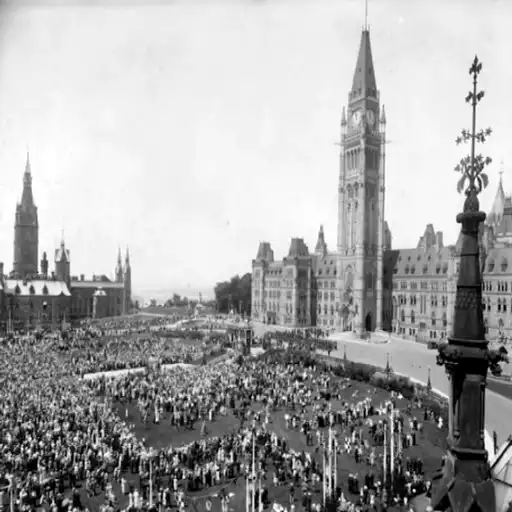
To understand why the name was dropped, we have to look at why it was chosen in the first place. On July 1, 1867, the British North America Act officially united the provinces of New Brunswick, Nova Scotia, and the Province of Canada (which split into Ontario and Quebec) into a single country.
But what should they call this new political entity?
The Fathers of Confederation originally wanted to name it the “Kingdom of Canada.” However, the British government got cold feet. Britain was deeply worried about offending the United States, which had just finished its Civil War and remained intensely anti-monarchical. Having a British “Kingdom” right on the northern border felt like a provocation.
Enter New Brunswick politician Sir Leonard Tilley. An avid Bible reader, Tilley found inspiration during his morning prayers in Zechariah 9:10 and Psalm 72:8, which declared: “He shall have dominion also from sea to sea, and from the river unto the ends of the earth.”

The term was perfect. It conveyed grand scale and self-governing dignity without using the trigger word “Kingdom.” On May 22, 1867, Queen Victoria signed the proclamation establishing the Dominion of Canada.
For the next century, July 1st was legally celebrated as Dominion Day. It was a day of parades, brass bands, and deep reverence for the country’s British heritage, as documented by The Canadian Encyclopedia.
Why the Name Started to Sour
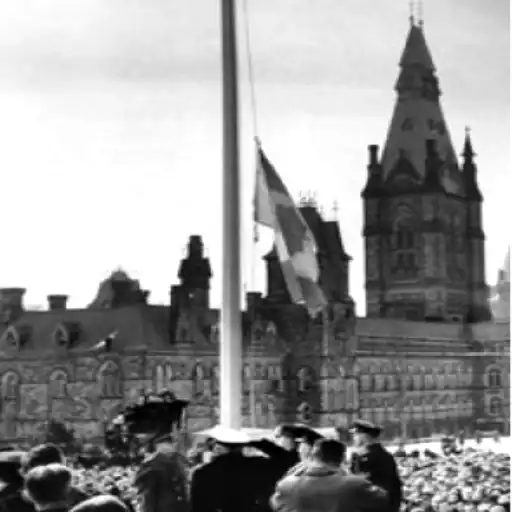
If “Dominion” was such a clever compromise, why did people start hating it?
The answer lies in how Canada grew up after the Second World War. Generations of young Canadians who fought overseas returned home with a fiercely independent streak. They no longer saw themselves as British subjects living abroad; they were simply Canadian.
To many modernists, the word “Dominion” started to smell like old colonial dust. It sounded subordinate, as if Canada were still a secondary property owned by a distant empire. Slowly but surely, federal institutions began dropping the word. The Dominion Bureau of Statistics became Statistics Canada. The Post Office Department stopped using it on letterheads.
This rebranding gathered massive steam under the Liberal governments of Lester B. Pearson and Pierre Elliott Trudeau. These leaders wanted to craft a fresh national brand — one rooted in bilingualism and multiculturalism rather than old British colonial ties.
The strategy roll-out happened in phases:

- 1965: Canada adopted the iconic red-and-white Maple Leaf flag, replacing the Canadian Red Ensign.
- 1980: “O Canada” was officially designated as the sole national anthem.
- 1982: The historic patriation of the Constitution severed the final legal ties allowing Britain to amend Canadian laws.
Once the Constitution Act of 1982 was signed by Queen Elizabeth II, keeping “Dominion Day” felt like wearing a rented tuxedo that no longer fit. The stage was set for a major change. Yet, traditionalists fought back fiercely. Conservative icons like former Prime Minister John Diefenbaker publicly rallied against what they called a “pell-mell rush to obliterate our traditions.” Because of this deep emotional split, government-sponsored attempts to change the name repeatedly stalled out in Parliament.
How the Name Actually Changed
Since official government bills kept dying under the weight of endless debate, the actual transformation happened through pure political stealth. It is one of the strangest procedural episodes in Canadian parliamentary history.
On the hot, hazy afternoon of Friday, July 9, 1982, the House of Commons was practically a ghost town. Most Members of Parliament had already left Ottawa for the weekend or hopped on flights back to their home ridings.
At roughly 4:30 PM, a private member’s bill called Bill C-201 came up on the agenda. It had been introduced by Hal Herbert, a Liberal MP representing Vaudreuil, Quebec, who ironically wasn’t even in the chamber at the time. The bill was incredibly simple: amend the Holidays Act to replace the words “Dominion Day” with “Canada Day.”
Under normal circumstances, a controversial bill like this would face hours of pushback. But that afternoon, there were only 13 MPs sitting in the entire House of Commons.
According to section 48 of the original British North America Act, a valid meeting of the House requires a quorum of at least 20 members. Had any MP stood up and called for a quorum count, the session would have been instantly shut down.
Instead, the remaining Liberal MPs moved with lightning speed. A lone Progressive Conservative MP, David Baker, was caught completely off guard. Before anyone could mount a defense or sound an alarm, the acting speaker sailed the bill through its second reading, committee stage, report stage, and third reading.
The Lightning Round: The entire process took less than five minutes. To guarantee no other politicians could walk through the door and ruin the plan, an MP requested unanimous consent to pretend the clock already read 5:00 PM, allowing the House to immediately adjourn.

Traditionalists were absolutely furious. Accusations flew that the Liberals had unconstitutionally “rammed” the legislation through an empty chamber. Critics argued the move violated democratic principles. Historical records on James Bowden’s Parliamentum highlight how close the move came to a procedural violation.
Despite the uproar, the tide had turned. A Gallup poll from late 1981 had already revealed that 70% of Canadians favored the name change. The Senate, recognizing the public shift, passed Bill C-201 on October 25, 1982. The bill received Royal Assent two days later, officially cementing Canada Day into law just in time for the 1983 celebrations.
Nostalgia vs Modern Identity
Did the controversy die down once the law passed? Not exactly. For over a decade, a lingering cultural hangover persisted.
During the mid-1990s, The Globe and Mail even launched a nostalgic marketing campaign selling t-shirts emblazoned with the slogan, “Bring Back Our Dominion Day.” Royalists and traditionalists claimed that erasing “Dominion” chipped away at the foundational pillars of the country’s history, replacing meaningful heritage with a pedestrian, literal name. After all, did citizens really need a holiday to remind them what country they lived in?
However, to the vast majority of modern Canadians, the change was an essential step forward. It allowed the national holiday to grow alongside the population. By shedding a word deeply tied to the British Empire, July 1st transformed into an inclusive space where indigenous peoples, multi-generational citizens, and brand-new immigrants could celebrate a shared future under a neutral, unifying name.
Ultimately, the sneaky afternoon vote in 1982 didn’t rewrite Canadian history — it simply allowed the country to finally stand entirely on its own two feet.
What do you think?
Does the original name “Dominion Day” hold an important piece of history that should have been preserved, or was the shift to “Canada Day” a necessary step for a modern sovereign nation? Let us know your thoughts in the comments below, and share this article with your favorite history buff!

