

What Really Caused the American Civil War? The Truth Behind the Conflict
The American Civil War is not a dusty old story. It’s not a closed chapter.
It’s the single most important, bloody, and transformative event in American history. It’s the scar you can still see on the map. It’s the source code for the country we are today—our triumphs, our divisions, and our demons.
From 1861 to 1865, the United States tore itself in two. The Union (the North) fought the Confederacy (the South) in a war that claimed an estimated 750,000 lives—more than every other American war, combined.
But why? Why would a nation go to war with itself? What was so broken that the only solution was to burn it all down and start over?
If you want to understand America, you have to understand the Civil War. Let’s dig in.
The Powder Keg: What Really Caused the Civil War?
People love to debate this. They’ll say it was “economic anxiety,” “cultural differences,” or the popular, sanitized myth of “states’ rights.”
Let’s cut through the nonsense. It was about slavery.
Everything else—the economics, the politics, the culture—was inextricably tied to the “peculiar institution” of human bondage.
To pretend otherwise is to ignore the words of the people who were there. When the Southern states seceded (left the Union), they wrote their own declarations of secession. They were very clear.
As the state of Mississippi declared in 1861: “Our position is thoroughly identified with the institution of slavery—the greatest material interest of the world.”
The idea that the war was about “states’ rights” is a myth… unless you finish the sentence. It was about a state’s right to do what? To own human beings.
So, how did this one issue become a powder keg?
1. The Economic Divide: King Cotton vs. The Factory
- The South: The Southern economy was almost entirely agricultural. Its main export? Cotton. By 1860, the South produced 75% of the world’s cotton. That wealth was built on a single, brutal foundation: the enslaved labor of nearly 4 million people. To the Southern elite, slavery wasn’t just a “way of life”; it was their entire economic engine.
- The North: The Northern economy was industrial. It was built on factories, railroads, and wage labor. It was a modern, capitalist economy that didn’t need slavery and increasingly viewed it as a moral and economic poison.
2. The Political Fails: Kicking the Can Down the Road
For 40 years, Congress tried to avoid a civil war by… compromising. But you can’t “compromise” on human bondage. Every “solution” just made things worse.
- Missouri Compromise (1820): Let Missouri in as a slave state and Maine as a free state. Drew a line across the country—slavery was banned “forever” north of that line. (Spoiler: “Forever” didn’t last long.)
- Compromise of 1850: Let California in as a free state, but also passed the Fugitive Slave Act. This horrific law required citizens and officials in the North to help capture and return escaped slaves. For many Northerners, this brought the horror of slavery to their doorstep. They were now complicit.
- Kansas-Nebraska Act (1854): This lit the fuse. It allowed new territories to vote on whether to allow slavery. Pro- and anti-slavery forces flooded into Kansas, leading to a bloody guerilla war known as “Bleeding Kansas.” The compromise was over.
3. The Social Rupture: The Nation Snaps
By the 1850s, the two sides weren’t just disagreeing; they hated each other.

- Uncle Tom’s Cabin (1852): Harriet Beecher Stowe’s novel was a blockbuster. It exposed the brutal, inhuman reality of slavery to a mass audience. It was sentimental, but it worked. It turned millions of Northerners into abolitionists.
- Dred Scott v. Sandford (1857): A Supreme Court decision that was a legal gut-punch. The Court ruled that Black people, enslaved or free, were not citizens. They had “no rights which the white man was bound to respect.” It also declared that Congress had no right to ban slavery in the territories. It was a total victory for the South.
- John Brown’s Raid (1859): A radical, white abolitionist, John Brown, tried to start a slave uprising by seizing a federal arsenal at Harpers Ferry. He failed and was hanged. To the South, he was a terrorist. To the North, he was a martyr. There was no middle ground left.
4. The Final Spark: Lincoln (1860)
In November 1860, Abraham Lincoln was elected president.
He was the candidate of the new, anti-slavery Republican Party. He didn’t even run on abolishing slavery where it existed; his main platform was simply to stop its spread into new territories.
For the South, this was the end. They knew that if slavery couldn’t expand, it would eventually die. On December 20, 1860, South Carolina seceded from the Union. Mississippi, Florida, Alabama, Georgia, Louisiana, and Texas followed.
The Confederate States of America was born. The powder keg was lit.
The First Shot: A War of Brother Against Brother
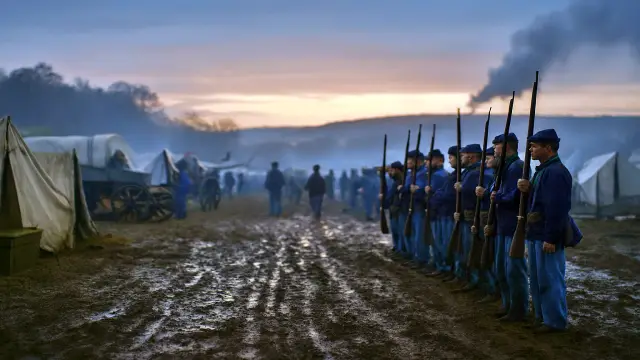
The shooting started on April 12, 1861.
Confederate forces fired on Fort Sumter, a U.S. federal fort in the harbor of Charleston, South Carolina. Lincoln called for 75,000 volunteers to put down the rebellion. In response, four more states—Virginia, Arkansas, Tennessee, and North Carolina—seceded.
The war was on.
The two sides were a total mismatch. On paper, the North should have won in six months.
| Union (The North) | Confederacy (The South) |
| Population: 22 million | Population: 9 million (inc. 3.5m enslaved) |
| Industry: 90% of the nation’s factories | Industry: Almost none. Had to import everything. |
| Railroads: 22,000 miles | Railroads: 9,000 miles (poorly connected) |
| Military: A standing US Army & Navy. | Military: Had to build one from scratch. |
| Advantage: Overwhelming industrial & human resources. | Advantage: Fighting a defensive war on home turf. |
| Weakness: Had to invade and conquer a massive territory. | Weakness: No resources. No navy. No money. |
The South’s only real path to victory was to not lose. They just had to make the war so long, so bloody, and so miserable that the North would give up and let them go.
They almost pulled it off.
The War Itself: Key Battles That Defined the Conflict
The war was a four-year story of unbelievable carnage, stunning incompetence, and moments of brutal genius. We can’t cover all 10,000+ battles, but these are the turning points that mattered.
1. First Bull Run / Manassas (July 1861)

What happened: A “get-to-know-you” battle just outside Washington D.C. Union soldiers and high-society picnickers thought it would be a quick, glorious rout. Instead, Confederate troops (led by “Stonewall” Jackson) stood firm, and the Union army fled in a humiliating panic.
Why it mattered: It was a wake-up call for both sides. This was not going to be a 90-day skirmish. This was going to be a war.
2. Antietam / Sharpsburg (September 1862)
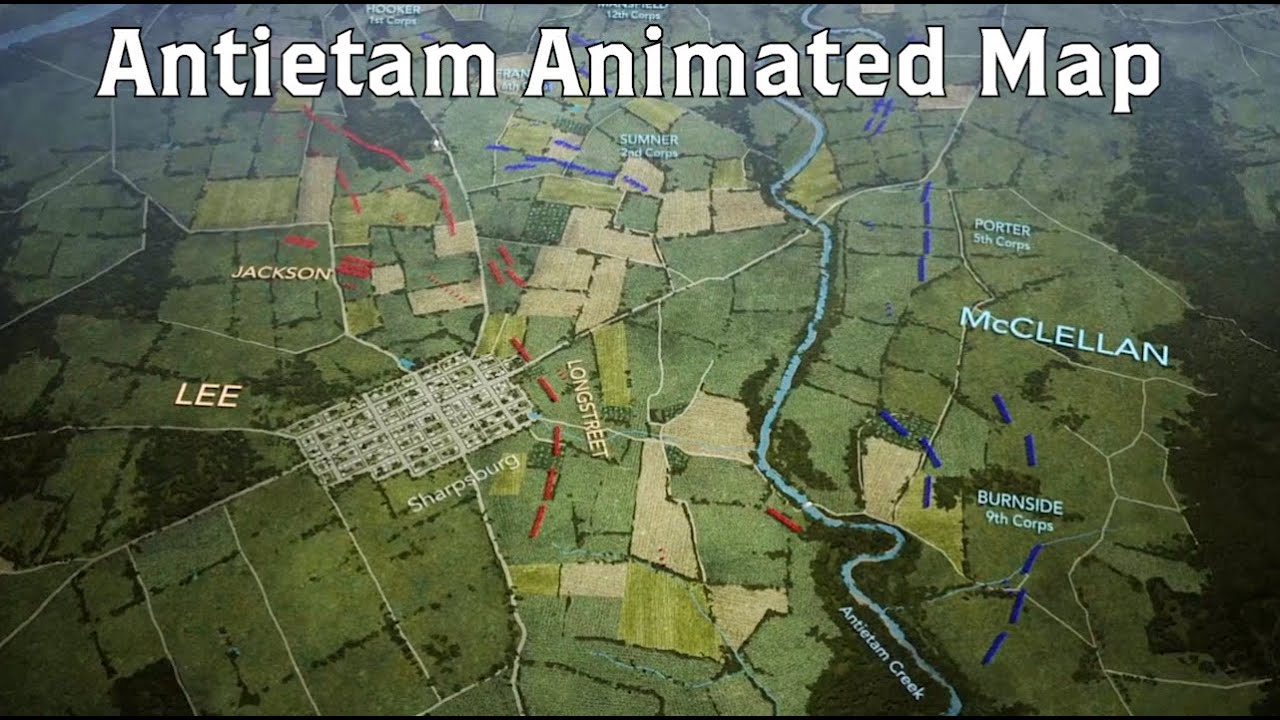
What happened: Confederate General Robert E. Lee invaded the North (Maryland) for the first time. Union General George McClellan met him at Antietam Creek. The resulting battle was the bloodiest single day in American history. Over 22,000 men were killed, wounded, or missing in 12 hours. It was a tactical draw, but Lee’s invasion was stopped.
Why it mattered: This was the “victory” Lincoln needed. Five days later, he issued the Emancipation Proclamation.
3. The Emancipation Proclamation (January 1, 1863)
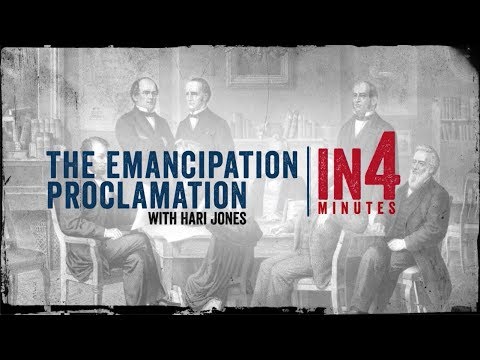
This wasn’t a battle. It was a political masterstroke that changed the soul of the war.
With the stroke of a pen, Lincoln declared that all slaves in the rebellious states were “thenceforward, and forever free.”
- Did it free everyone? No. It didn’t apply to the border states (slave states that stayed in the Union).
- What did it do?
- It changed the “Why”: The war was no longer just about “preserving the Union.” It was now an open, official, undeniable war against slavery. A war of liberation.
- It kept Europe out: Britain and France hated slavery. After the Proclamation, they could never side with the Confederacy.
- It allowed Black soldiers: For the first time, Black men could officially enlist in the Union Army. Nearly 200,000 would do so, providing a crucial surge of manpower that helped win the war.
4. Gettysburg (July 1-3, 1863)
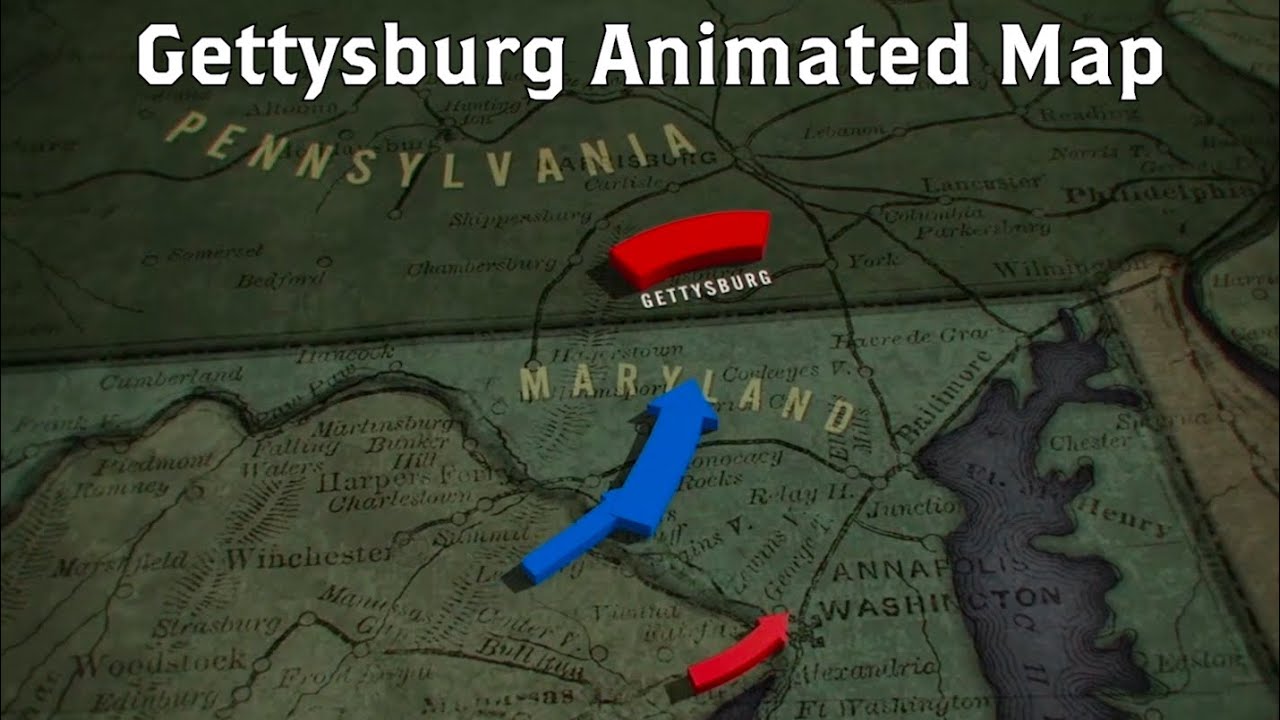
What happened: Lee tried to invade the North again, this time in Pennsylvania. For three days, the Union and Confederate armies clashed in the largest battle ever fought in North America. It ended with “Pickett’s Charge,” a suicidal Confederate assault across an open field. It was a catastrophic failure.
Why it mattered: This was the High-Water Mark of the Confederacy. Lee’s army was shattered. He would spend the rest of the war on the defensive.
5. Vicksburg (May-July 1863)
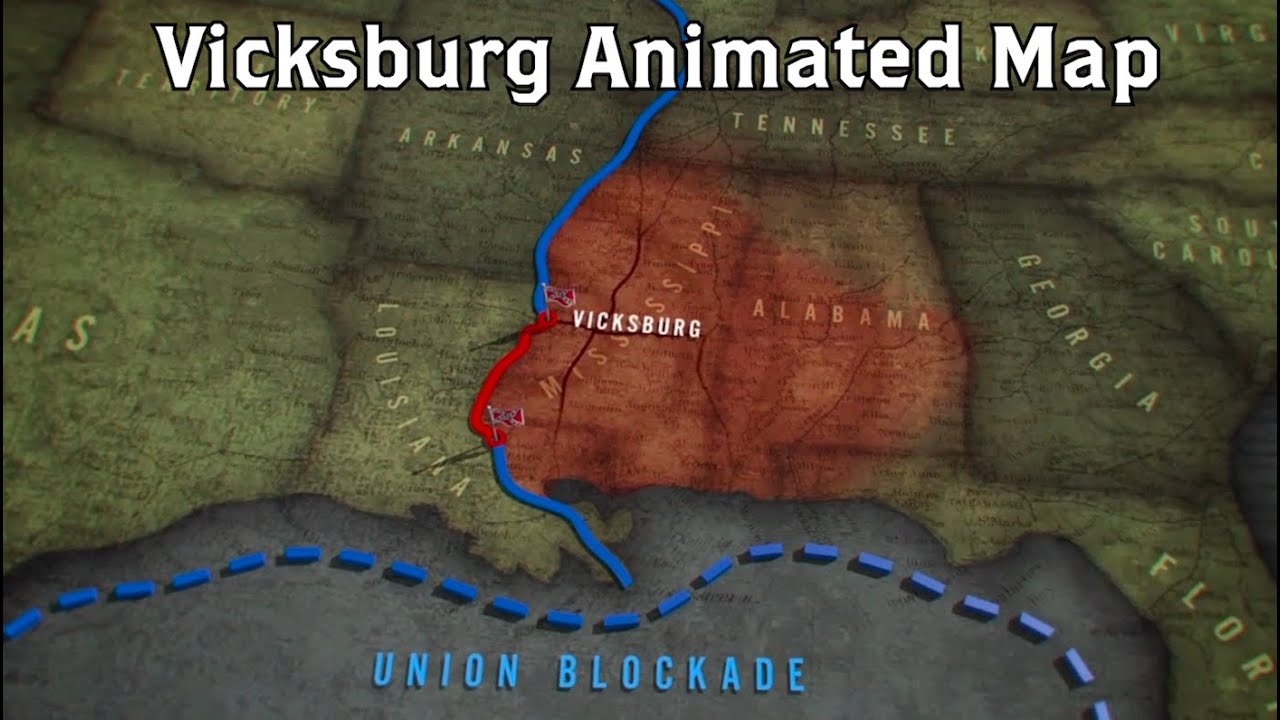
What happened: As Lee was losing at Gettysburg, General Ulysses S. Grant was winning the war in the West. After a long, brutal siege, he captured the fortress-city of Vicksburg, Mississippi.
Why it mattered: This was arguably more important than Gettysburg. Vicksburg was the last Confederate stronghold on the Mississippi River. Its capture split the Confederacy in two. It also proved that Grant was the general Lincoln had been waiting for.
6. Sherman’s March to the Sea (November-December 1864)
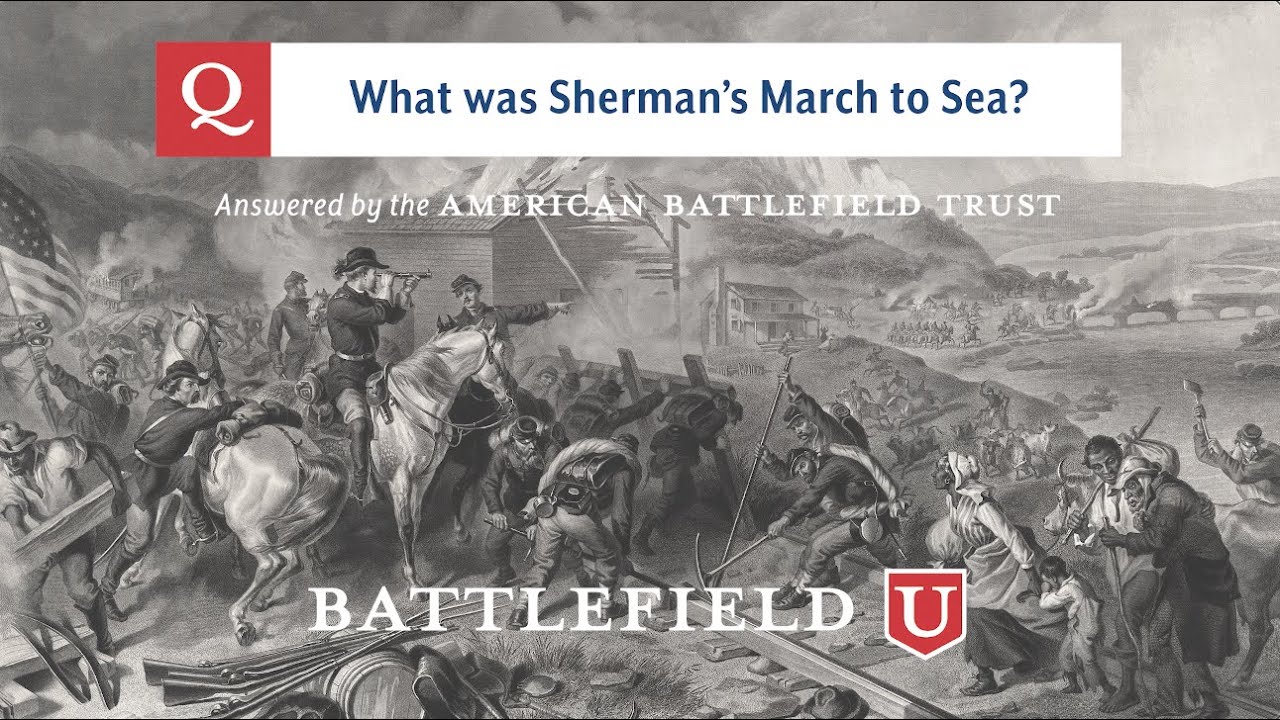
What happened: Grant put his best man, William Tecumseh Sherman, in charge of the West. Sherman captured Atlanta and then… just… left. He cut his own supply lines and marched his 60,000 men 300 miles to the coast, living off the land.
Why it mattered: This was total war. Sherman wasn’t just fighting the Confederate army; he was destroying the South’s will to fight. He burned farms, twisted railroads (“Sherman’s neckties”), and smashed the entire economic and psychological infrastructure of the Confederacy. It was brutal, and it worked.
The End of the War: “The Cruel Task is Over”
By 1S865, the Confederacy was a hollowed-out shell. Lee’s once-invincible army was starving, exhausted, and surrounded.
On April 9, 1865, at Appomattox Court House, Virginia, Robert E. Lee surrendered to Ulysses S. Grant.
Grant, in one of the war’s most critical moments, was a pillar of grace.
- He didn’t take Lee’s sword.
- He didn’t arrest the Confederate soldiers.
- He simply told them to sign a parole, hand over their rifles, and go home. He even let them keep their horses “for the spring planting.”
The war was over.
Five days later, Abraham Lincoln, the man who had held the nation together by sheer force of will, was assassinated. The joy of victory was instantly replaced by profound, bitter mourning.

The Legacy That Never Ended: Why the Civil War Is Still Being Fought
The war did settle two things:
- The Union was indivisible. States could not just leave.
- Slavery was dead.
To make it permanent, America passed three revolutionary amendments:
- 13th Amendment: Abolished slavery. Forever.
- 14th Amendment: Granted citizenship to everyone born in the U.S. (including the 4 million freed slaves) and guaranteed “equal protection of the laws.” This is the single most important amendment in modern legal history.
- 15th Amendment: Gave Black men the right to vote.
This was the promise. The chapter was called Reconstruction. The goal was to rebuild the South and integrate 4 million new citizens into the country.
And it failed. Utterly.
Radical, racist white Southerners fought back with terrorism. They formed the Ku Klux Klan. They passed “Black Codes” (later Jim Crow laws) to rob Black citizens of their new rights.
The North, tired of war and sacrifice, simply… gave up. In 1877, federal troops were pulled out of the South, and Reconstruction was officially over.
In its place rose the toxic “Lost Cause” myth. This was a deliberate, revisionist-history campaign to reframe the war.
- It claimed the war wasn’t about slavery, but about “states’ rights.” (It was.)
- It painted Confederate soldiers as noble heroes. (They were fighting to preserve slavery.)
- It presented slavery as a gentle, harmless institution. (It was a brutal, violent regime.)
The war ended in 1865, but the struggle for the soul of America—the fight for the 14th and 15th Amendments, the battle against white supremacy, the very definition of “who gets to be an American”—had just begun.
That struggle would lead to the Civil Rights Movement of the 1960s. And it’s a struggle we are still living in, right now. The Civil War isn’t a closed chapter. We are still writing the last page.
FAQs (Frequently Asked Questions)
Was it really just about slavery?
Yes. Everything else was a symptom. Slavery was the disease. It was the 4-million-person, 4-trillion-dollar (in today’s money) elephant in the room.
Why did the North win?
Overwhelming resources. The North had more men, more factories, more money, more ships, and more railroads. The South’s only chance was a quick victory or a war of attrition, and they couldn’t sustain either. The Union’s naval blockade choked the South to death.
What was the bloodiest battle?
Gettysburg was the bloodiest battle, with ~51,000 casualties over three days. Antietam was the bloodiest single day, with ~22,700 casualties.
Did the Emancipation Proclamation free all the slaves?
No. It only applied to slaves in the rebellious states. Slaves in the “border states” (like Kentucky, Missouri, Maryland, Delaware) that stayed loyal to the Union were not freed until the 13th Amendment was passed in 1865.
What’s your take? What part of the Civil War’s legacy do you see as the most powerful or relevant today? Share your thoughts in the comments below.

