

Why Nathan Hale Was America’s Most Famous (But Least Effective) Spy
You probably know the quote. “I only regret that I have but one life to lose for my country.” Those defiant words echo through every middle school history class in the United States. They paint a picture of a fearless, calculating patriot outsmarting the British Empire.
Reality paints a slightly different picture.
Nathan Hale is undoubtedly an American hero. He bravely faced the hangman’s noose at just 21 years old. But as an actual secret agent? The guy was a complete disaster. We are talking about a spectacular, almost comical failure of espionage.
Why do we celebrate a spy who failed his very first mission in less than a week? Let’s peel back the historical myth and look at the real story of the Revolutionary War’s most famous — and least effective — undercover operative.
Need to know
- Zero spy training: Hale had no background in espionage and carried no coded messages, just plain text notes.
- The worst cover story: He pretended to be a wandering schoolteacher but carried his real Yale diploma bearing his true identity.
- A fatal conversation: He was easily tricked into confessing his mission by a veteran British Loyalist in a local tavern.
- The legacy of a martyr: His botched mission forced George Washington to completely overhaul his military intelligence strategy.
Who Was Nathan Hale?
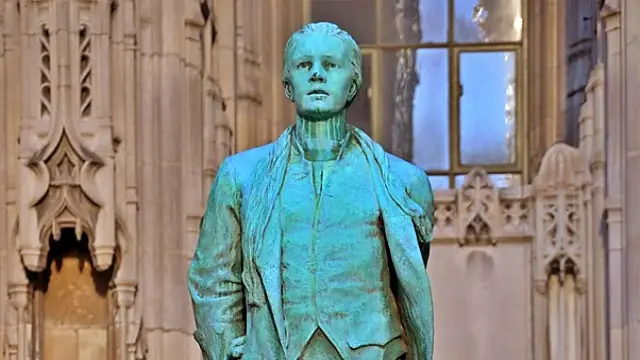
Before he was a bronze statue in city parks, Nathan Hale was just a bright, athletic kid from Coventry, Connecticut. He entered Yale College at 14, graduating with high honors in 1773. Following graduation, he took a quiet, respectable job as a schoolteacher.
Then the Revolutionary War exploded.
When shots rang out at Lexington and Concord in 1775, Hale had a choice. Stay in his safe classroom, or join the fight. You can guess which path he took. He enlisted in the Connecticut militia and quickly earned a promotion to first lieutenant.
Eventually, Hale joined Knowlton’s Rangers. Think of them as the 18th-century version of special forces. They were an elite, hand-picked group designed for reconnaissance and dangerous frontline skirmishes.
But being a tough soldier doesn’t automatically make you a good spy.
A Desperate Need for Intelligence

By September 1776, General George Washington was in deep trouble. The Continental Army had just been crushed at the Battle of Long Island. The British, led by General William Howe, were preparing to invade Manhattan. Washington desperately needed to know where and when the redcoats would strike next.
He needed eyes behind enemy lines.
Washington asked the commanders of Knowlton’s Rangers for a volunteer. The request was met with dead silence. During the 18th century, spying wasn’t considered glamorous. No one thought of James Bond. Espionage was viewed as sneaky, deceitful, and utterly beneath the dignity of a gentleman. If you got caught fighting in uniform, you became a prisoner of war. If you got caught sneaking around in civilian clothes, you hanged.
Hale was the only officer to raise his hand.
His friends begged him not to go. His college buddy, Benjamin Tallmadge, probably shook his head in absolute disbelief. But Hale was stubborn. “I wish to be useful,” he reportedly told a fellow officer. Every kind of service necessary to the public good, he argued, becomes honorable by being necessary.
It was a noble sentiment. It was also a death sentence.
Why Hale Failed So Badly
Sending Hale into British territory was like sending a golden retriever to infiltrate a pack of wolves. He possessed zero tactical training for undercover work.
Here is exactly how his mission fell apart.
1. The Cover Story Was Terrible
Hale disguised himself as a wandering Dutch schoolteacher looking for work. It sounded plausible enough. Teachers frequently traveled between towns back then.
There was just one massive problem. He brought his actual Yale diploma with him. If anyone patted him down and read Latin, his cover was instantly blown. He also didn’t really disguise his appearance. Hale was a tall, athletic, famously handsome guy with a face scarred by gunpowder burns. He stood out in any crowd.
2. He Ignored Basic Spycraft
Later in the war, American operatives used invisible ink, complex numerical ciphers, and secret dead drops. Hale used none of these.
For about a week, he wandered around Long Island, observing British camps and sketching troop positions. How did he record this highly sensitive, top-secret military intelligence? He wrote it down in plain English and shoved the notes right into his shoes. If he was stopped by a random patrol, he carried his own death warrant.
3. The Mission Was Obsolete
On September 15, while Hale was still sneaking around Long Island, the British invaded Manhattan. Washington’s army had to retreat. The very attack Hale was sent to predict had already happened.
A trained operative would have aborted the mission immediately and returned to base. Hale? He just kept wandering west toward Brooklyn, blindly hoping to gather something useful.
4. The Tavern Trap
The fatal blow came on September 21. According to the most credible historical accounts, Hale stopped at a local tavern near Flushing Bay. He grabbed a drink and struck up a conversation with a stranger.
That stranger was Major Robert Rogers.
Rogers was a legendary frontier fighter and a fierce Loyalist commander. He took one look at Hale and instantly smelled a rat. But Rogers didn’t arrest him on the spot. Instead, he played a psychological game. Rogers casually mentioned that he was secretly a Patriot, operating undercover against the British.
Hale swallowed the bait whole. Excited to find a friendly face behind enemy lines, the young schoolteacher leaned across the table and spilled everything. He admitted his rank. He revealed his mission. He basically handed Rogers his head on a silver platter.
Rogers calmly bought him another beer, then signaled his men. The trap snapped shut.
(This short historical video details Hale’s background, his deep sense of duty, and the massive cultural impact of his final moments at the gallows.)
The Swift and Brutal End
Hale was hauled before British General William Howe. The trial lasted about two minutes.
He wasn’t wearing a uniform. His shoes were stuffed with military sketches. He had already confessed his identity to Rogers. Howe didn’t even bother convening a military tribunal. He simply ordered the young American to be hanged the very next morning.
They locked him in a greenhouse for the night. He asked for a Bible. The British guards said no. He asked for a clergyman. Denied. The next morning, September 22, 1776, they marched him to an artillery park near modern-day 66th Street and Third Avenue in Manhattan.

They tied his hands. They slipped the noose around his neck.
Did He Really Say the Famous Words?
Here is where history and mythology collide. As he stood on the ladder, Hale supposedly uttered the immortal phrase: “I only regret that I have but one life to lose for my country.”
Is that an accurate quote? Probably not verbatim.
No official transcripts of the execution exist. The only people taking notes were British officers. A British engineer named John Montresor witnessed the hanging and later spoke with American officers under a flag of truce. He noted that Hale behaved with incredible composure.
Most historians believe Hale’s actual words were heavily inspired by Cato, a wildly popular 18th-century play by Joseph Addison. In the play, a character says, “What pity is it that we can die but once to save our country.” Hale was a well-read Yale graduate. It makes perfect sense that he would pull a dramatic line from his favorite literature in his final moments.
Whether he said the exact phrase or a close variation, the impact was identical. He looked death directly in the eye and didn’t blink.
The Greatest Martyr, The Worst Spy
It is easy to criticize Nathan Hale from the comfort of the modern world. He was naive. He was reckless. His espionage skills were practically nonexistent.
But let’s be fair to the kid. He was a 21-year-old teacher thrown into an impossible situation. He had no mentor, no handler, and no backup. He volunteered for a suicide mission simply because his commander asked for help.
His failure actually changed the course of the war. George Washington realized that relying on brave but untrained amateurs was a terrible strategy. Because Hale died, Washington completely overhauled American intelligence. He recruited Hale’s friend, Benjamin Tallmadge, to build the Culper Spy Ring — a deeply secretive, highly trained network that ultimately helped win the Revolutionary War.
Nathan Hale was a terrible spy, but he was a perfect martyr. He gave a battered, retreating army exactly what it needed: an inspiring symbol of absolute sacrifice. Sometimes, an imperfect hero is exactly what a revolution requires.
Are you surprised by the true story of Nathan Hale’s disastrous mission? Have you ever visited the historical markers in New York or Connecticut dedicated to his memory? Drop a comment below to share your thoughts, and don’t forget to subscribe to our newsletter for more deep dives into the hidden corners of American history!

