

The Covenant Chain: A History of Haudenosaunee and British Treaties
The Covenant Chain was far more than a peace deal. It was a living, breathing diplomatic system between the Haudenosaunee (Iroquois Confederacy) and the British Crown — built on wampum, ceremony, and mutual obligation. Forged between 1664 and 1677, it shaped a continent, survived empires, and still shows up in modern courtrooms.
What does a silver chain have to do with North American history? Everything, it turns out.
Long before the United States existed, before Canada had a constitution, a powerful alliance was quietly reshaping the eastern half of a continent. It didn’t come from kings or parliaments alone. It came from councils, ceremonies, and a piece of beadwork called a wampum belt. That alliance — the Covenant Chain — is one of the most sophisticated diplomatic systems the world has ever produced. And most people have never heard of it.
That’s worth fixing.
Need to know
- The Covenant Chain was a series of diplomatic, commercial, and military alliances between the Haudenosaunee and the English colonies, evolving from earlier Dutch agreements and formalized through treaties beginning in the mid-17th century
- The silver chain metaphor carries deep meaning — silver tarnishes if neglected, requiring active “polishing” to stay bright
- Ten treaties negotiated between 1664 and 1760 constituted the Covenant Chain as an “oral meta-treaty” between the Haudenosaunee and the British Crown
- The Haudenosaunee Confederacy — the world’s oldest participatory democracy — brought centuries of governing experience to every negotiation
- The Covenant Chain still holds legal weight in Canadian courts today
Who are the Haudenosaunee?
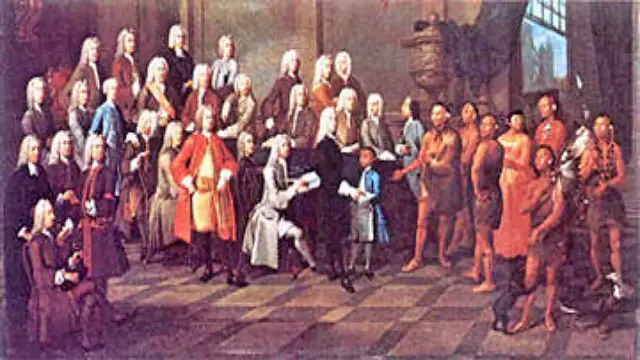
Before diving into treaties, you need to know who the Haudenosaunee actually were — because this matters enormously.
The Haudenosaunee, also known as the Iroquois Confederacy, are a historically dominant and influential group of Indigenous peoples in Northeastern America, consisting of Six Nations: the Mohawk, Oneida, Onondaga, Cayuga, Seneca, and Tuscarora.
Their name means “People of the Longhouse” — a reference both to their traditional dwellings and to their political structure. Picture a longhouse as a metaphor: multiple families, each with their own fire, living under one shared roof. That’s essentially how their confederacy worked.
Guided by the Great Law of Peace — their own constitution — this league came to jointly govern, while recognizing the sovereignty of each nation. This wasn’t a loose arrangement. At the heart of the Haudenosaunee system was the “Great Council,” composed of representatives from each member nation. These representatives, or sachems, deliberated and made decisions by striving for consensus.
Here’s something that rarely gets the attention it deserves: The Senate recognized the influence of the Haudenosaunee Confederacy on the construction of the U.S. Constitution in a resolution read on September 16, 1987, noting that “the original framers of the Constitution, including most notably George Washington and Benjamin Franklin, are known to have greatly admired the concepts, principles and governmental practices of the Six Nations.”
A democracy that inspired another democracy. When the British came to negotiate, they weren’t dealing with scattered tribes. They were dealing with a sophisticated, centuries-old political institution.
Before the British: The Dutch and the First Chains

The story of the Covenant Chain actually starts with the Dutch. Not the British.
Around 1613, two Dutch traders made their way up the Hudson River and met Mohawk representatives of the Haudenosaunee south of present-day Albany, NY. The Haudenosaunee saw a need to define their relationship with the newcomers, and this agreement — according to Onondaga oral history — contained the essential elements of all subsequent treaties.
That first agreement was captured in the Two Row Wampum, or Guswénta. This belt, originating from a 1613 agreement between the Haudenosaunee and Dutch settlers, depicted two parallel rows of purple beads representing the separate vessels of Indigenous and European peoples traveling side by side in mutual peace and non-interference.
Think of it as two boats on the same river — a European ship and a Haudenosaunee canoe — moving in the same direction, neither steering the other. The chain bound the ship and the canoe together, and both nations agreed to call this the Silver Covenant Chain of Friendship.
The metaphor of a chain evolved over time too. First there was a rope of bark fibers — a relatively weak initial alliance. Then came an iron chain, a synthesis of Indian and European elements. And eventually came the Silver Covenant Chain, chosen because silver resists rusting, yet requires polishing to retain its luster.
Each upgrade in material reflected an upgrade in commitment. That’s not accidental. The Haudenosaunee were precise, intentional diplomats.

1664: The British Take Over
Then the British showed up and changed the equation.
After the English defeated the Dutch in 1664, they turned their attention to ensuring peace with the influential Haudenosaunee. The English wanted to solidify their friendship to ensure that lucrative trade would continue.
From 1664 to 1667, several treaty agreements were made whereby they became political allies, trading partners, and agreed to resolve any difficulties using the Good Mind — the Haudenosaunee principle of thoughtful, compassionate decision-making.
The “Good Mind” isn’t just a nice phrase. It reflects a whole philosophy — the idea that disputes should be resolved through reason and empathy, not force. The Haudenosaunee brought this concept to every council fire. The British, at least initially, came willing to learn.
To maintain the relationship, the English had to become fluent in Haudenosaunee diplomacy. They began to use the metaphoric language and embodied gestures of treaty diplomacy that the Haudenosaunee used. By following Indigenous treaty protocol at regular Councils, they signaled their agreement that treaties are not static — both parties committed to ensuring the best outcome for each other.
That’s a remarkable concession. An empire learning the protocols of the people it was settling among.
1677: The Silver Covenant Chain Is Born
The moment the alliance truly crystallized came in 1677. The first mention of the Silver Covenant Chain is 1677. Sir Edmund Andros, the English governor of New York, formalized the relationship at Albany. This became the foundation that all future councils would reference.
Why silver specifically? While iron links would rust and break, silver can be polished and renewed. This became known as the Silver Covenant Chain, and it was intended to be polished on a regular basis as a way of symbolically renewing the covenant between both parties.
That’s a beautiful idea — and a demanding one. Keeping the chain “bright” required work. Regular councils. Gift exchanges. Speeches. Wampum presentations. The relationship wasn’t a document you signed and forgot. It was a living practice.
“Polishing” entailed speeches, wampum exchanges, and reaffirmations of prior treaties to avert “tarnish” from neglect, disputes, or external pressures.
When the chain wasn’t polished — when meetings were skipped, grievances ignored, promises broken — Haudenosaunee leaders said so plainly. Chief Hendrick of the Mohawks is recorded speaking his bitterness to Governor George Clinton and the provincial council of New York in 1753: “Brother, when we came here to relate our Grievances about our Lands, we expected to have something done for us, and we have told you that the Covenant Chain of our Forefathers was like to be broken.”
When a leader of that stature says the chain is “like to be broken,” that’s a diplomatic warning shot. And the British mostly understood what it meant.
What the Chain actually did
Think of the Covenant Chain as a diplomatic operating system — not one agreement, but a whole framework for managing a relationship.
The English and Iroquois councils and subsequent treaties were based on supporting peace and stability to preserve trade. They talked about where colonists could settle, tried to stop violence between colonists and tribes, and even among the tribes themselves.
But it went deeper than commerce. At periodic Council meetings, British and Haudenosaunee representatives held each other to account, exacted justice for transgressions, and demanded loyalty and fairness. They negotiated trade, set the prices of trade goods, and made requests for military assistance from each other. The British promised to investigate and settle compensation for murders.
Compensation for murders. That’s a strikingly modern concept — accountability embedded into treaty language. The Haudenosaunee held agreements to be binding under the authority of a Supreme Being, and not simply bonds of a political or economic nature. This belief continues today.
The councils were held mostly in Albany, New York — a city that became the beating heart of this diplomatic system. The New York governor would oversee these meetings, as the covenant started there. Historian Daniel Richter noted that “Iroquois and New Yorkers played dominant but seldom dictatorial roles” in keeping these treaties strong.

Dominant but never dictatorial. That’s the balance both sides were trying to hold.
The 1710 Visit to Queen Anne
Perhaps the most dramatic single moment in the Covenant Chain’s history came when four Haudenosaunee leaders sailed to London.
The 1710 visit by four Haudenosaunee leaders to Queen Anne is perhaps the most famous diplomatic visit by any Indian nation to any capital of Europe, the United States, or Canada. Called by their hosts the “Four Kings,” they were in fact simply the ambassadors of their people. Their leader was Te Ye Neen Ho Ga Prow of the Wolf Clan.
They brought with them “belts of wampum” and gave them to a monarch whom they considered to be an ally, a friend, and — most importantly — their equal.
Equal. Not subjects. Not petitioners. Equals. This was the whole philosophy of the Covenant Chain in action — two nations, two vessels, traveling side by side on the same river. When the Haudenosaunee ambassadors walked into Queen Anne’s court, they weren’t bowing to an empire. They were meeting a treaty partner.
The visit captivated London. It was covered in newspapers and inspired artistic representations. But its deeper purpose was diplomatic — to strengthen the Silver Covenant Chain at the highest possible level and to press for British military support against French expansion.
Sir William Johnson: The Chain’s Greatest Steward
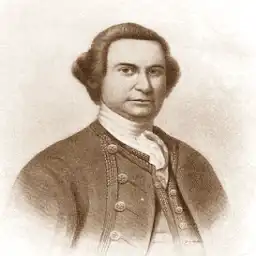
Throughout the mid-18th century, one man became the primary keeper of the Covenant Chain on the British side.
Sir William Johnson became a key figure in charge of Native American affairs for the Northern Department, based in central New York. He had a lot of influence and was later knighted for his work.
Johnson was extraordinary because he actually understood Haudenosaunee protocol. He spoke Mohawk. He participated in ceremonies. He didn’t just attend council fires — he lived within the diplomatic world the Haudenosaunee had built. His councils at Johnson Hall and Fort Niagara became legendary, carefully conducted according to Indigenous protocols that the British had agreed, generations earlier, to respect.
In diplomatic rhetoric, the three links of the chain represented foundational principles — peace, friendship, and unity — which demanded active upkeep through biennial or ad hoc renewal ceremonies at sites like Albany or Onondaga.
Johnson understood that skipping ceremonies wasn’t just disrespectful. It was dangerous. When the chain tarnished, wars followed.
When the Chain Began to Break
After Johnson’s death in 1774 — and with the American Revolution erupting almost immediately after — the Covenant Chain faced its biggest stress test.
The Revolution split the Haudenosaunee Confederacy. The Mohawk, Cayuga, Onondaga, and Seneca largely supported the British. The Oneida and Tuscarora sided with the American colonists. For a confederacy that had maintained unity for centuries, it was a devastating rupture.
As British settlement proceeded in New England, fraudulent land cessions and uses of land that were not welcome by the Haudenosaunee became a serious issue. The chain was tarnishing — and this time, no one was doing the polishing.
After the Revolution, the new American government showed no interest in honoring the Covenant Chain. They had just fought against Britain, after all. The careful diplomatic infrastructure of a century was effectively abandoned. Haudenosaunee nations found themselves squeezed between a British Crown that had moved on and an American government that had its own land agenda.
The Chain Today: Surprisingly Alive
Here’s what most history textbooks miss entirely — the Covenant Chain didn’t die. It’s still active in courts.
A Canadian judge ruled that two Mohawks had the right to freely trade tobacco because of their own Indigenous legal systems, persuaded by arguments that they held such rights as a result of ten treaties negotiated between 1664 and 1760 which constituted a Covenant Chain, or “oral meta-treaty.” The judge found that the Covenant Chain was a non-extinct Treaty under Section 35(1) of the Canadian Constitution.

Non-extinct. That’s legal language for still valid and enforceable.
The Attorney General of Canada objected, arguing that the Covenant Chain alliance was something symbolic rather than a true alliance. But the Court’s findings could lead to the recognition of new treaty rights based on oral tradition.
Courts today are increasingly willing to take up the challenge of rediscovering the Covenant Chain. A general legal history of this unique relationship will be important. That observation comes from a Queen’s Law scholar whose research on the Covenant Chain has been cited by the Supreme Court of Canada.
The chain is being “polished” again — not in Albany, but in courtrooms.
The Wampum Belt: More Than a Decoration
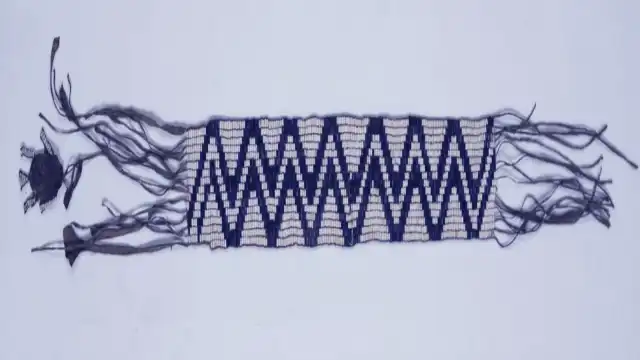
You can’t understand the Covenant Chain without understanding wampum. A lot of people think wampum was just beads used as currency. That misses the point entirely.
Wampum belts are living embodiments of the promises made and inter-generational kinship relationships established within treaties. Treaties are not merely historical documents or legal agreements, but foundational diplomatic artifacts that continue to shape relationships between Indigenous peoples and settler societies.
The belt is the treaty. Not a symbol of a treaty — the treaty itself. When Haudenosaunee diplomats exchanged wampum at councils, they were transferring memory, obligation, and relationship in physical form. Burning the belt would mean destroying the agreement. Accepting the belt meant accepting its terms. The British learned to read wampum and respond in kind.
The links on the chain were described as silver, a metal which tarnishes if not regularly polished. For over a hundred years, both nations regularly met to retell the story of the Covenant Chain and reaffirm their relationship of interdependence and independence.
Retelling the story. That’s significant. The Haudenosaunee didn’t just sign documents and assume the relationship would maintain itself. They gathered — every few years, sometimes every year — and spoke the covenant back into existence together.
That’s a profoundly different understanding of what a treaty is.
Remembering history
The Covenant Chain isn’t just a historical curiosity. It represents an entirely different model for how nations can relate to each other — one built on ongoing relationship rather than one-time transactions.
For Indigenous peoples including the Haudenosaunee, treaties are “living” documents — process-oriented, requiring renewal, related to sacred dimensions, drawing upon centuries of tradition around alliances and trade practiced long before contact with Europeans.
Compare that to how many governments treat Indigenous treaties today — as historical artifacts to be interpreted narrowly, litigated around, and minimized. The Haudenosaunee would say those agreements were never finished. They were never supposed to be. They required tending.
The overarching goal of modern “polishing the chain” research is to activate a long-neglected treaty obligation, helping Indigenous and non-Indigenous people learn the history of local agreements between Indigenous and settler peoples — an important first step toward rectifying centuries of neglect.
Whether you’re studying Indigenous history, Canadian constitutional law, colonial diplomacy, or simply trying to understand how North America became what it is — the Covenant Chain belongs in that story. It was sophisticated. It was reciprocal. And it worked, for a very long time, better than most alternatives tried since.
The chain is still there. The question is whether anyone’s willing to pick it up and polish it again.
If this history surprised you, share it — these are the stories that tend to get left out of standard curricula, and they shouldn’t be. Explore the Onondaga Nation’s own account of the Covenant Chain’s symbolism, or the University of Hull’s Brightening the Covenant Chain project for current scholarship on this living diplomatic legacy.

