

You’ve seen the images. You’ve heard the stories.
A construction crew in Ohio, a farmer in Ireland, a team of archaeologists in Greece… they all find a 15-foot human skeleton. Photos are taken. The local museum is called. And then, poof.
The Smithsonian shows up in a black van, confiscates the bones, and they are never seen again.
It’s one of the internets most persistent, most tantalizing stories: The great giant cover-up.
It feels true, doesn’t it? It feels like something a powerful, stuffy institution would do to “protect the narrative.”
But here’s the problam: when you try to find the original source for any of these stories, you hit a wall. The photos are proven fakes (often from early Photoshop contests). The newspaper clippings are vague and unverified.
So, are giants a total lie?
No. The stories are real. The myths are universal. And the reason for those myths is, frankly, more incredible than any cover-up. Our ancestors did find the bones of giants.
They just weren’t the giants we think.
The Myth You’ve Heard: The Great Smithsonian “Cover-Up”
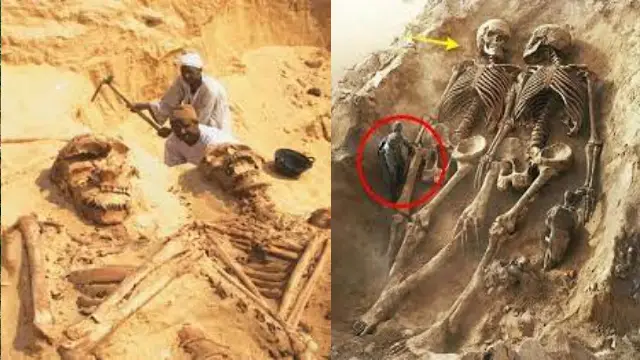
Let’s tackle the elephant in the room. This story is everywhere.
The Claim: A U.S. Supreme Court ruling in 2014 (or 2015, or 2017…) forced the Smithsonian Institution to release classified documents proving they had systematically destroyed thousands of giant human skeletons in the early 1900s to protect Darwin’s theory of evolution.
The Reality: This story is 100% false. It’s a complete fabrication.
It originated on a satire website called World News Daily Report, a site that openly states its content is fictional. But the story was so good, so perfectly aligned with what people wanted to be true, that it escaped containment and became “fact.”
There was no Supreme Court case. There are no documents.
fact-checkers like Reuters and USA Today have thoroughly debunked this claim. The Smithsonian itself has a page on its website flatly denying it.
So, why did this hoax work so well?
Because the real story isn’t that far off.
Why Does Every Ancient Culture Have Giant Myths?
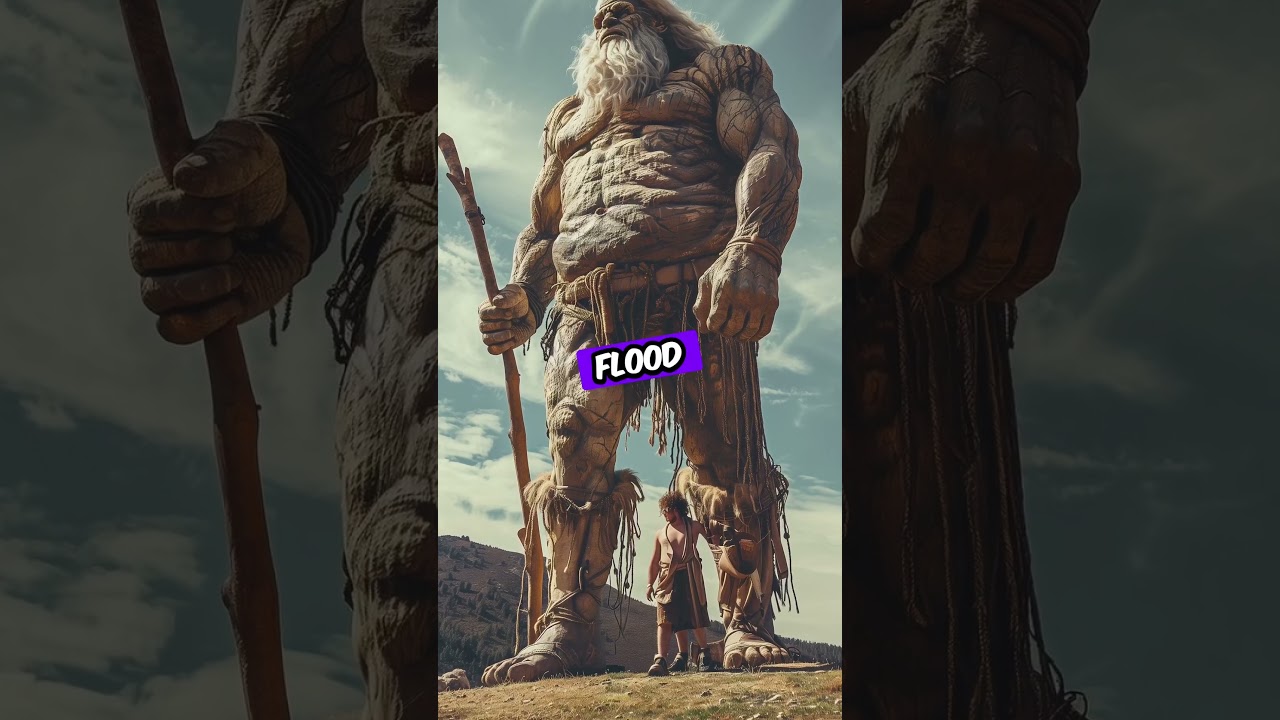
If the cover-up is fake, why is the idea of a lost race of giants universal? You can’t find an ancient culture that doesn’t have them.
- The Nephilim: In the Hebrew Bible and other texts like the Book of Enoch, these were the “sons of God” who bred with human women, creating a race of mighty, and often wicked, giants.
- The Titans: In Greek mythology, the Titans were the first gods. They were primal forces of nature, huge and chaotic, eventually overthrown by their children, the Olympians.
- The Jötunn: For the Norse, the Jötunn (or “Frost Giants”) were the ancient enemies of the Aesir gods (like Odin and Thor). They represented the untamed, dangerous wilderness.
- The Quinametzin: Aztec mythology holds that the earth was previously inhabited by a race of giants called the Quinametzin. It was said they built the ancient, massive city of Teotihuacan.
Why the repeat? Are these all just “stories”? Or were they all describing something they saw?
The “Skeletons” They Actually Found
Here’s the “aha!” moment. This is the part that changes everything.
Our ancestors were finding giant skeletons. They just didn’t have the science to know what they were looking at.
1. The Cyclops and the Mammoth Skull
Let’s go to ancient Greece. The most famous giant myth of all? The Cyclops, a one-eyed giant who lived in a cave.
Now, look at this.
That is the skull of a dwarf mammoth (or elephant), which lived on Mediterranean islands like Crete and Sicily.
What do you see?
If you’re an ancient Greek sailor and you find this skull washed up on a beach, you don’t know what a “nasal cavity” is. You see a massive, 10-foot-tall being… with one giant eye socket right in the middle of its head.
What else could it be? It’s a Cyclops.
Historians and paleontologists, like Adrienne Mayor in her book The First Fossil Hunters, argue this is exactly what happened. The ancient Greeks weren’t just making up monsters; they were early paleontologists doing their best to explain the incredible evidence they found.
2. Dragons, Giants, and Dinosaurs
It’s the same story everywhere else.
- China: For centuries, Chinese scholars documented the discovery of “dragon bones.” Today, we know these bones—found in the same regions—belong to dinosaurs.
- Medieval Europe: A farmer plowing his field unearths a femur (thigh bone) that is six feet long. It’s obviously a human bone, just… bigger. He hasn’t heard of a Mastodon or a Woolly Rhino. He’s heard of the “Nephilim” from his priest. He concludes he has found the remains of a giant from before Noah’s Flood.
This isn’t a “cover-up.” It’s a logical (but incorrect) conclusion based on the available data. They found bones of massive, extinct megafauna and, with no concept of deep time or evolution, slotted them into their existing mythologies.
The Hoax That Fooled a Nation: The Cardiff Giant
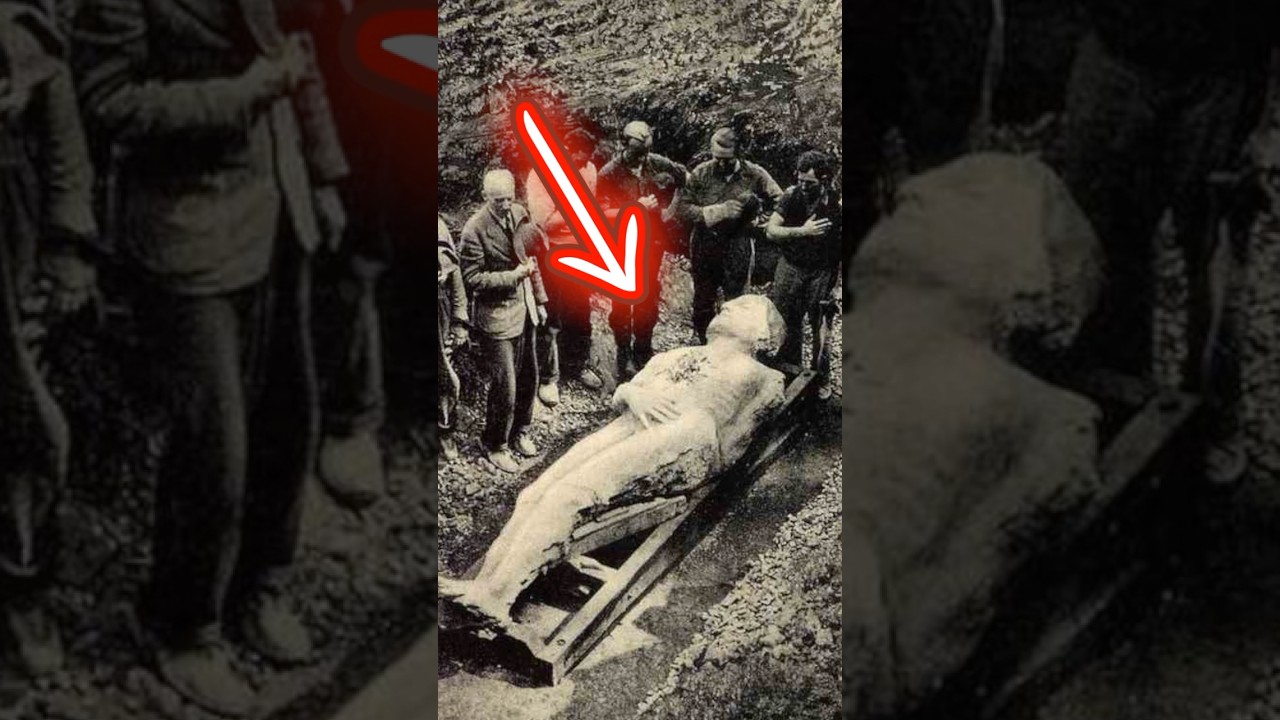
Okay, so ancient people mistook mammoth bones for giants. That’s understandable.
But what about the 1900s? What about those “newspaper clippings” from America?
This is where the story gets even more human. It stops being about “mistakes” and starts being about hoaxes.
The most famous “giant” ever “found” in America was the Cardiff Giant. In 1869, in Cardiff, New York, workers “discovered” the body of a 10-foot-tall “petrified man” while digging a well.
It became an instant sensation. It was the viral story of its day.
Thousands of people paid 50 cents (a ton of money then) to see it. Scientists from Yale debated it. Religious leaders proclaimed it was proof of the giants in the Bible.
It was all a lie.
It was the brainchild of a guy named George Hull, an atheist tobacconist. He got into an argument with a preacher about biblical giants and decided to “prove” how gullible people were.
- He quarried a 10-foot block of gypsum in Iowa.
- He shipped it to Chicago, where a stonecutter sculpted it into a “man,” complete with pores and stubble.
- He “aged” it with acid and staining.
- He shipped it to his cousin’s farm in Cardiff and buried it.
- A year later, he “hired” workers to dig a well, and… discovery.
The whole thing was a prank to mock literalist interpretations of the Bible. But it took on a life of its own. Even after Hull confessed, people still paid to see it. The great showman P.T. Barnum even made his own fake-of-the-fake Cardiff Giant and claimed his was the real one!
The Cardiff Giant (which you can still see in a museum in Cooperstown, NY) is the perfect American parable. It proves that sometimes, we don’t find mysteries. We make them because we want to believe.
But What About Real Giants? (The Science)
This is the last piece of the puzzle. Does our modern science allow for “giants”?

Yes. Just not a race of them.
We have a medical condition called gigantism (in children) or acromegaly (in adults). Both are almost always caused by a benign tumor on the pituitary gland, which causes the body to overproduce growth hormone.
This creates individuals of incredible size.

- Robert Wadlow (1918-1940): Known as the “Giant of Illinois,” Wadlow is the tallest human in verifiable recorded history. He stood 8 feet, 11.1 inches tall and was still growing when he died.
- André the Giant (1946-1993): The beloved wrestler and actor stood 7 feet, 4 inches tall due to acromegaly.
These real giants often lived difficult, painful lives. Their hearts and skeletons weren’t designed to support such a massive frame. Wadlow, for instance, needed leg braces to walk and had little feeling in his feet.
This is the scientific reality of giants. It’s not a mythical, powerful race. It’s a rare, difficult, and very human medical condition.
Why We Need to Believe in Giants
So, we’ve come full circle.
- The big Smithsonian “cover-up” is a hoax based on a satire article.
- Ancient giant myths are universal…
- …Because our ancestors were really finding the bones of mammoths and dinosaurs and logically (but wrongly) identifying them.
- Modern giant “discoveries” are often hoaxes (like the Cardiff Giant) preying on our will to believe.
- Real giants are individuals with rare medical conditions, not a lost race.
So, why do we still believe? Why do we want this to be true so badly?
Because giants are a powerful metaphor.
They represent a world bigger than our own. A world of magic and mystery. They represent the “chaos” of nature that our ancestors fought to tame. They represent a “golden age” when the world was new and titans walked the earth.
In our clean, predictable, scientific world, we crave the idea that a farmer could stick a shovel in the ground and find something that rewrites history.
The story of “Ancient Giants” isn’t really about bones. It’s about us. It’s about our search for wonder, our suspicion of authority, and our deep, deep hope that the world is more magical than we’re told.
And that’s a mystery that will never die.
What Do You Think?
You’ve seen the evidence from mammoth skulls to modern hoaxes.
- Why do you think the “giant” myth is so powerful, even today?
- Have you ever heard a local “giant” story from your own hometown?
Drop your theories and stories in the comments below. Let’s dig into this.

