

You live here. You walk on it, breathe its air, and swim in its water. You’d think, after all this time, we’d have a pretty good handle on planet Earth.
And you’d be wrong.
Our planet is a chaotic, bizarre, and endlessly surprising place. It’s a rock that’s been fine-tuning its brand of “weird” for 4.5 billion years. We’re just the occupants who think we run the show.
But the truth is, we’re living in a natural funhouse where the rules of common sense don’t always apply. If someone told you these facts at a party, you’d call them a liar. But every single one is 100% true, backed by solid science.
Our Wild Ride Through Space (and Time)

We all feel perfectly still right now, right? Maybe you’re sitting on your couch, sipping coffee. That feeling of stillness is the biggest illusion of all.
1. You’re spinning at 1,000+ mph.
Right now, if you’re near the equator, the Earth’s rotation is spinning you at over 1,000 miles per hour (about 1,670 km/h). Why don’t you fly off? In a word: gravity. You, the atmosphere, and the oceans are all held tight, moving with the planet, so you don’t feel a thing.
2. You’re also hurtling at 67,000 mph.
As if spinning wasn’t enough, the entire planet is slingshotting around the sun at a blistering 67,000 miles per hour (or 30 km/s). That’s your orbital speed. We are all, quite literally, astronauts on a giant biological spaceship.
3. A day isn’t quite 24 hours.
We’re so obsessed with our 24-hour clock, but the Earth doesn’t really care. It takes 23 hours, 56 minutes, and 4 seconds for the planet to complete one full rotation on its axis (a sidereal day). The 24-hour “solar day” is just the average time it takes for the sun to return to the same spot in the sky, and it’s what we’ve based our lives around.
4. The days are (slowly) getting longer.
The moon is slowly, slowly drifting away from Earth. This cosmic separation causes tidal friction, which acts as a brake on Earth’s rotation. The result? Our days are getting longer by about 1.7 milliseconds every century, as confirmed by NASA. When the dinosaurs were alive, a day was only about 22 hours long.
The Planet Itself is Weirder Than You Think
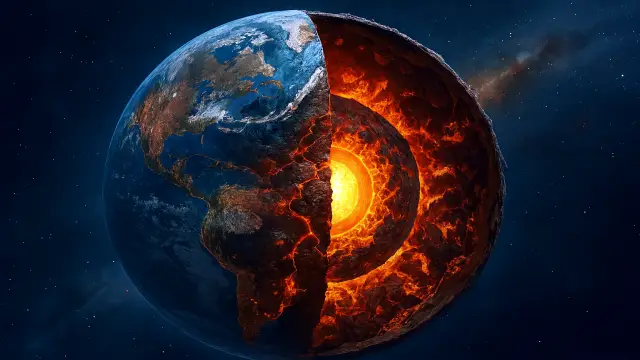
Forget the perfect blue marble from photos. The planet’s guts and bones are stranger than any sci-fi novel.
5. Earth is “fat” and lumpy.
We’re always told the Earth is a sphere. It’s not. That insane rotational speed (Fact #1) causes the planet to bulge at the equator. It’s an “oblate spheroid,” meaning it’s fat around the middle. It’s also lumpy, with gravity varying slightly all over the surface due to uneven mass distribution (mountains, ocean trenches, etc.).

6. The magnetic poles are flipping.
North isn’t always “north.” Earth’s magnetic field, generated by its swirling iron core, has a known habit of completely reversing its polarity. The North Pole becomes the South Pole, and vice-versa. It doesn’t happen on a neat schedule, but the last major reversal was 780,000 years ago. Geologists at the USGS confirm it’s not a matter of if, but when it happens again.
7. The core has enough gold to coat the planet.
Good luck getting to it. Geologists estimate that 99% of Earth’s gold (and other precious metals) sank to the core during the planet’s formation. There’s enough of it down there to cover the entire surface of the Earth in a 1.5-foot-thick layer.
8. We’re building a new supercontinent.
Remember Pangaea from 7th-grade science? The giant “one-world” continent? Well, the tectonic plates are still moving. Geologists predict that in about 200-250 million years, the continents will smash back together to form a new supercontinent. The most likely candidate has already been named: Amasia, formed as the Americas and Asia collide.
Unbelievable Places That Actually Exist
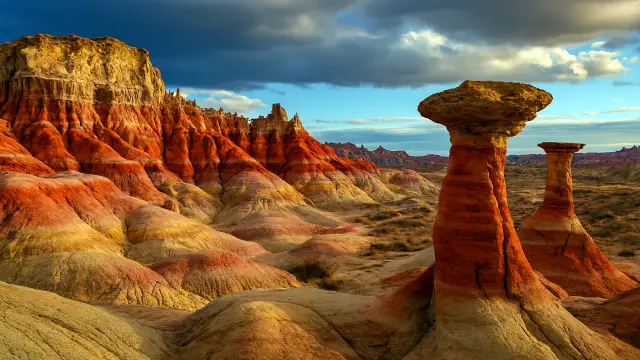
Some places on Earth look like a set designer’s fever dream.
9. The “Door to Hell” is real.
In Turkmenistan, there’s a 230-foot-wide crater that has been on fire continuously since 1971. It’s the Darvaza gas crater. Soviet geologists, fearing a methane gas buildup, reportedly set it on fire, thinking it would burn off in a few weeks. It’s still burning more than 50 years later.
10. Antarctica has a “Blood Falls.”
It’s exactly what it sounds like. A five-story, blood-red waterfall pours out of the Taylor Glacier. Is it blood? No, but it’s just as weird. It’s an ancient, trapped reservoir of ultra-salty water rich in iron. When this water leaks out and hits the air for the first time in a million years, the iron oxidizes (rusts), turning the water a deep, dark red. It’s a window into a sub-glacial ecosystem that exists with no light or oxygen.
11. Rocks in Death Valley move on their own.
The “Sailing Stones” of Racetrack Playa were a mystery for decades. Rocks, some weighing hundreds of pounds, would leave long tracks in the dried mud, with no one around to see them move. In 2014, scientists finally cracked it. In winter, thin, floating sheets of ice form. Wind then pushes these massive ice sheets, which plow the rocks in front of them.
12. There are “Fairy Circles” in the desert.
In the grasslands of Namibia, there are millions of circular, barren patches of red soil, each surrounded by a ring of grass. They look like a disease, or maybe giant polka dots. The local Himba people believed they were the footprints of gods. The real cause is still hotly debated by scientists, with theories ranging from thirsty sand termites to complex patterns of plant self-organization.
13. “Rainbow Eucalyptus” trees are not a painting.
This is a real tree, native to the Philippines and Indonesia. As it ages, it sheds patches of its bark at different times, revealing the bright green inner bark. This new bark then darkens and matures into different colors—blue, purple, orange, and maroon—creating a living, vertical, multi-colored abstract painting.

The Terrifying, Beautiful Deep
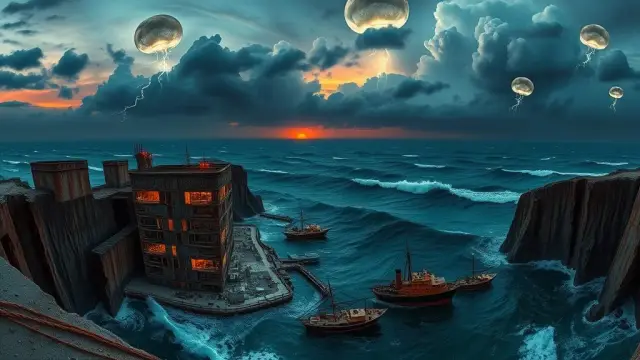
We are a water planet, but we are terrified of our own oceans. We should be.
14. Everest would fit in the Mariana Trench… with a mile to spare.
It’s hard to grasp the scale of the deep ocean. Mount Everest, the highest point on Earth, stands at 8,848 meters (29,032 ft). The Challenger Deep, the deepest part of the Mariana Trench, is 10,935 meters (35,876 ft) down, according to NOAA. If you could (hypothetically) drop Everest into the trench, its peak would still be more than 2,000 meters (1.2 miles) underwater.
15. We have seen less than 0.001% of the deep-sea floor.
This is the big one. According to a 2024 study in Science Advances, while we have mapped about 26% of the seafloor with sonar, the amount we have visually explored with cameras or submersibles is a microscopically tiny 0.001%. We have better high-resolution maps of Mars and the Moon than we do of our own planet’s ocean floor. Think about that.
16. Most of Earth’s freshwater is frozen.
You think “freshwater” and you picture lakes and rivers. But that’s almost nothing. The USGS states that over 68% of all freshwater on Earth is locked up in glaciers and ice caps. Most of the rest is groundwater, deep underground. All the rivers, lakes, and swamps in the world? They make up less than 1.2% of the world’s surface freshwater.
The Sky Is Putting on a Show
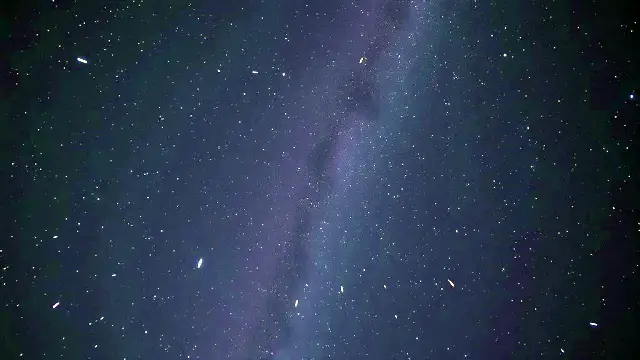
Don’t just look down. The sky above you is a physics-defying light show.
17. The “Everlasting Storm” is a real place.
Over Lake Maracaibo in Venezuela, a unique weather phenomenon occurs: the Catatumbo Lightning. This “storm” happens up to 260 nights a year, 10 hours a day, with as many as 28 lightning flashes per minute. It’s a near-permanent, silent (from a distance) electrical storm.
18. Volcanoes create their own lightning.
As if a giant mountain exploding with lava wasn’t metal enough, “dirty thunderstorms” (or volcanic lightning) are a real thing. The violent eruption generates incredible friction and static charges within the ash plume, leading to spectacular, terrifying lightning storms inside the eruption cloud.
19. “Ghost Rain” (Virga) never lands.
Have you ever seen dark streaks of rain falling from a cloud that just… disappear? That’s Virga. It’s precipitation that falls from a cloud but evaporates or sublimes in the dry air below it before it can ever reach the ground.
20. There are “Jellyfish Sprites” above the clouds.
This sounds like total fantasy. It’s not. “Sprites” are massive, bizarre electrical discharges that happen above thunderstorms, in the upper atmosphere. They are a form of cold plasma and can be 30 miles (50 km) tall, often taking on shapes that look like giant, red, glowing jellyfish.
21. Lightning strikes from the ground up.

Your eyes lie to you. While the initial “leader” of a lightning bolt comes down from the cloud, the bright, visible flash you see—the return stroke—is a massive surge of current traveling from the ground up to the cloud, as confirmed by the NSSL/NOAA.
22. “Fire Rainbows” are neither.
They aren’t fire. They aren’t rainbows. The stunningly colored “fire rainbow” is a “circumhorizontal arc.” It happens when sunlight, at a very specific angle, passes through high-altitude, plate-shaped ice crystals in cirrus clouds.
23. Hurricanes can “dance.”
When two (or more) cyclones get close to each other, they can be drawn into a “dance” around a common center point. This is the Fujiwhara Effect. Depending on their strength, they can just circle each other before spinning away, or the larger storm can absorb the smaller one.
Life… Finds a Way (In Bizarre Forms)
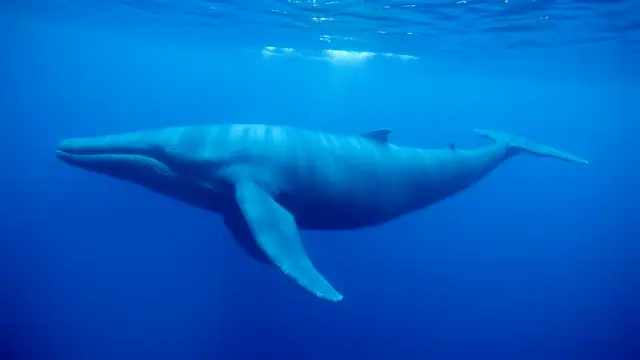
You think a blue whale is big? That’s cute.
24. The largest living thing is a 3.5-square-mile fungus.
Not a whale. Not a sequoia. The largest known organism by area on Earth is a fungus. Armillaria ostoyae, or the “Humongous Fungus” in Oregon’s Malheur National Forest, covers 2,385 acres (3.5 square miles). It’s one single, genetically-identical organism, mostly living underground as a network of black-shoelace-like “rhizomorphs,” slowly killing trees.
25. The oldest living thing is a giant, 14,000-year-old “forest of one.”
Meet “Pando.” In Utah, there’s a 106-acre colony of quaking aspen trees that looks like a normal forest. Except it’s not. It’s one single organism, with one massive underground root system connecting all 40,000+ “trees.” Pando is genetically identical and estimated to be as old as 14,000 years, though its true age is hard to pin down. It’s a literal living fossil.
26. Alien ice-spikes grow from the ground.
In the high, dry Andes mountains, you can find fields of “Penitentes.” These are tall, thin blades of hardened snow and ice, some up to 16 feet (5 meters) tall, that point directly at the sun. They look like a fortress of ice spikes or a field of ghostly figures. They’re formed by a rare combination of strong sun and dry air that causes snow to sublimate (turn from solid to gas) in a weird, uneven pattern.
So, What’s the Takeaway?
The world is not the simple, predictable place we try to make it. It’s a living, breathing, chaotic system that is more complex and beautiful than our brains can often handle.
We live on a lumpy, gold-filled rock that’s spinning at 1,000 mph, covered in giant fungi, ghost rain, and oceans we’ve barely looked at.
The more we learn, the weirder it gets. And isn’t that fantastic?
Which of these facts broke your brain? Do you have an even stranger, 100% true fact I missed?
Drop it in the comments below! Let’s see how weird this planet can get.

