

Project Kugelblitz: Can Lasers Really Create a Black Hole?
This sounds like a movie plot, right? A team of scientists in a secret lab, a giant laser array, a countdown… and poof, a man-made black hole. It’s the perfect sci-fi doomsday device.
But what if I told you this isn’t just science fiction?
The idea of creating a black hole from pure energy specifically, from light is a very real concept in theoretical physics. It even has a badass German name: Kugelblitz, or “ball lightning.”
The question isn’t just “can we?” The question is “why would we?” And the answer isn’t a weapon. It’s an engine.
The Kugelblitz is the ultimate “what if” in physics, one that sits at the crossroads of Einstein’s relativity and Hawking’s quantum mechanics. It’s a concept that forces us to stare straight into the “we don’t know” void.
let’s fire up the theoretical lasers. Could we actually build one? And what would happen if we did?
How to Build a Black Hole (The Standard Model)

First, let’s get the basics straight. Forget what you see in movies.
A black hole is not a cosmic vacuum cleaner. It’s an object of extreme density. It is, simply, a ton of mass crushed into a tiny amount of space.
Every object, including you, has a “point of no return” for density. It’s called the Schwarzschild radius.
- Your Schwarzschild radius is smaller than a proton.
- Earth’s Schwarzschild radius is about the size of a peanut (9 mm). If you could crush all 6,000,000,000,000,000,000,000,000 kg of our planet into a peanut, then it would become a black hole.
- The Sun’s Schwarzschild radius is about 3 kilometers (1.8 miles).
The recipe for a black hole is simple, but the ingredients are hard to get:
- Take a massive amount of matter.
- Crush it past its Schwarzschild radius.
- Its own gravity takes over, and it collapses in on itself forever.
That’s the “normal” way, the way stars do it. But there’s a cheat code.
The Einstein “Cheat Code”: E=mc²
This is the most famous equation on our planet as we know, and it’s the key to everything.
$E=mc^2$
Energy equals mass times the speed of light squared.
We usually read this from left to right: energy is mass times… blah, blah. But let’s read it backward.
Mass is just… energy.
It’s congealed, concentrated, “lazy” energy. The only difference between the matter that makes you and the light from your desk lamp is that the matter is “stuck” and the light is “moving.”
This was the genius realization of physicists like John Archibald Wheeler, the same man who famously coined the term “black hole” in 1967. Years earlier, in 1955, he proposed the Kugelblitz.

He asked:
If gravity pulls on mass… and mass is just energy… then gravity must pull on energy, too.
So, if you can make a black hole by crushing mass…
…can you make a black hole by concentrating energy?
The answer from general relativity is a resounding yes.
A Kugelblitz is a black hole made from pure energy rather than matter. If you can focus enough light and radiation into a small enough spot a spot so dense with energy that it reaches its own Schwarzschild radius—you will warp spacetime and create an event horizon.
You would, quite literally, forge a black hole from a beam of light.
The “Project Kugelblitz” Blueprint: Lasers, and Lots of ‘Em
so it’s theoretically possible. How would we do it?
You can’t just use a giant magnifying glass. You need to concentrate an unbelievable amount of energy. The only tool we have that can even begin to do this is a laser.
But it’s not as simple as one big “Death Star” beam. A single beam of light has momentum; it’s going somewhere. To get the energy to “stick” in one place, you’d need a spherical array of lasers, all firing inward, perfectly timed, so their energies and momentums cancel out at a single, microscopic point.
It’s the ultimate “clap.”
But what kind of laser? Not the red pointer you use to tease your cat. We’d need the highest-energy light in the universe: gamma rays.
Why? Because you can’t focus a beam of light into a spot smaller than its own wavelength.
- Visible light has a relatively long wavelength, so you can’t focus it tight enough.
- Gamma rays have the shortest wavelengths, meaning you could (theoretically) focus them down to an incredibly tiny point.
So, the blueprint for “Project Kugelblitz” is a massive, spherical shell of gamma-ray lasers (grasers), all firing at once at a single point in the center.
Simple, right?
The Three “Small” Problems: Cosmic Energy, Quantum Foam, and No Lasers
This is where the dream smashes headfirst into the brick wall of reality. Building a Kugelblitz isn’t just hard. It’s so far beyond our abilities that it’s almost funny.
There are three main problems.
Problem 1: The Power Requirement Is… Cosmic.
The numbers here get stupid. They get cosmically stupid.
Remember $E=mc^2$? The ‘$c^2$’ part (the speed of light squared) is a huge number. It’s roughly $90,000,000,000,000,000$. This means it takes a staggering amount of energy to create even a tiny bit of mass.

Let’s do the math. To create a Kugelblitz with the mass of a single proton…
- …you would need the energy of a one-gigaton thermonuclear bomb. The largest bomb ever detonated, the Tsar Bomba, was “only” 50 megatons.
That’s just for a proton-mass black hole. What about something more “useful”?
- Physicists have calculated that to create a Kugelblitz “engine” (more on this in a sec), you’d need a black hole with a mass of around 600,000 tons.
- The energy required to create this? You’d need to capture the Sun’s entire energy output… for about 1/10th of a second.
So, to power our project, we’d need to build a Dyson Sphere (a hypothetical megastructure that encloses a star to capture its power) just to charge the “batteries” for a single “shot.”
Problem 2: The Focus Is Too Good.
This is the real mind-bender. Let’s say we have our Dyson Sphere. We have the energy. Now we have to focus it.
To make our 600,000-ton Kugelblitz, we’d need to focus all that solar-level energy into a space just one attometer across. That’s 10⁻¹⁸ meters. It’s a thousand times smaller than a proton.
When you get this small, you crash into a place called the Planck Length (about 1.6 x 10⁻³⁵ meters).
What is the Planck Length?
It’s the “pixel size” of the universe.
It’s the scale at which our two best theories of the universe, General Relativity (for gravity) and Quantum Mechanics (for everything else), stop making sense. They flat-out break.
Physicists like John Wheeler theorized that at this scale, spacetime isn’t smooth. It’s a boiling, chaotic, bizarre mess of “quantum foam.” The very concepts of “here” and “there,” of “distance” and “time,” become meaningless.
You can’t just aim a laser at a point smaller than a proton. You’d be trying to hit a target in a universe where the concepts of “hit” and “target” no longer exist.
To even calculate what happens, we’d need a Theory of Everything (or Quantum Gravity), which we do not have.
Problem 3: We Don’t Have Gamma-Ray Lasers.
This one is almost a footnote, but it’s a big one. We can’t build the machine.
A gamma-ray laser, or “graser,” is still purely hypothetical. We can make gamma rays (nuclear reactions do it all the time), but we have no way to corral them, focus them, and make them “lase” (all move in one coherent beam). Building one is considered one of the holy grails of modern physics.
So, to recap: we can’t power it, we can’t focus it, and we can’t build the laser. Other than that, we’re golden.
The Big Question: Why Bother? The Ultimate Engine.
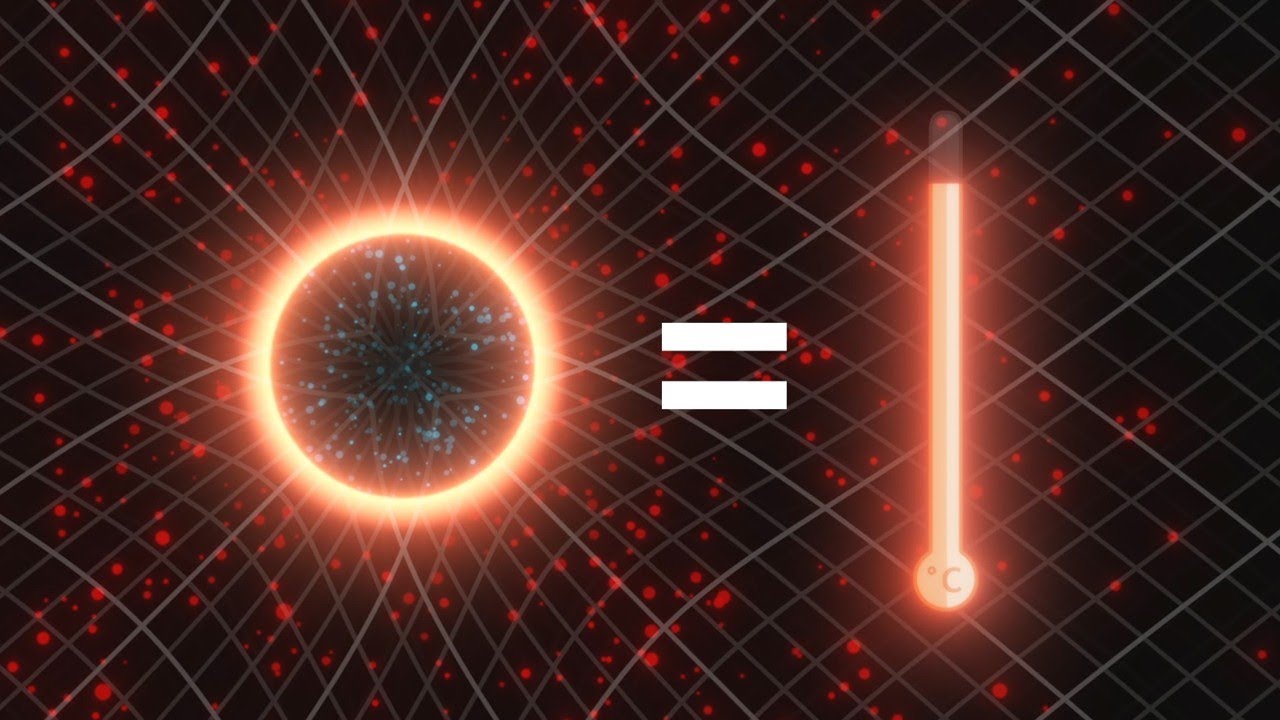
At this point, you’re thinking, “This is the dumbest idea ever. Why would anyone try to do this?”
Because of one man: Stephen Hawking.
Hawking’s most famous discovery, Hawking Radiation, is the key. He proved that black holes are not “forever.” They “evaporate.”
Here’s how it works:

- Empty space is full of “virtual particle” pairs that pop into existence and annihilate each other instantly.
- If this happens right at the edge of an event horizon, one particle falls in, and the other escapes.
- The escaping particle becomes “real” and flies off as radiation.
- To conserve energy, the black hole pays the price… by losing a tiny bit of its own mass.
Over eons, this process causes the black hole to “evaporate.” And here’s the kicker: the smaller the black hole, the hotter and faster it evaporates.
- A star-sized black hole will last for $10^{67}$ years (a “googol” years, an unimaginable timeframe).
- A 600,000-ton Kugelblitz, however, would be incredibly hot and would evaporate in a violent, high-energy explosion in about 3.5 years.
That’s the point.
A Kugelblitz isn’t a stable object. It’s a converter. It’s a machine for turning energy into matter (the Kugelblitz itself) and then back into different energy (Hawking radiation) with 100% efficiency.
You wouldn’t just make a Kugelblitz. You’d feed it.
The “Kugelblitz Drive” is a starship engine.
- You create a microscopic Kugelblitz at a focal point.
- It begins to evaporate, spitting out gamma rays and high-energy particles.
- You use a giant “Dyson Cap” (a parabolic mirror made of exotic, heat-proof material) to catch all that radiation and use it as thrust.
- You’d have to constantly feed it with more laser energy (or matter) to keep it from evaporating too fast.
This is the holy grail of propulsion. A regular rocket is pathetic. A nuclear fusion rocket is great (maybe 0.7% efficiency). A Kugelblitz Drive is 100% mass-to-energy conversion.
A ship with this engine wouldn’t just crawl to the next star. It could accelerate to 70%, 80%, or even 99% the speed of light. It would be a true interstellar vehicle.
A Quick Reality Check: What About CERN?
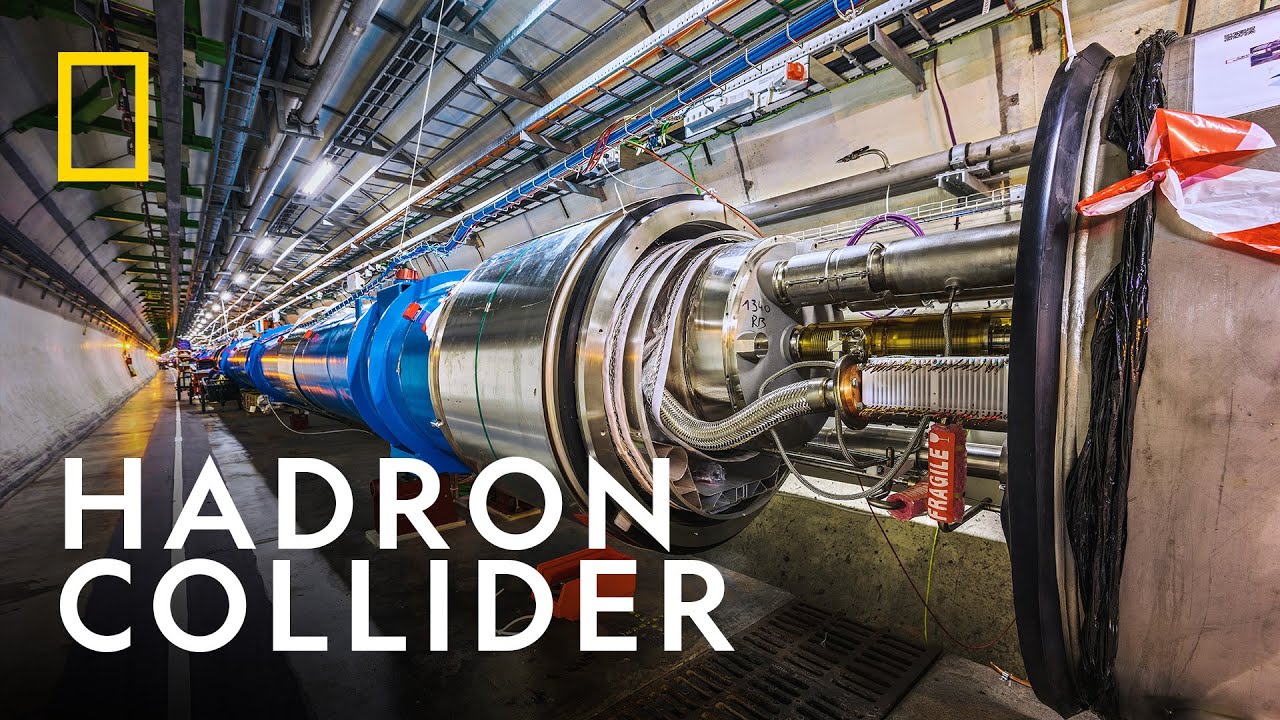
I have to address this. Any time “black hole” and “lab” are in the same sentence, people get… nervous. You’ve probably seen headlines: “Is CERN’s Large Hadron Collider (LHC) going to destroy the world?”
No. Full stop.
- The Theory: Some fringe theories (not mainstream physics) predicted that the high-energy collisions might create “quantum” micro-black holes.
- The Fact: They haven’t. Years of data from the LHC, the most powerful machine ever built, have shown zero evidence for micro-black holes. CERN has officially reported that their searches have found nothing.
- The Safety: Even if one did form, it would be “perfectly safe.” These hypothetical quantum black holes would have the mass of a few particles and would evaporate via Hawking Radiation instantly—so fast, we’d only see the “puff” of radiation they leave behind.
The LHC’s energy is a trillionth of a trillionth of what’s needed for a Kugelblitz. It’s not in the same league. It’s not in the same sport. It’s not in the same universe.
From “Ball Lightning” to the Stars
So, can lasers really create a black hole?
Theoretically? Yes.
Practically? No. Not today, not next century, and maybe not ever.
Project Kugelblitz is the ultimate “thought experiment.” It’s less a blueprint and more a map of the edges of our knowledge. To build one, we’d need to:
- Harness the power of a star (Dyson Sphere).
- Invent a whole new branch of physics (gamma-ray lasers).
- Solve the single deepest mystery of the universe (a Theory of Quantum Gravity).
So no, no secret lab is going to accidentally doom us all.
But the idea of the Kugelblitz is, in my opinion, one of the most beautiful in physics. It connects Einstein’s gravity, Hawking’s quantum fields, and our own sci-fi dreams of reaching the stars. It’s a perfect, impossible machine that shows us just how much more we have to learn.
This is some of the heaviest physics out there. Did it make sense? Or did it just break your brain?
Better yet: if we could build a Kugelblitz starship, what’s the first place in the universe we should go?
Drop your thoughts in the comments.

