

Your Brain on Sleep: 12 World-Changing Ideas Hatched in a Dream
Ever wake up from a dream so vivid, so utterly bizarre, that you just had to sit on the edge of your bed for a minute and ask, “…what was that?”
We all have. Most of the time, our brains are just running a highlight reel of the day’s anxieties, remixed with a talking squirrel and the fact we forgot to buy milk. But every now and then, the sleeping mind, freed from the rigid rules of waking logic, stumbles upon something extraordinary. It connects dots no one else sees.
It changes the world.
History is littered with stories of scientists, artists, and inventors who were banging their heads against a wall, only to have the solution delivered to them in a dream. It sounds like a myth, but it’s not. This isn’t about magic; it’s about the incredible processing power of the subconscious mind.
So, let’s pull back the curtain on the creative chaos of sleep and look at 12 incredible discoveries that were literally dreamed up.
1. The Benzene Ring
The Person & The Problem: August Kekulé, a 19th-century German chemist, was obsessed with a chemical puzzle: benzene. He knew this crucial organic compound was made of six carbon atoms and six hydrogen atoms (C6H6), but he couldn’t figure out how they were arranged. The chemical structures known at the time were all straight chains, but that didn’t work for benzene. It drove him nuts.
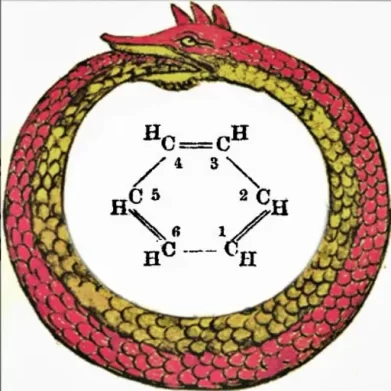
The Dream: One evening in 1865, dozing in his chair, Kekulé dreamed of atoms flitting about. He’d seen this before. But this time, the atomic chains began to twist and move like snakes. Suddenly, one of the snakes seized its own tail in its mouth, forming a spinning ring.
The “Aha!” Moment: Kekulé woke with a start. A ring. That was it. What if the carbon atoms weren’t in a line, but a closed loop? He spent the rest of the night working out the details of the hexagonal, rotating benzene ring. It fit the data perfectly.
The Impact: This wasn’t just about one compound. The discovery of the benzene ring unlocked the entire field of aromatic chemistry, which is fundamental to plastics, dyes, detergents, and countless pharmaceutical drugs. It was a foundational moment in modern chemistry, all thanks to a sleepy snake.
2. The Periodic Table
The Person & The Problem: In 1869, Russian chemist Dmitri Mendeleev was writing a chemistry textbook and desperately needed a way to organize the 65 known elements. He knew some elements behaved similarly, but their properties didn’t seem to follow a simple pattern. He spent days writing each element on a notecard and arranging them over and over, a game he called “chemical solitaire.” Exhausted, he fell asleep at his desk.
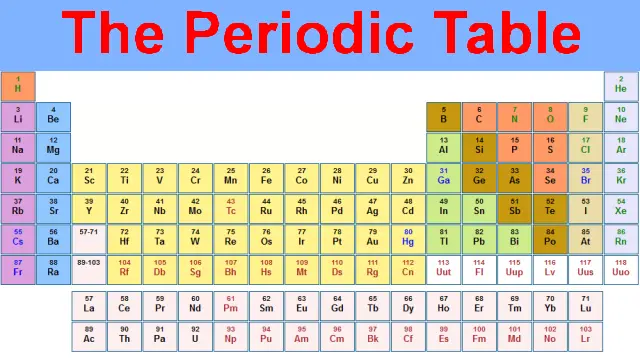
The Dream: Mendeleev dreamed of a table where all the elements fell into place exactly as required. As he later recalled, “In a dream I saw a table where all the elements fell into place as required. Awakening, I immediately wrote it down on a piece of paper.”
The “Aha!” Moment: The dream showed him the organizing principle he’d been missing: arranging the elements by atomic weight. When he did this, their chemical properties repeated in predictable, periodic intervals. His dream-inspired table was so accurate that he even left gaps for elements that hadn’t been discovered yet, predicting their weights and properties with stunning precision.
The Impact: The Periodic Table of Elements isn’t just a poster in a science class; it’s the single most important organizing principle in all of chemistry. Every scientist in the world uses it, and it all fell into place during a nap.

3. Insulin

The Person & The Problem: In 1920, Dr. Frederick Banting was a young Canadian surgeon fascinated by diabetes, which was then a death sentence. Scientists knew the pancreas produced something that regulated blood sugar, but every attempt to isolate it failed. The pancreas’s own digestive juices destroyed the substance before it could be extracted.
The Dream: On October 31, 1920, after reading a dense article on the topic, Banting went to bed. At 2 AM, he woke up with an idea crystal clear in his mind. He dreamed of the exact experimental procedure needed. He scribbled it down: “Ligate pancreatic ducts of dog. Keep dogs alive till acini degenerate leaving Islets. Try to isolate the internal secretion of these to relieve glycosurea.”
The “Aha!” Moment: In simple terms, his dream told him to tie off the ducts that produce the digestive juices in the pancreas. This would cause that part of the organ to wither away, leaving only the insulin-producing islet cells behind. Then, he could extract the insulin without it being destroyed.
The Impact: It worked. Banting and his colleague Charles Best successfully isolated insulin, transforming diabetes from a fatal disease into a manageable condition. The discovery has saved countless millions of lives and won Banting a Nobel Prize, all because his sleeping brain designed the perfect experiment.
4. The Sewing Machine

The Person & The Problem: Elias Howe was an American inventor in the 1840s determined to create a working sewing machine. His prototypes failed because he was using a needle that was pointed at one end with the eye at the other, like a standard hand-sewing needle. He couldn’t figure out how to make a stitch with it.
The Dream: Frustrated and broke, Howe had a nightmare. He dreamed he was captured by a tribe of cannibals who gave him 24 hours to perfect his machine, or they would cook and eat him. As they danced around him, he noticed that their spears had holes near the pointed tips.
The “Aha!” Moment: He woke up in a panic, but the image of the spears stuck with him. The hole was at the tip! That was the breakthrough. He designed a new needle with the eye close to the point. This allowed the needle to push the thread through the cloth, form a loop on the other side, and allow a second thread from a shuttle to pass through it, creating a lockstitch.
The Impact: Howe’s dream-inspired, lockstitch sewing machine revolutionized the garment industry, changing the world of fashion, manufacturing, and domestic life forever.
5. “Yesterday”
![The Beatles - Yesterday (Live With Spoken Word Intro, New York) [Remastered 2015]](https://www.gsnsp.com/wp-content/cache/flying-press/b3bff0602050ef05c2e88fcc0c804f93.jpg)
The Person & The Problem: In 1965, Paul McCartney was just a 22-year-old Beatle. He wasn’t trying to solve a problem, but his brain was apparently working on a masterpiece in the background.
The Dream: McCartney woke up one morning in his London flat with a stunningly beautiful, complete melody in his head. The tune was so perfect and seemed so familiar that he was convinced he had accidentally plagiarized it.
The “Aha!” Moment: He spent weeks playing the melody for friends and music experts, asking, “Is this yours? Do you know this song?” No one had ever heard it. He finally had to accept that his brain had composed the entire thing in his sleep. He put placeholder lyrics to it, calling it “Scrambled Eggs,” before eventually writing the iconic words to “Yesterday.”
The Impact: “Yesterday” has become one of the most covered songs in the history of recorded music, with over 2,200 versions. It’s a testament to the brain’s incredible power of artistic creation, even when we’re not paying attention.
6. The Terminator
![T-850 Arrival | Terminator 3 [Open Matte 1.78:1]](https://www.gsnsp.com/wp-content/cache/flying-press/e516d2f3e13f46b1e990f2395720dd99.jpg)
The Person & The Problem: In 1981, a young and struggling director named James Cameron was in Rome, sick with a high fever. His first directing gig was going terribly, and he was broke and demoralized.
The Dream: In his feverish state, Cameron had a vivid and terrifying dream. He saw an image of a metallic, robotic skeleton emerging from an explosion, dragging itself across the floor with kitchen knives. A chrome torso from the future.

The “Aha!” Moment: The image was so powerful that as soon as he recovered, Cameron started sketching it and building a story around it. That chrome skeleton became the Terminator, and the story became the script for the 1984 sci-fi classic that launched his legendary career.
The Impact: The Terminator not only made Arnold Schwarzenegger a superstar but also set a new standard for sci-fi action films. The iconic T-800, one of cinema’s greatest villains, was born from a sick-day nightmare.
7. Google’s Algorithm

The Person & The Problem: In 1996, Larry Page was a 23-year-old graduate student at Stanford. He was working on a project to analyze the structure of the World Wide Web, but he was struggling with how to determine the importance of a webpage.
The Dream: One night, Page woke from a dream with a startling vision. He had dreamed that he was able to download the entire web and just keep the links.
The “Aha!” Moment: The dream gave him the core idea for his algorithm. What if a webpage’s importance wasn’t determined by its content, but by how many other pages linked to it? And what if the importance of those linking pages also mattered? This concept of “backlinks” and “PageRank” was a revolutionary way to organize information.
The Impact: This dream-inspired idea became the foundational algorithm for Google, the world’s most powerful search engine. It completely changed how we access information and arguably shaped the modern internet itself.
8. Frankenstein

The Person & The Problem: In 1816, Mary Shelley was just 18 years old, spending a dreary summer in Switzerland with her lover Percy Shelley and Lord Byron. To pass the time, they challenged each other to write a ghost story. Mary struggled for days to come up with an idea.
The Dream: As she described in the preface to the 1831 edition, she experienced a “waking dream.” She saw a “pale student of unhallowed arts kneeling beside the thing he had put together.” Then, she saw the creature stir with a “vital warmth” and open its “dull yellow eye.” The vision horrified her.
The “Aha!” Moment: “I have found it!” she realized. The terror of her dream gave her the central, horrifying scene of her novel. The rest of the story flowed from that single, powerful image of creation and revulsion.
The Impact: Frankenstein; or, The Modern Prometheus became a masterpiece of Gothic literature and is considered by many to be the very first science fiction novel. Its themes of creation, responsibility, and what it means to be human still resonate today, all thanks to a teenager’s nightmare.
9. The Atomic Model

The Person & The Problem: In the early 20th century, scientists knew that atoms contained positive and negative charges, but the structure was a mystery. Danish physicist Niels Bohr was grappling with the “plum pudding” model, which just didn’t explain experimental results.
The Dream: Bohr reported having a dream in which he saw the planets orbiting the sun, attached by thin wisps or strings. It was a vision of a stable, miniature solar system.
The “Aha!” Moment: The dream provided a powerful analogy. What if the atom was structured like a tiny solar system, with electrons (planets) orbiting a central, positive nucleus (the sun)? This model, where electrons existed in specific energy levels or “shells,” was a huge leap forward.
The Impact: The Bohr model was a critical step in understanding atomic structure and quantum mechanics. While it has since been refined, this dream-inspired vision laid the groundwork for our modern understanding of the atom.

10. Nerve Impulses
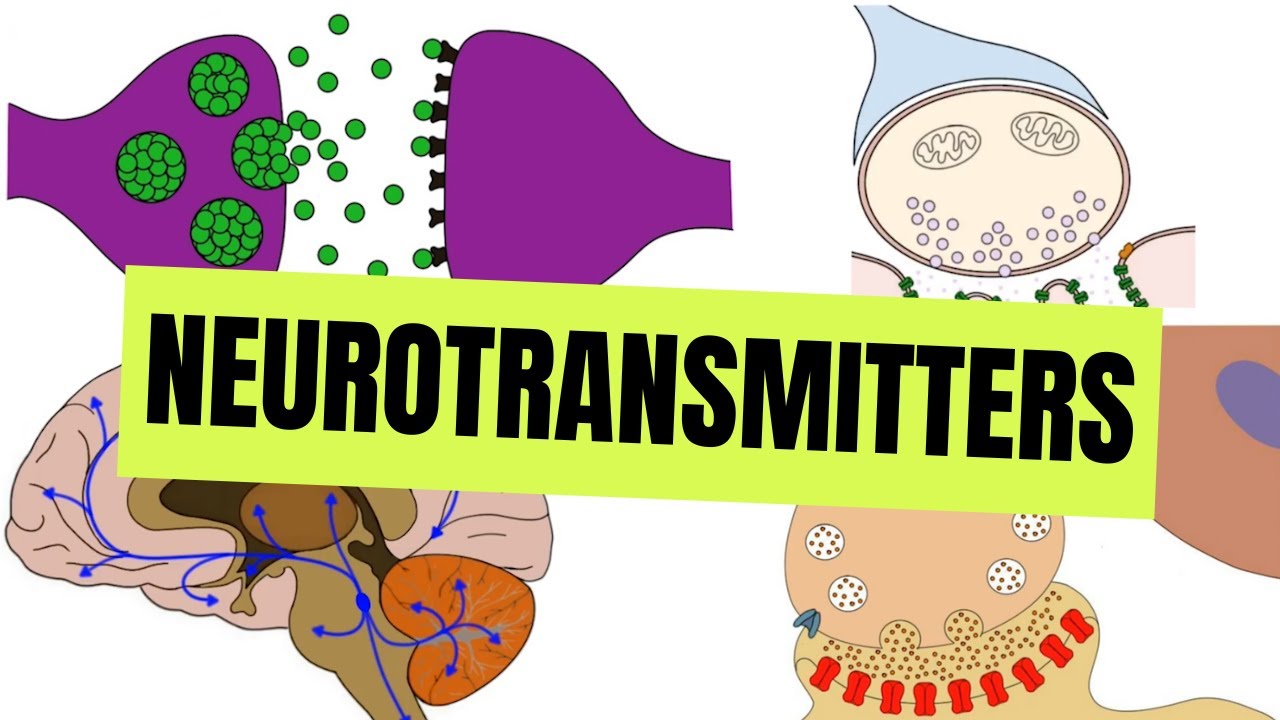
The Person & The Problem: In 1921, German pharmacologist Otto Loewi was trying to prove that nerve signals were transmitted chemically, not just electrically. He had a hypothesis but couldn’t devise an experiment to prove it.
The Dream: One night, an experiment came to him fully formed in a dream. He woke up, scribbled it on a scrap of paper, and went back to sleep. The next morning, to his horror, he couldn’t read his own handwriting. He thought the idea was lost forever.
The “Aha!” Moment: The very next night, by an incredible stroke of luck, he had the exact same dream again. This time, he didn’t take any chances. He immediately got out of bed, went to his lab, and performed the experiment at 3 AM. He used two frog hearts, stimulating one and transferring the fluid from it to the second, which then behaved as if it had also been stimulated.
The Impact: This elegant experiment proved that nerves communicate using chemical messengers (which we now call neurotransmitters). The discovery was the foundation of modern neuroscience and earned Loewi the Nobel Prize in Medicine in 1936.
11. Relativity’s Seed
The Person & The Problem: Albert Einstein didn’t dream up the entire theory of relativity fully formed. But he did report a crucial dream from his youth that planted the seed for his famous thought experiments.
The Dream: As a teenager, Einstein dreamed he was walking through a field when he came upon a herd of cows huddled against an electric fence. The farmer turned on the power, and the cows all jumped back at the same instant. But the farmer, who was standing at the other end of the field, saw them jump back one by one, like a wave.
The “Aha!” Moment: The dream was a startling illustration of a core concept of relativity: events that appear simultaneous to one observer can appear sequential to another, depending on their position and motion. The dream didn’t give him the math, but it gave him a powerful, intuitive grasp of the relativity of simultaneity.
The Impact: This early, dream-inspired insight was a foundational piece of the puzzle that would eventually lead to E=mc2 and a complete re-imagining of space, time, and gravity.
12. Mathematical Genius
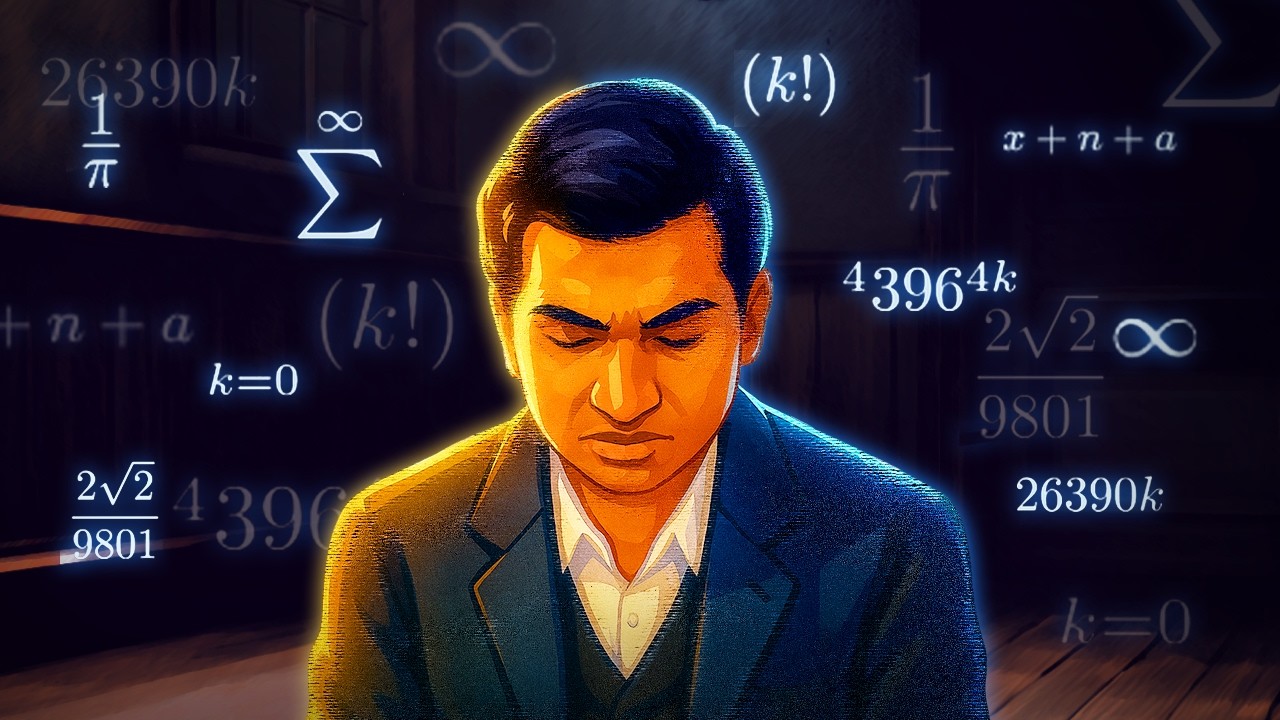
The Person & The Problem: Srinivasa Ramanujan was a largely self-taught mathematical genius from India in the early 1900s. He produced thousands of original theorems and formulas, but he often struggled to provide the formal proofs that Western mathematicians required.
The Dream: Ramanujan claimed that his mathematical ideas didn’t come from his own mind. He said that the Hindu goddess Namagiri Thayar would appear to him in dreams, presenting him with complex mathematical formulas inscribed on scrolls.
The “Aha!” Moment: For Ramanujan, there was no separation. He would wake up and simply write down the formulas he had been “shown.” He said, “An equation for me has no meaning unless it expresses a thought of God.”
The Impact: Ramanujan’s work has had a profound impact on number theory, black holes, and string theory. His dream-inspired notebooks are still being studied by mathematicians today, who continue to find new and startling applications for his divine formulas.
What about you? Has a dream ever helped you solve a problem or given you a great idea? Share your story in the comments below!

