

The Lost City of Z: Was Percy Fawcett Chasing Ruins or a Sentient Jungle?
In 1925, Colonel Percy Harrison Fawcett, a man carved from the very granite of the British Empire, marched into the Amazon rainforest with his son Jack and his son’s friend, Raleigh Rimmel. They were searching for a legend: a lost city of glittering towers and advanced civilization hidden in the jungle’s green heart.
They were never seen again.
The story of the Lost City of Z is one of history’s great, unsolved mysteries. It’s a classic tale of adventure and obsession. But what if the story we all know is wrong? What if Fawcett, in the final years of his quest, wasn’t just looking for ancient ruins?
What if he was searching for a place where the jungle itself was alive, conscious, and intelligent?
Strap in. This goes deeper than a lost city. We’re venturing into the hazy borderland between exploration, obsession, and a belief system that changes the entire story.
Who was Colonel Percy Fawcett?
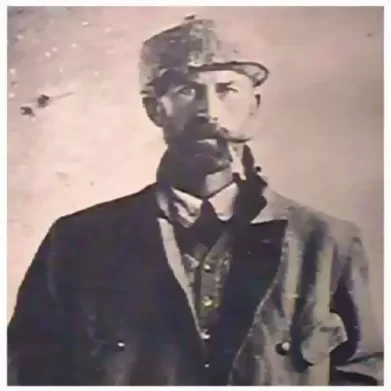
First things first: Percy Fawcett was not some crackpot amateur. This guy was the real deal — the Indiana Jones that Indiana Jones was based on. He was a decorated British artillery officer, a diplomat, and a brilliant surveyor for the Royal Geographical Society.
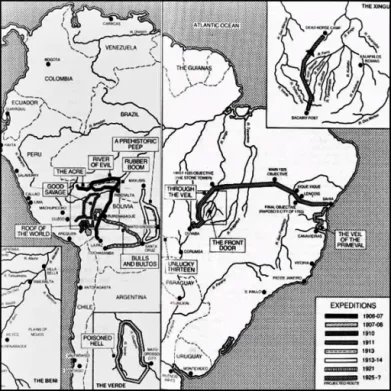
Between 1906 and 1924, he led seven expeditions into the uncharted territories of South America. His job was to map the contested borders between Brazil, Bolivia, and Peru. It was brutal, thankless work. He and his men faced starvation, disease, venomous snakes, and tribes who had never seen a white man.
But Fawcett was different. He was ridiculously tough — a six-foot-two testament to Victorian grit who seemed immune to the jungle’s horrors. He treated indigenous tribes with respect, learning their customs and languages when others met them with bullets. He survived expeditions that killed all his companions. The jungle didn’t seem to break him; it seemed to speak to him.
He was a man of science, of maps and measurements. But the deeper he went, the more the jungle’s immense, overwhelming presence began to change him.
The Birth of “Z”
Fawcett’s obsession didn’t come from nowhere. It started with a document he found in the National Library of Rio de Janeiro: Manuscript 512.
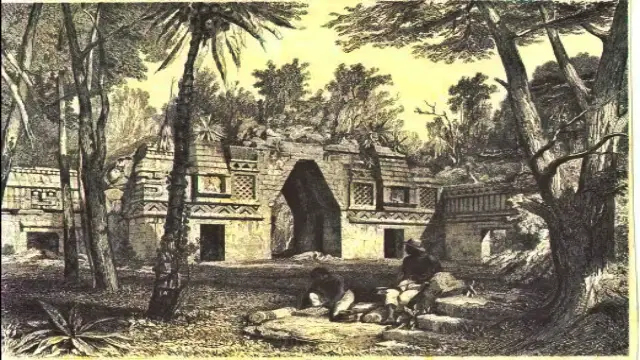
Written by a Portuguese explorer in 1753, the manuscript described discovering the ruins of a magnificent, sophisticated stone city in the depths of the Mato Grosso region of Brazil. It spoke of multi-storied buildings, wide avenues, stone arches, and hieroglyphics.
For Fawcett, this was the smoke from a hidden fire. It confirmed the whispers he’d heard from tribes about ancient white gods and lost cities. He began to piece together a theory: that a highly advanced civilization — perhaps refugees from Atlantis — had once flourished in the Amazon, leaving behind a final, undiscovered outpost.

He didn’t give it a name. He called it, simply, “Z.”
“Z” became the white whale to his Captain Ahab. It wasn’t just a discovery; it was the ultimate answer, the final piece of the human puzzle. His reputation, his finances, and his family life all became secondary to this one, all-consuming goal.
Final Expedition
In 1925, funded by newspapers and scientific societies, Fawcett launched his final, definitive expedition. He believed he had the exact coordinates. This time, he would not fail. He took only two companions: his athletic 21-year-old son, Jack, and Jack’s best friend, Raleigh Rimmel. Fawcett believed a small, fast-moving party had the best chance of survival.
On May 29, 1925, from a location he called “Dead Horse Camp,” Fawcett sent his last dispatch back with a local runner. He was confident, excited, and on the verge of his great discovery. He wrote:
“You need have no fear of any failure.”
Then, silence. The three men walked into the jungle and vanished from the face of the earth.
For years, search parties combed the Amazon. Dozens of would-be rescuers died looking for him. Rumors flew — that he’d been killed by tribes, that he’d “gone native” and become a chief, that he was being held captive. But no credible trace of Fawcett, his son, or Rimmel was ever found.
Was “Z” Even a City of Stone?
This is where the story gets weird. To understand Fawcett’s final quest, you have to understand that he wasn’t just an explorer anymore. He was a mystic.
Fawcett was deeply involved in Theosophy, a spiritualist movement popular in the early 20th century. It blended Eastern philosophy, mysticism, and the occult. He and his wife were followers of Madame Blavatsky, who wrote about lost continents like Atlantis and Lemuria and the ancient “master races” that inhabited them.
Fawcett’s private letters and writings reveal a startling shift in his thinking. He began to believe that the inhabitants of “Z” might not be dead, but alive an ancient, spiritually enlightened community that had chosen to remain isolated. He wrote of “Z” as a source of immense psychic energy, a place with a “spiritual guard” that kept the unworthy out.
Did his idea of “Z” evolve from a city of stone to a city of consciousness?
He described the Amazon not as a backdrop, but as a living entity. He spoke of the “spirit of the woods” and a palpable, intelligent presence that watched him. Read his writings, and you get the chilling feeling that he wasn’t just looking for a ruin hidden by the jungle. He was looking for a secret hidden within the jungle’s own consciousness.
Maybe “Z” wasn’t a destination. Maybe it was a state of being. A place where the veil between the physical and spiritual worlds was thin, and the jungle itself was the great, sentient gatekeeper.
Modern Science Vindicates the “Madman”
For nearly a century, the scientific establishment dismissed Fawcett. The consensus was that the Amazon’s acidic soil and harsh environment could never have supported a large, complex civilization. A city like “Z,” they argued, was an ecological impossibility. Fawcett, they concluded, was a brilliant explorer who simply went mad chasing a fantasy.
And then we invented LIDAR.
LIDAR is, essentially, laser-based radar that can map the ground from an airplane, digitally stripping away the forest canopy. And what it has revealed in the last 10-15 years has completely rewritten human history.
- In the Llanos de Mojos in Bolivia, LIDAR revealed the sprawling, interconnected settlements of the Casarabe culture, complete with pyramids, causeways, and reservoirs, thriving from 500 to 1400 A.D.
- In early 2024, scientists announced the discovery of a vast network of cities in the Upano Valley of Ecuador, linked by ancient roads and dating back 2,500 years, older than any other known Amazonian society.
The bombshell conclusion is undeniable: Percy Fawcett was right.
The Amazon was home to massive, complex, urban civilizations. He was looking in the right jungle, even if he might have been in the wrong part of it. The foundation of his entire quest, the core belief that got him labeled a madman, has been proven spectacularly correct by 21st-century technology.
So, What Really Happened to Fawcett?
The vindication of his theory doesn’t solve the mystery of his disappearance. While we’ll never know for sure, David Grann, author of the definitive book The Lost City of Z, presents the most plausible theory. Fawcett’s party, weakened by hunger and injury, likely encountered a hostile tribe the Kalapalos who, according to their oral history, warned Fawcett not to venture into the territory of their more violent neighbors. Fawcett, in his obsessive pride, ignored them and pushed onward, walking directly into his doom.
A Lost City or a Lost Mind?
So where does that leave us?
We have a man who started as a scientist, a man of maps and logic. He became consumed by a quest that blended archaeology with occult mysticism. He pushed the boundaries of exploration so far that he blurred the line between the physical world and his spiritual beliefs. He vanished chasing a dream that science called impossible.
And then, a century later, science proved his dream was real.
Perhaps the true “Lost City of Z” was never a single place on a map. Perhaps it was the destination of Fawcett’s own personal journey — a point where the known world ended and the intoxicating, terrifying mystery of the Amazon took over his soul. He went looking for a city and may have found a truth far stranger: that in the heart of the world’s largest wilderness, the greatest uncharted territory is the human mind.
FAQs
Is the Lost City of Z real?
The Lost City of Z has never been definitively found, but modern research suggests that advanced ancient civilizations did exist in the Amazon. Archaeological discoveries, including large settlements and infrastructure, support the idea that Percy Fawcett’s theory may have had some basis in reality.
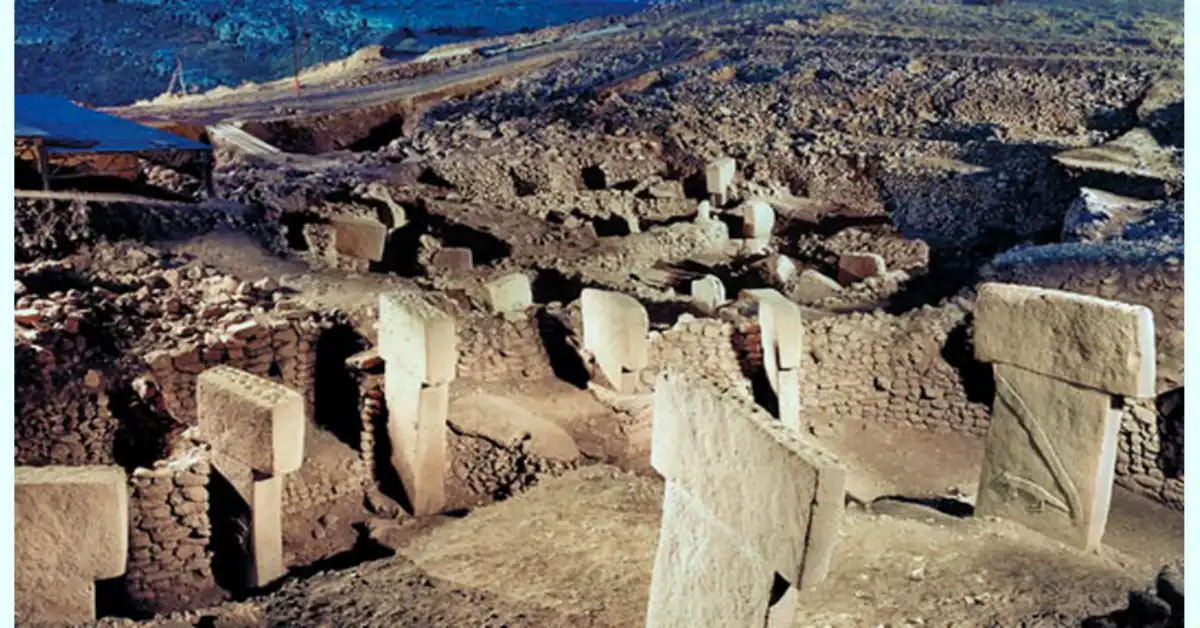
Who was Percy Fawcett?
Percy Fawcett was a British explorer and surveyor who became famous for his expeditions into the Amazon. He believed in the existence of a lost civilization, which he called “Z,” and disappeared in 1925 while searching for it.
What happened to Percy Fawcett?
Fawcett, along with his son and a companion, vanished in the Amazon rainforest in 1925. Despite numerous rescue missions and investigations, their fate remains unknown, making it one of the greatest unsolved exploration mysteries.
Why did Percy Fawcett believe the Lost City of Z existed?
Fawcett based his theory on historical documents like Manuscript 512 and his own findings in the Amazon, including pottery and evidence of organized settlements. He believed a complex ancient civilization once existed deep in the jungle.
Has the Lost City of Z ever been found?
No confirmed discovery has been made. However, modern archaeological research using technology like lidar has revealed large ancient settlements in the Amazon, suggesting that cities similar to Fawcett’s vision may have existed.
Where was the Lost City of Z supposed to be located?
Fawcett believed the city was located in the Mato Grosso region of Brazil, deep within the Amazon rainforest, based on historical accounts and exploration records.
What is Manuscript 512?
Manuscript 512 is an 18th-century document describing the ruins of an ancient city in Brazil. It includes references to arches, statues, and structures, which inspired Fawcett’s search for the Lost City of Z.
Why is the Lost City of Z still a mystery today?
The Amazon rainforest is vast, dense, and difficult to explore. Combined with limited historical evidence and Fawcett’s disappearance, this has made it extremely challenging to confirm whether the city truly existed.
Did Percy Fawcett actually find the Lost City of Z?
There is no proof that Fawcett found the city. Some theories suggest he may have encountered evidence of ancient settlements without realizing it, but this remains speculative.
Are there other lost cities in the Amazon?
Yes, modern discoveries have revealed multiple ancient settlements in the Amazon, including large networks of villages and structures, indicating that complex civilizations once thrived there.
Is the Lost City of Z based on a true story?
Yes. The story is based on real events involving Percy Fawcett’s expeditions and disappearance. While some elements have been dramatized in books and films, the core mystery is historically accurate.
Why is the Lost City of Z so famous?
The mystery combines exploration, disappearance, and the possibility of a lost civilization. Fawcett’s obsession and unexplained fate have kept the story alive for over a century.
What do you think happened to Percy Fawcett? Was he a visionary who saw the truth a century early, a madman chasing a ghost, or both? Share your theories in the comments below!

