

Eurail vs Point-to-Point Tickets: Which One Saves You More Money?
You are staring at your laptop at 2 a.m., completely overwhelmed by fifty open tabs. You have Trenitalia loaded on one screen. The official Eurostar site is open on another. Smack in the middle sits a shiny ad for the Eurail Pass promising “unlimited travel” across 33 European countries.
If you are planning a European adventure, you eventually hit the ultimate brick wall: Should I buy a rail pass or just book individual tickets?
Ask five different backpackers, and you will get five different answers. Some swear the pass gives them ultimate freedom. Others insist buying single tickets saves them hundreds of dollars.
Who is actually right?
The landscape of European rail travel has shifted massively. High-speed trains are faster than ever, budget carriers are aggressive, and ticketing rules are strict. Let’s bypass the marketing hype. We are going to look at the cold, hard math for 2026 so you can figure out exactly which option keeps more cash in your wallet.
- The Quick Answer: If you plan your route months in advance, point-to-point tickets are almost always cheaper. If you want absolute freedom to wake up and decide where to go, buy a Eurail Pass.
- The Hidden Catch: A Eurail Pass is rarely fully “unlimited.” High-speed and overnight trains require mandatory seat reservation fees ranging from €10 to €40 per ride.
- The Sweet Spot: The Eurail Global Pass shines brightest for long, multi-country trips (think 5+ countries in two weeks).
- Families Win Big: Kids under 12 travel absolutely free with an adult Eurail Pass, making it a financial no-brainer for parents.
What are Point-to-point tickets?
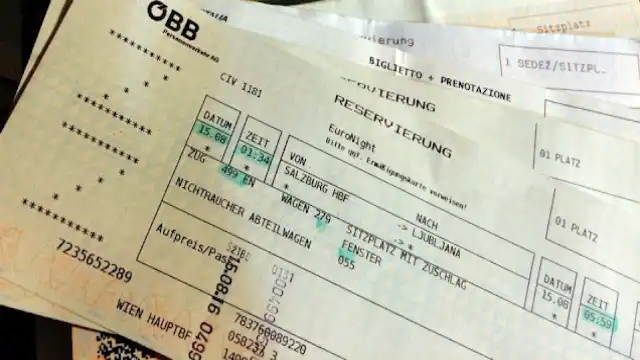
A point-to-point (P2P) ticket is simply an individual fare purchased for a specific train, on a specific date, at a specific time. You buy a ticket from Paris to Amsterdam. That is it.
Think of booking them exactly like booking airplane flights. Airlines reward you for planning ahead, right? European train operators do the exact same thing.
If you buy a P2P ticket 90 to 180 days in advance, the prices are staggeringly cheap. You can snatch a seat on a French TGV or German ICE train for as little as €18 ($19). Spain’s Renfe network and Italy’s Trenitalia constantly run massive advance-purchase promos.
Here is the downside. Flexibility is practically zero. If you miss your 10:15 a.m. train to Berlin because you partied too hard at Oktoberfest, your ticket is garbage. You must walk up to the counter and buy a brand-new, full-price ticket for the next train. Last-minute tickets are brutally expensive, easily topping €150 ($160) for popular cross-country routes.
What is the Eurail Pass?
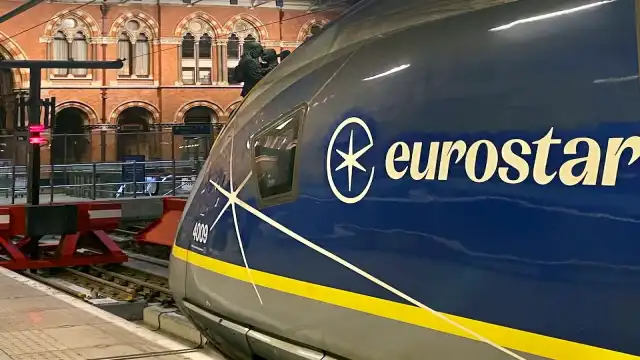
The Eurail Pass (known as the Interrail Pass if you are a European citizen) is essentially a golden ticket to the continent’s massive railway network.
Instead of buying individual fares, you buy “travel days.” A popular option is the 7-Days within 1-Month Flexi Pass. This lets you ride as many trains as you physically want on seven separate calendar days over a 30-day window. In 2026, an adult Global Pass covering 33 countries starts around €283 ($306), depending on current official pricing from Trainline.
Want to take three short train rides through Switzerland in a single afternoon? Go for it. That counts as one travel day.
It sounds like a dream for free-spirited digital nomads. But there is a massive catch you must understand before pulling out your credit card.
Seat reservation fees
This is where rookie travelers get financially burned.
Years ago, you could flash your rail pass, hop on any train, and sit anywhere. Those days are gone. Today, almost every high-speed, international, or overnight train requires a mandatory seat reservation. Your pass covers the base fare, but it does not guarantee you a physical seat.
These reservations are not cheap. Expect to pay:
- France (TGV): €10 to €20.
- Italy (Frecciarossa): €13.
- Eurostar (London to Paris): €30+. (They also strictly cap the number of pass-holder seats, so they sell out fast!)
- Scenic Swiss Trains (Glacier Express): Up to €49 ($52).
Imagine buying a 10-day rail pass thinking your travel expenses are entirely covered. Then, you spend an extra €150 just reserving seats. The Man in Seat 61, a highly respected authority on European rail, constantly warns travelers to factor these fees into their total budget.
When Point-to-point tickets absolutely destroy Eurail
Are you a planner? Do you have an Excel spreadsheet detailing your daily itinerary? If so, skip the pass.
Let’s run a real-world scenario for a classic Western Europe trip. You want to travel from Paris to Lyon, then down to Barcelona, over to Madrid, and finally to Lisbon.
Option A: The Eurail Pass
You buy a 10-day Global Pass for roughly €395 ($425). Great. Now, you need reservations.

- Paris to Lyon TGV supplement: €15
- Lyon to Barcelona high-speed supplement: €25
- Barcelona to Madrid Renfe supplement: €10
- Madrid to Lisbon (night train or multiple connections) supplement: €15
Your total cost easily climbs past €460.
Option B: Advance P2P Tickets
You book three months ahead.
- Paris to Lyon (Ouigo budget train): €15
- Lyon to Barcelona (Advance fare): €39
- Barcelona to Madrid (Avlo/Renfe advance): €15
- Madrid to Lisbon: €35
Your total cost? €104.
By locking in your dates early, point-to-point tickets save you over €350. You could buy a lot of tapas and sangria with that leftover cash.
Single-Country Travel
If you are only visiting one country, point-to-point tickets almost always win. For instance, short hops in Italy (like Florence to Pisa) cost barely €9 on regional trains. Wasting a €40 “Eurail travel day” on a €9 journey makes zero mathematical sense.
When the Eurail Pass is a Genius Investment
Before you totally write off the pass, realize there are specific scenarios where it provides incredible value. The pass isn’t a scam. It is just built for a specific style of travel.
1. You Crave Total Spontaneity
Do you hate planning? Do you want to meet fellow backpackers at a hostel in Prague and spontaneously join them on a trip to Vienna the next morning?
If you try pulling that stunt with point-to-point tickets, a last-minute walk-up fare will cost you €120+. With a rail pass, you simply open the Eurail app, log your journey, and step onto the train. You are paying a premium upfront for the ultimate luxury of freedom.
2. You Are a “Power Traveler”
The pass shines when you cover massive distances frequently. If you are hitting six countries in 14 days, crossing borders daily, and using trains as your primary transport, the sheer volume of travel makes the pass cost-effective.
3. Germany, Austria, and Switzerland
If your itinerary heavily features Central Europe, get the pass. Why? Because trains in Germany (ICE), Austria (Railjet), and Switzerland generally do not require seat reservations. You truly can just hop on and hop off. Combine this with the fact that full-price Swiss train tickets are notoriously expensive, and the rail pass easily pays for itself in these regions.
4. Traveling with Children
Are you dragging the kids across the pond? Here is a massive perk. Children under 12 travel completely free when accompanied by an adult using a Eurail Pass. You can link up to two kids per adult.

If a family of four (two adults, two kids under 12) buys P2P tickets, they must pay for four individual seats. With a pass, they only pay for two adults. That mathematical shift changes the game instantly for vacationing parents.
Youth travelers (ages 12 to 27) also snag a 15-20% discount on their pass, while seniors over 60 get a 10% price drop.
Making your trip seamless
Gone are the days of carrying a giant paper map and a physical ticket book. Europe’s train system went fully digital.
If you choose the pass route, you will use the Rail Planner App. This is where you activate your pass, plan routes, and show your QR code to the conductor. It even works offline.
If you choose point-to-point tickets, do not waste time visiting five different local railway websites. Download Trainline or Omio. These apps aggregate all European train schedules. They show you the fastest routes, compare prices across different operators (even budget buses), and store all your tickets in one place. Yes, they charge a tiny booking fee, but avoiding the clunky, foreign-language interfaces of regional train websites is worth every penny.
Google Maps is also surprisingly reliable across Europe now. It shows exact platform numbers and walking routes within mega-stations like Paris Gare du Nord or Berlin Hauptbahnhof.
Making your final choice
Still feeling paralyzed? Let’s narrow it down. Ask yourself these four simple questions:
- How far out is my trip? If you are leaving next week, advance cheap tickets are gone. Buy the pass. If your trip is four months away, start booking P2P tickets now.
- Am I staying in one region? If you are only visiting Italy or Spain, buy single tickets. If you are doing the grand London-Paris-Amsterdam-Berlin tour, price out the pass.
- Do I need a rigid schedule? If you booked non-refundable hotels and timed museum entries, you have a set schedule. Buy advance P2P tickets.
- Am I under 28 or traveling with young kids? Take advantage of the heavy Eurail age discounts.
Final thoughts
European train travel remains one of the absolute best ways to see the continent. There is no TSA security theater. There are no middle seats. You simply grab a coffee, sink into a spacious chair, and watch the Swiss Alps or French vineyards roll past your massive window.
Whether you opt for the structured savings of point-to-point tickets or the carefree flexibility of a Eurail Pass, do your research early. The math does not lie. Crunching the numbers today guarantees you won’t be stressed out on the platform tomorrow.
Ready to start booking? Drop a comment below with your dream European itinerary! Are you team planner or team spontaneous? Let’s chat about it. Safe travels out there!

